
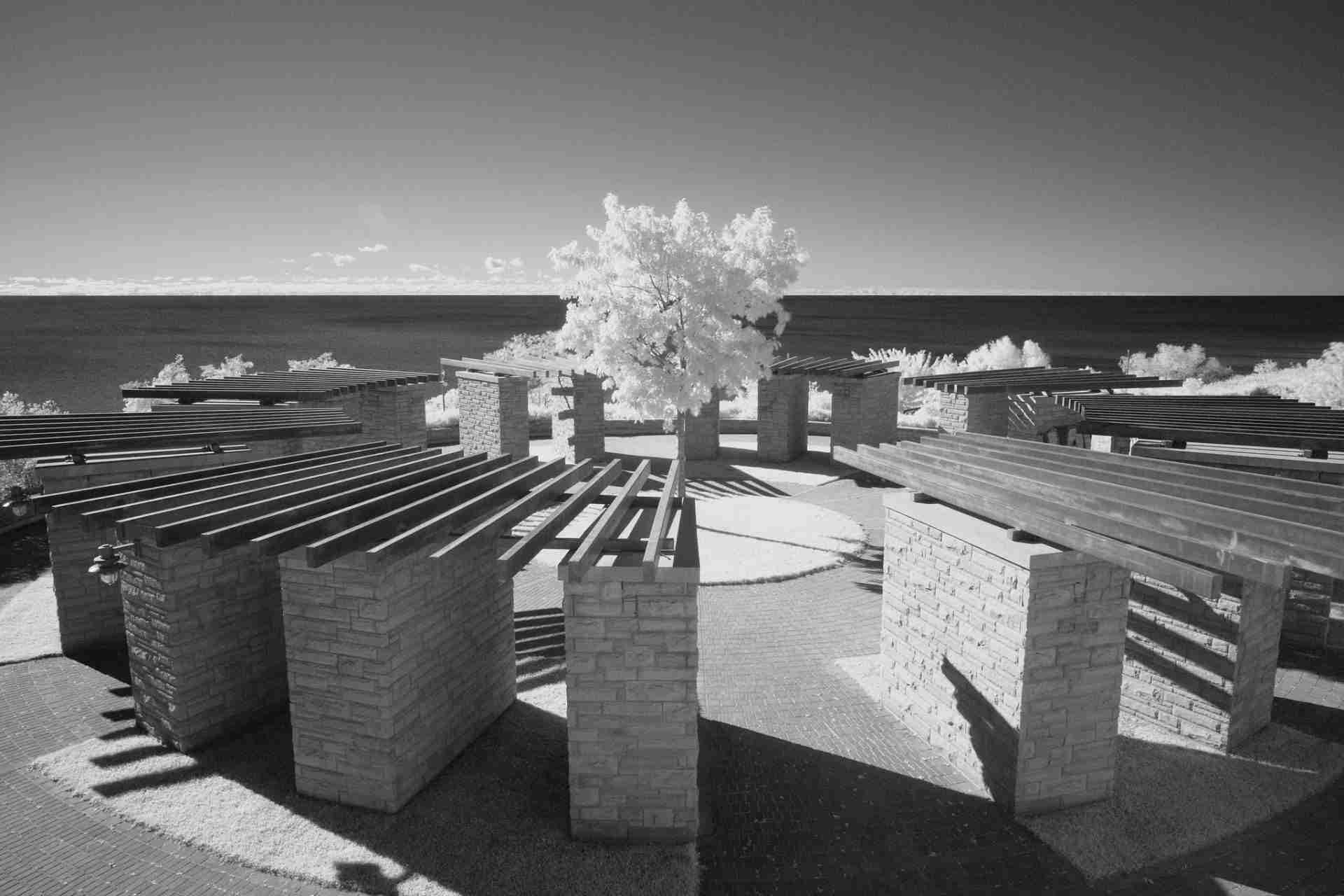
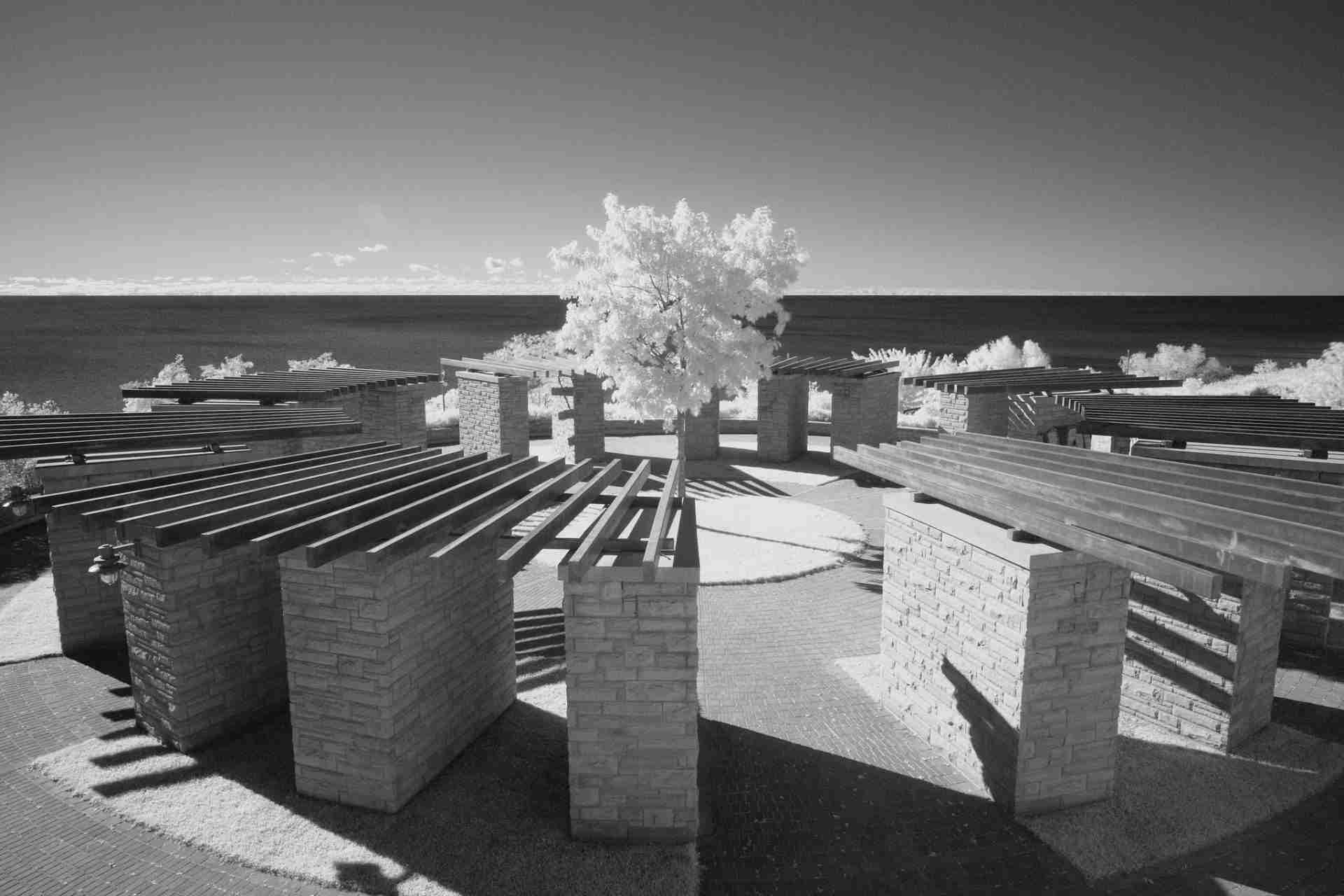
Stretching along the quiet northern shoreline of Lake Ontario, Ajax Waterfront Park is a peaceful fusion of curated landscape, public art, and natural lakefront rhythm. What sets this park apart is its expansive sightlines and minimalist design language—clean walking paths, lake vistas uncluttered by development, and the standout presence of a circular steel art installation that frames both sky and water in compelling symmetry. Located just east of Toronto, the park offers a calming, less-touristed setting that rewards photographers looking to capture the dialogue between land, art, and horizon. Whether in morning fog or sunset glow, this is a location where geometry and atmosphere meet with quiet power.
Best Photography Opportunities
• Circular Art Installation Framed Against the Lake
: The park's signature photo subject is a large, circular steel ring set directly against the backdrop of Lake Ontario. From the main path, you can align this installation with the water's edge to create striking compositions that emphasize balance and visual tension. Use a standard or wide-angle lens to place the circle as a frame-within-frame, capturing sky, clouds, or even silhouetted figures through the opening. Early morning light from the east backlights the lake beyond, while golden hour warms the steel and enriches the textures of the surrounding grasses.
• Minimalist Shoreline Compositions
: The gently curved waterfront, lined with stone breakwaters and sparse benches, provides ample opportunity for minimalist landscape work. Especially in winter or early spring, when color is subdued, the shoreline transforms into a series of soft lines and tonal gradients. A long lens (100–200mm) helps compress the open space, turning natural elements—trees, ripples, rocks—into textural compositions. Overcast skies flatten contrast and make for ideal black and white studies.
• Long Exposures of Lake Ontario
: On calm days, Lake Ontario behaves more like an inland sea, with glassy surfaces ideal for long exposure photography. Use a tripod and 6- or 10-stop ND filter to smooth the water and render passing clouds into streaks above the horizon. Position the circular sculpture off-center to create a strong anchor within the frame, or isolate lakeside rocks and breakwaters for abstract shoreline studies. Blue hour is particularly rewarding here, when the lake takes on cooler tones and the artificial lighting along the path begins to glow.
• Fog and Atmospheric Studies
: Ajax Waterfront Park often wakes to a blanket of lake fog in the early morning, particularly in autumn and spring. This mist softens every edge and transforms the park into a quiet dreamscape where trees and sculptures appear and disappear in veils of gray. Use a fast prime (35mm or 50mm) to handhold in low light and capture high-ISO atmospheric shots. The circle sculpture becomes especially surreal in fog—floating in emptiness, partially obscured, it invites interpretive framing and mood-driven work.
• Silhouettes and Sunset Portraiture
: The western sky over the lake offers excellent light in the late day, especially when clouds catch warm hues. The open design of the park provides clean backgrounds for silhouette work, particularly if you position subjects walking through the circular sculpture or along the pier railings. A 24–70mm lens gives you flexibility for wide context or tighter storytelling. Reflective water, bare trees, and the geometric forms of the park infrastructure make this a great location for minimalist portraits or environmental studies.
Best Time to Visit
Ajax Waterfront Park offers strong photographic potential year-round, but each season affects the light and landscape differently. Spring brings the earliest fog and quiet sunrises, with cool pastels and fresh shoreline textures. Mid-spring also brings migratory bird activity, particularly near the small wetlands at the park's eastern edge, adding subtle life to still frames.
Summer is best for clean skies, flat lake reflections, and strong color—particularly during the long golden hours of June and July. While the park can become moderately busy in midday, early morning and dusk remain reliably quiet. Midday light is harsh but usable for stark contrast or high-key black and white work.
Autumn introduces dramatic skies, wind-lifted waves, and the season's best fog, especially on cool mornings after warm days. The circle sculpture takes on more tonal complexity as the sun lowers and foliage begins to change, offering a slightly rusted palette to frame within the installation.
Winter pares the landscape down to its core elements. Snow on the shoreline flattens contrast, and ice along the breakwaters adds texture to the frame. The circular sculpture often appears more stark and monumental against a snow-covered backdrop. Low sun angles throughout the day allow for strong directional lighting and long shadows—ideal for monochrome, abstract, and mood-driven compositions.
How to Get There
Ajax Waterfront Park is located along Lake Driveway West in Ajax, Ontario, just off the 401 highway and less than 45 minutes east of downtown Toronto by car. Take the Salem Road exit south, then turn east on Bayly Street and south again on Harwood Avenue to reach the lakeshore access point. Free parking is available at multiple lots along the waterfront trail, including near Rotary Park and the Butterfly Garden access, which puts you within a short walk of the sculpture and lakefront.
The park is also accessible by public transit: Durham Region Transit connects with GO Transit, with nearby bus stops along Harwood Avenue and Bayly Street. From the Ajax GO Station, it's approximately a 30-minute walk or a 10-minute bike ride to the park.
The entire waterfront is fully accessible, with paved trails, ramps, and wide open areas suitable for tripods, strollers, or rolling camera bags. There are no entrance fees, and the park is open year-round. Facilities such as restrooms, water fountains, and picnic areas are available seasonally. Tripods and drones may be used with appropriate caution—avoid flying over crowds or wildlife areas, especially near the adjacent marshlands.
Recommended Gear and Shooting Tips
To make the most of Ajax Waterfront Park's minimalist geometry and variable conditions, a lean but versatile setup is ideal. A wide-angle lens (16–35mm) is essential for framing the circular sculpture against the lake and sky, while a mid-range zoom (24–70mm or 24–105mm) provides excellent coverage for street-style portraits, environmental scenes, and tighter compositions of architectural elements.
For long exposure work, bring a sturdy tripod and both 6- and 10-stop ND filters to handle different light levels. A circular polarizer can reduce surface glare on the lake and deepen sky tones, but be cautious when used at wide angles to avoid uneven polarization across open skies.
A telephoto lens (70–200mm) adds flexibility for isolating details, especially when working with shoreline texture or abstract studies of lake waves and stone. A drone, if flown within regulations, opens up striking top-down views of the sculpture, lake curve, and trail design. Use apps to monitor wind speed and flight restrictions, particularly during bird migration seasons.
Footwear should be weather-appropriate—gravel paths, occasional mud, and exposed shoreline areas demand grip. Bring gloves, extra batteries, and lens cloths in colder months, especially during fog or light rain. Conditions here shift quickly, and the open exposure to lake weather often creates unexpected photographic opportunities. Stay patient, scout light movement across the water, and return at multiple times of day to see how the space changes with atmosphere and angle.
Nearby Photography Locations
: Just west of the sculpture, Rotary Park features a photogenic footbridge crossing over Duffins Creek. The curved lines of the bridge and the surrounding marshland offer contrasting textures to the open lakeshore. This is an excellent sunrise location when low fog filters across the wetland.
A short drive west, this stark industrial landmark offers a powerful juxtaposition to the natural shoreline. Best shot at dusk or under dramatic skies, the symmetrical lines and cooling towers create an unexpected subject for abstract, architectural, or environmental storytelling.
• Frenchman's Bay
: Located in Pickering, Frenchman's Bay offers marina reflections, piers, and residential waterfront scenes. Soft evening light often creates calm, mirror-like surfaces ideal for long exposures or shoreline compositions with a more domestic feel.
: Ten minutes east of Ajax, this wetland reserve provides a completely different environment—dense cattail marshes, boardwalk trails, and abundant birdlife. Early morning here can yield fog, rich texture, and unexpected wildlife interactions.
: Farther east in Whitby, this compact harbor features a lighthouse, curved breakwater, and expansive lake views. The walk out to the point offers strong leading lines and excellent golden hour conditions, with open sky compositions and calm water reflections on still days.
Ajax Waterfront Park might be modest in scale, but its photographic voice is one of clarity, elegance, and atmosphere. From architectural symmetry to shoreline subtlety, it invites a considered eye and a patient frame—proof that sometimes the strongest images come not from spectacle, but from balance.
Comments
Loading comments…