
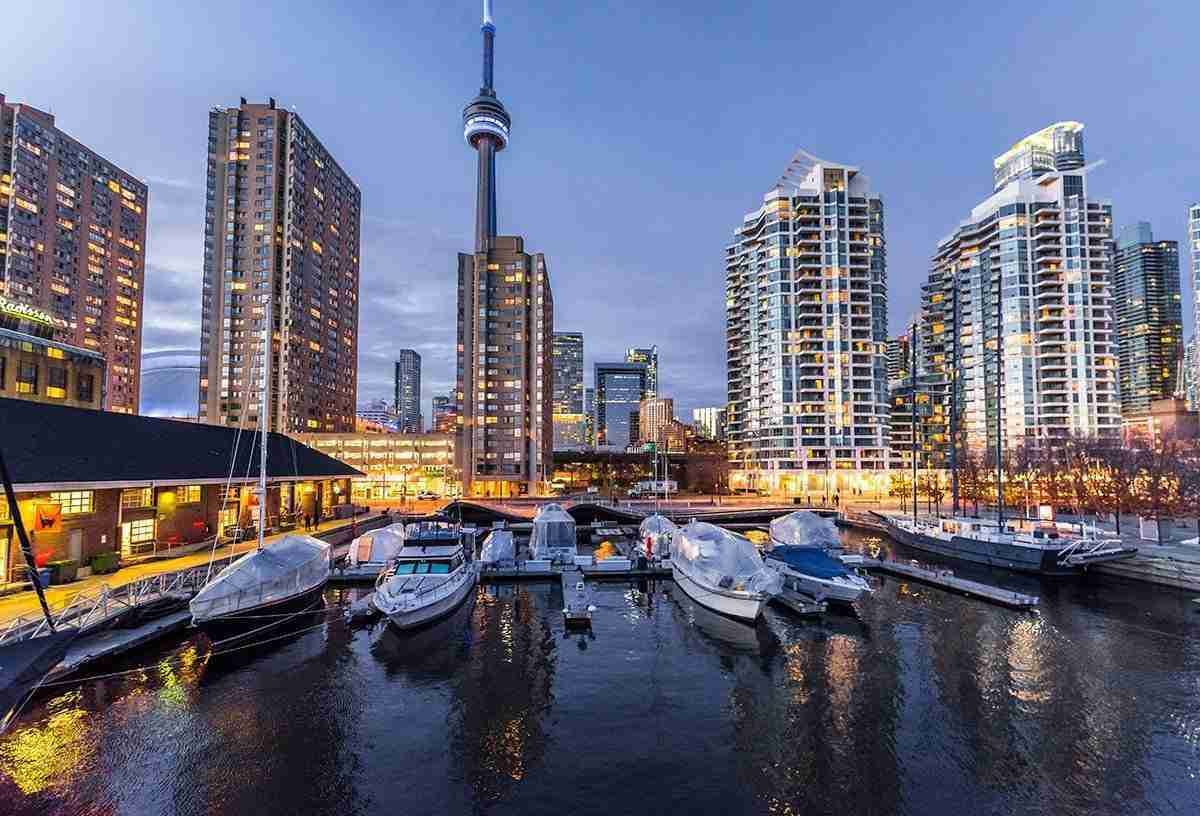
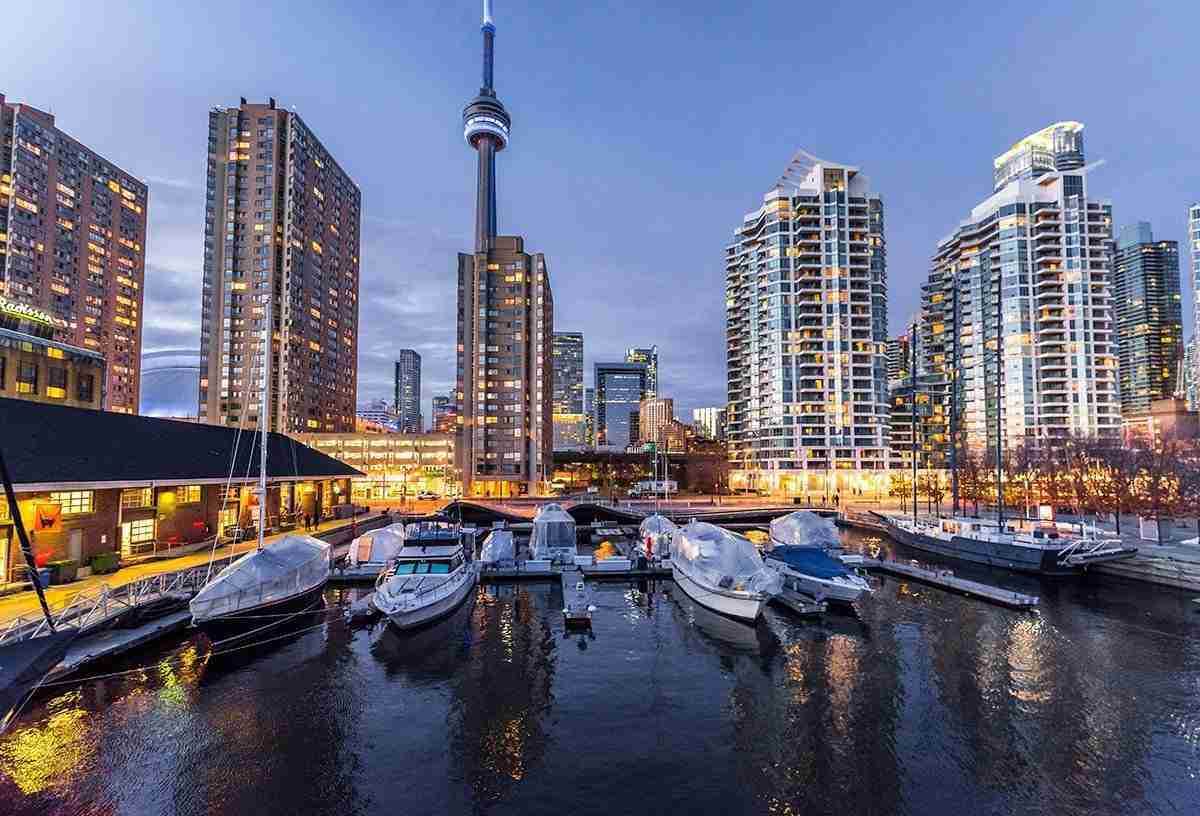
Stretching gracefully over the entrance to Marina Quay West, the Amsterdam Bridge is one of Toronto's best-kept secrets when it comes to capturing postcard-perfect cityscapes. Located at the western edge of the Harbourfront, this gently arched pedestrian bridge offers a clean, elevated view of downtown Toronto—framed by sailboat masts, water reflections, and the unmistakable skyline featuring the CN Tower and Rogers Centre. As daylight fades and the city lights begin to glow, this spot transforms into a cinematic stage where glass towers shimmer, boats drift in the marina, and Lake Ontario reflects the whole scene back in subtle, shifting color. For skyline photographers and city lovers alike, the Amsterdam Bridge delivers one of the most dynamic and layered compositions in the city.
Best Photography Opportunities
• Skyline at Golden Hour and Blue Hour
: The Amsterdam Bridge faces directly toward Toronto's core, with the CN Tower rising prominently at center and the Rogers Centre's curved dome tucked in just to the left. Golden hour adds warm tones to the glass and steel of the city, while blue hour intensifies the reflections on Lake Ontario and the still marina waters below. The curvature of the bridge offers excellent symmetry and framing opportunities—shoot from the middle for clean vanishing point compositions or off-center to highlight the CN Tower as a dominant vertical.
• Marina Reflections in Foreground
: Below the bridge, Marina Quay West often holds rows of docked boats, their masts rising like matchsticks against the softened skyline. These make for rich foreground detail, particularly when shooting in calm conditions near sunset. Use a tripod and slower shutter speed to smooth the water surface and enhance reflections. Framing the boats at the base of your image adds scale and a layer of human activity to your cityscape.
• Lake Ontario to the South
: Looking in the opposite direction, the bridge also offers open views south over Lake Ontario. This direction is ideal for minimalist compositions at sunrise or midday, when light washes across the open water. In the evening, soft pastel tones often develop on the southern horizon, and the occasional sailboat can add a focal point to wide-open lake scenes.
• Symmetrical Shots of the Bridge Itself
: The Amsterdam Bridge is as much a subject as it is a vantage point. Its gentle arc, clean lines, and white railings stand out beautifully under soft light or against a dramatic sky. Use a wide lens from either end of the bridge to capture its full shape, or walk the centerline and frame a vanishing point looking toward the skyline. Twilight and night shots are particularly strong here, with city lights beginning to glow behind the bridge's silhouette.
• Night Photography and Light Trails
: As the sun sets and city lights flicker on, the bridge becomes a perfect platform for long exposure work. Capture light trails from passing boats or glow from nearby buildings, reflected softly in the marina. The CN Tower's lighting often changes color and becomes the visual anchor of the scene. Consider bracketing exposures or using HDR techniques to balance the luminance across city lights and foreground shadows.
Best Time to Visit
The Amsterdam Bridge is a year-round photography location, but its strengths shine brightest from late spring through early autumn, when the marina is active and the days stretch into long, golden evenings. Golden hour typically begins around an hour before sunset, providing rich, directional light that hits the glass towers from the west and paints the water with glowing tones.
Blue hour—roughly 20–40 minutes after sunset—is ideal for skyline photography. During this time, the city's lights contrast beautifully with the deepening sky, and the water is often calm enough for smooth reflections. Early mornings can also be magical, especially in late summer and early fall when low fog may settle over the lake, adding atmosphere and mystery to your compositions.
Winter brings a different mood: frost-rimmed railings, bare docks, and icy waters give a graphic, minimalist feel. The marina may be empty, but the skyline remains photogenic against cold, clear skies. Just be prepared for wind chill off the lake and slick walking surfaces.
How to Get There
The Amsterdam Bridge is located at Marina Quay West, just south of Queen's Quay Boulevard at the foot of Dan Leckie Way. From Union Station, it's a pleasant 20-minute walk west along Queens Quay, with plenty of signage and lake views along the way. Alternatively, the 509 Harbourfront streetcar runs west from Union Station and stops at Dan Leckie Way, just steps from the bridge.
There are several nearby parking options, including paid surface lots and underground garages along Queen's Quay. The bridge itself is pedestrian-only, flat, and fully accessible, with benches and railings ideal for stabilizing cameras or resting while scouting angles. Tripods are welcome and safe to use, especially during off-peak times in the early morning or evening.
The bridge is open year-round and is rarely crowded outside of summer weekends, making it easy to set up and take your time composing without interference.
Exploring the Surrounding Area
Beyond the bridge itself, the Harbourfront area offers a rich range of compositional options. Just east, the Toronto Music Garden provides landscaped paths and waterfront textures for softer, nature-infused shots with the skyline peeking through. To the west, HTO Park adds wide, open spaces with beach umbrellas and water views—great for including people and lifestyle elements in your frame.
Walking a few minutes south or east along the shoreline opens up additional low-angle views of the CN Tower framed by boats, piers, or park trees. The area comes alive at dusk, with city lights reflecting off the water and shifting colors in the sky providing an evolving palette of moods.
On windy days, waves along the lakefront can be used to add motion and energy to your compositions; on still evenings, the water turns mirror-like, doubling the glow of the skyline. The Amsterdam Bridge acts as a perfect visual and literal crossing point between city and lake—a place to pause and take it all in.
Nearby Photography Locations
• HTO Park
: Located just west of the bridge, this urban beach park offers wide, open views of the skyline and lake, perfect for golden hour silhouettes and more casual, lifestyle-focused compositions.
: A beautifully designed green space with winding trails, sculpted plantings, and skyline views through willow trees and over low hedges. Excellent for soft, layered shots that blend nature and city.
: A ferry ride south of the bridge, the Islands provide one of the most iconic panoramic skyline views. Great for sunrise, sunset, and long exposures over open water with the CN Tower centered on the horizon.
• Harbourfront Centre
: Just east of the bridge, this area includes piers, cultural spaces, and open public seating—all ideal for street-style or event-based photography, especially in the summer.
• Polson Pier
: Farther east across the harbour, Polson Pier offers a full, uninterrupted view of the skyline from a distance. Ideal for long-lens work or dramatic wide frames during fireworks, storms, or clear night skies.
The Amsterdam Bridge is one of those rare city locations that offers both a subject and a perspective—a quiet, elevated stage from which the best of Toronto's skyline reveals itself. Whether you're chasing reflections in the marina, painting the tower with long exposure light, or simply standing still as the city wakes or winds down, this is where urban beauty meets waterfront calm, and every frame tells a story of contrast and connection.
Comments
Loading comments…