
The Art Gallery of Ontario, known locally as the AGO, is both a cultural hub and a strong subject for architectural photography. Situated in the heart of Toronto, the gallery combines early twentieth-century brick buildings with contemporary design by Frank Gehry, a Toronto native. Its most striking feature is the sweeping glass and wood façade that curves along Dundas Street, reflecting the surrounding cityscape and sky. Inside, open galleries, warm wood staircases, and skylit halls provide abundant opportunities for framing both structure and people in context. For photographers who enjoy working with form, reflection, and light, the AGO offers a wide range of possibilities in a single location.
The Art Gallery of Ontario, known locally as the AGO, is both a cultural hub and a strong subject for architectural photography. Situated in the heart of Toronto, the gallery combines early twentieth-century brick buildings with contemporary design by Frank Gehry, a Toronto native. Its most striking feature is the sweeping glass and wood façade that curves along Dundas Street, reflecting the surrounding cityscape and sky. Inside, open galleries, warm wood staircases, and skylit halls provide abundant opportunities for framing both structure and people in context. For photographers who enjoy working with form, reflection, and light, the AGO offers a wide range of possibilities in a single location.
Best Photography Opportunities
• Glass Façade on Dundas Street
The long glass front along Dundas Street is one of the gallery's defining features. Shooting from across the street with a wide-angle lens allows you to capture the curve in its entirety, while a standard zoom is useful for isolating reflections of passing streetcars, clouds, or pedestrians. Afternoon light creates warm tones on the glass and wood, while overcast days are ideal for minimizing glare. At night, the façade glows with light from the interior, and long exposures can be used to capture traffic trails alongside the illuminated structure. This perspective works especially well for showing the gallery as part of Toronto's urban fabric.
• Galleria Italia
Inside the gallery, the Galleria Italia runs parallel to Dundas Street and features a long hall framed in wood and glass. Its repeating arches create natural leading lines that suit wide-angle compositions, and a tripod is helpful for precise exposures, though handheld work is possible under bright conditions. Overcast skies create soft, even light that accentuates the rhythm of the space without harsh highlights. Including visitors in the frame emphasizes the scale and flow of the design. The length of the hall provides opportunities for both symmetrical shots from the center and angled frames from the sides.
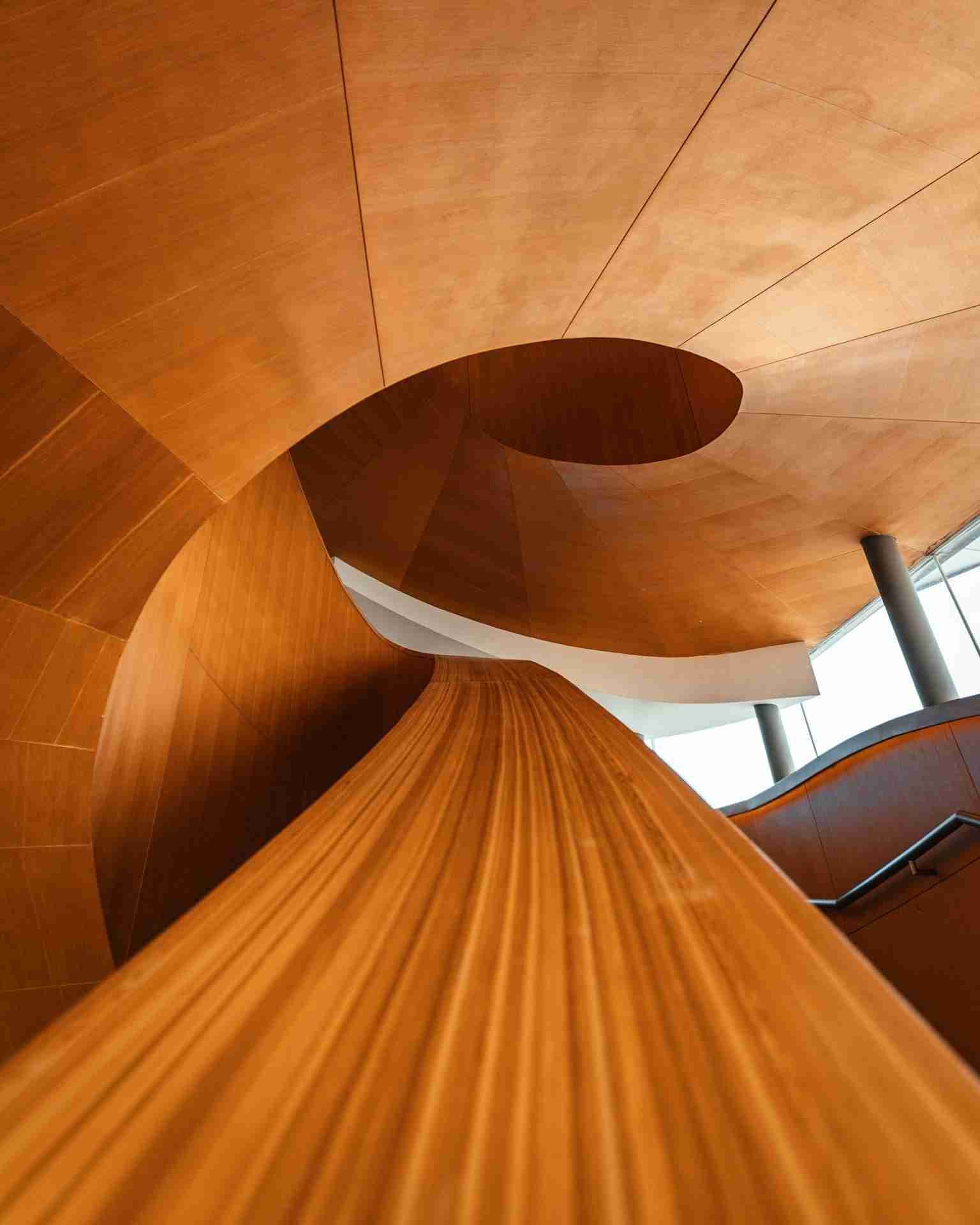
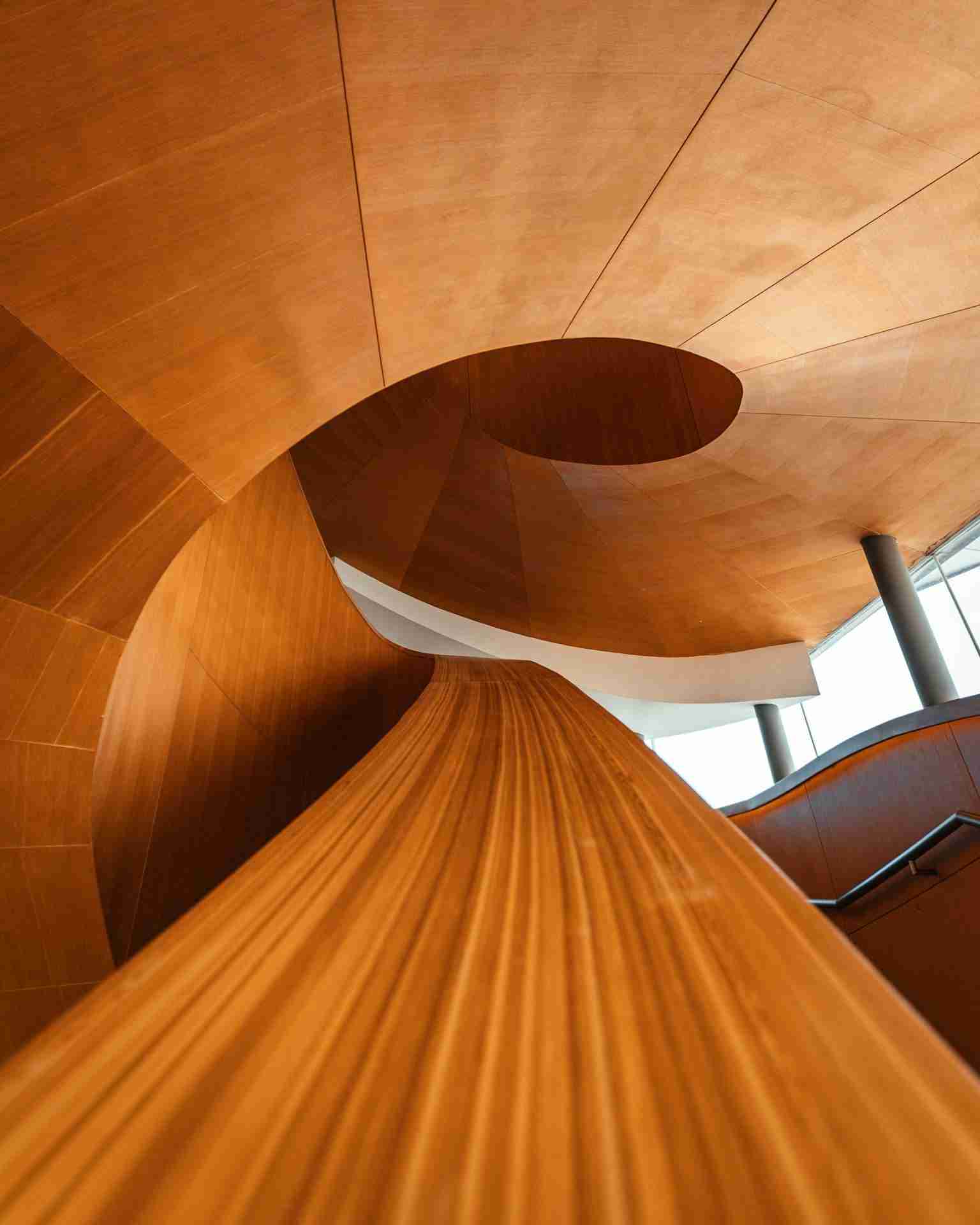
• Spiral Staircases
Several staircases inside the AGO offer excellent opportunities for abstract photography. Gehry's spiral staircases in particular are prime subjects for both wide and close framing. Shooting upward from the base emphasizes their curves, while a downward view highlights their form against the open space below. A mid-range zoom lens is ideal for adjusting composition without distortion. Natural light from nearby skylights creates highlights across the wood surfaces, while overcast conditions soften shadows and enhance grain detail. These staircases reward careful study from multiple angles and benefit from a slower, deliberate shooting style.
• Historic Architecture and Exterior Angles
The AGO retains earlier brick and stone façades from its original construction, which contrast strongly with the modern additions. Shooting these older sections from nearby streets or courtyards creates layered compositions that highlight the combination of old and new. Morning light is best for illuminating the eastern walls, while late afternoon highlights the western sides. A polarizing filter helps control reflections and brings out the warm tones of the brickwork. Combining these shots with the modern glass façade in a portfolio emphasizes the way the AGO has evolved over time.
• Skylit Galleries and Interior Spaces
The gallery's interior is filled with skylights and open areas where natural light plays across both walls and floors. These spaces are excellent for capturing how visitors interact with art and architecture. A fast prime lens is helpful in these settings, as tripods are not permitted inside and light levels can be lower in certain rooms. Framing works of art alongside structural elements or visitors creates dynamic, narrative images. Patience is key here, as waiting for the right moment often produces frames that balance stillness and motion.
Best Time to Visit
The AGO is a location that can be photographed in every season, with each offering distinct qualities. In winter, snow on the ground reflects light onto the glass façade and surrounding streets, brightening exterior shots and creating interesting juxtapositions between warm interior light and cool outdoor tones. Spring brings fresh greenery to nearby Grange Park, which can be used as a soft natural frame in compositions of the gallery's rear façade. Summer offers long daylight hours and dramatic sunsets that reflect in the glass front, though crowds are heavier, so early morning or evening sessions are best for clean frames. Autumn brings cooler light, softer skies, and rich tones in nearby trees, complementing both brick and wood surfaces.
Time of day is equally important. Early morning provides the quietest conditions inside and around the gallery, making it easier to compose without crowds. Midday creates stronger contrast on the glass front, but interior spaces are well lit and workable during this time. Late afternoon is the most rewarding for exterior work, when the glass façade reflects warm, low sunlight and interiors begin to glow. Blue hour and evening bring a dramatic transformation, with the façade illuminated from within and the city's lights surrounding it, making long exposures particularly rewarding. Overcast days provide balanced light with minimal glare, ideal for texture studies and detail shots of both interior and exterior elements.
How to Get There
The Art Gallery of Ontario is located at 317 Dundas Street West in downtown Toronto, making it easy to reach by multiple forms of transport. By public transit, the closest subway stop is St. Patrick Station on the Yonge–University line, just a five-minute walk away. Streetcars also run along Dundas Street, with stops directly in front of the gallery. Buses from other parts of the city connect to the same area, making transit a straightforward option for visitors without a car.
For those driving, there are several parking garages and surface lots within walking distance, though spaces can be limited during peak hours. Cycling is another option, with bike lanes along nearby streets and racks available near the entrance. The gallery is pedestrian-friendly and located near other major landmarks, allowing for easy integration into a broader walking photography session.
Entry to the AGO requires a ticket for non-members, with free admission for members and on certain designated days or evenings. Photography is allowed in many public areas and permanent collection spaces, though some special exhibitions prohibit it. Flash and tripods are not permitted inside, so plan to work with available light and handheld equipment. The exterior of the gallery, including its glass façade and historic brickwork, can be photographed at any time of day without restriction.
Recommended Photography Gear
A wide-angle lens is essential for capturing the scale of the glass façade and the sweeping interior of the Galleria Italia. A standard zoom lens such as 24 to 70 millimeters is highly versatile for both interior and exterior work, allowing for quick adjustments between architectural overviews and mid-range details. A fast prime lens, ideally f/1.8 or wider, is extremely useful indoors where light levels are lower and tripods are not permitted, ensuring sharp images without sacrificing quality. A telephoto lens between 70 and 200 millimeters is helpful for isolating reflections on the façade, compressing urban context, or highlighting sculptural elements like the Quadriga-inspired wood curves of Gehry's staircases.
A tripod is invaluable for exterior photography at night, allowing for long exposures that smooth traffic trails or emphasize the gallery's glowing glass frontage. A circular polarizer is useful during daytime for reducing glare on the glass and enhancing sky color. A neutral density filter can extend exposure times outdoors, allowing for creative cloud or traffic motion in daylight. Indoors, a small camera bag with minimal gear makes movement easier through galleries, and a lens cloth is important for wiping smudges from glass reflections. For those planning to shoot in multiple sessions, consider both wide and telephoto perspectives to build a complete portfolio of the location.
Nearby Photography Locations
Directly behind the gallery, this public park features mature trees, open lawns, and views of the AGO's rear façade. It provides a softer, natural contrast to the urban streetscape.
Just north of the AGO, Kensington Market offers colorful storefronts, murals, and lively street scenes that provide a strong counterpoint to the clean architectural lines of the gallery.
About a fifteen-minute walk east, this civic square is home to Toronto City Hall and the reflective pool. It is excellent for both architectural compositions and night photography.
Located nearby, the campus includes Gothic revival buildings, open quads, and tree-lined streets. It is particularly photogenic in spring and autumn.
A short transit ride south, this area combines Lake Ontario views, marina reflections, and Toronto's skyline. It is ideal for broader cityscape compositions that contrast with the AGO's architectural focus.
The Art Gallery of Ontario is a place where design, culture, and urban life come together in visually rewarding ways. Its balance of glass curves, wooden interiors, and historic masonry ensures that every visit brings new photographic opportunities. By exploring both its exterior presence on Dundas Street and the quiet rhythm of its interior spaces, photographers can create a complete story of one of Toronto's most engaging landmarks.
Comments
Loading comments…