
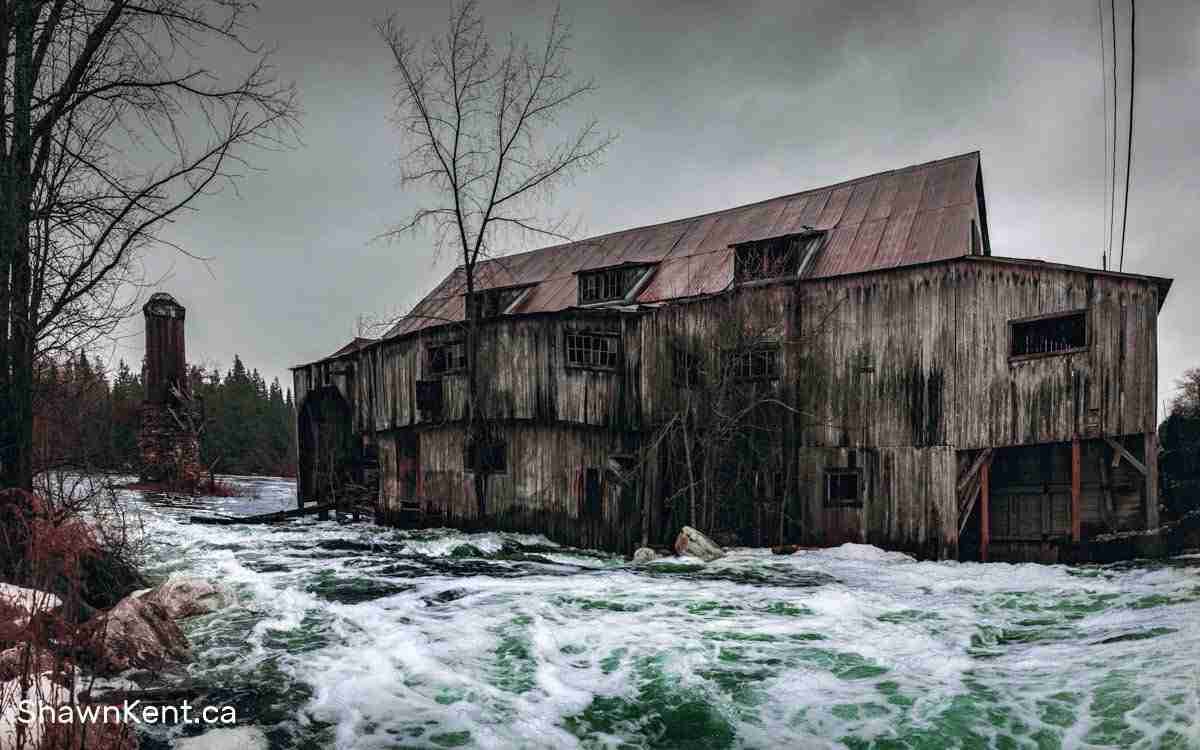
Tucked deep into Renfrew County, west of Ottawa, the ghost town of Balaclava offers one of Eastern Ontario's most evocative abandoned structures: a 19th-century water-powered sawmill still standing—miraculously—alongside the Little Bonnechere River. Although the town itself has faded into overgrown lots and scattered outbuildings, the mill remains the focal point, surrounded by thick forest, crumbling relics, and the ever-present roar of water crashing through its foundation.
Balaclava is a dream location for photographers interested in rural decay, industrial heritage, and long exposure water work. The juxtaposition of rotting timber and flowing river embodies the tension between permanence and impermanence. It's a place where light filters through trees onto moss-covered beams and the movement of water carves ever deeper into the past. For those who enjoy shooting solitude, texture, and timeworn places that speak without words, Balaclava delivers a profound visual narrative.
Best Photography Opportunities
• The Sawmill and Water Flow
The centerpiece of Balaclava is the old sawmill perched over the water on aging stilts and stone piers. It appears as though one good flood might take it, but still it holds. A wide-angle lens from across the river captures the entire structure against its woodland backdrop, especially powerful in autumn when the leaves burn gold behind it. Long exposures (2–30 seconds) smooth the rushing river and add a sense of motion that contrasts beautifully with the leaning, static structure of the mill. The exposed beams, worn siding, and collapsing rooflines provide drama from every angle, whether you're shooting head-on or positioning the building along a diagonal axis. Reflections in calmer sections of the river add an ethereal, mirrored quality that's especially effective in low light.
• Detail Work: Wood Grain, Nails, and Machinery
The mill is covered in textural beauty—aged wood with deep grain, oxidized iron fittings, and remnants of gears or chutes that speak to its former function. Use a macro or mid-range lens to isolate these elements. Especially on overcast days, you can capture rich tonal gradients and surface contrast without the distraction of harsh shadows. Nails rusting into the grain, moss creeping along beams, and waterlogged mechanical components all tell stories of entropy and resilience. These quiet, static elements form a strong counterpoint to the constant motion of the river.
• Reflections and Riverbank Framing
The riverbanks offer excellent compositional foregrounds. Frame the mill between ferns or broken fenceposts, using branches or rocks to create natural framing. In still conditions, reflections of the building in the water can be symmetrical and painterly. During higher flow periods, use slow shutter speeds to turn the river into a white ribbon that leads the eye directly to the structure. Look for pools or eddies below the mill that mirror its worn timbers with remarkable clarity—these make excellent subjects for vertical compositions or minimalist interpretations.
• Ghost Town Context and Nearby Ruins
While the mill dominates the scene, Balaclava's ghost town atmosphere is built from more than one building. Nearby, you'll find an abandoned blacksmith shop, the decaying general store, and remnants of homes. Each of these provides a secondary subject for a broader photo story. Work with layered compositions where the mill appears in the background or create a visual sequence that moves the viewer through time and place. These buildings, often obscured by overgrowth, are particularly evocative when shot in low light, mist, or snow, which softens their rough edges and deepens their melancholy.
• Seasonal and Atmospheric Shoots
Balaclava photographs well in all four seasons. Autumn delivers peak color and soft, angled light throughout the day. Spring brings high river levels and morning fog that can enhance the ghostly atmosphere. In winter, snow gathers on the wooden beams and steam rises off the warmer river—a dramatic contrast that suits monochrome work. Summer gives access to trails and banks not easily navigable in colder months, but insect repellent is a must. Each season alters not only the palette but the emotional tone of the space—what feels haunted and stark in February might feel serene and nostalgic in July.
Best Time to Visit
Photographically, the golden hours offer the most evocative conditions. Early morning light filtering through the trees to the east of the mill adds side illumination that sculpts the form of the building. Late afternoon brings warmth to the wooden surfaces and may backlight river mist or leaf detail depending on the season.
Autumn is arguably the best season to visit, both for color and for the sense of time-worn melancholy it evokes. Spring runoff swells the river, ideal for dramatic long exposures. Summer light can be harsh midday but is excellent in early evening, and winter conditions reward those seeking minimalist compositions and atmosphere. The snow-covered beams and slow-moving river contrast beautifully in soft winter light, making it especially appealing for black-and-white imagery.
Morning visits often provide quiet, fog-laced conditions and fewer distractions, while twilight offers deeper shadows and bold contrast that enhance the ruin's silhouette. Cloudy days are also beneficial, softening the light for detail-focused shots and reducing harsh highlights on the river. Consider visiting multiple times throughout the year if you're building a longer-term project around seasonal transformation and architectural decay.
Autumn is arguably the best season to visit, both for color and for the sense of time-worn melancholy it evokes. Spring runoff swells the river, ideal for dramatic long exposures. Summer light can be harsh midday but is excellent in early evening, and winter conditions reward those seeking minimalist compositions and atmosphere.
Because Balaclava is off the beaten path, you're likely to have the place to yourself, especially if you arrive early. That solitude is part of what makes it so powerful to photograph.
How to Get There
Balaclava is located in Renfrew County, Ontario, approximately two hours west of Ottawa. From Ottawa, take Highway 417 west, then exit onto County Road 41 (toward Renfrew), continuing onto Scotch Bush Road, and follow signage toward Balaclava Road. GPS may not be completely reliable here, so preloading your map or using offline navigation is wise.
The mill is easily visible from the road, with a small gravel area to park nearby. There are no amenities or services in Balaclava itself, so come prepared with everything you need—especially water, proper footwear, and a full battery load. Access is from public roadside areas, but the buildings are structurally unsound and should not be entered.
Recommended Gear and Shooting Tips
A wide-angle lens (16–35mm) is ideal for full-building compositions from across the river or trail. A 24–70mm zoom allows for tighter, more intimate framing of architectural and mechanical detail, while a 70–200mm telephoto can isolate specific elements—like the mill's foundation, a weathered beam, or reflections—at a distance.
A tripod is essential for long exposures and river shots. A 6- or 10-stop ND filter allows for silky water effects even in brighter light, and a circular polarizer helps reduce surface glare and boost saturation in foliage. Weather-sealed gear is a plus, especially if you're shooting in spring melt or after rain.
Take care navigating the riverbanks, which can be slippery and uneven. If you're shooting at ground level or near the water, use a low perspective to enhance scale and drama. Avoid entering the mill—its foundation is unstable, and it's best appreciated (and preserved) from a safe distance.
Nearby Photography Locations
• Bonnechere River and Low Falls
Just downstream, the river forms natural rapids and lower cascades that are perfect for landscape or abstract long exposure photography. The contrast between open water and dense forest makes for a varied compositional experience. Early morning light reflects beautifully off the swirling currents, and in autumn, leaves scattered on the surface add dynamic color to water-based compositions.
• Renfrew County Backroads
The rural roads in the region are dotted with old barns, fieldstone ruins, and fading signs of agricultural history. This is ideal territory for photographers interested in vernacular architecture and documentary-style rural storytelling. Each twist in the road reveals new foregrounds, seasonal backdrops, or overlooked textures that make the most ordinary scenes come alive with a practiced eye.
• Foymount Lookout
One of Ontario's highest inhabited points, this former military radar station site offers wide views of the surrounding highlands and sky. Great for panoramic landscapes, cloud formations, and sunset work. When fog settles into the valley below, the elevated viewpoint becomes perfect for minimalist or surreal wide-angle compositions.
Located east of Balaclava, this small cultural site offers wooden buildings, folk art, and a contrasting story of survival and settlement. It pairs well with the themes of industrial loss and memory found in Balaclava. The interiors and handcrafted details offer fine material for close-range documentation, especially during cultural events or seasonal festivals.
Follow parts of the historic Opeongo Line through old townsites and decaying settlements. These locations are excellent for those creating a long-form project on the legacy of settlement, failure, and endurance in Ontario's northern edge. Look for old signage, cemeteries, and collapsing homesteads that add to the broader narrative of rural evolution and abandonment.
Comments
Loading comments…