
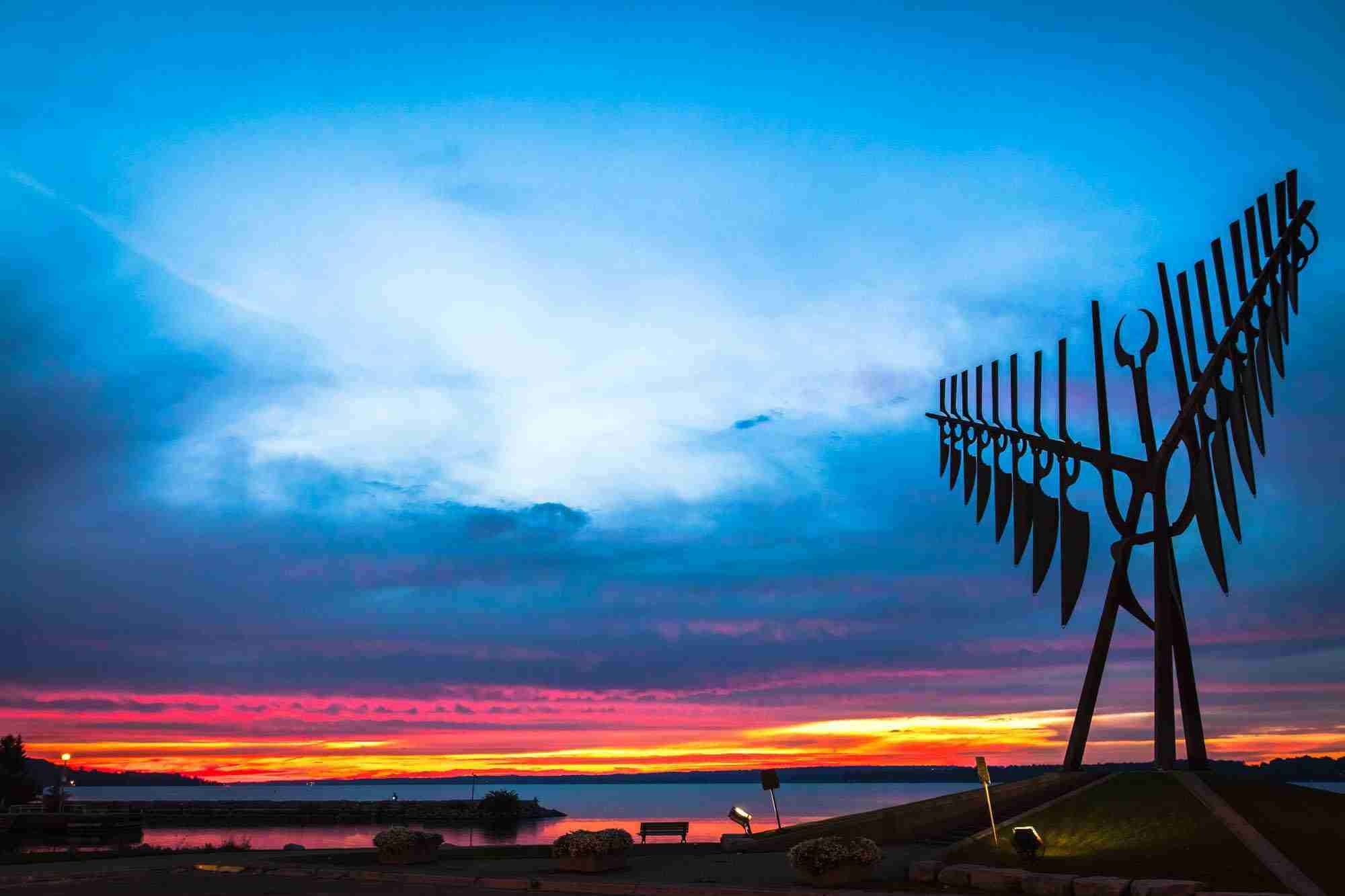
Standing sentinel on the edge of Lake Simcoe's Kempenfelt Bay, the Barrie Spirit Catcher is one of Ontario's most striking pieces of public art and a powerful subject for landscape, architectural, and abstract photography. Created by sculptor Ron Baird and installed in 1986, the sculpture rises 21 metres above the shoreline, its steel frame crowned with 16 wing-like kinetic blades that move with the wind. Originally commissioned for Expo 86 in Vancouver, the Spirit Catcher has become a defining symbol of Barrie's waterfront and a dynamic focal point for photographers.
Set in a broad green space near downtown Barrie, the sculpture offers sweeping views of the lake, skyline, and marina. Its bold silhouette, constant motion, and interplay with natural light make it especially rewarding to shoot across changing seasons, times of day, and weather conditions. For photographers seeking drama, symmetry, and connection between man-made and natural elements, the Spirit Catcher delivers.
Best Photography Opportunities
• Full Structure with Bay and Sky Backdrop
The Spirit Catcher is ideally positioned for wide-angle compositions that include Lake Simcoe stretching into the distance behind it. From the south or southeast side, you can capture the full sculpture with its wings framed against the sky, often catching reflected light from the lake. Late afternoon and golden hour bring out warm tones in the rusted corten steel and can create strong shadows that emphasize the sculpture's scale and angularity.
• Silhouettes and Sky Drama
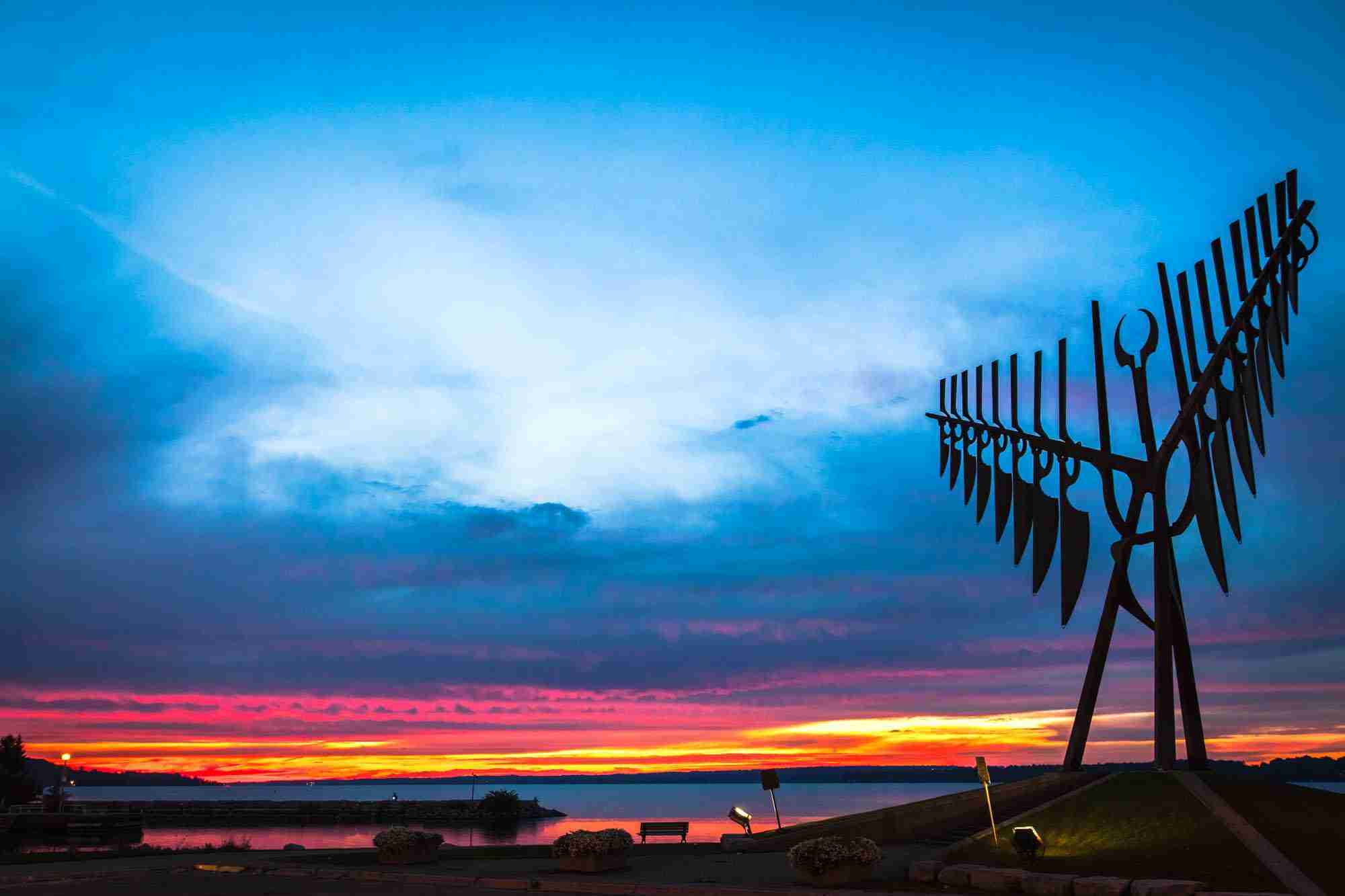
Due to its elevated position and open backdrop, the sculpture is perfect for silhouette photography. At sunrise or sunset, especially in winter when the sun aligns lower across the horizon, the Spirit Catcher stands out as a dramatic shape against vivid skies. Use a low angle and shoot upward to isolate the form against color or clouds, and consider framing with foreground elements like frozen lake edge or bare trees for added depth.
• Detail and Abstract Compositions
The structure is full of opportunities for tighter compositions that explore its material and geometry. The kinetic blades move in the wind, creating constantly shifting relationships between shape and negative space. Use a mid-range zoom or prime lens to isolate clusters of the blades, sections of the lattice framework, or the patterns formed by shadows on the sculpture's surface. These shots work well in black and white or subdued color edits to emphasize form.
• Environmental Portraits and Human Scale
With its massive form and open setting, the Spirit Catcher is ideal for portrait and lifestyle photography. Frame subjects in the foreground with the sculpture rising behind them, or position them within the wings to create dynamic scale contrast. Early morning or golden hour provides directional light and fewer visitors, while overcast days offer soft light for clean environmental compositions.
• Long Exposure and Seasonal Mood
The lake and sky shift constantly here, making the sculpture an anchor in long exposure work. Use an ND filter to smooth the lake surface and blur cloud movement, especially on windy days when the blades are spinning. In winter, snow on the surrounding grass and ice on the lake create stark contrast against the sculpture's dark steel. Spring and autumn provide richer tones in the grass and trees that surround the piece, each adding their own atmosphere.
Best Time to Visit
The Spirit Catcher photographs well year-round, with each season providing unique visual qualities. Autumn offers rich skies and textured foregrounds with colorful foliage. Winter snow creates dramatic minimalist compositions, especially with the steel structure standing dark and solid against a pale landscape. Spring and summer bring more human activity and color but allow for more environmental portraiture and sunset over-water photography.
Golden hour and blue hour are especially strong, as the sculpture is west-facing and picks up the light beautifully. Windy conditions are ideal for capturing motion in the blades or cloud movement for long exposures. Early mornings are often quiet and peaceful, offering excellent opportunities for unobstructed compositions and subtle light.
How to Get There
The Barrie Spirit Catcher is located in Spirit Catcher Park, part of the larger Heritage Park complex on the western edge of Kempenfelt Bay. It is directly adjacent to the MacLaren Art Centre and downtown Barrie. If driving, you can park along Simcoe Street or in one of the nearby public parking lots along Lakeshore Drive or at the Barrie Marina.
From the Barrie GO Station, it's a short 10-minute walk north along the lakefront trail. The sculpture is clearly visible from the waterfront and can be accessed from multiple paved paths leading through the park. The area is open year-round and free to access, with plenty of space for setting up tripods or scouting multiple vantage points.
Recommended Gear and Shooting Tips
A wide-angle lens is ideal for capturing the entire sculpture with its backdrop of sky, lake, or city. A 24–70mm lens provides the most flexibility for mid-range detail work, environmental portraits, or switching between vertical and horizontal compositions. A telephoto lens can be used to isolate the sculpture's kinetic blades or compress it with background elements like boats, clouds, or skyline architecture.
Bring a tripod for long exposure and golden hour work. A neutral density filter allows you to control sky and water movement during the day, and a polarizer helps deepen sky contrast or reduce glare off the lake. For shooting silhouettes or minimalist winter scenes, a fast prime lens and low ISO will help retain sharpness and mood.
Consider returning at different times of day or in varied weather—the kinetic blades and lakeside setting shift constantly, offering new compositions even from familiar angles.
Nearby Photography Locations
Just a short walk west along the waterfront, Centennial Park offers marina views, sailboats, and sweeping lines of shoreline trail and tree-lined framing—ideal for layered urban-nature compositions.
• Downtown Barrie and Dunlop Street
The historic buildings, murals, and storefronts of Dunlop Street provide a strong contrast to the lakeside views. Look for architectural textures, reflections, and street photography opportunities in soft morning light.
• Allandale Station and Rail Corridor
South of the Spirit Catcher, the historic Allandale rail station offers bold, symmetrical compositions and red-brick textures. Trains and platforms can provide motion blur and leading-line setups.
Further along the south shore of the bay, this park offers more natural shoreline compositions and distant views back toward the Spirit Catcher and Barrie skyline—ideal for wide lenses or compressed telephoto landscapes.
• Tyndale Park and Brentwood Marina
On the opposite side of the bay, this area offers a more distant but complete skyline view of Barrie with the Spirit Catcher visible from afar. Sunset here allows the sculpture and downtown to glow together across the water.
The Barrie Spirit Catcher offers a rare blend of sculptural clarity and dynamic setting—a subject that transforms with the weather, light, and time of day. Whether you're photographing it as a standalone form, a symbolic anchor, or a stage for broader environmental storytelling, this lakeside landmark remains one of the most visually rewarding spots in central Ontario.
Comments
Loading comments…