
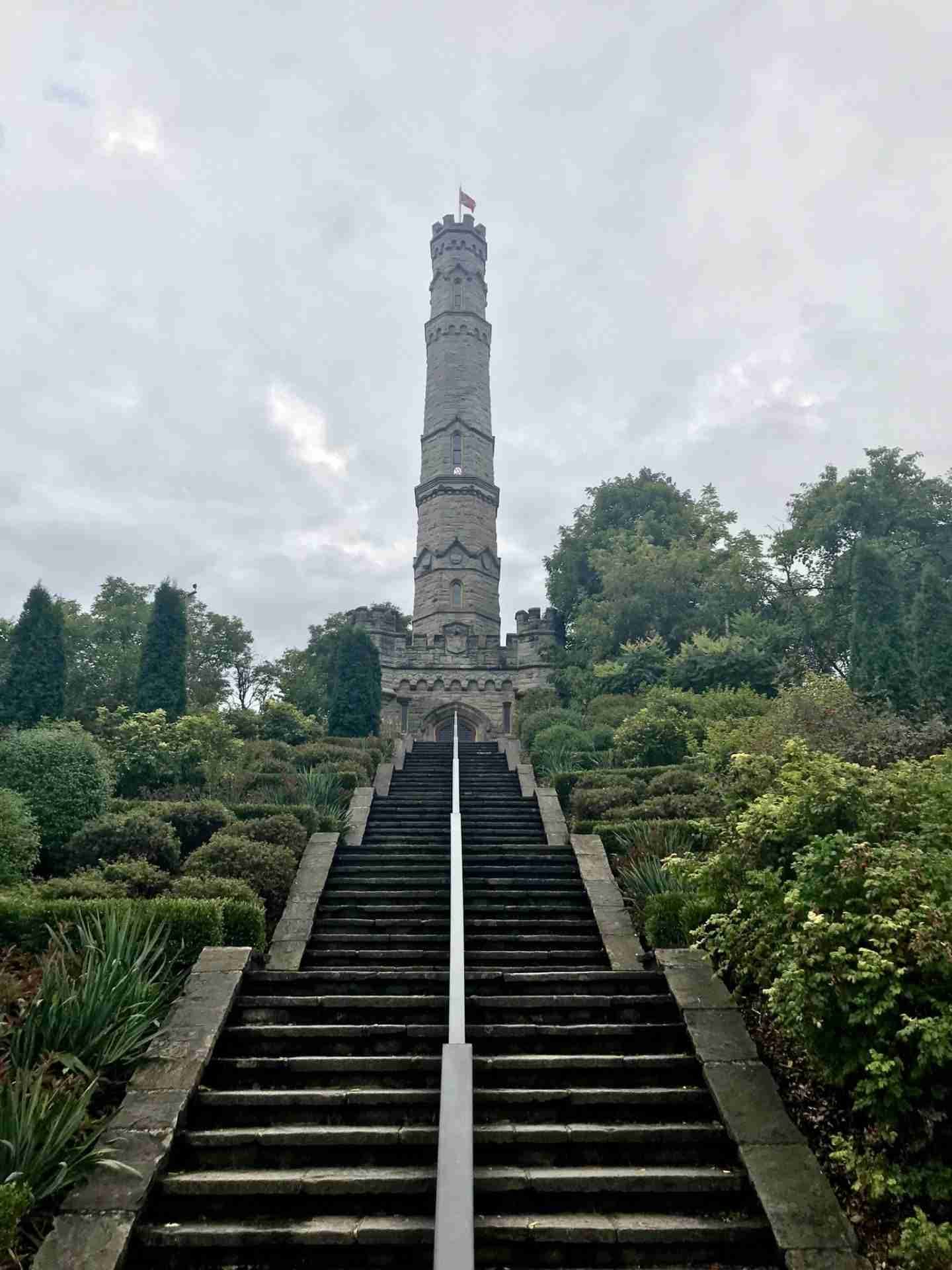
Rising 100 feet above the surrounding trees in Hamilton's east end, the Battlefield Monument stands as a towering tribute to those who fought and died during the pivotal Battle of Stoney Creek on June 6, 1813. Located within the grounds of the Battlefield House Museum & Park National Historic Site, the monument is surrounded by carefully maintained lawns, historic pathways, and the preserved 19th-century Gage family homestead. For photographers, this site blends classical monumentality with rich Canadian history, offering a compelling mix of vertical form, landscape detail, and layered storytelling—all within a peaceful heritage park.
Best Photography Opportunities
• Full Tower Composition from the Park Lawn
: The Battlefield Monument's vertical stone structure is most photogenic when shot from a distance, framed by trees or approached from the open central lawn. Use a wide-angle lens from a low vantage point to emphasize its height and create a dramatic sense of scale. Late afternoon side light casts deep shadows across the monument's ornate carvings and accentuates the vertical lines of the stonework.
• Historic Gage House and Garden Context
: The nearby Gage homestead, a restored Georgian-style farmhouse, provides a strong historical anchor for environmental compositions. Including both the house and monument in a single frame reinforces the site's narrative and offers contrast between domestic and commemorative architecture. Shoot wide to encompass the building's classic symmetry alongside the towering monument in the background, particularly in early morning or golden hour light.
• Close-Up Architectural Details
: The monument features carved emblems, inscriptions, and relief details that benefit from tight compositions using a mid-range or telephoto lens. Focus on the stonework around the base or zoom in on the upper column when dramatic skies add contrast. Cloudy or overcast days are ideal for this kind of detail work, helping to reduce harsh highlights on the pale stone.
• Pathways and Tree-Framed Views
: Several trails wind through the surrounding park and up to the monument's base. Use these as natural leading lines, especially in the spring and autumn when foliage colors add seasonal framing. A path leading uphill can draw the viewer's eye toward the column, offering a sense of movement and approach within the composition.
• Evening Light and Peaceful Ambience
: While the monument is not artificially lit, the surrounding grounds capture soft light beautifully in the hour before sunset. Use the warm tones of golden hour to silhouette the monument against the sky or to softly illuminate the stone from one side. Twilight can also be used for atmospheric, long-exposure shots that emphasize the monument's solemn presence within its quiet park setting.
Best Time to Visit
The Battlefield Monument and surrounding park offer different photographic opportunities throughout the year. Spring brings fresh green growth and blossoms along the walking paths, with soft morning light perfect for both landscape and architectural compositions. Summer provides lush tree cover and steady light, especially in the mornings before crowds arrive.
Autumn is one of the most visually rewarding times to visit, as the park's mature trees frame the monument in vibrant orange and red foliage. Early October typically sees the best color, and late afternoon light casts long, warm shadows across the grounds and the column's face.
Winter transforms the monument into a stark, sculptural element against bare trees and snow-covered paths. The quiet atmosphere and high-contrast visuals work well for black-and-white photography or minimalist framing with a telephoto lens.
The park is generally open year-round during daylight hours, and early morning is the best time for solitude and soft directional light. Avoid midday visits in summer when the sun flattens detail and the site becomes busier with visitors and tour groups.
How to Get There
Battlefield House Museum & Park is located in the Stoney Creek area of Hamilton, Ontario, just off King Street East. It is accessible by car from the Queen Elizabeth Way (QEW) or Highway 8, with clear signage directing visitors to the historic site.
Free parking is available on-site, with dedicated lots near the museum entrance and additional street parking nearby. The monument itself is a short walk from the museum building, connected by paved paths and grassy trails that circle through the landscaped park.
The site is well-maintained and suitable for visitors with tripods or heavier gear. Benches, washrooms, and interpretive signage are available throughout the grounds, and the museum offers additional insight into the site's history during regular hours.
There is no fee to access the monument or the park grounds for personal photography, though admission applies if you wish to tour the Gage House interior.
Recommended Gear and Shooting Tips
A wide-angle lens (16–35mm) is essential for capturing the full height of the monument from up close or for including it in broader landscape scenes with the house and trees. A mid-range zoom (24–70mm) is ideal for environmental portraits and detail shots, while a telephoto lens (70–200mm) can isolate architectural features or compress the monument against seasonal backdrops.
A tripod is useful for low-light or twilight shooting, and helpful for carefully composing symmetrical shots of the monument or Gage House. A circular polarizer can enhance sky contrast and reduce glare on the stone surface during midday, but is best avoided when the sun is low and shadows are key to the image.
Visit early or late in the day to take advantage of long shadows and warm light. Overcast skies are excellent for capturing subtle texture in the stone and for minimizing contrast between sun and shade across the tall structure.
When exploring the walking paths, keep an eye out for leading lines, tree tunnels, or low-hanging branches that can help frame the column or create visual balance in wide compositions. Be patient—cloud movement, people passing through the park, and shifting light all provide subtle but meaningful changes to your frame.
Nearby Photography Locations
: A short drive to the south, this dramatic gorge features a tall seasonal waterfall, layered rock walls, and panoramic views over Hamilton—ideal for wide-angle landscapes and layered geological compositions.
: Another nearby waterfall site offering dramatic cascades, rock formations, and forest surroundings, especially photogenic in early spring or after heavy rains.
: This nearby green space includes sinkholes, crevices, and cave-like limestone features ideal for abstract nature shots and soft woodland compositions in low light.
• Downtown Stoney Creek
: Just a few blocks away, this heritage-rich commercial area features century-old buildings, shopfronts, and small-town streets perfect for architectural detail work and candid urban photography.
: Located to the west atop the Niagara Escarpment, this park offers sweeping views of the city skyline, Hamilton Harbour, and Lake Ontario—best visited at sunset or after dark for nightscapes and long exposures.
The Battlefield Monument at Stoney Creek is more than a towering column—it's a photographic tribute to Canadian history, set within a landscape that shifts with the seasons and rewards a thoughtful approach. Whether you're capturing stone under soft fog or crisp afternoon light cutting across the old homestead, the park offers a rich, reflective space to explore line, texture, and time.
Comments
Loading comments…