
Nestled where the West Credit River slices through rolling hills and limestone escarpment, Belfountain Conservation Area offers a concentrated mix of natural and constructed photographic subjects. Located just off the scenic Forks of the Credit Road in Caledon, this park is home to a charming suspension bridge, historic stonework, cascading waterfalls, and forested trails that shift dramatically with the seasons. The entire area feels compact but immersive, with carefully built viewing platforms and winding walkways guiding visitors through a series of layered compositions involving water, rock, and foliage. Photographers will find that this location blends human design with natural form in a way that supports both wide environmental shots and detail-rich studies, especially in the softer light of morning and late afternoon.
Best Photography Opportunities
• Suspension Bridge Over the River Gorge
The small suspension bridge that crosses the West Credit River is the centerpiece of Belfountain's visual identity. Suspended over a narrow gorge carved by water and time, the bridge creates strong leading lines that work well in both wide and medium compositions. From one end, you can shoot directly down its length with the river below framed by cliffs and thick vegetation, especially vibrant in autumn. Include the riverbanks to guide the viewer's eye from foreground into the frame, and time your shots during golden hour to highlight the bridge's structure without blowing out the background. Alternatively, shoot from below near the edge of the falls, capturing the underside of the bridge and emphasizing the dramatic drop and stonework beneath.
• Waterfall and Stone Terrace
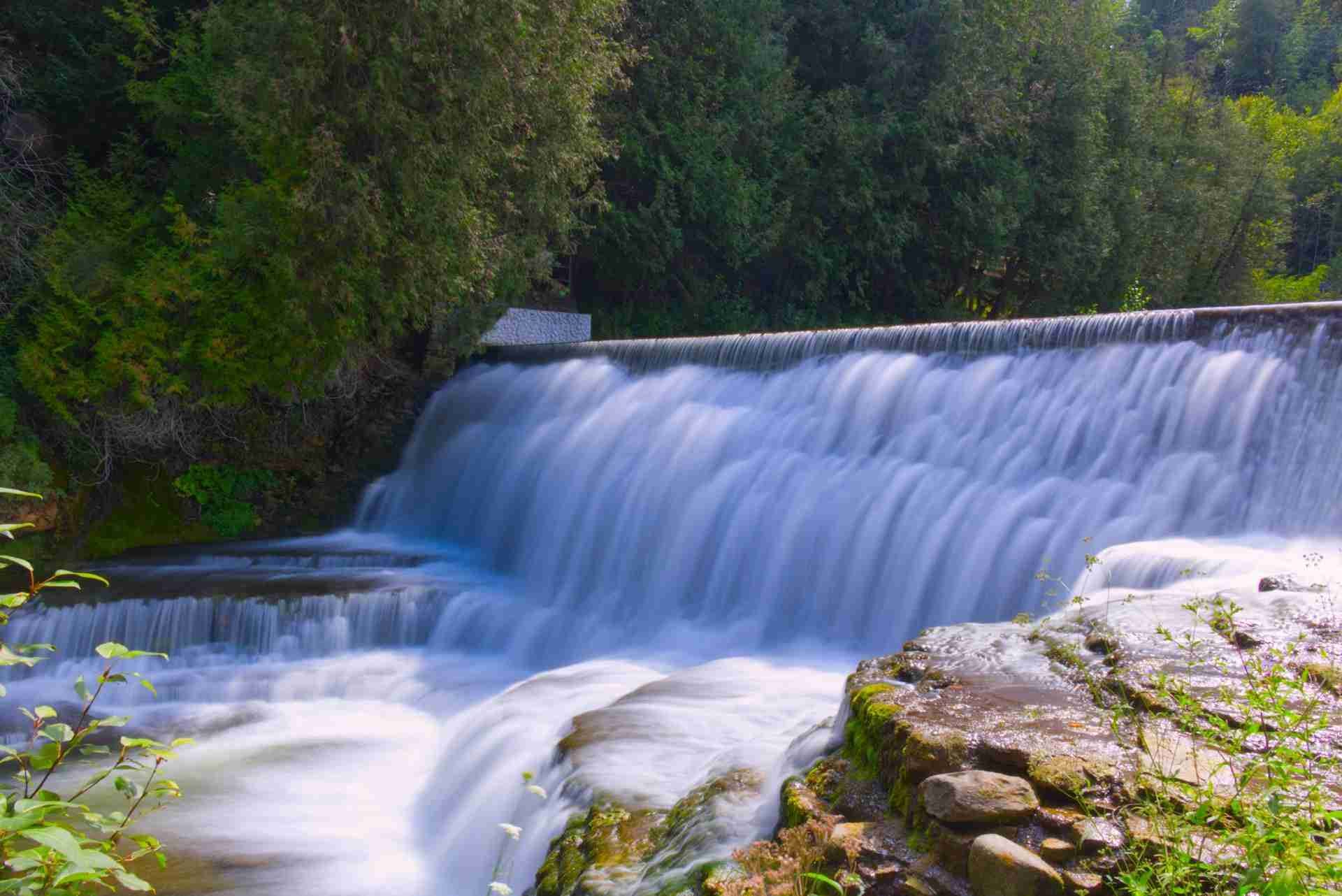
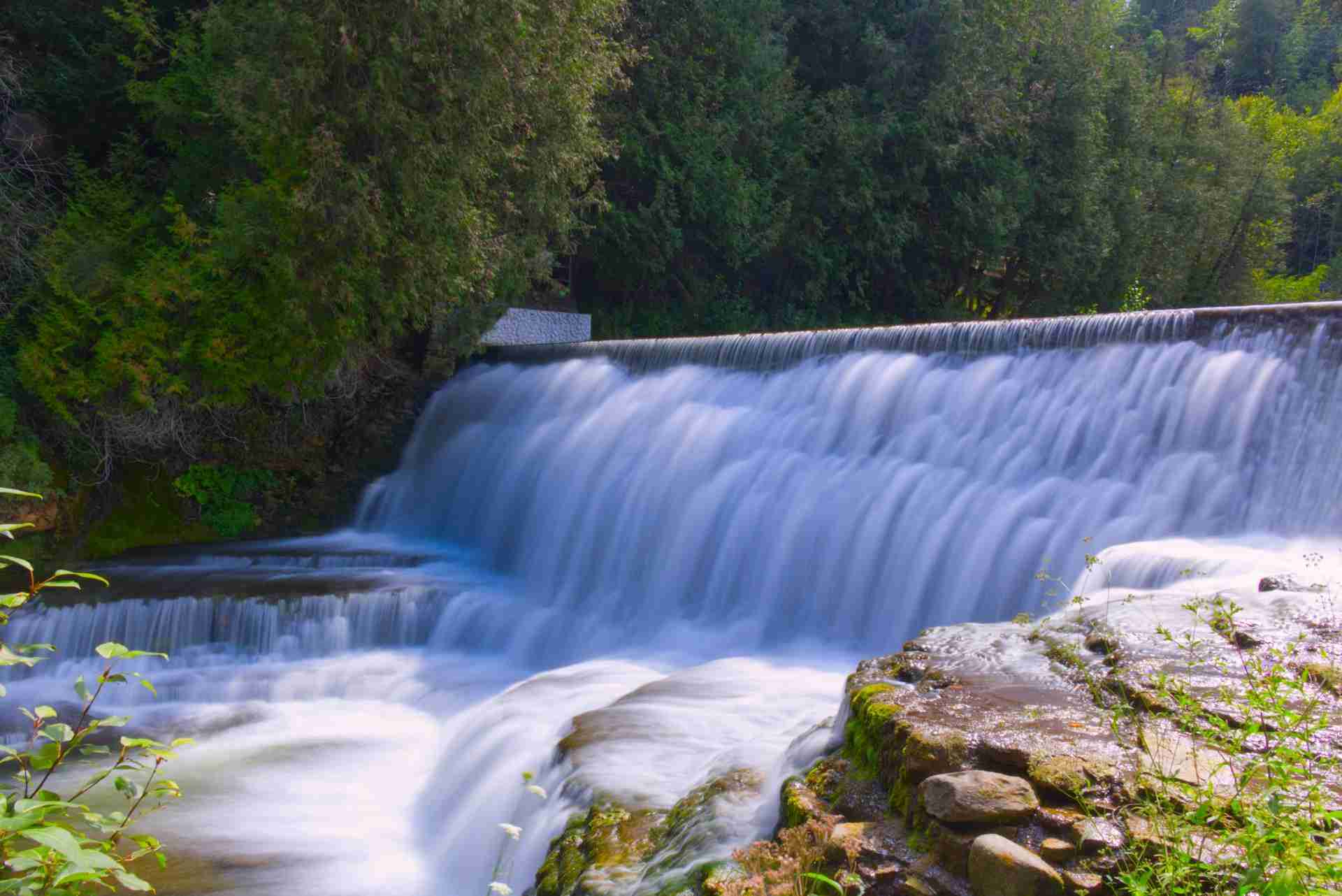
The man-made waterfall near the conservation area's stone terrace is small but photographically compelling. With its stepped, tiered flow and surrounding moss-covered rock, the falls take on a serene quality when shot with a long exposure. Position your tripod across from the falls at a low angle to maximize reflection in the pool below and create a layered vertical frame. Surrounding railings and stone walls provide compositional structure and contrast well with the organic forms of water and vegetation. This location also changes character with the seasons, becoming lush in spring, golden in fall, and ice-rimmed in winter.
• Autumn Color Through the Canopy
The forested trails leading into and out of the conservation area provide exceptional overhead canopy views during peak fall color. Use a standard or wide-angle lens to look upward through the branches, letting the curve of the trail and the high trunks form natural frames around vibrant red, orange, and gold leaves. Soft overcast light is ideal for these shots, reducing harsh contrast and allowing for even color rendering across the frame. A polarizer helps enhance saturation and control glare on damp leaves. These compositions often work best handheld to allow for spontaneous adjustments to the shifting canopy above.
• Rocky River Edge and Reflections
Down by the river, the shoreline is scattered with large, smooth rocks that serve both as foreground anchors and compositional tools. Especially in early morning, when the water is still and the light low, reflections of trees, sky, and bridge details can be captured cleanly in the shallow pools. Try composing at water level, placing a large rock in the immediate foreground to provide scale and depth. Use a small aperture to keep the scene sharp throughout, and consider bracketing exposures if shooting into brighter areas of the sky. In winter, these rocks catch frost or light snowfall, offering crisp black-and-white studies of contrast and form.
• Textures of Historic Infrastructure
Beyond natural subjects, the conservation area includes well-preserved stone terraces, walkways, and retaining walls that date back to the early twentieth century. These architectural details offer tight-frame opportunities where lichen, moss, and weathering create rich surface textures. A macro or short telephoto lens helps isolate patterns of stone and shadow, while directional morning light brings out form without flattening detail. These shots work especially well in overcast conditions, which soften contrast and reveal subtle color shifts in the materials. Including fallen leaves or branches adds a seasonal layer to these architectural studies.
Best Time to Visit
Belfountain Conservation Area is visually engaging throughout the year, but the type of light and foliage dramatically affects your compositions. Autumn is by far the most rewarding season for landscape photographers, with late September through mid-October offering peak color in the forest canopy and rich ground cover for detail shots. Golden hour during this season produces striking contrast between warm foliage and the cool shadows of the gorge.
Spring offers lush greenery and higher water levels in the falls and river, especially after snowmelt, which creates livelier movement and more volume in the waterfall. Early mornings are best for capturing mist rising through the trees and undisturbed reflections on the water's surface. Summer brings more visitor traffic but also a fuller canopy and bright green tones that work well with deep blue skies, especially in midday with a polarizing filter.
Winter transforms the area into a study in monochrome, with frozen waterfalls, snow-lined tree trunks, and low light that demands slower, more deliberate compositions. Although access may be limited due to trail conditions, the muted palette and quiet atmosphere reward those prepared for cold-weather shooting. The light during winter golden hour is especially soft, creating long shadows across the snow and warming the stone structures just enough to add contrast.
How to Get There
Belfountain Conservation Area is located on Forks of the Credit Road in Caledon, Ontario, within the Niagara Escarpment region. From Toronto, the drive takes roughly one hour via Highway 410 north, connecting to Charleston Sideroad and then turning south on Mississauga Road. The conservation area is clearly signed, and the entrance is just east of the village of Belfountain.
Parking is available within the conservation area, and entry fees apply per person and vehicle, with seasonal changes and reservation requirements during peak periods in autumn. The site includes maintained paths, washrooms, and picnic areas, making it suitable for half-day or full-day photography outings.
Tripods are allowed but should be used with care on narrow paths or heavily trafficked viewpoints such as the suspension bridge. Early morning visits are best for both light and avoiding crowds, especially during fall weekends. Cell reception is limited in parts of the gorge, so it is a good idea to plan your route and timing in advance. No drones are permitted within the conservation area due to its environmental protection status.
Recommended Photography Gear
A wide-angle lens in the 16 to 35 millimeter range is essential for capturing expansive views of the suspension bridge, forest canopy, and stone terraces. A 24 to 70 millimeter standard zoom covers most general compositions, from mid-distance river scenes to trail-side studies. For tighter frames and detail work, a 70 to 200 millimeter telephoto lens will allow you to isolate elements like the waterfall, tree trunks, or structural textures from a distance.
Macro lenses or extension tubes are valuable for capturing fine detail in leaves, moss, or the aged stonework of the site's architecture. A sturdy tripod is necessary for long exposures of water movement and low-light conditions, especially in early morning or late evening. A polarizing filter is useful for managing glare on wet surfaces and enhancing the saturation of foliage during peak color seasons. A six- or ten-stop neutral density filter can help you stretch exposure times on the waterfall and river, particularly in brighter light.
Because terrain can be uneven and trails often damp, waterproof hiking shoes or boots are recommended. Bring lens cloths and a rain cover in case of mist or sudden weather shifts. A backpack with modular compartments helps when navigating the narrower trails, allowing you to adjust quickly without unpacking entirely between locations.
Nearby Photography Locations
Located just a few minutes away, this park features sweeping valley views, cascading falls, and open meadows suitable for golden hour light. The Cataract Falls and railway bridge add structural elements to wide landscape shots and offer broader compositional variety than Belfountain alone.
• Cheltenham Badlands
A short drive southeast, these distinctive red clay hills are best photographed during early morning or late afternoon when shadows emphasize their rippled texture. The surrounding boardwalk allows for elevated angles and controlled compositions without damaging the fragile terrain.
Further south, Terra Cotta offers dense forests, wooden bridges, and slow trails ideal for close-up studies of vegetation, bark, and seasonal change. It is especially rewarding in winter or during spring thaw when light filters gently through the trees.
• Caledon Hills and Heritage Roads
The countryside around Belfountain is dotted with stone fences, old barns, and winding roads that photograph beautifully in soft light. These routes are best explored at sunrise or during fall color, when long shadows and golden tones highlight the terrain.
Situated in the nearby town of Alton, this restored stone mill includes galleries and a small river with walkways and cascades. It combines industrial textures with natural water flow, making it a flexible spot for both indoor and outdoor photography.
Belfountain Conservation Area invites a thoughtful, texture-rich approach to photography. Whether you are capturing quiet forest trails, the shimmer of falling water, or the rhythm of bridge and stone, the space offers balance between natural energy and human scale. For photographers looking to explore both landscape and design in a compact, seasonal setting, this location offers rewarding possibilities all year.
Comments
Loading comments…