
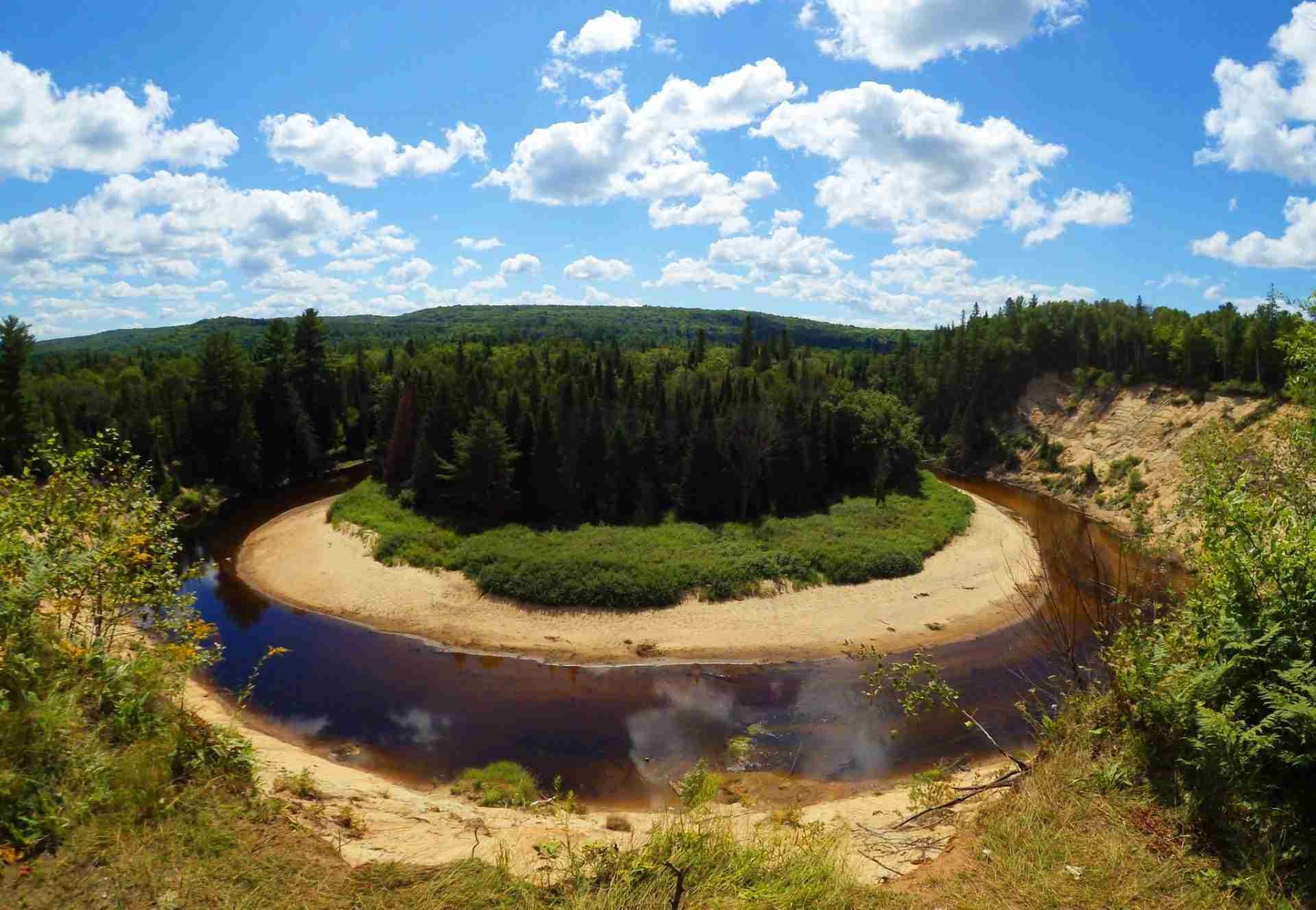
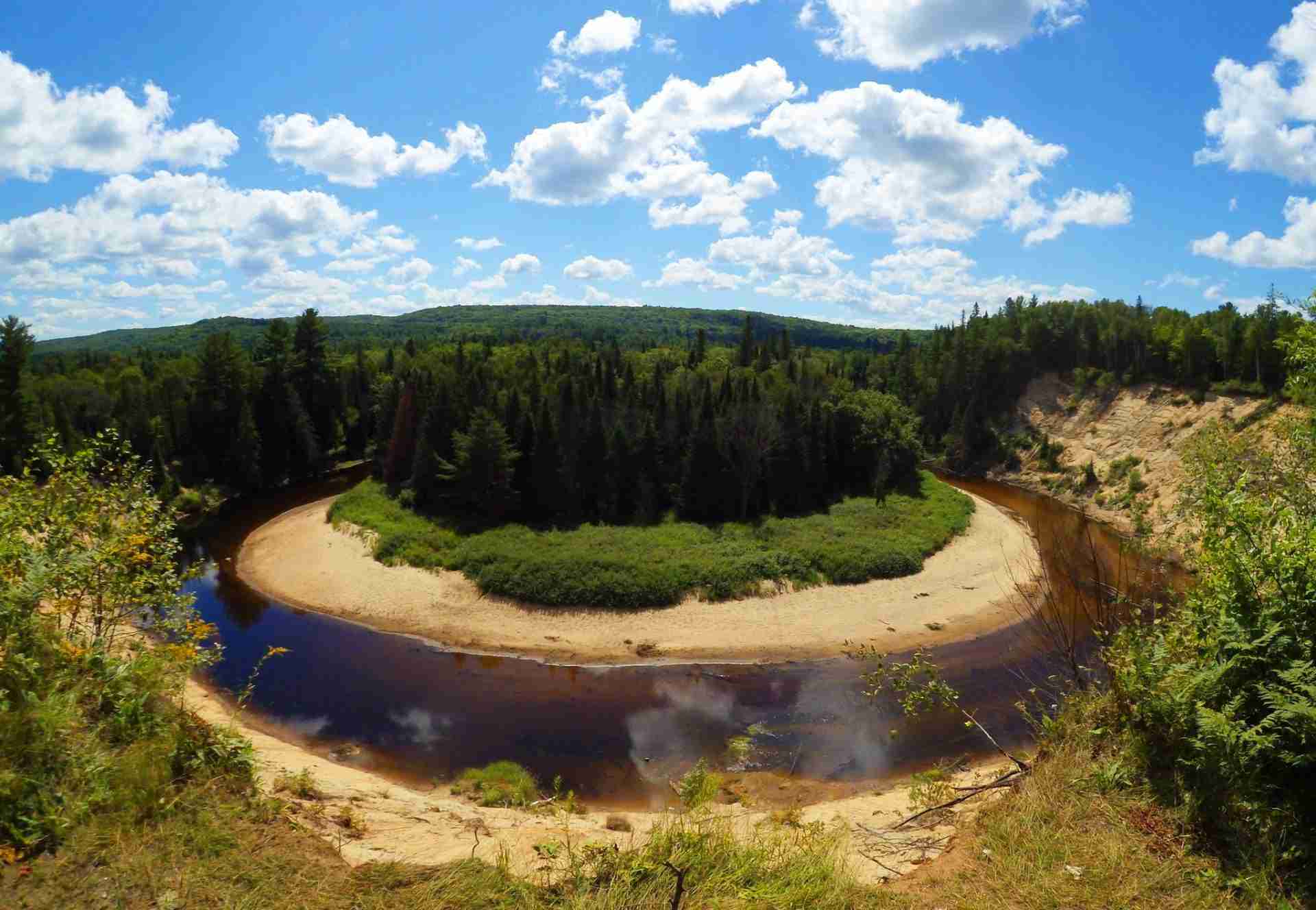
Tucked deep within the forested interior of Arrowhead Provincial Park, Big Bend Lookout offers a commanding view over one of the most photogenic river curves in Ontario. This sweeping oxbow turn of the Little East River is a perfect natural composition—its serpentine shape framed by sandy shores and a dense canopy of mixed hardwood and evergreen forest. From the lookout's rocky platform, photographers can take in the entire scene in a single frame: a winding ribbon of water, vibrant summer foliage, and a constantly shifting sky above. With its layered textures and natural symmetry, Big Bend Lookout presents a classic landscape subject, whether you're working with a wide-angle lens, a drone, or simply waiting for the right light to settle on the treetops.
Best Photography Opportunities
• Wide-Angle Views of the River Bend
: The most iconic composition is a full wide-angle shot from the main lookout platform, capturing the entire S-curve of the river as it winds below. A lens in the 16–35mm range will let you include both foreground rock and the distant horizon, giving the scene depth and scale. Early morning and late afternoon light highlight the contrast between the forest's deep greens and the golden tones of the sandbar edges, especially on clear days when the sky reflects in the water.
• River Reflections and Cloud Movement
: On still summer days, the calm surface of the Little East River becomes a mirror for the sky above. Puffy cumulus clouds drifting through create a moving canvas of light and shadow. Set up your composition to include both the reflected and real sky—either directly above or at an angle. Use a polarizer to manage glare or enhance reflection depth, and try bracketing exposures for HDR blending if light contrast is extreme.
• Detail Studies of Shoreline Contrast
: The sandy inner curve of the river creates a strong visual contrast against the dark, tree-lined outer bank. A mid-range zoom (24–70mm) allows you to isolate these areas into tighter, layered compositions. Shoot slightly downward to emphasize patterns—tree shadows, ripples, and the jagged meeting point of sand and water. This is particularly effective in late afternoon when directional light enhances texture.
• Aerial Perspectives with Drone
: For drone photographers, Big Bend Lookout becomes a launch point for dramatic top-down or oblique views of the oxbow's form. At altitudes between 50–100 meters, the bend's full geometry comes into view, often framed by cloud shadows and shifting light on the treetops. Golden hour flights offer the best color, while mid-morning provides the cleanest river reflections. Maintain a legal distance from park visitors and avoid overflying the lookout platform itself.
• Seasonal Color and Early Morning Atmosphere
: Though summer provides the richest greens, early autumn can yield patchy bursts of red and yellow as the forest begins to turn. Visit just after sunrise for low, horizontal light slicing through mist that sometimes clings to the riverbanks. Use a tripod and a longer exposure to soften any movement in the fog and amplify the quiet mood of the scene.
Best Time to Visit
Summer is the prime season to photograph Big Bend Lookout. From June through August, the foliage is dense and saturated, the river levels are steady, and the sky frequently delivers strong cloud definition—ideal for capturing layered compositions. Early mornings provide the softest light and least visitor interference, while evenings bring warm tones that glow on the treetops and sandbars.
Autumn visits, particularly in late September, offer the added draw of changing colors. However, be aware that heavy leaf fall can obscure the clarity of the riverbend shape when viewed from above. Spring visits are possible, but the trail may be muddy, and full canopy coverage has not yet returned. Winter access is restricted and not always advisable for photography unless you are fully prepared for snowshoeing and cold-weather shooting conditions.
For the clearest views and best light angles, plan your trip around mid-morning or late afternoon. The sun rises and sets behind the forested ridges, so timing your visit to catch light grazing across the bend will yield the most dynamic results.
How to Get There
Big Bend Lookout is located within Arrowhead Provincial Park, just north of Huntsville, Ontario. From Highway 11, take the exit for Arrowhead Park Road and follow signs into the park entrance. Once inside, continue on the main road past the visitor centre and beach access until you reach the Big Bend Lookout parking area.
From the lot, a short gravel path leads directly to the main viewing platform. The trail is well-maintained and suitable for all fitness levels, with benches and interpretive signs along the way. Access is year-round, weather permitting, though the lookout is most popular in the warmer months.
There is a day-use fee for entry to the park, payable at the gate or through the Ontario Parks online reservation system. Tripods, camera gear, and drones are permitted, though drone pilots must follow all provincial park regulations and should launch away from high-traffic areas to avoid disturbing visitors.
Recommended Gear and Shooting Tips
A wide-angle zoom (16–35mm) is essential for capturing the full riverbend from the lookout. Pair it with a standard zoom (24–70mm) for tighter framing of shoreline details or for incorporating people, signage, or natural foregrounds. A telephoto lens (70–200mm) can be useful for compressing river curves and isolating distant textures across the canyon floor.
Bring a polarizer to enhance sky reflections and manage glare on the water, especially in mid-day sun. An ND filter can help lengthen exposures for softening water or movement in clouds. A tripod is recommended for pre-sunrise, sunset, or HDR brackets, particularly when working in lower light.
Drones are effective here, but fly responsibly. Avoid obstructing the trail or interfering with other visitors at the lookout. Early morning is best for battery life, stable air, and low wind interference.
Pack water and insect repellent—summer days in Arrowhead can be humid and bug-heavy. Take your time to observe the way light shifts through the trees and across the water; every ten minutes can bring a new frame worth capturing.
Nearby Photography Locations
: Located within the park, this small cascade along the Little East River offers short-exposure action and foreground studies. Use a tripod and ND filter to smooth the water for classic flow effects beneath the arched footbridge.
: The sandy shoreline, canoe dock, and treeline backdrop make this a strong sunrise or golden-hour location, especially when the lake is still and mirror-like. Excellent for wide landscapes and reflective compositions.
: This loop trail leads through wetlands, forest, and open meadows, offering chances to shoot wildlife, wildflowers, and moody path scenes under diffuse light. In spring and fall, fog and dewdrops on grasses enhance macro and environmental photography.
: Just outside the park, this elevated town viewpoint overlooks Hunters Bay and the Muskoka River. Great for sunset cityscapes or layered hilltop views with a 70–200mm lens.
• Oxtongue River-Ragged Falls
: A short drive east on Highway 60 brings you to this thunderous cascade in Oxtongue River Provincial Park. The fast-flowing water and boulder-strewn banks are perfect for long exposures and dramatic vertical compositions.
Big Bend Lookout is more than a scenic stop—it's a living map of movement and stillness, shape and color, all laid out beneath a northern Ontario sky. For photographers, it's a space where natural symmetry and seasonal drama converge, offering a fresh perspective with every visit and a lasting impression with every frame.
Comments
Loading comments…