
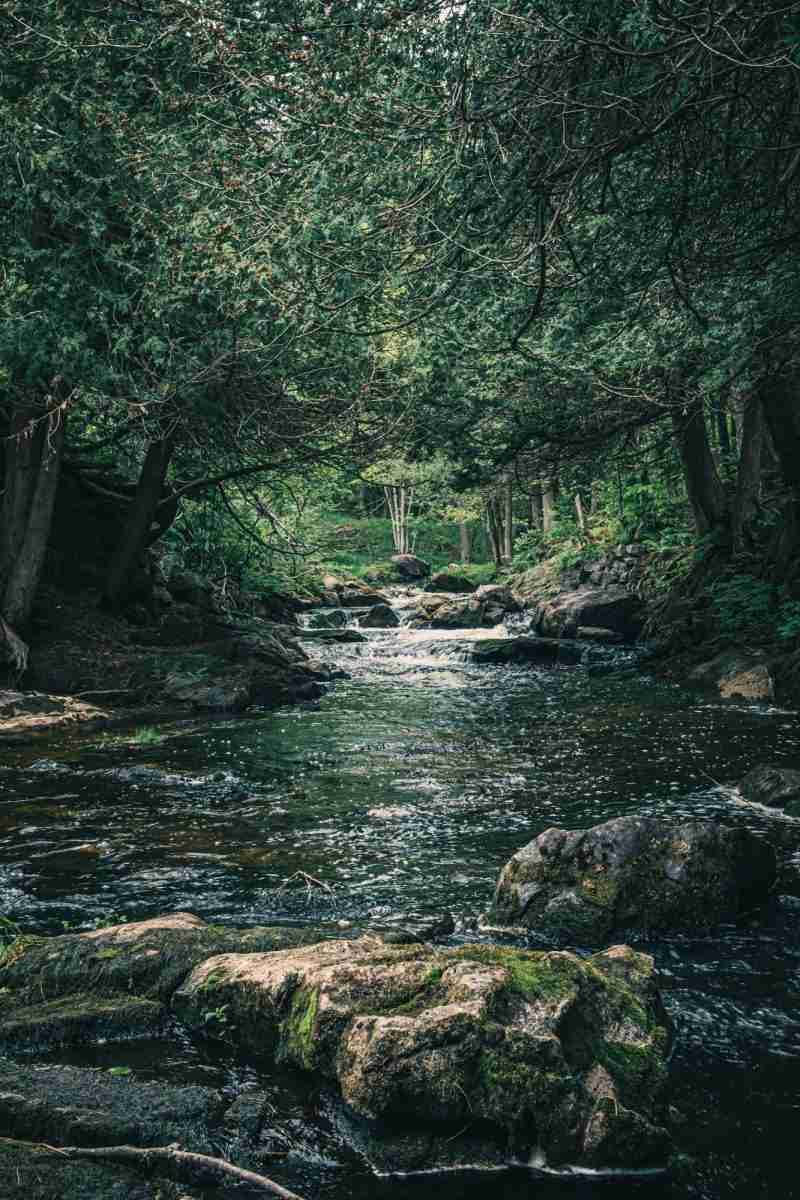
Tucked within the forested landscapes of eastern Ontario, Black Creek winds quietly through the southern edge of Murphy's Point Provincial Park, offering a peaceful, photogenic counterpoint to the more trafficked trails and campgrounds nearby. This secluded waterway flows with dark, tannin-rich water bordered by lush cedar, maple, and pine, creating soft reflections and moody woodland vignettes. Often overlooked by casual visitors, Black Creek is a rewarding location for photographers seeking quiet scenes of mirrored light, subtle movement, and intimate wilderness detail—especially when paired with a canoe, a tripod, and time to observe the way light plays along the water.
Best Photography Opportunities
• Creek Reflections and Canoe Compositions
: The stillness of Black Creek on calm mornings or late evenings creates near-perfect reflections of the surrounding forest. These mirror-like surfaces are ideal for symmetrical compositions, particularly when framed low from a canoe or shoreline rock. A wide-angle lens allows you to include both sky and reflection for a painterly effect, while a longer focal length can isolate patterns of ripples and reflection for abstract or fine art-style shots. Shooting from a canoe also gives access to angles otherwise unavailable from land, offering a sense of immersive solitude.
• Mist and Morning Light Through the Trees
: The creek is best experienced early in the day, when morning mist rises gently from the cool water and sunlight filters through the trees at an angle. Low, directional light creates golden highlights on reeds and branches, while backlit mist adds atmosphere and softens the forest behind. This is an excellent time for shooting into the light, using tree trunks or foliage to partially block the sun for controlled flare and glow. Slower shutter speeds can further exaggerate the stillness and mystery of the moment.
• Macro and Detail Shots Along the Creek Edge
: Ferns, mosses, water striders, and decaying wood line the edges of the creek and make for rich close-up material. Macro photography thrives here, especially in the filtered light under the forest canopy. Dew-covered leaves, wet bark, and the layered textures of shoreline debris offer a natural color palette of deep greens, browns, and silvers. Use a tripod and a low ISO to maintain clarity and depth of field, particularly in low-light situations where handheld shots can be compromised.
• Autumn Foliage Reflections
: In early to mid-October, the creek becomes a corridor of mirrored fall color. The reds and oranges of maple and oak are intensified by their dark reflections on the tannin-rich water, especially in overcast conditions that enhance saturation. Look for floating leaves and layered reflections where surface details mix with submerged textures for complex, multilayered frames. A polarizing filter can be used selectively to either cut or preserve reflection, depending on your visual intent.
• Twilight Silhouettes and Long Exposures
: As light fades, the quiet of the creek becomes even more pronounced. Long exposures at blue hour smooth the water and soften the remaining ambient light into a painterly wash. Tree branches arching over the water can be silhouetted cleanly against the dimming sky. This is a particularly peaceful and meditative time to shoot, especially in late summer when insects hum and the forest breathes quietly around you.
Best Time to Visit
Black Creek is accessible and visually rich from mid-spring through late autumn, with each season offering unique lighting and tonal characteristics. Late spring brings soft greens, active birdlife, and moderate water levels, ideal for both landscape and nature detail photography. Summer delivers stable weather and calm water surfaces, perfect for early morning or golden hour reflections and canoe-based exploration. During this time, be prepared for biting insects, especially near dusk and dawn—consider long sleeves and insect repellant to stay focused on your work.
Autumn is perhaps the most rewarding time to photograph the creek. From late September through mid-October, the surrounding forest becomes a kaleidoscope of reflected color. This season also brings cooler mornings and higher odds of mist, creating magical conditions for early risers. Lighting is lower and softer throughout the day, extending the shooting window and reducing harsh contrast.
Winter access is limited, and ice coverage may be thin or variable depending on the year. If conditions allow, the creek becomes a minimalist scene of dark water ribbons winding through white woods—though the area is more difficult to navigate and best reserved for experienced cold-weather explorers.
How to Get There
Black Creek flows near the southern end of Murphy's Point Provincial Park, located roughly 25 kilometers southwest of Perth, Ontario. The most straightforward access is through the park itself, which offers seasonal vehicle entry via the main gate off County Road 21. From the park's Lally Homestead or nearby campsites, the creek is reachable via short trails or canoe portages, depending on current water levels and vegetation.
For photographers bringing a canoe or kayak, water access is typically available at Hogg Bay, from which you can paddle upstream into Black Creek. This route provides the best perspective of the winding waterway and gives you access to otherwise unreachable shorelines. On foot, small side trails lead to points along the creek, though views may be partially obscured by dense foliage in summer months.
There is a day-use fee during operational months, and parking is available at designated lots near trailheads and canoe launches. Facilities in the park include outhouses, potable water taps, and visitor information areas, but most of the creek area remains remote and natural. Plan ahead for backcountry-like conditions, even if you're only a short walk from a maintained trail.
Recommended Gear and Shooting Tips
Photographing Black Creek rewards minimal, versatile gear that performs well in changing light and moist environments. A wide-angle lens (16–35mm) is essential for immersive landscapes, especially when shooting from a low angle near water or in a canoe. Pair it with a circular polarizer to control surface reflection or enhance foliage color, depending on the conditions. A mid-range zoom (24–70mm) offers flexibility for both wider scenes and tighter vignettes along the shoreline or within the forest.
A sturdy, lightweight tripod is invaluable for early morning mist shots or long exposures, particularly when shooting from uneven terrain or canoe landings. If you're shooting macro subjects like moss or insects, a dedicated macro lens and a small reflector or diffused LED panel can help manage tricky lighting under the canopy. For fall color, a polarizer becomes even more essential to dial in reflection and saturation.
Footwear should be waterproof or quick-drying—shoreline areas are often muddy or marshy, and some shots will require careful footing. Carrying dry bags or protective pouches for your gear is recommended, especially if you're on or near the water. Mosquitoes and blackflies can be aggressive in summer, so bring insect protection to stay focused on your work. For extended shooting days, pack water, snacks, and a headlamp—some of the best light comes just before and after the sun touches the horizon.
Nearby Photography Locations
: The Lally Homestead Trail and Point Trail offer scenic forest paths, historic stone structures, and shoreline views of Big Rideau Lake. These trails are especially vibrant in autumn and allow for intimate woodland compositions.
: Located within Murphy's Point Park, this restored mica mine and its surrounding structures offer a unique mix of industrial history and natural encroachment. Rusted rail carts, stone walls, and decaying timbers create rich textural contrasts against the surrounding forest.
: Accessible via park trails or by canoe, the shoreline of Big Rideau Lake provides expansive water views, weathered rocks, and ever-changing skies. It's especially rewarding during sunrise and sunset when clouds and color stretch over the open horizon.
: Located northeast of Murphy's Point, this protected area features boardwalks through wetland habitats, excellent for bird photography, especially during spring migration. The landscape is rich with texture and color in all seasons.
: About 30 minutes south in Westport, this hilltop park offers panoramic views over the Upper Rideau and Westport village. It's an ideal complement to the low, intimate scenes of Black Creek—particularly at sunrise or after a fall storm when mist settles in the valley.
Whether you're capturing the shimmer of morning mist or the quiet rhythm of forest reflections, Black Creek offers the kind of understated beauty that rewards slow photography and close observation. Its still waters and wooded banks invite not just a photograph, but a moment of pause—something that resonates long after you've packed away your gear.
Comments
Loading comments…