
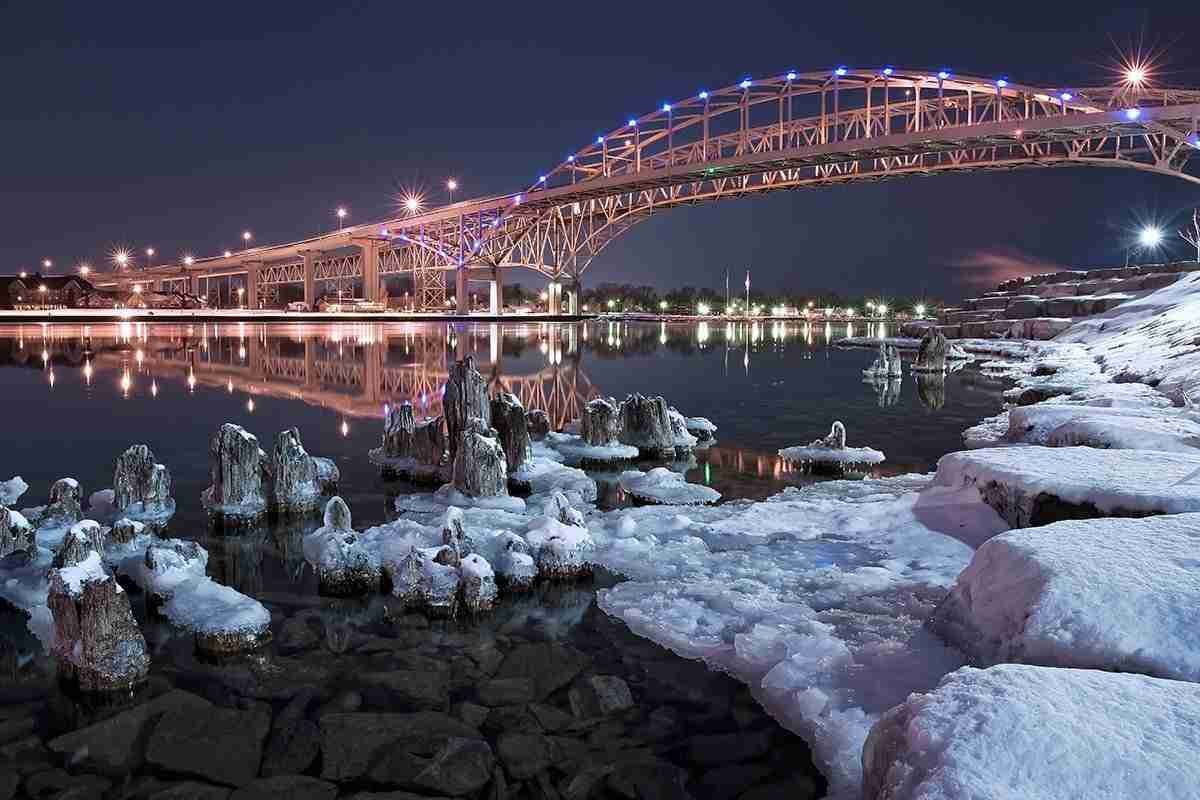
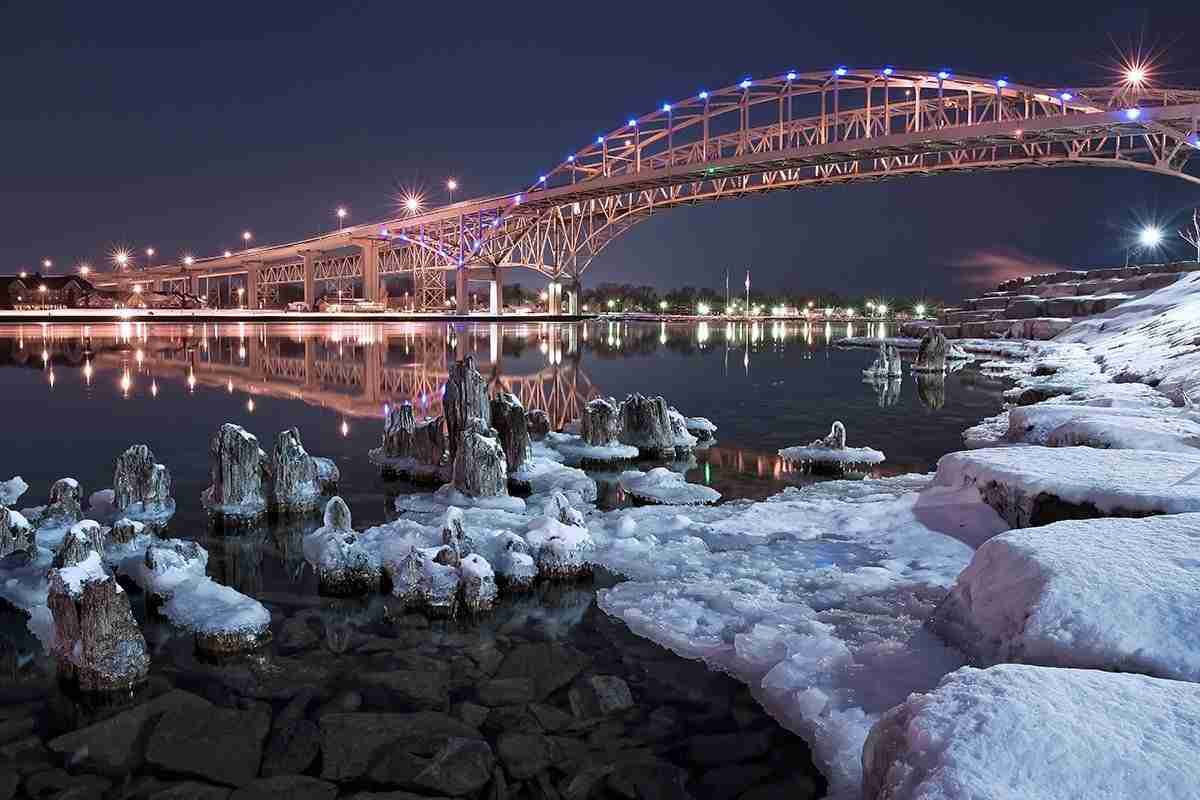
Spanning the deep-blue channel of the St. Clair River, the Blue Water Bridge is a towering feat of steel engineering that connects Point Edward, Ontario, with Port Huron, Michigan. As one of the busiest and most visually striking international crossings in Ontario, the twin bridges command attention with their elegant steel arches and sweeping symmetry. Backed by the vibrant hues of the river and often set against dynamic skies, the Blue Water Bridge is a compelling subject for architectural, industrial, and landscape photographers alike. With excellent vantage points from both water level and elevated trails, this location offers a variety of compositions throughout the day and across all seasons.
Best Photography Opportunities
• Golden Hour Light on the Steel Arches
The best light for photographing the bridge is during golden hour, particularly in the evening when the setting sun casts warm tones across the metal structure and water. From the riverbank in Point Edward, frame the twin spans with soft reflections on the river surface and silhouetted elements like trees or lampposts to add depth.
• Wide-Angle Compositions from Waterfront Park
Waterfront Park in Point Edward offers clear, unobstructed views of the entire bridge complex, including both the original 1938 arch bridge and its newer twin span. Use a wide-angle lens to capture the full scale of the structure, with the expansive river below and a broad, cloud-filled sky above. The park's pathways, benches, and stone shoreline make excellent foreground elements.
• Long Exposure of Traffic and Water Flow at Night
At night, the bridge glows with traffic lights and roadway illumination. Set up near the base or further back for long exposure compositions that blur car lights and smooth the rippling river surface. Light trails from passing vehicles across the bridge add movement and contrast to the heavy steel forms.
• Drone or Elevated Views of the Bridge and Border Flow
When permitted, aerial photography provides a unique perspective on the bridge's curvature, cross-border road network, and surrounding industrial and natural landscape. Sunrise or sunset adds dynamic light to the river's surface and creates dramatic shadows along the bridge deck. A top-down view reveals the symmetry and intricate detailing of the arches.
• Abstract Steel and Structural Detail Studies
The rivets, girders, and sweeping trusses of the bridge offer rich material for architectural abstraction. Use a telephoto lens to isolate repeating patterns or shoot upward from underneath to exaggerate scale and convergence. Overcast light works well here, reducing glare and enhancing contrast.
Best Time to Visit
The Blue Water Bridge is a strong subject year-round, though conditions vary with season and weather. Late spring through autumn offers the most comfortable temperatures and the richest natural colors. The blue-green clarity of the St. Clair River is particularly vivid in summer, creating a striking contrast with the neutral grey steel of the bridge.
Sunrise and sunset offer the most compelling lighting for wide shots, with directional light casting long shadows and bringing out the texture of the structure. Twilight and blue hour provide excellent conditions for long exposures and night scenes, especially when city lights begin to reflect across the river.
Winter adds drama and mood, with snow-covered riverbanks and mist rising from the water—ideal for monochrome or atmospheric work, though care is needed on icy walkways.
How to Get There
The Canadian side of the Blue Water Bridge is easily accessible from Highway 402, which terminates at the bridge entrance in Point Edward. Parking is available at nearby Waterfront Park and surrounding public lots. Pedestrian access along the waterfront trail provides clear lines of sight to both spans of the bridge.
Photographers can explore multiple shooting angles from the riverside paths, including spots directly beneath the bridge and slightly upriver where the structure looms above. For safety and legality, avoid restricted areas near the customs plaza and follow signage regarding border and bridge authority boundaries.
Tripods are welcome in public spaces, especially for long exposures and low-light work. Bring lens cloths to handle mist or wind-blown spray from the river on breezy days.
Exploring the Surrounding Area
The waterfront area surrounding the Blue Water Bridge is filled with complementary scenes for photography. The Point Edward Waterfront Trail offers benches, lookout decks, and access points down to the rocky shore. These provide excellent places to shoot boat traffic, water textures, or the occasional freighter moving through the channel.
Just east of the bridge, the waterfront opens up toward Sarnia Bay, where docks, marinas, and shoreline greenery offer relaxed, low-contrast compositions—perfect for golden hour lifestyle or environmental portrait work. The nearby Point Edward lighthouse and picnic areas also provide strong coastal imagery with wide views and nautical elements.
On the American side, the Thomas Edison Parkway and Riverwalk in Port Huron provide equally strong angles for shooting back toward the Canadian side, creating options for pairing views from both countries in one photo essay.
Nearby Photography Locations
A large park along the shores of Lake Huron just minutes from the bridge, Canatara offers sand dunes, forest trails, and open lake vistas—ideal for sunrise beach scenes and long lens wildlife photography. It's especially beautiful during late summer and fall color.
Stretching along the St. Clair River, this area features fountains, public art, floral gardens, and city skyline views. It's a great location for urban waterfront photography, particularly during community events or at sunset with city lights reflecting on the river.
Located a short drive to the south, this site blends historic buildings, rural scenery, and wooded trails—perfect for rustic textures and interpretive storytelling in natural light.
A quieter section of the Lake Huron shoreline, Bright's Grove offers long views across the lake, wave-washed stone beaches, and excellent sunset opportunities. It's ideal for minimalist coastal landscapes and high-contrast black and white compositions.
A roadside gem along the St. Clair Parkway, this museum includes vintage locomotives, historic village buildings, and railway elements—great for detail work, heritage storytelling, or experimenting with wide dynamic range scenes in changing light.
The Blue Water Bridge is more than just a vital connection between countries—it's a monumental piece of infrastructure that invites photographers to explore light, structure, and borderland beauty. Whether you're capturing its graceful arcs against the river at golden hour or isolating its riveted lines in black and white, the bridge offers countless ways to frame the intersection of engineering, geography, and human movement.
Comments
Loading comments…