
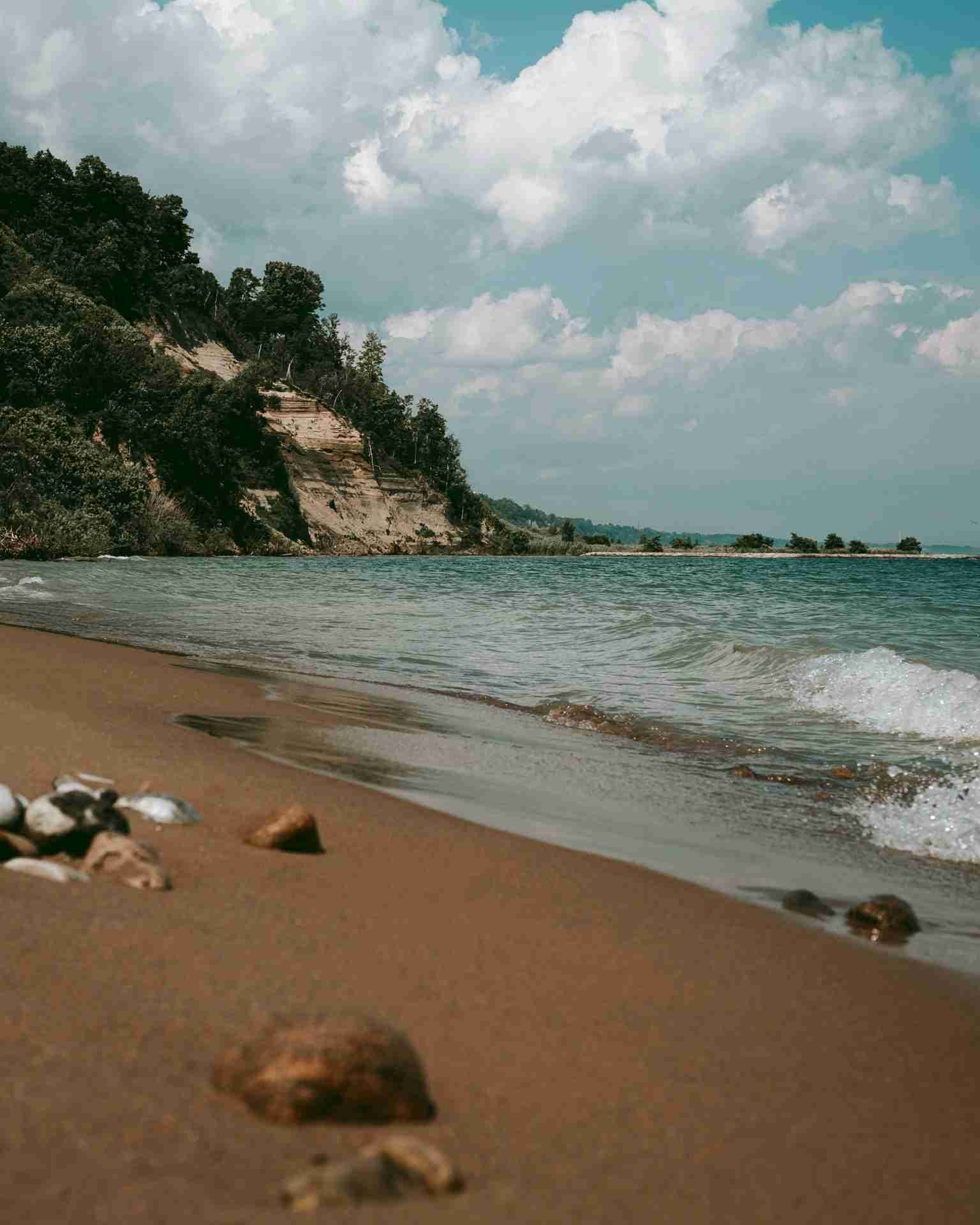
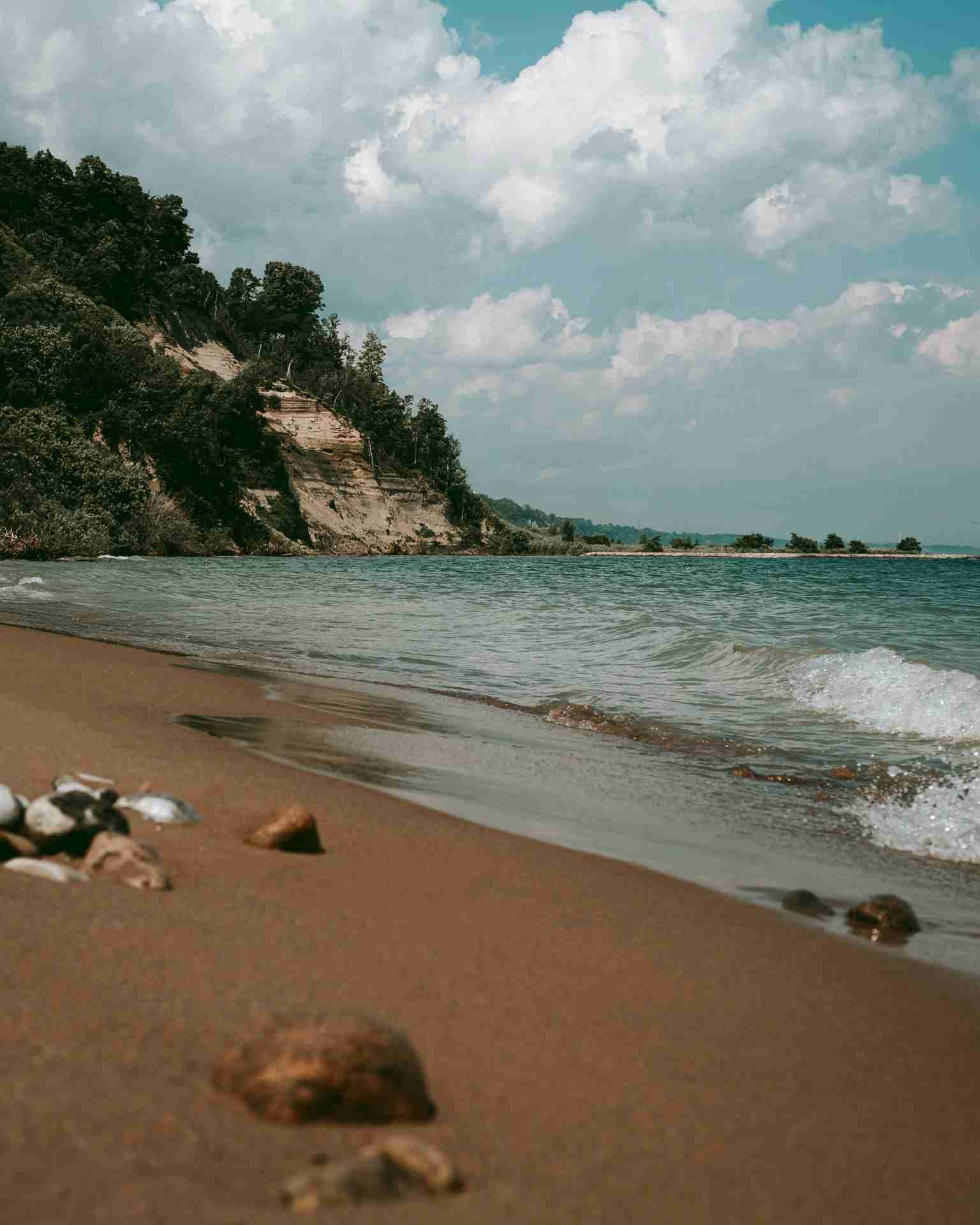
Tucked against the eastern edge of Toronto's waterfront, Bluffer's Park and Beach in Scarborough delivers one of the most visually dramatic natural settings in the city. Towering white cliffs—carved by centuries of glacial erosion—rise above the serene blue waters of Lake Ontario, creating a rare combination of vertical geology and open shoreline. This contrast between sky, stone, and water makes the park a year-round haven for landscape photographers seeking bold shapes, luminous light, and reflective compositions. With a blend of beach, marina, forested trails, and elevated lookouts, Bluffer's Park offers both intimate coastal details and sweeping cinematic vistas in a single, easily accessible location.
Best Photography Opportunities
• Cliffside Reflections from the Beach
The most iconic view of Bluffer's Park is from the sandy beach looking north toward the bluffs. Here, the cliffs rise steeply from the shoreline, their layered white faces catching light and shadow in constantly shifting patterns. On calm days, the lake acts as a natural mirror, reflecting the cliffs and sky for symmetrical compositions that balance texture and tone. Shoot wide (16–24mm) to emphasize scale, and consider positioning driftwood or boulders in the foreground for added depth. Early morning is best for soft sidelight, while late afternoon can warm the cliff face and intensify reflected color.
• Marina and Recreational Activity
On the western side of the park, the marina offers a different visual rhythm—rows of sailboats, weathered docks, and the gentle motion of moored vessels create strong repeating forms and textural interest. Capture the motion of boats with long exposures or shoot at higher shutter speeds to freeze kayak launches or seagulls in flight. The marina's calm waters provide excellent surface reflections at sunrise and blue hour. Use a 70–200mm lens to compress sailboats against the distant cliffs, or switch to a wide-angle lens to include activity along the shoreline.
• Clifftop Lookouts and Elevated Vistas
For those willing to explore the trails above the park, the lookouts along the top of the Scarborough Bluffs offer one of the best aerial perspectives of Lake Ontario within the GTA. The most photogenic views are found at dawn, when low sunlight illuminates the tops of the cliffs while mist lingers over the lake. These elevated angles reveal the curvature of the shoreline, tree canopies, and isolated beachgoers far below. Shoot with a standard zoom to frame the entire arc of the shoreline or with a telephoto to pull out layered textures in the cliff face and treetops. Be cautious of cliff edges and obey all posted safety signage—tripod setup is only advisable in designated safe areas.
• Golden Hour Beachscapes and Silhouettes
As the sun sets behind the western edge of the park, the beach transforms into a warm, low-contrast landscape with deep shadows and glowing highlights. Use this time to capture silhouettes of walkers, swimmers, and shoreline birds against a fading sky. Backlit grasses and reeds along the shoreline can be framed to catch the last rays of light, while long exposures smooth the lake into a pastel gradient. A 50mm prime or 85mm lens excels here, isolating subjects with shallow depth and natural vignetting from the angled light.
• Nature and Wildlife Along the Trails
In addition to cliffs and beach, Bluffer's Park is home to wooded paths, wetland edges, and rocky inlets that provide habitat for birds, small mammals, and seasonal flora. Photographers interested in detail and natural storytelling will find opportunities for macro work, bird photography, and layered environmental portraits. Spring brings blossoms and migrating birds, while autumn reveals golden leaves clinging to cliffside trees. Use a telephoto or macro lens to isolate texture—moss-covered rocks, feathered reeds, or the ripple of water against stone. Visit early in the day to catch wildlife activity in soft light and minimal crowds.
Best Time to Visit
Bluffer's Park and Beach is beautiful in every season, but its strongest photographic qualities emerge during the shoulder hours of the day—early morning and late afternoon—when light rakes across the cliff faces and softens the lake surface. In spring, the forested trails fill with new growth, and birds return to the wetland edges, offering gentle color and texture across a still-cool landscape. This is a great time for macro photography and wildlife activity.
Summer brings vibrant greens, blue water, and the liveliest human activity along the beach and marina. For a quieter experience, shoot before 9 a.m. or after 6 p.m., when the light softens and foot traffic thins out. Reflections are strongest in the early morning, especially on windless days when the lake becomes a mirror.
Autumn is the most colorful time to photograph the bluffs. Trees cling to the upper ridge in yellows, oranges, and reds, creating a rich contrast against the pale cliffs and grey-blue water. Low sun angles further emphasize this contrast and sculpt the terrain. Early October typically brings peak foliage.
In winter, the bluffs become stark and architectural. Fresh snow clings to ledges and outlines the cliff structure, while lake ice creates minimalist compositions along the shoreline. Overcast skies are best for shooting cliff detail and monochromatic landscapes, while golden hour light can be especially dramatic with snow reflecting warmth into a cool-toned scene.
How to Get There
Bluffer's Park and Beach is located at the foot of Brimley Road in Scarborough, Ontario. By car, take Kingston Road east to Brimley Road South and follow it all the way down to the park entrance. The descent is steep but well maintained, and the road leads directly into a large parking lot near the marina and beach. Parking is available year-round, though spaces fill quickly on warm weekends.
Public transit users can take the TTC to Kennedy Station and transfer to the 175 Bluffer's Park bus, which operates seasonally and drops passengers near the shoreline. Outside of seasonal service, the nearest year-round stop is along Kingston Road, with a 20-minute walk to the water.
The park is fully accessible by bike, with the Waterfront Trail connecting to the area from the west and the Gatineau Hydro Corridor Trail linking from the north. Trails within the park are paved or gravel, with some wooden boardwalk sections. Trails leading to cliff-top lookouts start outside the main park area and should be accessed with care.
There is no fee to visit Bluffer's Park, and photography is permitted throughout the area. Tripods are allowed, but drone use may be restricted in certain areas—check with the City of Toronto or TRCA for the most current regulations.
Recommended Photography Gear
Bluffer's Park offers both wide-open landscapes and fine natural detail, so bring a well-rounded kit. A wide-angle lens (16–35mm) is essential for shooting cliffside panoramas and beachscapes. A standard zoom (24–70mm) is excellent for framing the cliffs with water and sky, or for shooting marina and trail activity. For wildlife and compressed compositions from the lookout, a 70–200mm or longer telephoto is invaluable.
For long exposure work on the beach or near the marina, bring a sturdy tripod and ND filters (6- and 10-stop) to manage shutter speeds and create smooth, minimalist water shots. A circular polarizer is helpful for reducing glare on wet rocks and enhancing color saturation, especially during midday.
In macro-friendly areas—such as wetland fringes or forest trails—a macro lens or extension tubes will allow you to focus on detail: blossoms, feathers, bark, or ripple patterns in sand. A lightweight, weather-sealed camera bag is useful for protecting gear from sand and sudden lake breezes.
Bluffer's Park is spread out, so plan for mobility. Sturdy footwear and weather-appropriate layers are essential, particularly if you plan to shoot from both shoreline and cliff-top areas in the same session.
Nearby Photography Locations
Just a 10-minute drive east, this unique site combines historic architectural fragments with landscaped gardens and forest trails. It's ideal for stylized portraits, environmental texture, and architectural detail in natural light.
Perched on the bluffs further west, this formal garden offers panoramic lake views, sculpted hedges, and flower beds that change with the season. It's a quiet retreat for floral and macro photography, particularly in spring and summer.
Less crowded than Bluffer's Park, this nearby bluff-top location offers sweeping views of Lake Ontario and the horizon, especially striking at sunrise. A great location for long-lens skyline silhouettes and wide-format seascapes.
This easternmost section of Toronto's waterfront includes nature trails, meadowland, and quiet shoreline access. It's an excellent spot for bird photography, shoreline textures, and early morning light along the cliffs.
Flowing inland from the lake, this trail follows a meandering creek through a forested ravine, with bridges, water reflections, and native plant life. It's ideal for low-light woodland photography or close-up nature studies in quieter surroundings.
Bluffer's Park and Beach offers photographers a rare convergence of grand landscapes, subtle textures, and evolving seasonal light. From the soaring bluffs to the calm lapping of the lake, this location invites a range of visual approaches—from epic wide-angle compositions to quiet studies of sand and sky. For those seeking variety, access, and drama within a single coastal setting, few places in the Toronto area offer as much visual potential as this sculpted edge of the Scarborough shoreline.
Comments
Loading comments…