
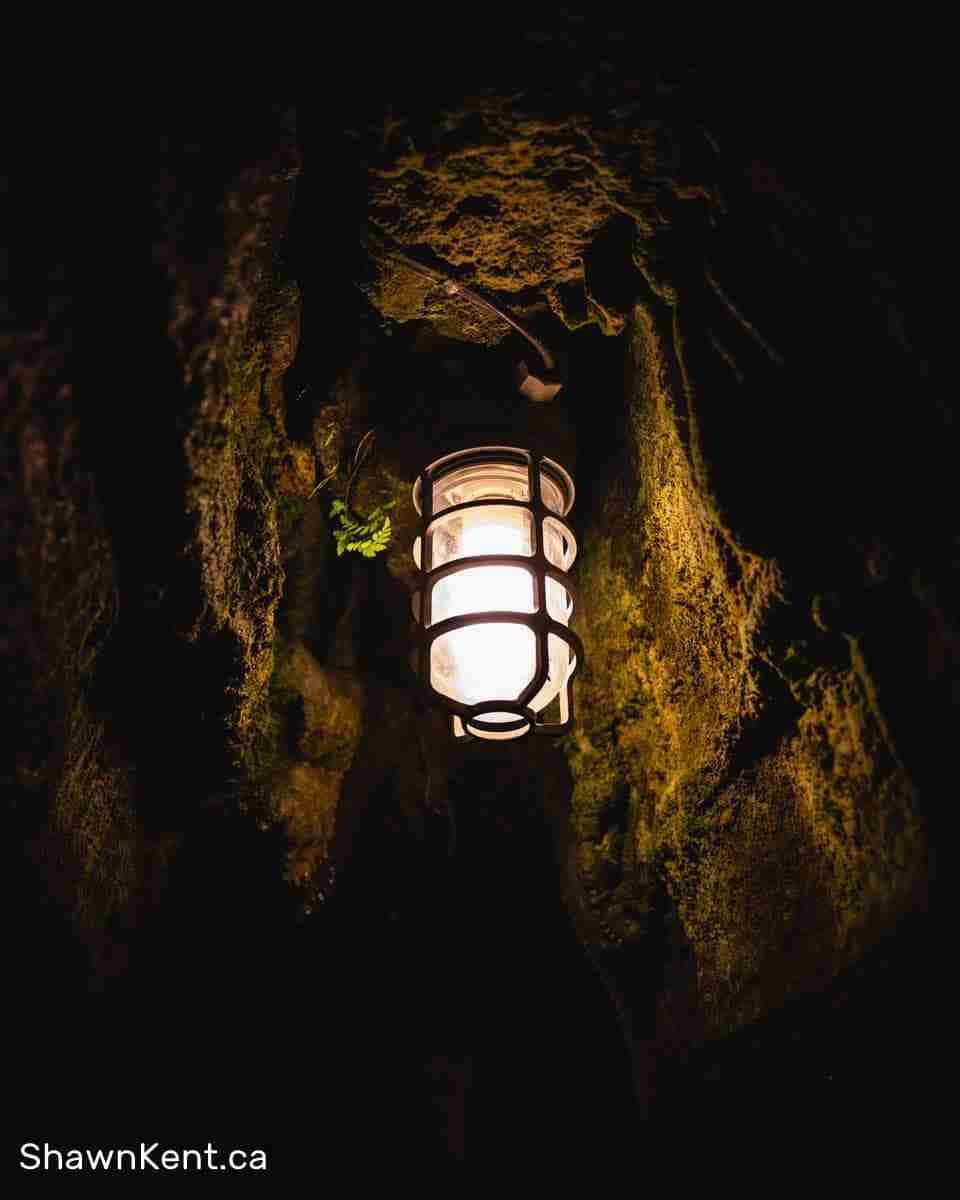
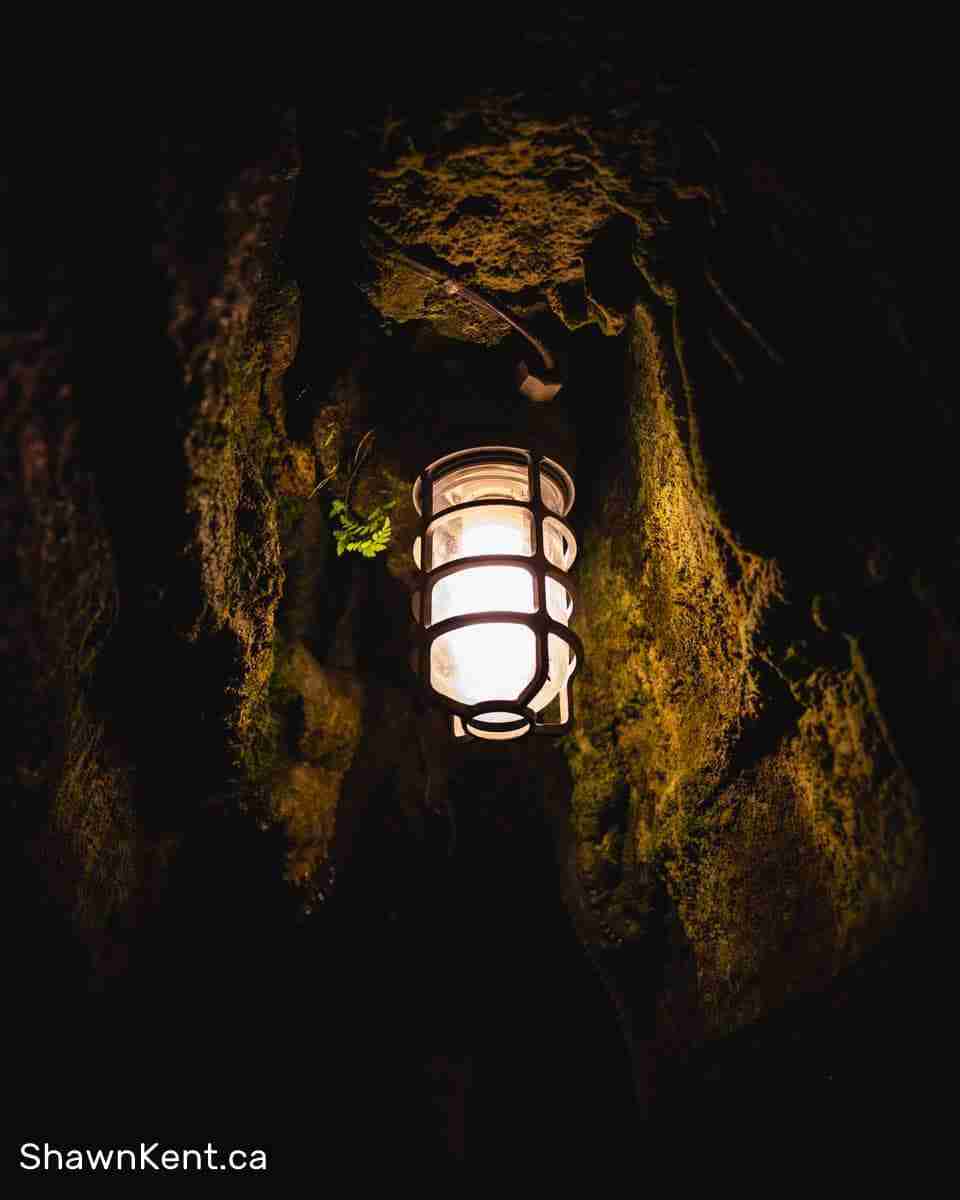
Nestled into the Ottawa Valley limestone near Eganville, Ontario, the Bonnechere Caves offer a rare opportunity for photographers to explore one of Eastern Ontario's most fascinating underground landscapes. Discovered and first explored by Tom Woodward in the 1950s, the cave system descends nearly 100 feet below the surface, revealing sculpted passageways, fossil-rich walls, and beautifully lit chambers shaped by millions of years of erosion. Today, visitors follow in Tom's footsteps—literally—via a guided tour that ensures both preservation and safety.
Though access to the caves is controlled and must be done as part of a scheduled guided tour, it's well worth the planning. The interior presents compelling photographic challenges and rewards: low light, rich textures, and carefully placed lighting that emphasizes the natural formations. Outside the caves, a picturesque waterfall on the property adds another layer of visual interest, making this a surprisingly varied shoot that spans both natural history and landscape photography.
Best Photography Opportunities
• Narrow Passages and Textured Walls
The caves wind through narrow, atmospheric corridors carved by ancient underground rivers. These stone passageways, lined with fine sedimentary striations and punctuated by fossil imprints, are excellent subjects for close compositions that highlight depth and texture. Use a fast lens and steady hand—or better yet, a monopod if allowed—to capture the ambient light filtering through the carefully illuminated interiors. Look for framed openings, bends in the path, and overhangs that add dimensionality and lead the viewer's eye deeper into the earth.
• Cavern Rooms and Pool Reflections
Several broader chambers within the caves allow for wide-angle shots that emphasize the drama of the space. In some sections, water pools reflect the rough limestone ceiling, offering opportunities for symmetry and abstraction. These larger spaces are well-lit by the tour's internal lighting system, which casts a warm glow and creates dynamic shadow play along the contours of the rock. Composing vertically here helps convey the vertical depth of the space and works especially well when including tour pathways or other visitors for scale.
• Fossils and Surface Detail
The walls of the Bonnechere Caves are rich with fossils—primarily corals and other marine life dating back over 500 million years. A macro lens or zoom with close-focus capabilities is ideal for capturing the fine textures and embedded patterns of these ancient specimens. These compositions serve not only as visual studies but as geological documentation, making them a great addition to any portfolio focused on time, erosion, or natural history.
• Waterfall and Surface Landscape
Above ground, the property features a small but beautiful waterfall that cascades over rocky outcrops near the entrance to the cave system. This location is ideal for classic landscape compositions with flowing water, foreground boulders, and forested backgrounds. Use a neutral density filter to slow the shutter and create a soft, misty effect in the falls, and experiment with side light or golden hour conditions to warm the scene and enhance foliage color.
• Guided Tour Perspective Shots
Because the caves must be visited on a tour, photographers have the opportunity to incorporate the human element—capturing the sense of exploration as others move through the space. Silhouetted figures backlit by cave lights, heads turned upward toward towering rock features, and tight clusters of people within stone corridors add scale and narrative. These storytelling images are perfect for travel and editorial-style work that emphasizes experience and interaction.
Best Time to Visit
Bonnechere Caves are open seasonally, typically from late spring through early fall. The best time to visit is during the earlier part of the day, when lighting conditions inside the cave are less affected by crowding and exterior temperatures are cooler. Mornings tend to be quieter and offer a more relaxed pace for composing and adjusting shots during the guided walk.
Summer provides the most stable conditions in terms of humidity and temperature—though the cave remains naturally cool year-round. Autumn adds color and richness to the surface landscape around the waterfall and trail systems, making it a great season for pairing underground photography with vibrant outdoor scenes.
Due to the tour format, there may be limited time in certain chambers, so it's worth familiarizing yourself with cave photography techniques in advance. The lighting inside is warm and dim, so expect to shoot at higher ISOs or use fast lenses to keep pace with the group.
How to Get There
Bonnechere Caves are located just outside the town of Eganville in Renfrew County, Ontario—about 90 minutes west of Ottawa. From Highway 417, head west toward Renfrew, then follow Highway 60 through Eganville. The entrance to the caves is clearly marked along Fourth Chute Road and includes ample signage, especially during open season.
Parking is available on-site, with a visitor center and facilities. Tickets must be purchased for a guided tour, and photography is welcome throughout the experience, though tripods are typically not permitted for safety and logistical reasons. Confirm access guidelines with staff upon arrival, and consider booking ahead during peak tourist periods.
Recommended Gear and Shooting Tips
A fast wide-angle lens (such as a 16–35mm f/2.8) is ideal for capturing the broad chambers and tight passageways of the cave. A mid-range zoom (24–70mm) provides flexibility in tighter quarters and is useful for isolating fossil textures or abstract patterns in the walls. A macro lens can be extremely useful for documenting small fossils and surface features, especially along the more accessible outer chambers.
Since lighting is dim, shoot with higher ISO settings and use image stabilization where possible. A monopod may be allowed—check with guides—but be prepared to shoot handheld in low light. Shoot in RAW to retain maximum flexibility in editing, especially for white balance and shadow recovery.
For the surface waterfall, bring a tripod, ND filters, and a polarizer. The scene is ideal for long exposures, and a polarizer will help manage glare from the wet rocks and bring out the colors in surrounding foliage. Pack a lens cloth—humidity inside the caves can fog lenses quickly, especially on cooler days.
Nearby Photography Locations
• Fourth Chute Falls (Bonnechere River)
Just a short drive from the caves, this lesser-known waterfall offers beautifully layered bedrock and fast-moving water. Excellent for long exposures and a natural companion subject to the main cave system. It's quiet, accessible, and great for composing with leading lines and layered textures.
• Eganville Heritage Museum and Riverwalk
Located in the heart of Eganville, this small museum and adjacent trail along the Bonnechere River provide a relaxed shooting experience with views of the town, river bends, and interpretive signs that add narrative value to documentary shots.
• Douglas Ghost Town and Rural Ruins
West of Eganville, the hamlet of Douglas features aging storefronts, abandoned homes, and traces of rural life ideal for those exploring vanishing vernacular architecture. Pairing the caves with this stop offers a balanced shoot between natural and cultural heritage.
• Calabogie Peaks and Eagle's Nest Lookout
Further south but within range for a day trip, this elevated lookout provides sweeping views of the Ottawa Valley and is ideal for sunrise or sunset landscape photography. Rugged cliffs, fall color, and dramatic skies make it a strong contrast to the caves' enclosed world.
Located just north of Eganville, this park offers forested trails, lakeshore scenes, and quiet campgrounds—perfect for early morning fog and waterline reflections. A good basecamp for those staying overnight and building a multi-location shoot in the area.
Bonnechere Caves are more than a geological marvel—they're a passage through time and stone, inviting photographers to explore texture, light, and scale beneath the surface of the Ottawa Valley. Paired with the surrounding trails, waterfalls, and heritage towns, they offer a full-day shoot that's both immersive and inspiring.
Comments
Loading comments…