
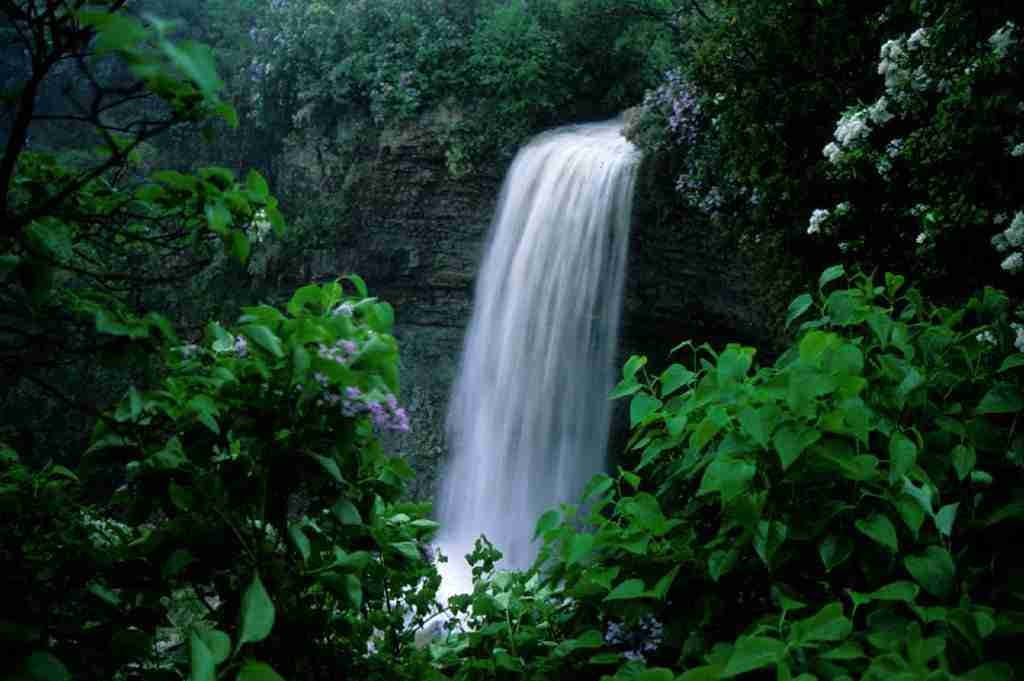
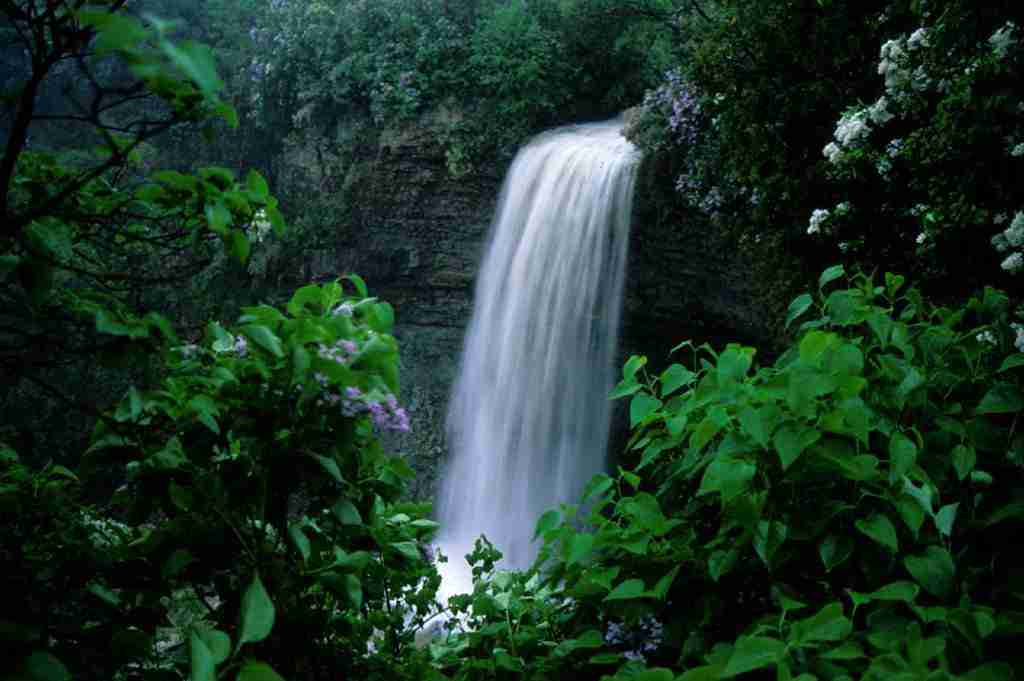
Carved into the edge of the Niagara Escarpment just outside Dundas, Ontario, Borer's Falls offers a classic example of a ribbon waterfall tucked within a rich, hardwood forest. At 15 meters tall, the falls drop in a slender vertical stream over a sheer cliff face, framed by layered rock formations and dense canopy. Part of the Royal Botanical Gardens' natural lands and embedded within the broader trail network of the Dundas Valley, this site offers multiple vantage points—each rewarding photographers with a different sense of scale, drama, and compositional texture. Whether bathed in golden autumn light or framed by the icy stillness of winter, Borer's Falls is a dependable, year-round subject for nature and landscape photographers alike.
Best Photography Opportunities
• Frontal Views from the Borer's Falls Lookout
The most direct view of the falls is from the lookout platform just off the trailhead near the Borer's Falls Conservation Area parking area. From here, the waterfall appears head-on, framed symmetrically by trees and stone. A medium zoom works well to compose both tight waterfall frames and wider environmental shots that include the gorge walls and vegetation. This vantage is particularly effective during spring runoff or after heavy rain, when water volume increases and mist enhances the drama of the cascade. During autumn, the trees surrounding the cliff burst into color, creating a natural frame that glows under morning or late afternoon light.
• Side Angles Along the Bruce Trail Spur
The Bruce Trail branches off near the top of the falls, providing several partially obscured side views through the trees. These glimpses are ideal for more abstract compositions, where the waterfall is partially hidden by trunks and branches. Use a longer focal length to compress depth and emphasize light filtering through the canopy. These shots are strongest in late spring and early summer, when the foliage is fresh and vibrant, and when morning backlighting catches the mist as it rises from the gorge.
• Long Exposure Studies from the Gorge Rim
Although access to the gorge floor is restricted to protect the sensitive escarpment environment, the rim trails above the falls allow for long exposure work using slower shutter speeds and ND filters. Position your tripod securely at a distance to smooth the water's movement and draw attention to the fine vertical lines of the cascade. The falls' ribbon shape benefits from exposures between one and three seconds—enough to soften the descent without losing the detail in the rock behind it. Overcast days are ideal here, as they reduce harsh contrast and extend exposure times naturally.
• Details in Ice, Moss, and Rock Formations
In winter, Borer's Falls often freezes into a curtain of icicles and glimmering sheets, turning it into a dramatically different subject. Detail shots of hanging ice, snow-dusted ledges, and frost on surrounding vegetation offer abstract studies of texture and tone. Macro lenses or short telephoto lenses are useful for isolating these natural features. Likewise, in spring and summer, moss-covered rocks and wildflowers near the trail add color and intimacy to the broader waterfall scene. These work well as environmental close-ups or layered elements in wide compositions.
• Trail Perspectives Through Seasonal Forests
The trails leading to and from the falls provide their own photographic interest—root-laced paths winding through hardwoods, sunbeams cutting across trail bends, and small wildlife encounters along the way. Use these settings to create context for the falls themselves, capturing the lead-up to the main subject. These shots are excellent for storytelling sequences and can benefit from vertical framing or the use of natural arches created by leaning trees or trail openings.
Best Time to Visit
Borer's Falls offers visual appeal across all four seasons, but each comes with its own photographic signature. In spring, melting snow and rainfall boost water flow to its peak, making for the most dramatic cascades and mist-filled compositions. New green growth provides a fresh color palette, and wildflowers begin to dot the forest floor.
Summer can see reduced water flow in dry years, but it also brings lush vegetation and strong directional light filtering through the high canopy—perfect for backlit forest scenes and wide dynamic range captures. Mornings offer cooler temperatures and softer shadows.
Autumn is perhaps the most visually rewarding time to visit, with peak color typically arriving in early to mid-October. The golden and crimson leaves form a vivid contrast against the dark cliff face and the silvery flow of the falls. Cooler temperatures also help reduce haze and increase air clarity, enhancing fine detail in wide landscape shots.
Winter transforms the scene entirely. The waterfall can freeze partially or completely, turning into a pillar of ice. Snow-covered branches, frost patterns, and the silence of the forest create a moody, minimalist version of the site. Use caution on icy trails, and plan for shorter visits due to cold conditions and reduced daylight.
The falls are best photographed early in the morning or late in the day, when the sun is lower and casts longer, more interesting shadows across the gorge. Avoid midday hours if possible, as overhead light flattens textures and can blow out highlights in flowing water.
How to Get There
Borer's Falls is located on the west side of Hamilton, near the village of Dundas. From Highway 403, take the Highway 6 exit north and follow signs for York Road and Rock Chapel Road. Parking is available at the Borer's Falls Conservation Area lot near Rock Chapel Road and York Road. This lot is part of the Royal Botanical Gardens' network and may require a paid parking permit, especially during high season.
From the parking lot, follow the marked trail to the Borer's Falls lookout—about a five-minute walk through hardwood forest. The trail system also connects to the Bruce Trail and the Rock Chapel Sanctuary Trail, both of which offer extended hikes and additional viewpoints, including elevated bluffs overlooking Spencer Gorge.
While the trail is relatively easy, footing can be uneven and slippery after rain or in winter. Proper footwear is essential, especially if planning to explore side trails for alternative angles. The gorge floor is not legally accessible, and entry is discouraged to preserve the ecological integrity and ensure safety.
Recommended Gear and Shooting Tips
Bring a wide-angle zoom for overall compositions, especially from the lookout or along the upper trail where tight shooting conditions require close framing. A standard zoom is ideal for isolating the falls within its environment, and a longer lens is helpful for picking out forest details or compressing depth along the side trails.
A sturdy tripod is crucial for long exposures of the falls and forest paths, particularly in low-light conditions or when using ND filters. A circular polarizer helps reduce glare on wet rocks and enhances the colors of leaves and moss—especially effective in the fall.
Pack weather protection for your gear and clothing, as trails can be damp or muddy year-round. Shooting in RAW provides flexibility for managing contrast, particularly during transitional light periods when sun and shadow interact unpredictably within the gorge.
Take your time to explore multiple angles, but stay on marked trails and respect conservation signage. The best images at Borer's Falls often come from patience—waiting for light to shift, mist to rise, or shadow to pull forward textures in rock and foliage.
Nearby Photography Locations
• Webster's Falls
One of the region's most dramatic and well-known waterfalls, Webster's Falls offers wide cascades, a stone bridge, and excellent top-down and side-angle compositions. Best viewed in spring and early autumn for full flow and colorful surroundings.
Just across the gorge from Webster's Falls, Tews is one of the tallest waterfalls in Ontario. A steep ribbon fall framed by escarpment cliffs and changing leaves, it's especially striking after rainfall or in early spring.
Accessible from the same trail network, this elevated viewpoint provides panoramic views over the Spencer Gorge and surrounding forest. Ideal for wide landscape work and seasonal tree canopy shots.
• Dundas Peak
One of Hamilton's most popular overlooks, offering a sweeping view of the valley and town below. Best at sunset or during fall when the landscape is ablaze with color. Can be busy on weekends—visit early or midweek for best access.
Set along the escarpment near Borer's Falls, this heritage building surrounded by meadows and split-rail fences offers rustic textures and story-rich backdrops for environmental and historical photography.
Borer's Falls is more than just a cascade—it's a point of convergence where geology, forest, and water meet in elegant simplicity. Whether you're chasing mist in spring, color in autumn, or frozen drama in winter, the site offers a rewarding mix of accessibility and natural beauty. For photographers who appreciate subtle compositions and layered landscapes, this waterfall is a quiet but compelling subject in Ontario's waterfall capital.
Comments
Loading comments…