
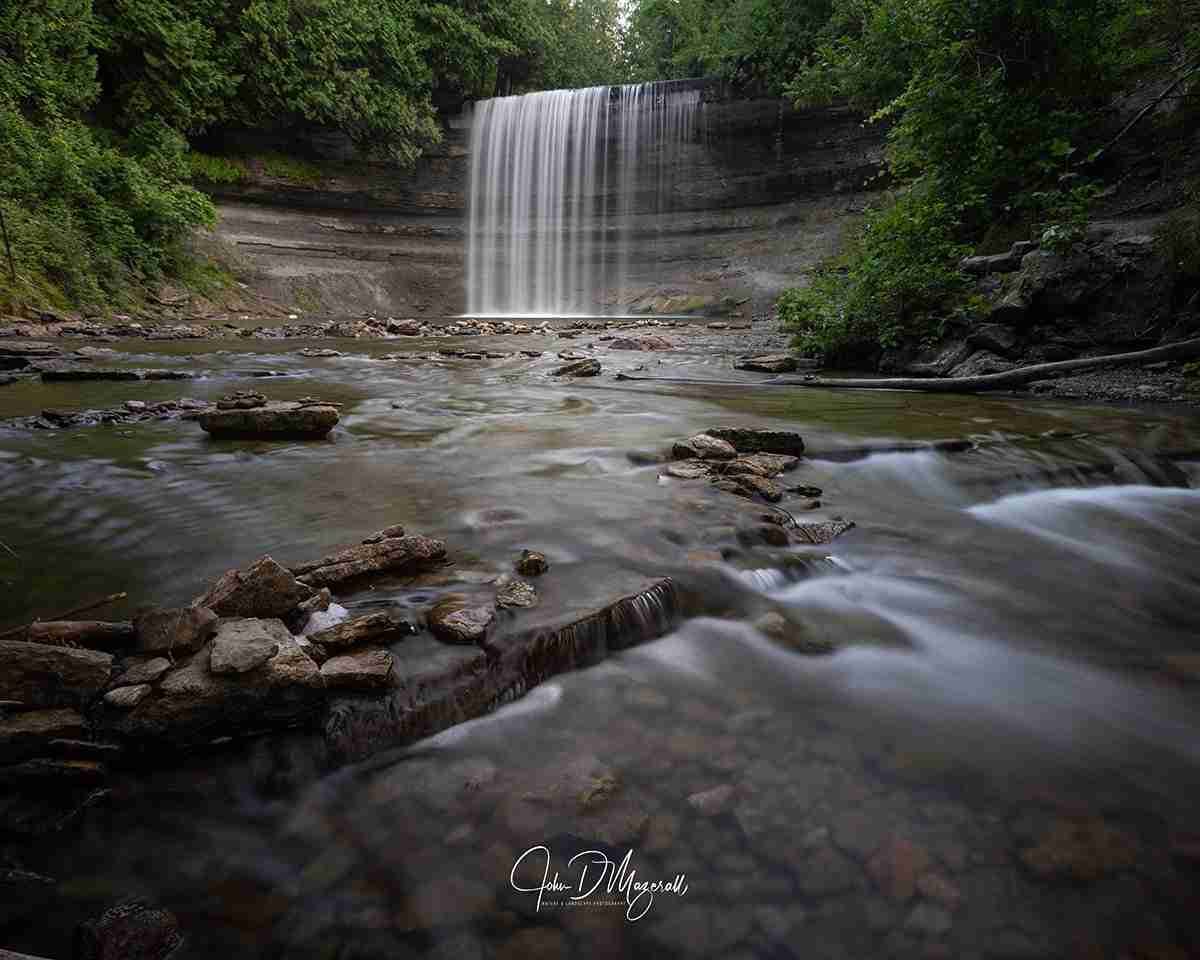
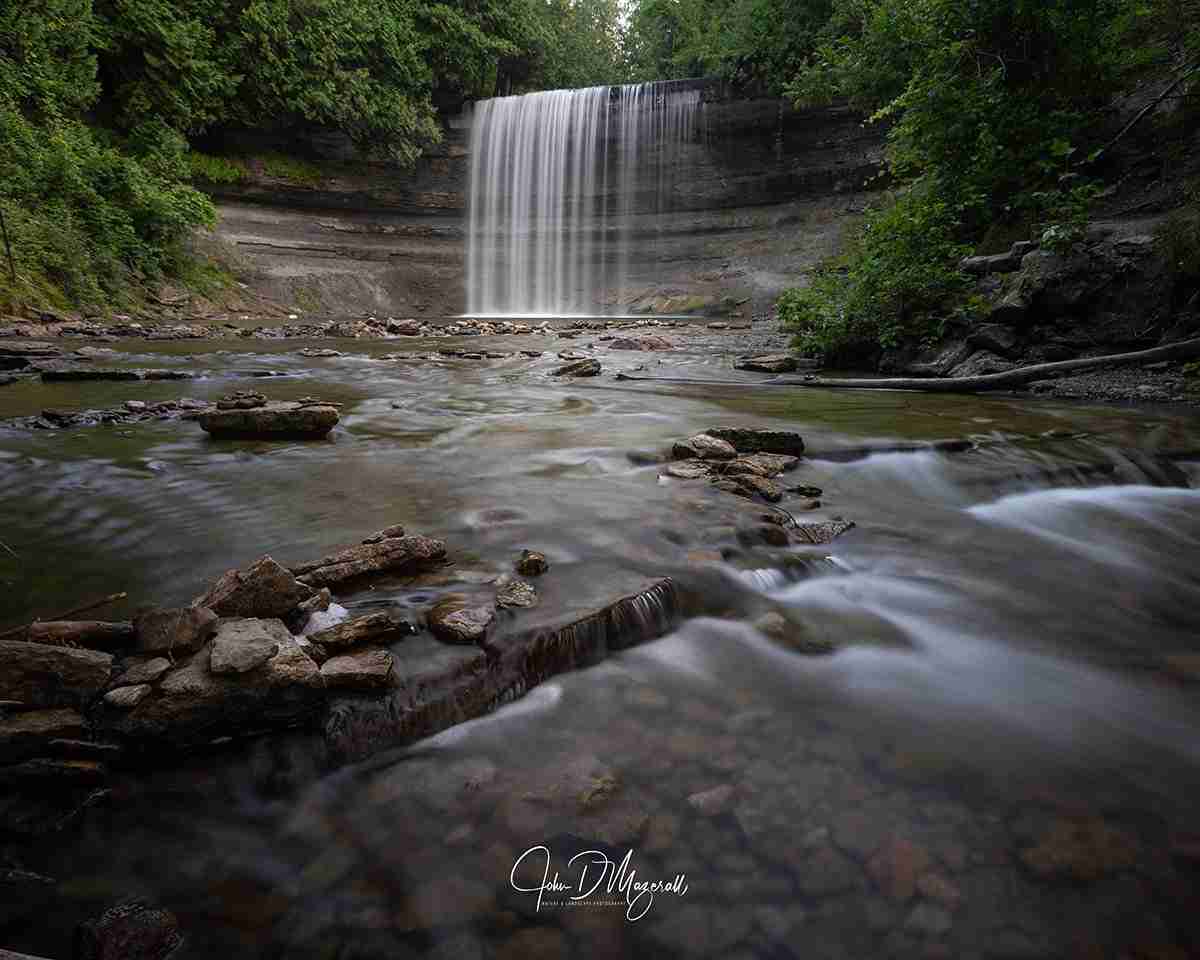
Bridal Veil Falls, one of Ontario's most scenic and accessible waterfalls, pours gracefully over a 34-metre limestone cliff near the village of Kagawong on Manitoulin Island. Fed by the Kagawong River and ultimately sourced from Lake Kagawong, this curtain-style waterfall flows into a shallow plunge pool below, framed by mossy stone walls and dense northern forest. Whether you're standing above it, beside it, or down on the rocks at its base, Bridal Veil Falls offers a range of compositions that shift with light, water level, and season. It's a must-visit location for any photographer exploring the natural richness of the world's largest freshwater island.
Best Photography Opportunities
• Main View from the Base of the Falls
: The most iconic perspective is from the plunge pool below, where the full height of the falls is visible with a clean vertical drop framed by rock walls and overhanging trees. Use a wide-angle lens to capture the full structure along with the stream foreground, especially when shooting low near the water's edge. A tripod and neutral density filter are essential here to smooth the water into silky ribbons while preserving sharp texture in the surrounding rock and foliage.
• Mid-Staircase Viewpoints
: The staircase leading down from the upper parking area includes several platforms that offer partially elevated views of the falls through tree cover. These landings are ideal for compositional layering—placing branches in the foreground to frame the waterfall in a natural vignette. A mid-range zoom lens works well here to balance reach and flexibility, allowing you to react quickly to changing light or visitor activity on the path below.
• Long Exposure Stream Shots Downstream
: Below the falls, the Kagawong River meanders gently through a forested ravine. Along the river trail, several small cascades, mossy stones, and reflective pools create opportunities for quieter compositions that focus on detail and repetition. Long exposures of the stream can be used to create visual flow through the frame, especially in low morning light or under the forest canopy on overcast days.
• Autumn Color and Reflections
: In late September and early October, the forest surrounding Bridal Veil Falls transforms into a rich tapestry of oranges, reds, and golds. These warm tones reflect off the water and stone, creating added depth and warmth in both wide and close-up compositions. This is a great time to experiment with polarizing filters to either enhance reflection or reveal underwater detail, depending on your angle and artistic intent.
• From Behind the Falls
: During lower water flow—especially in late summer—it's often possible to walk behind the falls along a shallow rock shelf. This rare perspective places you within the hollow of the falls, shooting outward through the cascade into the forest beyond. A fast shutter is needed to freeze the water in motion while maintaining sharpness through the bright, backlit scene. Be prepared for mist and water spray, and protect your gear accordingly.
Best Time to Visit
Bridal Veil Falls is most photogenic between late spring and mid-autumn, when the flow is strong and access paths are open and dry. May and June offer high water levels from spring runoff, adding volume and power to the falls. Early morning during these months delivers soft, filtered light through the canopy, ideal for shooting without harsh contrast.
Autumn brings the richest color and the best air clarity, with the added benefit of fewer visitors during early weekdays. Early October is typically peak foliage season on Manitoulin Island. The combination of clear water, colorful leaves, and crisp air creates some of the most visually rich conditions for landscape and detail work.
Summer is the most popular season for casual visitors, so early arrival is key if you want to shoot the falls without crowds. Late in the day also provides nice side light and shadows across the rock face, especially after thunderstorms or cloudy mornings.
Winter visits are not officially supported, and the trail and staircase can be hazardous due to ice and snow. However, if safely accessed, the falls in a frozen or partially frozen state offer stark, sculptural beauty—ideal for high-contrast or black-and-white photography.
How to Get There
Bridal Veil Falls is located just off Highway 540 in the village of Kagawong, on the northern coast of Manitoulin Island. From the main road, a well-marked entrance leads to a parking lot with washroom, picnic, and interpretive signage facilities.
The falls are reached by a short walk down a well-maintained metal staircase, which includes several landings and handrails. The base of the falls is accessible via stone steps and footpaths, and a hiking trail continues downstream along the river toward Mudge Bay and the Kagawong Marina.
The site is easily accessed by car from other Manitoulin Island communities, with signage visible from the highway. No admission fee or permit is required for personal photography, and the site is generally open from spring through late fall.
Tripod use is permitted, and there is ample space at the base of the falls to set up without disrupting the flow of visitors. Peak season may require patience when composing without people in frame, but early visits typically offer a quiet and peaceful shooting experience.
Recommended Gear and Shooting Tips
A wide-angle lens (16–35mm) is essential for full waterfall compositions and working in the tight space at the base. A mid-range zoom (24–70mm) is useful for composing from the staircase or isolating sections of the cascade and rock walls. A telephoto lens can also be effective downstream for compressing forest scenes and capturing small river details.
A tripod is strongly recommended for long exposures, particularly when working with ND filters at slower shutter speeds. A circular polarizer will help manage glare from wet stone and leaves while deepening the tones in the water and forest. Be cautious with polarizers when shooting the full falls from an angle, as they can unevenly affect the sky if included in the frame.
Waterproof footwear is helpful if you plan to explore the riverbank or behind the falls. Lens wipes and microfiber cloths are a must for clearing mist and spray. Bring a lens hood and keep gear in weather-sealed bags or pouches to protect from unexpected moisture.
The trail is shaded, and light shifts quickly. Shoot bracketed exposures during bright times to balance shadows and highlights, or use HDR blending in post-processing for high-contrast conditions. Overcast days often yield the most balanced tones and soft water flow without overexposing highlights.
Nearby Photography Locations
• Kagawong Marina and Mudge Bay
: Accessible via the trail downstream from the falls, this quiet harbor opens onto Lake Huron and offers reflective water, docked boats, and expansive lake views—ideal for sunset compositions and gentle long exposures.
• Old Mill Heritage Centre and Kagawong River Trail
: Just minutes from the falls, this area includes heritage buildings, bridges, and wooded walking trails ideal for detail shots and environmental portraits with a rustic backdrop.
: Located further east near M'Chigeeng, this popular hike offers sweeping panoramic views over Manitoulin Island's hardwood forests and escarpment landscape—best photographed at sunrise or sunset with a wide lens and patience.
: South of Kagawong, this wide sandy beach on Lake Huron is perfect for minimalist shoreline compositions, driftwood detail shots, and dramatic cloudscapes over open water.
: Northwest of the falls, this elevated viewpoint provides expansive views over the town and harbor below, excellent for layered telephoto landscapes and golden hour skyline compositions.
Bridal Veil Falls combines accessibility, natural elegance, and compositional variety, making it one of Ontario's best waterfall locations for photographers. Whether you're chasing misty long exposures, autumn color, or crisp early morning light, this Manitoulin Island landmark delivers a timeless and satisfying photographic experience.
Comments
Loading comments…