
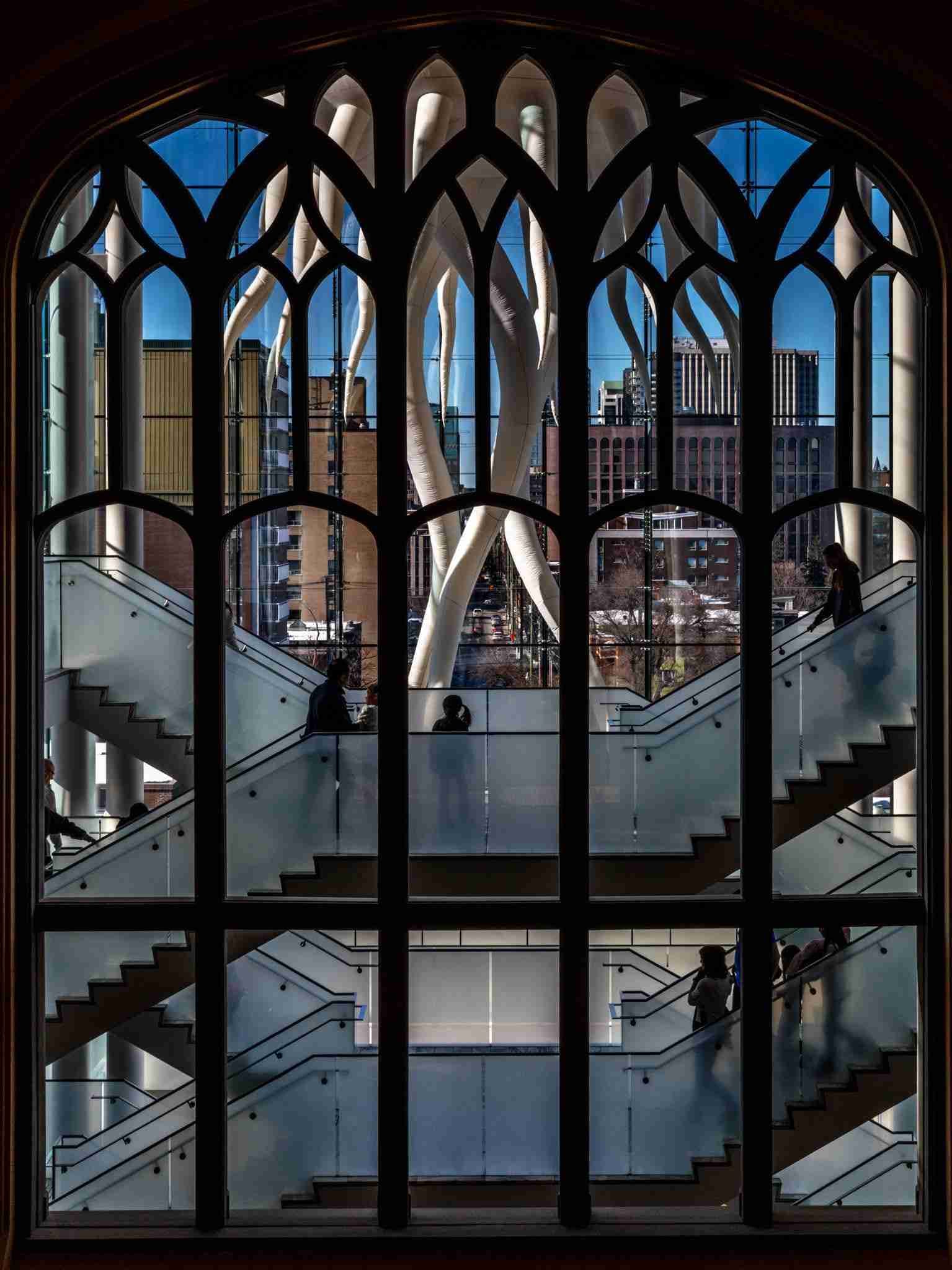
Set within a majestic castle-like structure in downtown Ottawa, the Canadian Museum of Nature is one of the city's most photogenic landmarks, blending architectural elegance with scientific exploration. Formerly the Victoria Memorial Museum Building, this National Historic Site showcases a stunning façade of Scottish Baronial stonework, soaring windows, and a modern glass tower addition that symbolizes the museum's evolution. It's a place where natural history meets visual drama—making it an exceptional subject for photographers drawn to structure, detail, and interior storytelling.
Whether you're shooting the grand exterior, capturing interior exhibits, or composing people within the museum's light-filled atrium, the space is rich in contrasts and textures. The juxtaposition of the historic building with sleek contemporary elements creates a layered aesthetic that rewards both wide-angle architectural work and intimate composition.
Best Photography Opportunities
• Exterior Architecture and Stone Detail
The museum's façade is a showpiece of early 20th-century stonework, complete with turrets, ornate windows, and grand entry stairs. Photograph it head-on for symmetry or explore side angles to play with perspective and shadows. Sunrise or golden hour enhances the limestone tones, while a polarizer helps bring out the subtle textures in the stone. Seasonal elements—snow on the turrets or blossoms in the adjacent gardens—add extra context.
• The Queens' Lantern Glass Tower
The modern glass tower addition at the front of the museum offers striking contrast against the historic stone. Shoot it from below for dramatic lines, or catch its reflections during dusk for mirrored lightplay. Inside, the tower is filled with clean, symmetrical staircases and a suspended whale skeleton—perfect for interior architecture shots with strong verticals and leading lines.
• Interior Atriums and Exhibits
The museum's galleries and central atrium provide excellent opportunities for low-light and ambient interior photography. Glass cases, fossil displays, and specimen mounts are all thoughtfully lit. Look for compositions that include visitors interacting with exhibits or use symmetry and depth-of-field to isolate artifacts. The blue whale skeleton and Arctic exhibit are particularly striking.
• Framing with Garden and Foreground Elements
The front grounds include modest garden spaces, benches, and decorative lighting that make excellent foregrounds for wider shots. In spring and fall, the surrounding foliage adds rich tones and balance to stone-heavy compositions. These elements help to ground the architecture and offer layered outdoor perspectives.
• Night Photography and Reflections
At night, the museum is lit from below, creating dramatic shadows and spotlights on its façade. The glass tower glows softly, revealing interior silhouettes. This is an ideal time for long exposures from across the street or symmetrical front-on shots that capture the building illuminated against the night sky. A tripod and low ISO settings are key here for clean results.
Best Time to Visit
Photographically, the museum can be visited in any season. Golden hour offers warm, angled light that enhances the texture of the stone and softens architectural contrast. Snowfall adds definition and atmosphere to the turrets and balconies, while spring and summer bring the gardens and lawns into play.
For interior shots, weekdays and early mornings tend to be quieter, allowing for less obstructed views of exhibits and architectural features. If you're aiming for night photography, visit just after sunset to capture the full glow of the glass tower before the ambient light fades entirely.
Because the museum operates on an admission basis for interior access, plan ahead for exhibit photography, and check any restrictions on tripods or flash. The exterior can be explored freely at any time.
How to Get There
The Canadian Museum of Nature is located at 240 McLeod Street in downtown Ottawa. It's easily accessible by foot from Elgin Street, by bike via nearby paths, or by public transit with several bus routes stopping nearby. On-site parking is available for a fee, and nearby street parking can be found depending on time of day.
The building is wheelchair accessible, with ramps and elevators available inside. Exterior photography is best approached from McLeod Street or through the garden spaces on the front lawn. Interior access is ticketed, with lockers available for gear storage if needed.
Recommended Gear and Shooting Tips
Bring a wide-angle lens (16–35mm) for capturing the full height and symmetry of the façade or for working within the atrium spaces. A 24–70mm lens is perfect for both interior and exterior compositions, while a 70–200mm can help isolate architectural detail or signage. A fast prime lens (f/1.8 or wider) is useful for low-light exhibit photography where tripods may be restricted.
Use a tripod for exterior night shots, and a polarizer to reduce glare on the glass tower during the day. For interiors, increase ISO cautiously to avoid noise while preserving handheld flexibility. Shoot in RAW to handle the tricky mix of daylight, LED, and backlit lighting inside.
Respect visitor flow, and look for human interaction to add scale and storytelling to interior images. Play with reflections in glass cases and modern surfaces to add layers of visual interest.
Nearby Photography Locations
• Museum of Nature Gardens and Side Streets
The gardens and residential streets surrounding the museum feature period homes, iron fences, and mature trees. These make for excellent environmental context shots or calm architectural studies.
• Elgin Street Commercial Strip
Just steps away, Elgin Street offers a vibrant mix of storefronts, patios, and people. It's ideal for street photography or colorful urban detail compositions.
• Ottawa City Hall and Confederation Park
A 10-minute walk north, this area includes public art installations, fountains, and large open plazas perfect for wide-angle or urban landscape work.
• Centretown Heritage District
The nearby neighborhood is filled with heritage homes, old churches, and tree-lined streets. It's a quiet, walkable place for architectural photography with lots of late-afternoon shadow play.
• Rideau Canal at Flora Footbridge
A short walk east takes you to one of the newer footbridges over the canal, offering elegant lines and beautiful reflections—especially at sunrise and sunset.
Comments
Loading comments…