
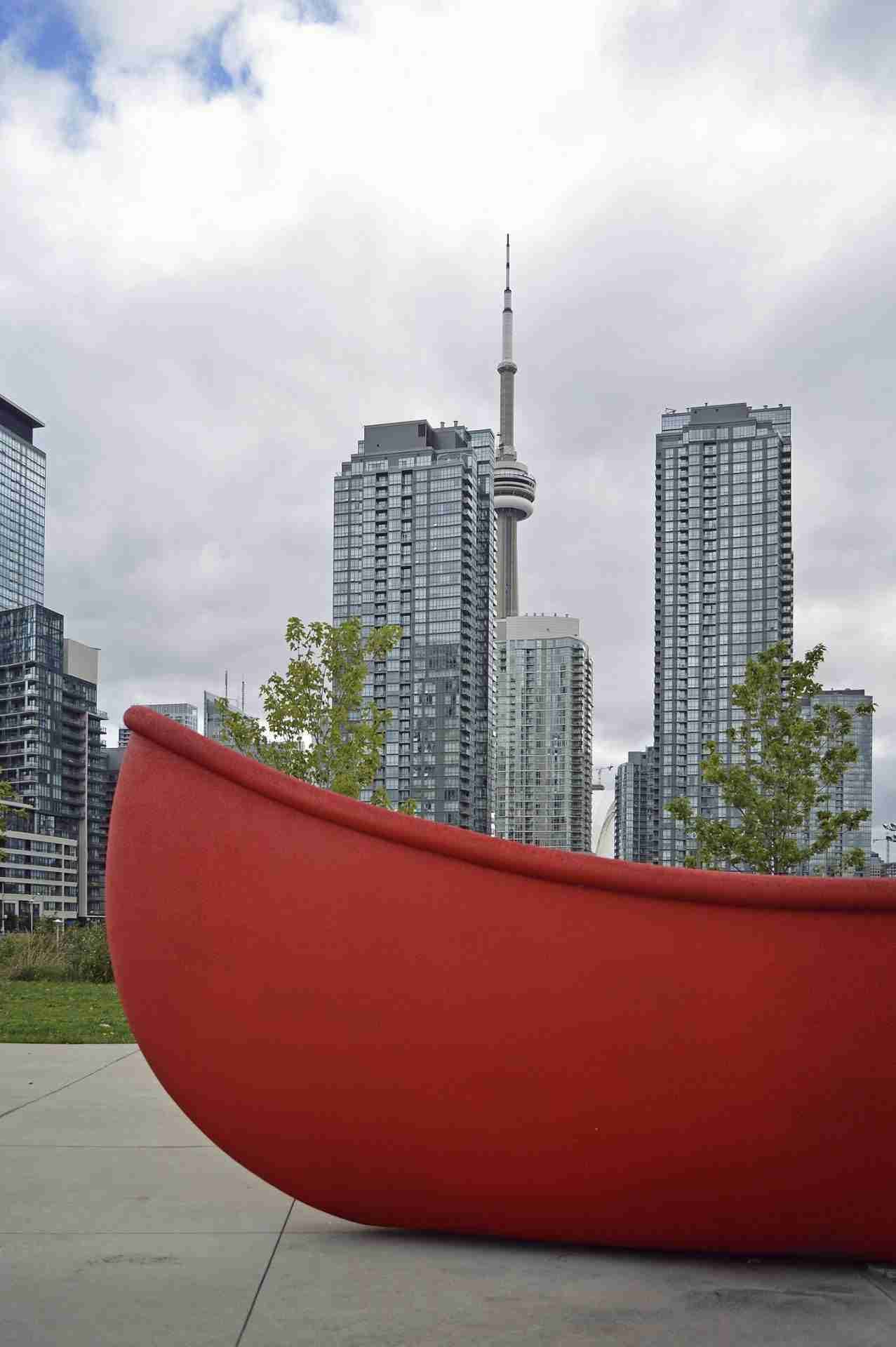
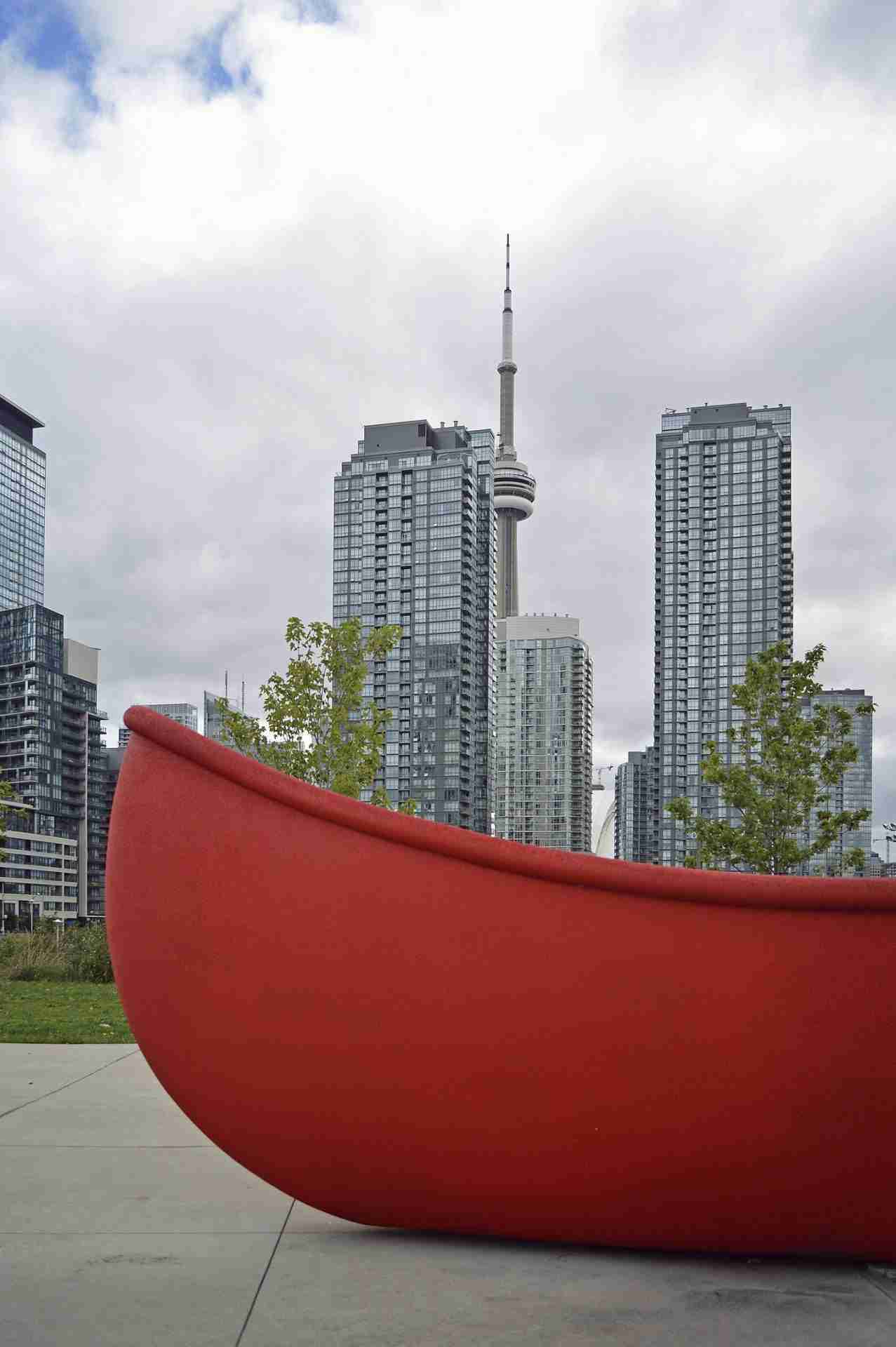
Canoe Landing Park is a contemporary green space tucked tightly into the high-density core of downtown Toronto, bordered by rail lines, highway overpasses, and a sea of glass towers. Despite its compact footprint, this elevated park offers a creative mix of urban views, curated public art, and a playful nod to Canadian identity. At its heart are several works by artist Douglas Coupland, including the striking Tom Thomson's Canoe, which rises above the park like a sculptural tribute to the northern wilderness. For photographers, Canoe Landing is a microcosm of modern Toronto—a place where art, skyline, and infrastructure collide in visually layered compositions.
Best Photography Opportunities
• Tom Thomson's Canoe and City Backdrop
: The most iconic feature of the park is the massive red canoe sculpture, perched on a small rise with a commanding view of downtown's western skyline. It's perfectly positioned for dramatic wide-angle compositions, especially at golden hour when the city's glass towers catch soft light. Frame the canoe with the CN Tower in the distance or use a low angle to silhouette it against the sky. A wide or mid-range zoom lens gives flexibility to experiment with both contextual and abstract framing.
• Sculpture: Float Forms and Green Space Details
: Nearby, Coupland's Float Forms dot the lawn with oversized, glossy shapes in aquatic tones. These playful, modernist forms are perfect for color-forward compositions and abstract studies. Use a shallow depth of field to blur the skyline or surrounding buildings behind them, or go wide to place them within the full urban context. Their reflective surfaces also work well in soft, overcast light, which reduces glare and brings out subtle hue gradients.
• City Skyline and Urban Density
: Canoe Landing Park provides one of the most intimate and cinematic vantage points of downtown Toronto from within its own vertical environment. The surrounding condos form a canyon of glass and steel, especially dramatic when photographed at dusk or in the blue hour. Shoot from the higher southern edge of the park facing north for layered perspectives of towers, balconies, and distant landmarks. Long lenses can be used to compress architectural features, while wide angles give a more immersive street-level experience.
• Railway and Gardiner Expressway Perspectives
: To the north and east, the rail corridor and Gardiner Expressway offer unique industrial and infrastructural elements that contrast sharply with the clean lines of the park's art installations. Use these elements as framing tools or leading lines—bridges, fences, and light poles all contribute to a dynamic urban narrative. These compositions are strongest under late afternoon side light or during evening rush hour when light trails can be captured with long exposures.
• Night Photography and Urban Glow
: After sunset, the surrounding buildings come alive with interior lighting and reflections. The canoe sculpture takes on a moody presence under ambient city glow, and the surrounding walkways become clean, graphic shapes under soft LED light. Use a tripod and low ISO for long exposures, or bracket shots to capture both shadow detail and highlight bloom in the high-rise windows. Blue hour is especially rewarding, with a gradient sky providing contrast to the warm tones of building lights and sculptures.
Best Time to Visit
Canoe Landing Park is photographable year-round, though its visual style changes significantly with the seasons and time of day. Golden hour in the late afternoon is ideal for warm, directional light that washes over the sculpture surfaces and brings out the textures of the surrounding architecture. Morning light tends to be cooler and more diffused due to shadow from the eastern towers, but it works well for color and contrast when shooting city details.
Spring and summer offer green lawns and clear skies that contrast beautifully with the red canoe and Float Forms sculptures. Autumn brings a touch of foliage color to the park edges and enhances the palette of the sculptures. Winter transforms the park into a stark minimalist setting, with snow cover adding graphic clarity to the red canoe and reducing visual clutter around walkways and benches.
Evenings in any season are excellent for skyline compositions and long exposure work. The combination of ambient city lighting, rail traffic, and distant glow provides strong contrast and a sense of urban energy that's hard to replicate elsewhere in the city.
How to Get There
Canoe Landing Park is located just south of Fort York Boulevard between Spadina Avenue and Bathurst Street, in the CityPlace neighborhood of downtown Toronto. It is easily accessible on foot or by bicycle from the waterfront, Entertainment District, or King Street corridor.
The nearest TTC stops are at Spadina Avenue and Fort York Boulevard, serviced by the 509 and 510 streetcars. There is also public parking available in nearby underground lots and street spaces along Dan Leckie Way and Fort York Boulevard.
The park is open daily and is free to access. There are multiple paved paths, grassy areas, and small elevation changes that make the site easy to navigate with camera gear. Benches and public art are evenly distributed, and tripods can be used without restriction. Lighting in the park is subtle but sufficient for evening sessions, particularly near the canoe and pathway lights.
Recommended Gear and Shooting Tips
A wide-angle lens is essential for capturing the red canoe sculpture against the skyline or shooting full-context views of the park. A mid-range zoom (24–70mm) offers the flexibility to move between sculpture detail, skyline layering, and architectural abstraction. A telephoto lens is useful for compressing condo facades or isolating the CN Tower between buildings.
A tripod is highly recommended for twilight and night sessions, especially for capturing rail light trails or bracketed skyline exposures. A circular polarizer can help reduce glare on the Float Forms sculptures and boost saturation in blue skies, though should be used with caution to avoid uneven gradients when shooting wide.
Overcast days can be your friend here—Coupland's sculptures and the surrounding glass towers often photograph best under soft light that reveals subtle color and reduces harsh contrast. For night work, scout compositions in advance and time your exposures to catch building lights, moving trains, or street-level motion for added depth.
Nearby Photography Locations
: Just west of the park, this historic military site offers a rare mix of open grass, stone buildings, and skyline views—excellent for juxtaposing history against modern high-rises.
: A short walk south, this carefully designed waterfront park features spiraling pathways, native plantings, and seasonal color—ideal for macro work and soft landscape compositions.
• Bathurst Street Bridge and Rail Corridor
: Overlooking the tracks just north of Canoe Landing, this elevated location provides strong linear perspective, especially during golden hour or with long exposures at dusk.
• Spadina Quay and Toronto Waterfront
: Head east or south for expansive lake views, marina reflections, and wide-open skies that contrast with the verticality of CityPlace and Canoe Landing's compact energy.
: Just north of the park under the Gardiner Expressway, this public space combines raw infrastructure with installations and seasonal events—perfect for moody architectural shots or street-style compositions.
Canoe Landing Park offers photographers a dynamic blend of urban contrast, national symbolism, and curated sculptural form—all compressed into a walkable, highly shootable space in the heart of Toronto. With ever-changing light, surrounding movement, and bold design, it rewards repeat visits and a creative eye attuned to the dialogue between landscape and city.
Comments
Loading comments…