
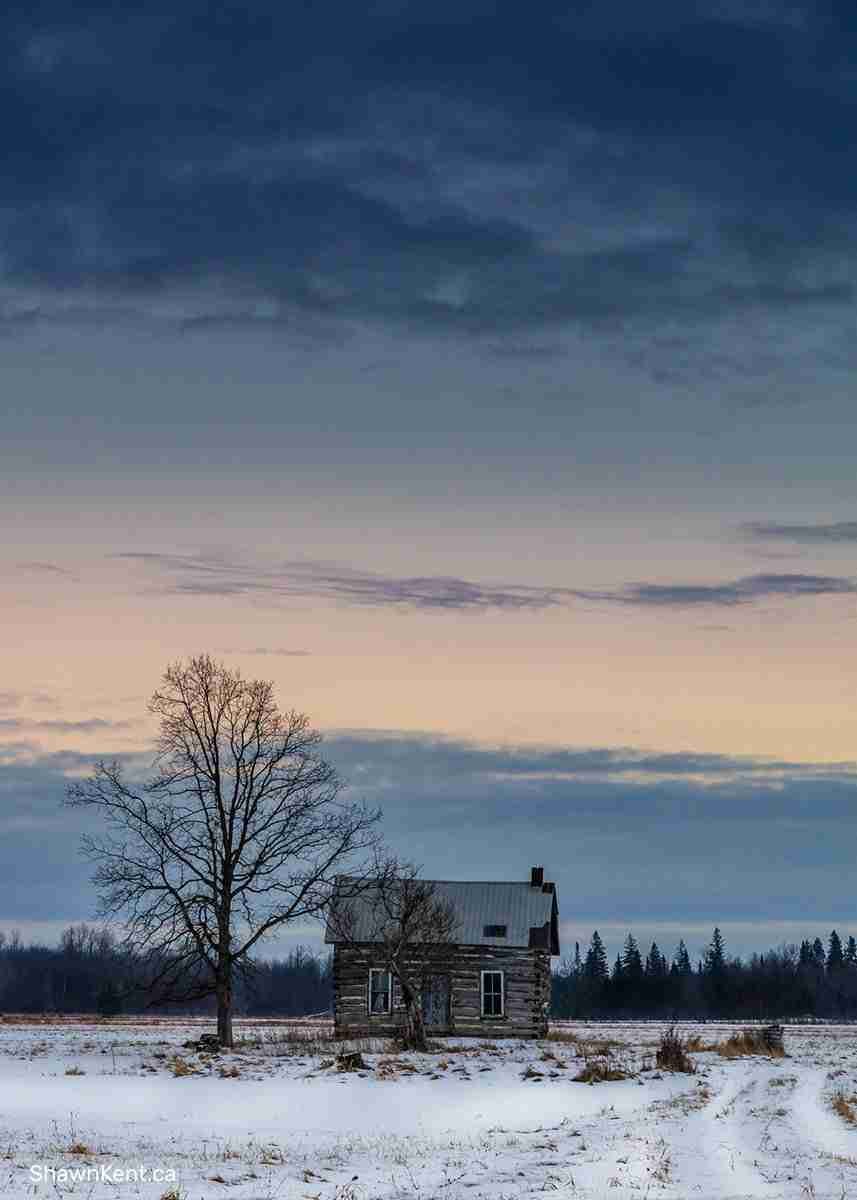
Just outside the village of Carp in Ottawa's rural west end, a small abandoned farmstead sits quietly along the edge of a country road, its weathered wood and time-softened lines offering a poignant study in rural decay. Though modest in scale, the building has a strong presence—isolated in an open field, it leans into the landscape like a memory barely held in place. It's a spot that rewards restraint and patience, especially because it's located on private property and must be photographed respectfully, from the roadside.
Best Photography Opportunities
• Roadside Compositions with Foreground Framing
Since the building is set back from the road and partially obscured by trees in warmer months, one of the most effective approaches is to incorporate natural roadside elements—like fenceposts, tall grass, or wildflowers—as foreground texture. These compositional layers add both depth and narrative while emphasizing your respectful distance from the property. A longer focal length lens (85mm–200mm) helps compress the scene and isolate the farmstead from surrounding distractions.
• Obscured Views and Seasonal Mood
In summer, the building is partially hidden by dense foliage, which creates opportunities for more atmospheric, suggestive imagery. Look for breaks in the greenery or frame the building through branches and leaves for a layered, almost secretive feel. In fall and early spring, when the foliage drops, the building emerges more clearly—its roofline, broken windows, and wood siding more defined. Each season brings its own palette and emotional tone.
• Textural Studies with Long Lenses
Even from a distance, the building's surface textures—peeling paint, cracked wood, rusting metal—can be effectively captured with a long lens. These tighter frames focus attention on the details without breaching private boundaries. Use side lighting in the early morning or late afternoon to bring out relief in the textures and enhance shadows along the lines of the structure.
• Atmospheric Weather and Natural Light
Fog, snow, and soft rain can completely transform the mood of the site. Fog adds mystery and abstraction, while fresh snow isolates the building from its environment, emphasizing form and contrast. Golden hour lighting can catch the edges of the siding or glint off broken windowpanes, adding subtle highlights and a sense of time passing. Overcast days are excellent for even lighting and enhancing the subtle tones of aged wood.
• Minimalist and Contextual Compositions
The surrounding farmland offers clean sightlines, making it possible to compose minimalist frames where the farmstead is a small but deliberate focal point. These compositions can highlight the loneliness and poetic stillness of the site, especially under dramatic skies or across open fields. Look for compositional anchors like utility poles, tree lines, or distant barns to provide balance and narrative context.
Best Time to Visit
The visibility of the farmstead shifts dramatically throughout the year. Spring and autumn are the best seasons for shooting—when leaf cover is sparse and light passes through bare branches, the structure is most exposed and defined. In summer, it is nearly obscured by heavy foliage, which creates a more hidden, mysterious atmosphere. Winter reveals the full shape of the building and allows for high-contrast, black-and-white work.
Lighting is most favorable in the early morning or late afternoon when the sun angles low across the field and adds warmth or long shadows. Mist and frost are common in the cooler months and add atmosphere that works especially well with this subject. Avoid midday visits when light is flat and the roadside becomes more trafficked.
How to Get There
The abandoned farmstead is located near the village of Carp, Ontario, northwest of Ottawa. From downtown Ottawa, take Highway 417 west and exit onto Carp Road. Follow Carp Road north through the village and into the surrounding countryside. The farmstead is visible from the roadside along a quieter rural stretch—its location is well known to local photographers.
There is no formal parking or signage, but there are safe shoulders to pull off for a brief stop. Be mindful of private property boundaries—do not enter the field or approach the building under any circumstances. All photography must be done from the roadside. Bring appropriate footwear for shoulder terrain, especially in wet conditions.
Recommended Gear and Shooting Tips
A telephoto lens (70–200mm or longer) is the best tool for photographing this site from a respectful distance. A mid-range zoom (24–105mm) can also be useful for framing roadside elements or composing wider environmental shots. A tripod is helpful for precise framing, especially in low light or when working with smaller apertures.
Consider using a polarizer to manage glare and deepen tones, particularly in fall when leaf color and contrast are heightened. In winter, a lens hood can help with flare when shooting into low sun, and microfiber cloths are essential in wet or snowy weather.
Watch for traffic and maintain safety when shooting from roadside positions. Return visits throughout the year will provide fresh takes on the scene, allowing you to build a seasonal photo essay around this quiet, crumbling structure.
Nearby Photography Locations
• Carp Ridge and Huntley Highlands
South of the village, this region of rolling forested ridges and rocky outcrops offers excellent landscape and wildlife photography opportunities. The changing elevation and forest cover make it ideal for fall color and low-angle light work.
Located in Carp itself, this Cold War-era underground bunker is visually and historically compelling. The stark architecture and moody interior lighting provide a strong contrast to rural and natural subjects.
• Constance Creek Wetlands
A few minutes east, this wetland area is great for misty mornings, bird photography, and reflective compositions. Boardwalks and elevated vantage points offer strong sunrise potential.
• Kinburn and Stone Structures
Nearby rural hamlets contain old stone barns, silos, and heritage homes in various states of decay. These are excellent for architectural detail and documentary-style rural photography.
• Old Carp Road Scenic Drive
This winding stretch of country road is dotted with weathered fences, old farms, and distant ridgelines. It's especially photogenic in winter and fall, offering ample roadside compositions and open-sky drama.
Comments
Loading comments…