
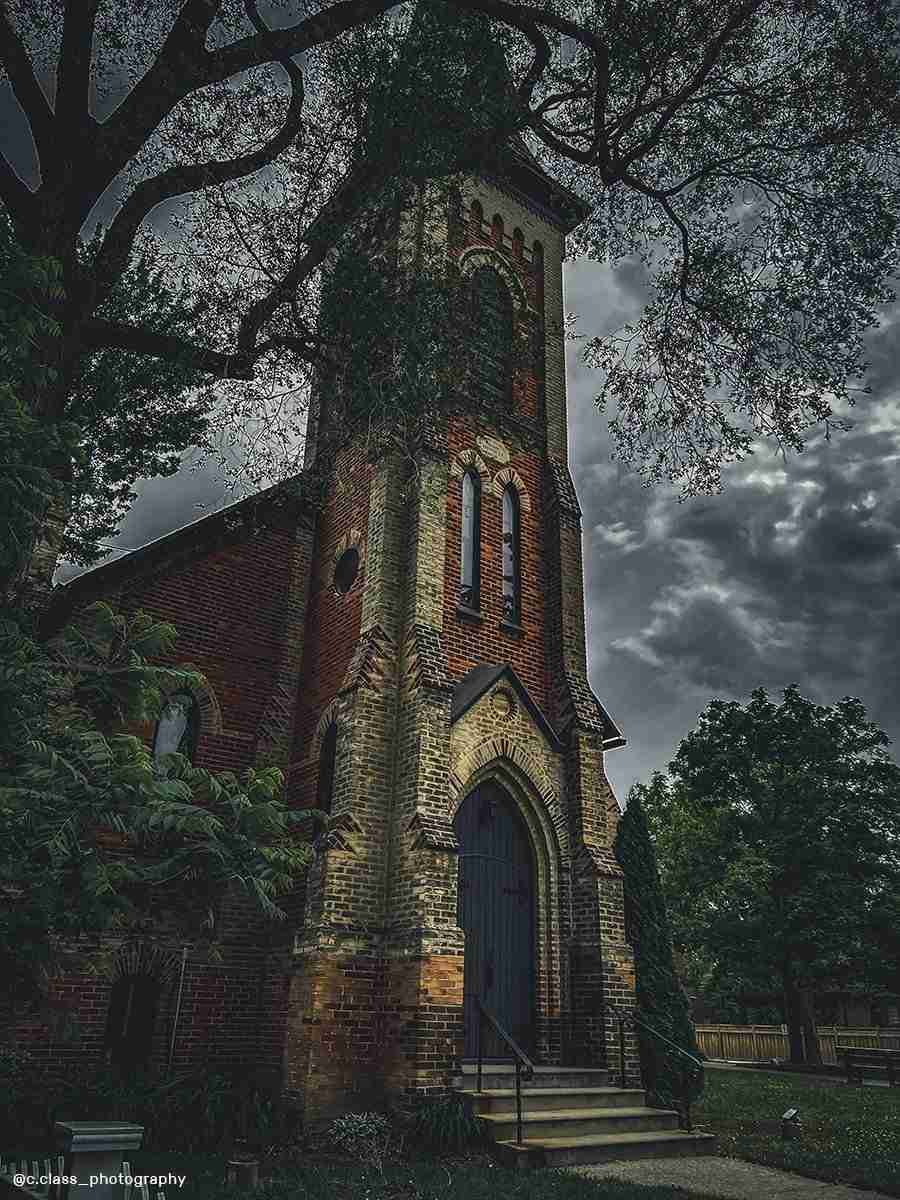
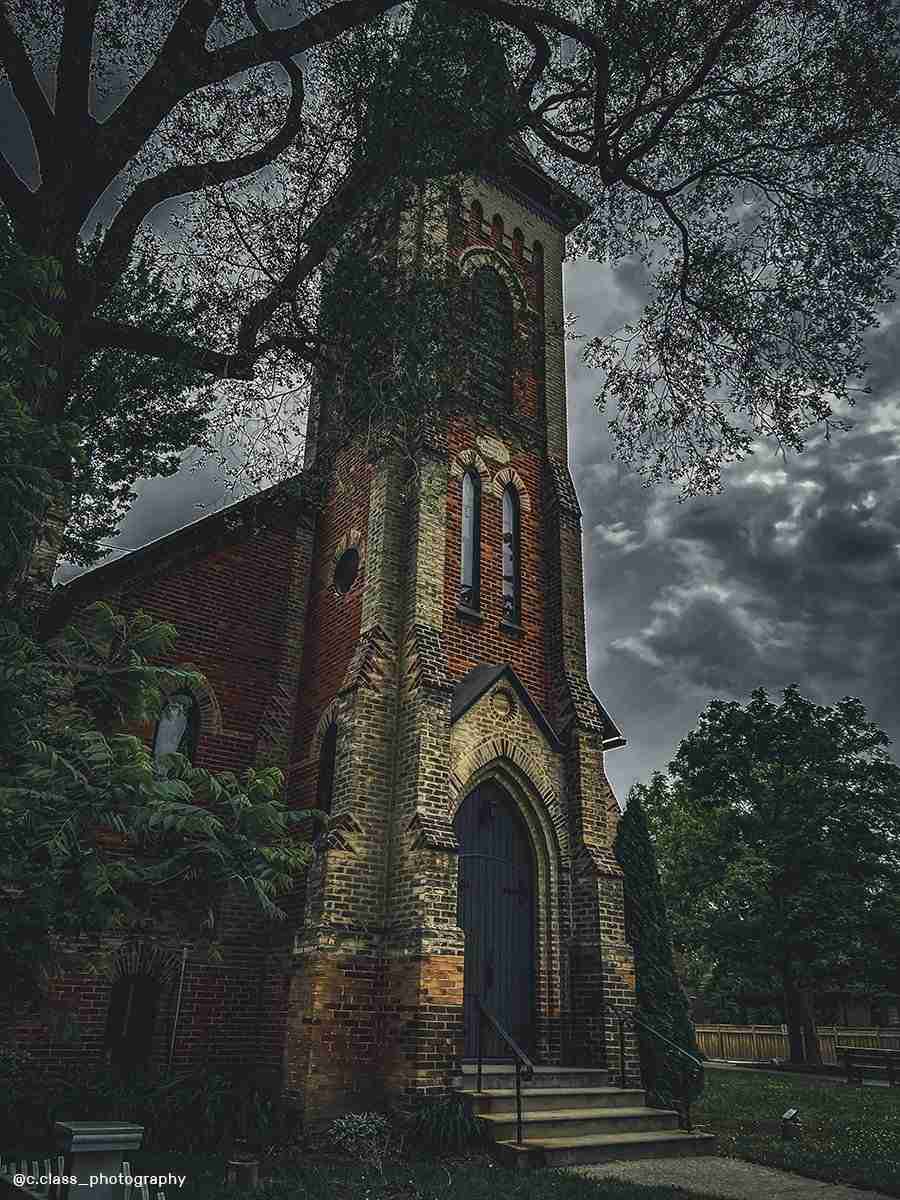
Rising with quiet authority above Main Street in the heart of Unionville, Central United Church is a landmark of stone and spirit. This historic limestone structure, completed in 1879, commands attention not just for its Gothic Revival architecture but for the story etched into its very walls. The stone was ferried across Lake Ontario from Kingston and hauled by horse-drawn wagon to its final resting place, anchoring the church both literally and symbolically to the roots of Ontario's built heritage. Despite numerous interior renovations over the years, the exterior remains faithful to its 19th-century origins—a tall, graceful presence marked by arched windows, a sharply pointed bell tower, and architectural symmetry that makes it a rewarding subject for photographers interested in historical integrity, texture, and natural light.
Best Photography Opportunities
• Frontal Elevation from Main Street
: The church's stately front façade is best photographed from across Main Street, where you can frame the entire building within the leafy context of Unionville's heritage district. A standard or wide-angle lens (24–35mm) allows for a balanced composition that includes the arched entryway, symmetrical windows, and bell tower rising above. Early morning or late afternoon side light casts delicate shadows across the limestone, emphasizing texture and depth.
• Architectural Details and Stone Texture
: The building's limestone blocks—hand-cut and weathered over time—offer a rich surface for detail-oriented compositions. Close-up photography with a 50mm or longer lens reveals chisel marks, the varied coloration of aged stone, and ornate woodwork around entryways and trim. These details are best captured under soft, overcast skies or during golden hour, when directional light brings out the building's surface contours without blowing out highlights.
• Bell Tower and Rooflines
: The church's vertical emphasis, especially the sharply pitched roof and bell tower, lends itself well to low-angle perspectives. Shooting from just below the building's foundation—especially with a wide-angle lens—enhances the sense of height and drama. Consider using the lines of the sidewalk or nearby lamp posts as compositional elements to lead the viewer's eye upward. Twilight provides an excellent backdrop for silhouetting the tower against the evening sky.
• Seasonal Framing and Environmental Context
: Central United Church is surrounded by mature trees that change character dramatically across the seasons. In spring and summer, green foliage can be used to frame the steeple or peek through archways, while autumn offers rich complementary colors to the limestone's cool tones. In winter, snow collects along ledges and rooftops, creating a clean, high-contrast canvas ideal for black-and-white work. Try positioning branches in the foreground to create layered depth and a sense of enclosure.
• Night Photography and Community Glow
: The church is softly illuminated at night, especially during community events or holiday seasons. Use long exposures to capture the gentle uplighting across the stone walls, and balance it against the warm ambient lighting of Main Street. A tripod is essential here, and bracketing can help manage dynamic range between lit and shadowed areas. On foggy nights, diffused lighting adds an ethereal quality that enhances the church's quiet grandeur.
Best Time to Visit
Central United Church is photographable year-round, though each season offers distinct visual cues that alter the tone and palette of your work. Spring brings fresh greens and floral blooms along Main Street, which soften the building's sharp lines and provide vibrant foregrounds. Morning light in April and May is gentle and low, casting even illumination across the façade.
Summer yields long days and dense foliage, which can both frame and obscure the building depending on your vantage. It's an ideal time for wide-angle architectural studies that incorporate the lively streetscape and blue skies. Evening golden hour offers the richest color on the stone, especially when photographed from the west side as the sun dips behind nearby rooftops.
Autumn is one of the most visually dynamic times to visit. The surrounding trees turn vibrant shades of red, orange, and yellow, providing high contrast against the church's muted tones. This is an excellent time for reflection shots in puddles or after rain, and for using fallen leaves as compositional texture.
Winter brings stark clarity, especially on bright sunny days when the low sun skims across the limestone and highlights the shadows within each block. Fresh snow can be used to emphasize the church's symmetry and height. Twilight and early evening light tend to be soft and cool, matching the building's palette and enhancing its sense of permanence and solitude.
How to Get There
Central United Church is located on Main Street in Unionville, a historic village now incorporated within Markham, Ontario. The church sits prominently along the east side of the street, just north of the intersection with Carlton Road. For those arriving by car, free public parking is available along Main Street and in nearby municipal lots, though weekend traffic can be busy—arrive early to secure a space and shoot uninterrupted.
Public transit access is available via York Region Transit (YRT) routes, with stops within walking distance of the church. Cyclists and pedestrians will find Main Street Unionville very accessible, with sidewalks and crossings that allow for easy exploration of the area's many heritage buildings and tree-lined streets.
Photographers will find ample room to work from across the street or on the sidewalk immediately in front of the building. All shooting can be done from public land, and the church's position makes it easy to capture full elevations without the need for intrusive gear or specialized access. Please be mindful of scheduled services or events, particularly on weekends and holidays, when the site may be busier and require additional discretion.
Recommended Gear and Shooting Tips
For photographing Central United Church, a versatile kit that handles both wide architectural views and compressed details will serve best. A 24–70mm lens is ideal for capturing full-building elevations, surrounding context, and interior framing if access is granted. If you're shooting from across the street, a longer focal length (85–200mm) allows you to compress the building's layers and isolate features like window tracery, the steeple, or the arching stonework.
A tripod is essential for twilight or night photography, and useful for carefully composed detail shots. Use a circular polarizer during the day to manage glare from windows and to deepen sky tones. Graduated ND filters can help balance the exposure when shooting at sunrise or sunset, particularly if you're including sky in the frame. For macro shots of stone texture or wood detailing, a fast prime lens (50mm or 100mm) provides excellent clarity and control over depth of field.
Foot traffic can be steady in Unionville, especially on weekends or during festivals, so shooting early in the day ensures cleaner compositions and fewer distractions. Take advantage of the trees and garden features around the church to build foreground interest and depth, especially in spring and fall. Finally, experiment with both symmetrical and offset compositions—the church's design invites precision, but also rewards creative angles from the edges of the frame.
Nearby Photography Locations
: Just a short walk south, this tranquil park features forested trails, footbridges, and water reflections that shift beautifully through the seasons. It's especially striking in the early morning mist or under autumn foliage.
: The surrounding neighborhood is a rich visual archive of Victorian and Edwardian homes, boutique storefronts, and historic signage. Photographers can spend hours capturing architectural details, seasonal decor, and the interplay of shadow and light along the pedestrian-friendly strip.
• Unionville Train Station
: Located nearby on Station Lane, this restored train station provides a rustic, rail-side composition opportunity. With heritage charm and strong linear perspective, it's ideal for black-and-white or documentary-style work.
: A short drive north, this open-air museum features preserved historic buildings, barns, and pioneer artifacts. The grounds are visually dense and offer both interior and exterior shooting opportunities in a curated heritage setting.
: Just south of Highway 7, this expansive natural area features forest trails, boardwalks, and a reservoir. It's a great place for landscape and wildlife photography, especially during migratory bird seasons and early morning fog.
Central United Church is more than a historic place of worship—it's a photographic anchor point in one of Ontario's most charming heritage communities. With its enduring architecture and carefully preserved stonework, it invites both reverence and creativity, offering photographers a chance to tell stories framed by time, faith, and the quiet strength of limestone.
Comments
Loading comments…