
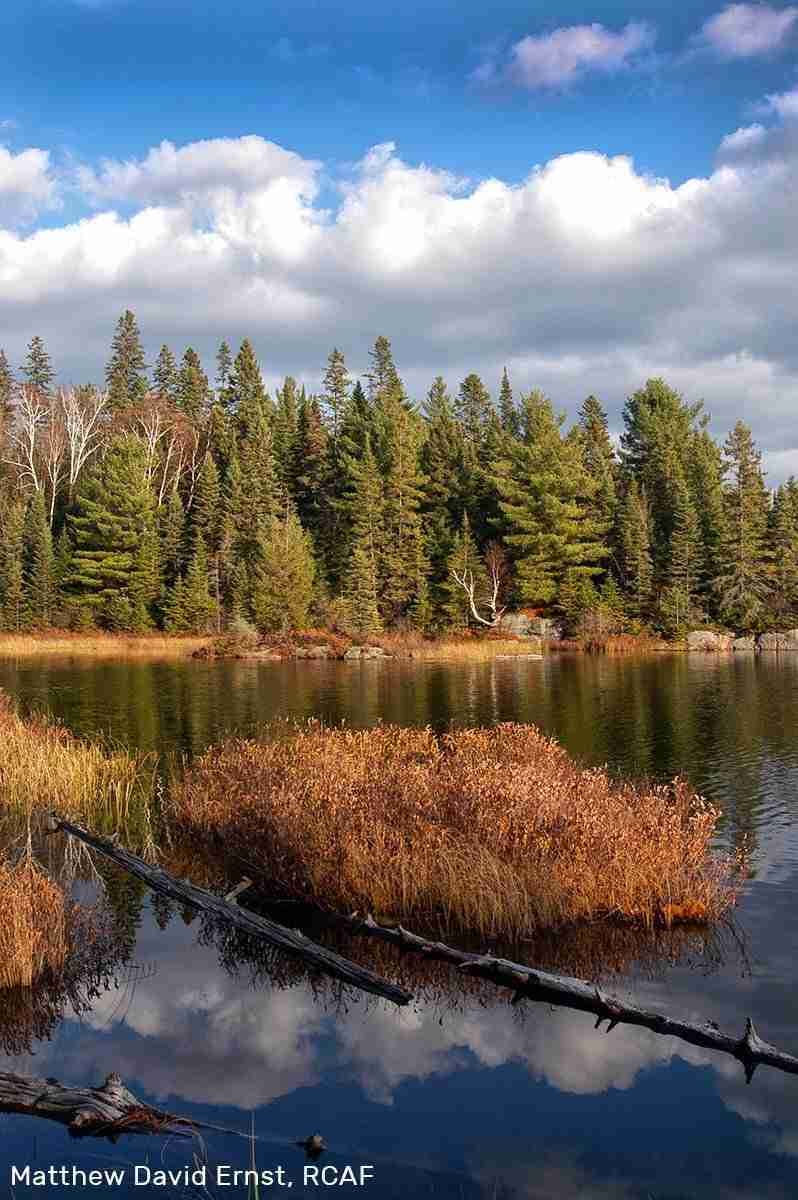
Tucked quietly within the expansive wilderness of Algonquin Provincial Park, Charles Lake is a hidden haven for photographers seeking solitude and pure, untamed beauty. Surrounded by dense coniferous forest and mirror-flat water, this tranquil lake embodies the quiet magic of Ontario's interior. Algonquin's deep wilderness—home to moose, bears, loons, and wolves—forms the perfect backdrop for nature photography that emphasizes stillness, reflection, and seasonal transformation. For those willing to paddle, portage, or hike in, Charles Lake offers a deeply immersive photographic experience in one of Canada's most iconic wild landscapes.
Best Photography Opportunities
• Golden Hour Reflections from the Shoreline
The lake's calm, undeveloped edges are ideal for capturing pure mirrored reflections of trees, clouds, and early morning or late afternoon light. Use a wide-angle lens and low tripod setup near the water's edge to emphasize foreground detail—such as reeds, rocks, or driftwood—framing the broader reflection in the background. In fall, this scene erupts in fiery color, while spring and summer bring deep greens and soft mist.
• Moose and Wildlife Photography at Dusk or Dawn
The quiet edges of Charles Lake, particularly where wetlands meet the treeline, are prime habitats for moose. Arrive before sunrise or settle in at golden hour with a telephoto lens to photograph wildlife as they emerge to feed. Watch and listen for loons calling across the lake, and be prepared for unexpected moments of animal movement through the shallows or across the shore.
• Canoe-Based Compositions and Mid-Lake Perspectives
From a canoe or kayak, you can access open views and low-angled compositions looking toward the shoreline or horizon. These paddling perspectives give your photography a sense of quiet isolation, ideal for minimalist landscapes and layered forest compositions. Use a waterproof bag for your gear and a strap for handheld stability while on the water.
• Morning Mist and Soft Light for Moody Atmosphere
On cool mornings, mist often lingers above the lake's surface, especially in early fall or late spring. This is the best time for capturing atmospheric shots with diffused light and ghostly outlines of pines fading into the haze. Shoot wide for storytelling or tight for intimate detail, using backlight to enhance the mood.
• Night Photography with Stars or Aurora
With virtually no light pollution, Charles Lake is a superb location for astrophotography. In late summer and early autumn, the Milky Way rises clearly above the treetops. Use a sturdy tripod, wide-aperture lens, and long exposure settings to capture the night sky mirrored on the lake. During periods of solar activity, the aurora borealis may also dance above the treeline—particularly on cold, clear nights.
Best Time to Visit
Charles Lake is photogenic year-round, but access and photographic conditions vary by season. Spring (late May through June) brings fresh foliage, moose sightings, and early morning mist—a rich time for wildlife and landscape work. Autumn (late September to early October) is the most spectacular, with intense color change in the maples and tamaracks, mirrored perfectly in the calm water.
Summer (July and August) offers long light, warm paddling conditions, and dramatic skies for sunset, though mid-day light can be harsh. Winter transforms the lake into a silent, snow-covered expanse—ideal for minimalism and stark black-and-white compositions—but access is limited and requires backcountry experience.
Golden hour—especially morning—is ideal for soft light, reflections, and active wildlife. Cloudy and overcast conditions also work beautifully here, bringing out depth in the greens and enhancing textures along the forest floor and shoreline.
How to Get There
Charles Lake is located in the backcountry of Algonquin Provincial Park, and is accessible primarily by canoe and portage through the park's network of interior lakes. The most common access route begins at one of the western or central park access points, such as Canoe Lake or Smoke Lake, depending on your chosen route.
A multi-day canoe trip is typically required, with multiple portages and navigation across several lakes and river segments. Plan your route using an official Algonquin Park canoe route map, and be sure to secure a valid backcountry permit through Ontario Parks before heading out.
The lake has limited or no marked campsites, so plan accordingly for wilderness camping with Leave No Trace principles. Bring waterproof gear storage, a portable tripod, and lightweight lenses suited for both landscapes and wildlife. Cell service is unavailable—offline navigation and safety planning are essential.
Exploring the Surrounding Area
Charles Lake is part of a larger chain of remote water bodies and forested ridges within the interior of Algonquin, each with its own visual and ecological personality. Exploring nearby portage trails or paddling to adjacent lakes reveals hidden marshes, beaver lodges, and secluded coves ideal for quiet wildlife and landscape photography.
The forests surrounding the lake are dense and varied, offering trails through stands of pine, spruce, maple, and birch—perfect for vertical compositions and forest detail studies. Depending on your route, cliff-top lookouts or elevated shorelines can provide wide-angle views across the canopy, especially striking during peak fall color.
Campsite areas near Charles Lake offer natural vignettes of fire rings, canoes, and lakeside tents—excellent for storytelling and documentary-style backcountry photography.
Nearby Photography Locations
A larger lake located along several backcountry routes, Burnt Island offers big sky reflections, sunset color, and excellent mid-lake compositions from a canoe. Its many islands and headlands create opportunities for layered compositions and strong foreground framing.
A remote interior lake with long shorelines and moody water, ideal for atmospheric landscape shots, especially in overcast or early morning light. The surrounding forest is also home to moose and osprey, making it a strong destination for wildlife photographers.
• Ragged Lake
More accessible than deeper interior lakes, Ragged Lake offers excellent reflections, tall pine silhouettes, and golden-hour campsites. Its sheltered coves are perfect for quiet water compositions and early-season sunrise work.
Named for the famed Canadian painter, this lake is rich with creative framing options—twisted pines, windswept points, and strong natural forms that echo Group of Seven aesthetics. Great for both color photography and interpretive black-and-white work.
For those traveling on foot, this rugged loop trail offers interior views of lakes, hardwood forest, and exposed ridgelines. Several scenic lookouts make excellent vantage points for sunrise or moody weather photography, especially during the fall color season.
Charles Lake is a place for slow photography—for quiet mornings, patient waits, and deep attention to detail. It's not the easiest place to reach, but for those who carry their gear into its stillness, it rewards with an untouched palette of sky, water, and forest. Whether you're capturing the low hum of dawn light on water or the silent shimmer of stars above the trees, Charles Lake invites you to photograph not just what you see—but what you feel.
Comments
Loading comments…