
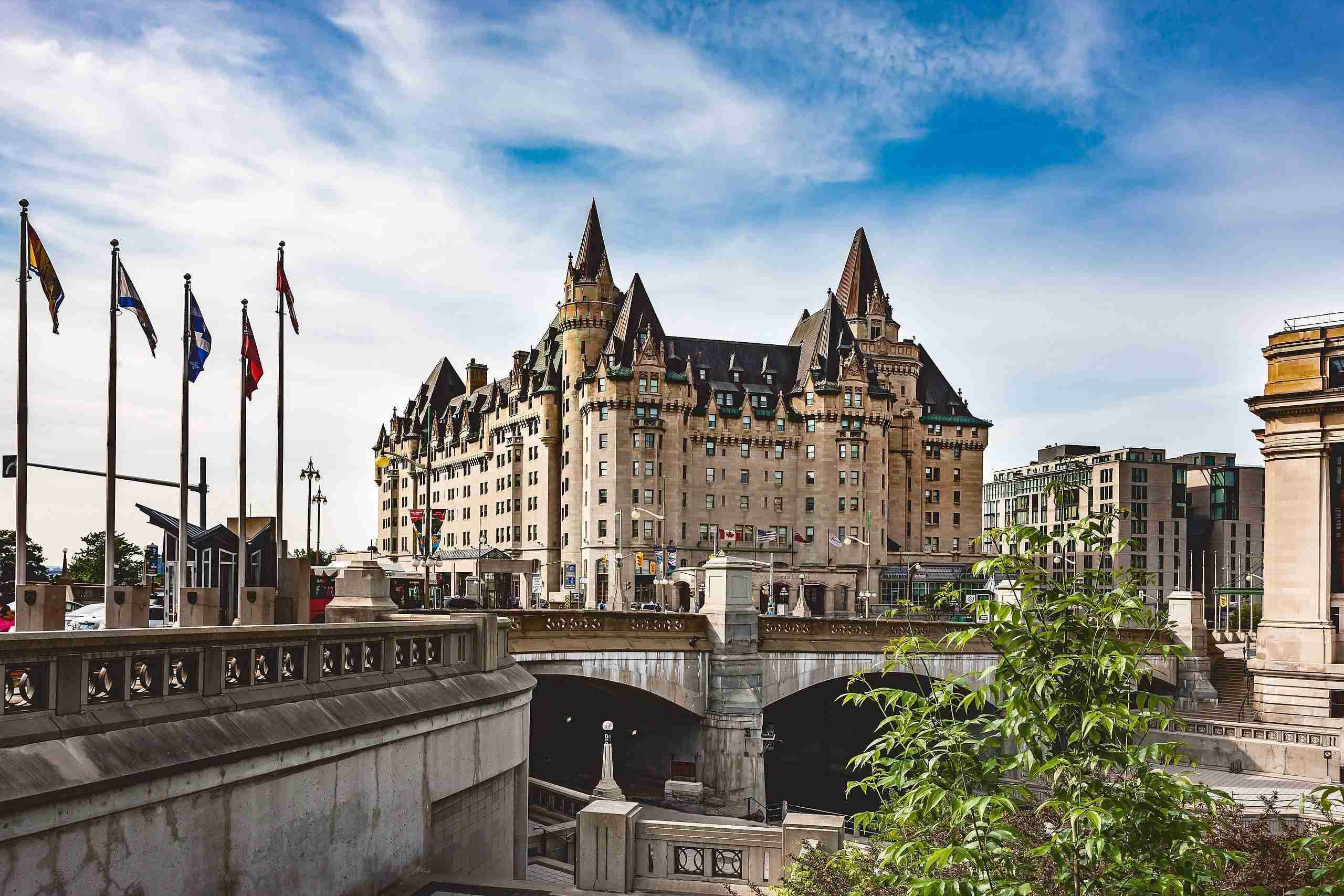
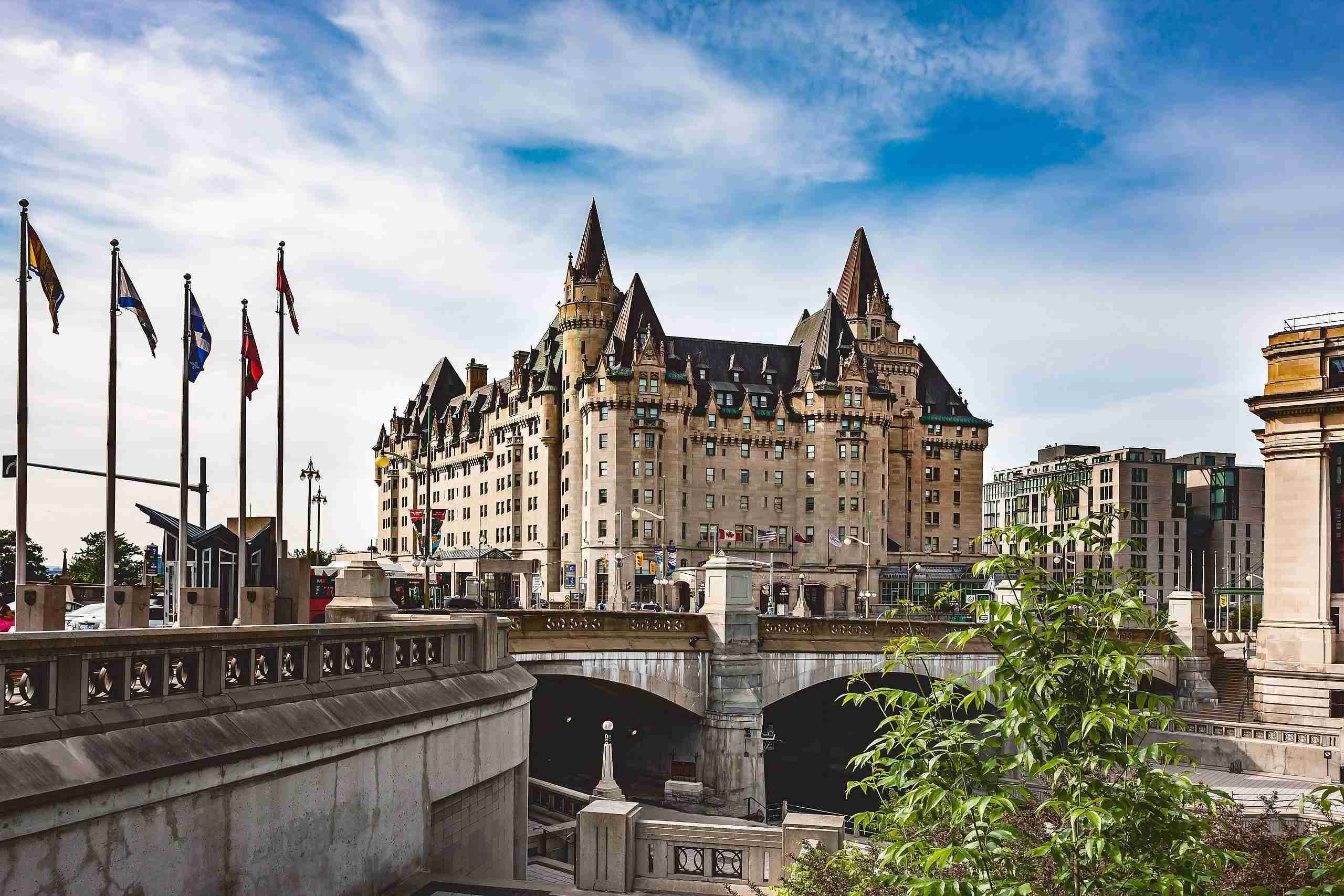
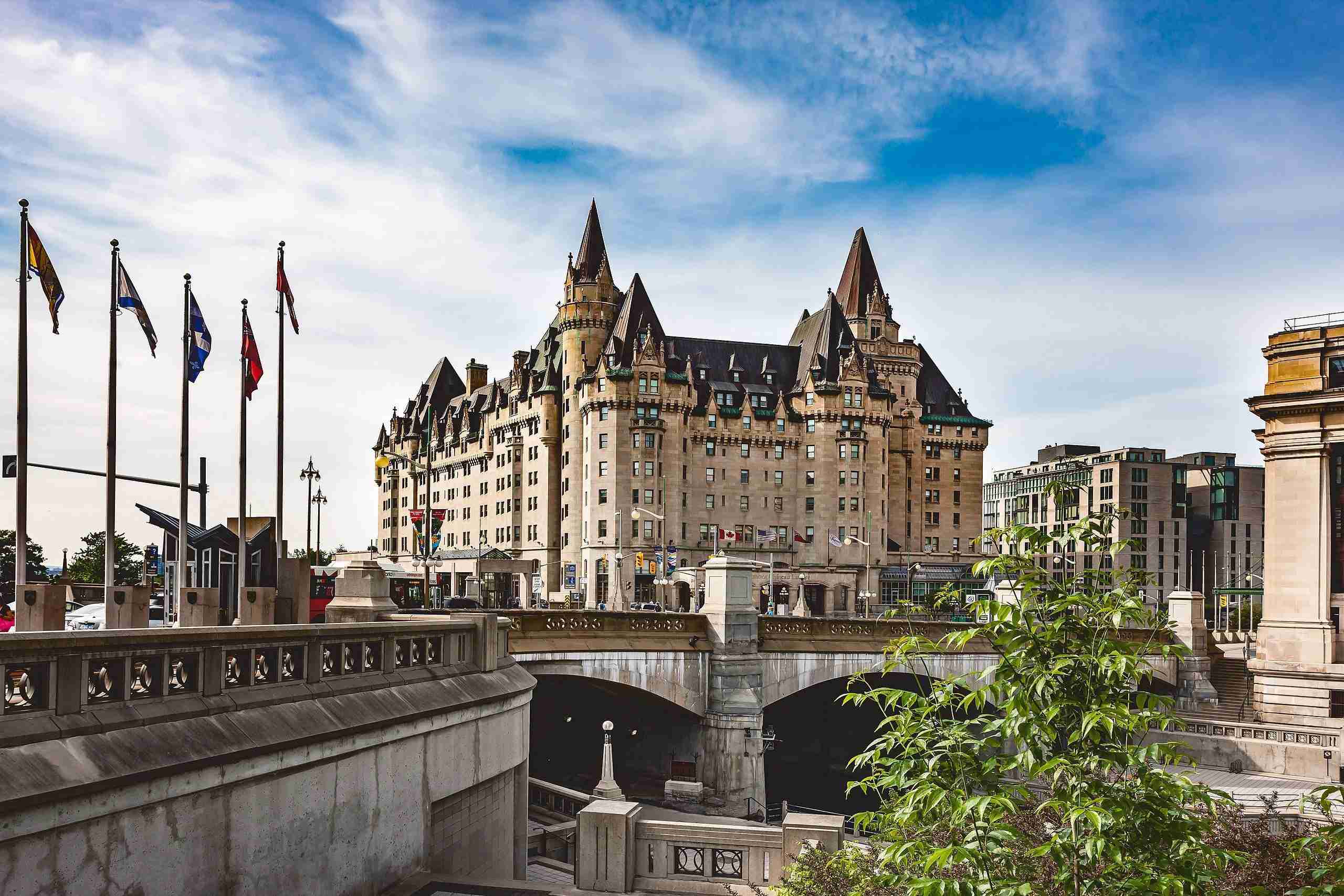
Perched above the Rideau Canal in downtown Ottawa, the Château Laurier is one of Canada's most iconic architectural landmarks. With its grand turrets, steep copper roofs, and creamy limestone façade, this hotel resembles a French castle more than a typical urban building—making it a dream subject for photographers working with historic architecture, dramatic cityscapes, and golden-hour light. Since opening in 1912, it has become a defining feature of Ottawa's skyline and an anchor in any serious photographic exploration of the capital.
Its proximity to Parliament Hill, the canal, and the Ottawa River means you can capture the Château from countless angles and with varied context—from formal wide shots to abstract studies of detail. Whether you're visiting for dusk skyline compositions, architectural storytelling, or atmospheric nighttime work, the Château Laurier is as visually rich as it is historically resonant.
Best Photography Opportunities
• Rideau Canal View from the Plaza Bridge
One of the most iconic vantage points is from Plaza Bridge looking west along the Rideau Canal. This composition places the Château high above the canal locks, framed by water, sky, and the occasional tour boat or skater depending on the season. Sunset brings warm side light across the stone façade, while early morning offers calm reflections in the canal. Long exposures here can turn moving water and clouds into painterly backdrops behind the castle-like structure. The bridge railings can also serve as strong leading lines, guiding the eye directly to the Château's profile.
• Major's Hill Park and Back Elevation
From within Major's Hill Park, you can photograph the rear elevation of the Château framed by trees, gardens, or skyline. The soft sloping lawns and quiet paths provide excellent foregrounds for wide compositions, particularly in spring and autumn. This perspective also allows you to integrate Parliament Hill into your frame, creating layered architectural storytelling in a single image. During tulip season or after fresh snowfall, the park becomes a vibrant or minimalistic setting that enhances the Château's form with complementary textures and tones.
• Close-Up Architectural Details and Textures
The Château's walls are lined with decorative carvings, arched windows, wrought iron balconies, and intricate stonework. These details shine in golden hour light or soft overcast conditions, making them ideal for architectural abstract work or textural studies. Use a short telephoto or prime lens to compress and isolate elements like turrets, dormers, and weathered limestone patterns. In spring, look for vines creeping across the stone, while in winter, frost can accentuate edge detail and transform subtle shadows into striking geometry.
• Night Photography and Illuminated Turrets
At night, the Château Laurier glows under architectural lighting that accentuates its form and symmetry. From the canal or nearby Wellington Street, it becomes a luminous anchor in the dark city. Use a tripod for long exposures and take advantage of nearby lamplight or passing cars to add leading lines or motion blur into your compositions. The castle's profile stands out beautifully against twilight or deep blue hour skies. In winter, falling snow under lamplight adds atmosphere, while in summer, the scene remains vivid and crisp deep into the evening.
• Reflections from Across the Ottawa River
Head to the Museum of History across the Alexandra Bridge in Gatineau for one of the best skyline shots in the region. From here, you can capture the Château Laurier alongside Parliament and the canal in one sweeping frame, especially effective at sunset or with dramatic clouds overhead. This distance allows you to contextualize the building within the national capital's broader cityscape. The river often adds mirror-like reflections, especially in early morning or after rain, allowing you to incorporate natural symmetry and enhance the storytelling of the city's historic core.
Best Time to Visit
The Château Laurier is photogenic year-round, but the best time to shoot it depends on the perspective and atmosphere you're aiming for. Spring and autumn provide the most varied lighting and environmental color. In spring, tulips and blossoms around Major's Hill Park and the canal offer bright foreground interest. In fall, golden trees line the canal and the park, adding warmth to every angle.
Golden hour—particularly late afternoon into blue hour—is the most flattering time for the building's soft limestone exterior, creating rich contrast and dimensionality. Overcast days are excellent for detail and textural photography without deep shadow or blown highlights. Snowfall transforms the scene into a romantic postcard, and in winter, the Rideau Canal below often freezes into a skateway, adding dynamic movement and activity into your compositions.
Weekdays and early mornings offer fewer people on the paths and bridges nearby, allowing for cleaner shots and more flexibility. At night, the Château is fully illuminated until late, making it an excellent subject for tripod work and skyline photography even in off hours.
How to Get There
The Château Laurier is located at 1 Rideau Street in the heart of downtown Ottawa, directly next to Parliament Hill and the Rideau Canal. It is easily accessible on foot from anywhere in the downtown core. Several OC Transpo bus routes stop within one block, and there's paid underground parking nearby if you're arriving by car.
From Parliament Hill, walk east along Wellington Street to reach the canal and Plaza Bridge—one of the best locations for your first wide composition. For rear and park views, enter Major's Hill Park just behind the National Gallery. The Alexandra Bridge and the Gatineau side offer the best distant views.
All public areas around the Château are accessible year-round. Be respectful when photographing near hotel entrances and guest-facing areas, and avoid blocking pathways during busy times of day.
Recommended Gear and Shooting Tips
A wide-angle lens (16–35mm) is ideal for capturing the full building from the bridge or park, especially when including leading lines like paths or railings. A mid-range zoom (24–70mm) is perfect for detail shots, contextual frames, or compressing the towers with nearby elements like the Parliament Library or canal bridges. For skyline views across the river, a 70–200mm telephoto helps bring the building into prominence within the broader cityscape.
A tripod is essential for golden hour and night photography, especially when working along the canal where low light and long exposures create the best results. A polarizer can reduce glare on canal water and deepen blue skies in midday conditions, while ND filters are helpful for smoothing out water motion during long exposures.
Bring a lens cloth, especially if shooting along the canal in spring or winter when mist or snow can coat the lens. Watch for people and vehicle movement on nearby roads and bridges—timing your shots to avoid distractions (or use them creatively) makes a big difference in your final composition.
Nearby Photography Locations
• Rideau Canal Locks and Ottawa River Pathways
Just below the Château, the Rideau Canal locks offer intricate mechanical detail and strong lines leading up toward the hotel. The Ottawa River pathways nearby provide riverfront views and reflections, especially striking in early morning fog or with low sun cutting across the scene.
• Parliament Hill and Library of Parliament
Steps away from the Château, Parliament Hill offers commanding views, formal architecture, and wide public lawns that allow for broad compositions and storytelling between national institutions. The Library's intricate design and copper dome contrast beautifully with the Château's turrets.
• ByWard Market District
East of the hotel, the ByWard Market provides colorful urban scenes, murals, and narrow historic streets. It's a lively contrast to the grandeur of the Château and excellent for capturing local character and small-scale architectural detail.
• Alexandra Bridge and Jacques-Cartier Park
Walk across the bridge into Gatineau for panoramic views of the entire Ottawa skyline. At sunset or twilight, the city lights up with reflections in the river, and the Château becomes a glowing feature among Parliament and downtown.
• National Gallery of Canada and Notre-Dame Basilica
Just behind Major's Hill Park, the gallery's modernist glass structure and the Gothic spires of the basilica offer contrasting architectural forms to photograph. These sites can be combined with the Château into a full walking loop with varied visual tone.
The Château Laurier is more than a hotel—it's a storybook silhouette, a historic cornerstone, and a constant in Ottawa's ever-evolving skyline. For photographers drawn to architectural grace, heritage charm, and timeless form, it remains one of the most iconic and rewarding subjects in the capital.
Comments
Loading comments…