
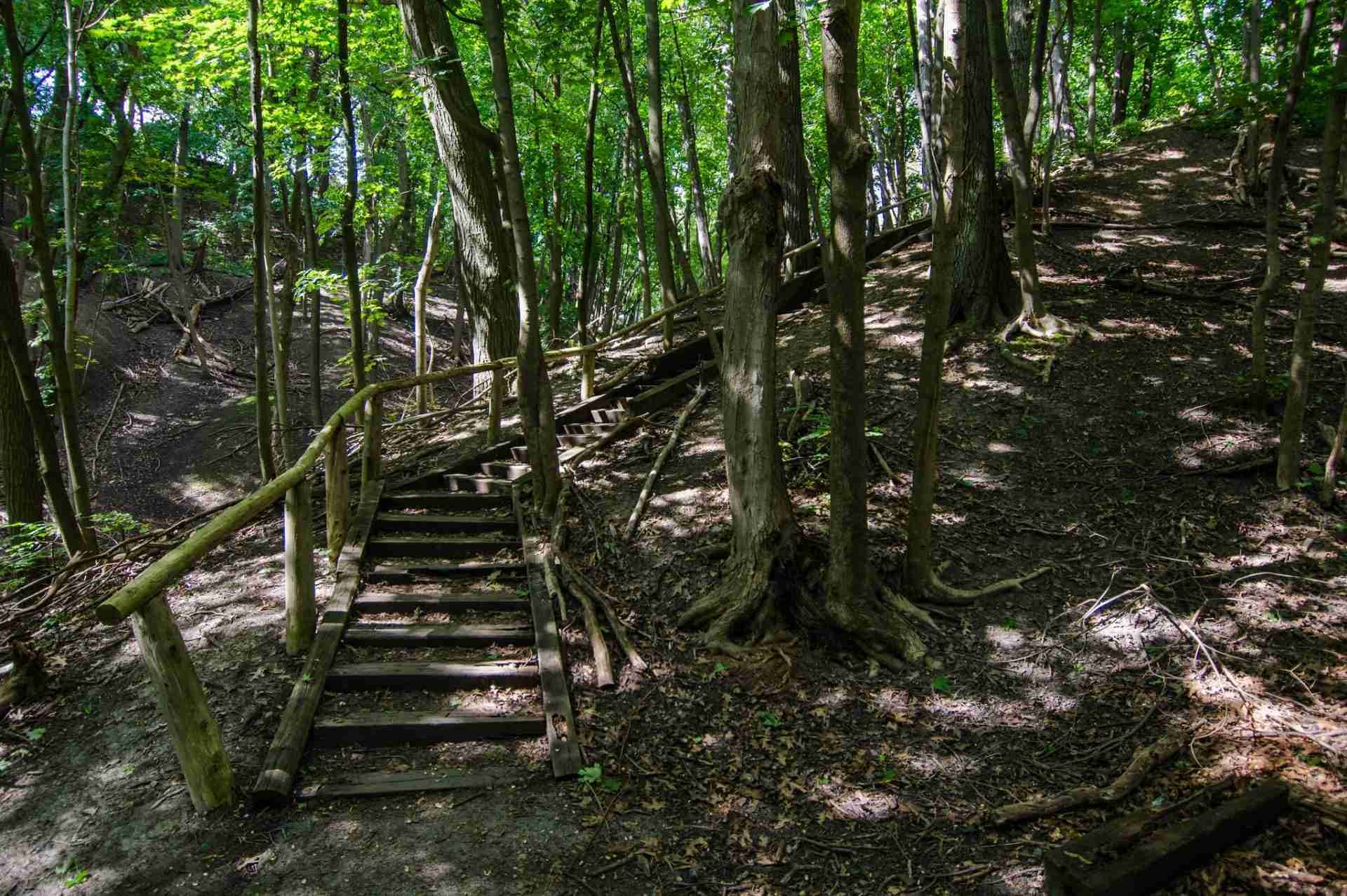
Nestled within the stately Rosedale neighborhood, Chorley Park is a lesser-known gem in Toronto's green space network—quiet, elevated, and perfectly poised for contemplative photography. Once the grand site of Ontario's Government House, this terraced expanse now offers subtle beauty through its rolling lawns, towering hardwoods, and a gentle network of winding paths that descend toward the Don Valley. The absence of heavy crowds and the park's slightly removed position from the urban grid make it a sanctuary for photographers seeking clean compositions, strong natural light, and changing seasonal atmospheres. Whether you're framing a fog-draped valley in autumn, a sunlit pathway in spring, or using the forested ravine trail as a stage for portraits, Chorley Park is rich with understated visual poetry.
Best Photography Opportunities
• Don Valley Overlook and Wide-Angle Landscapes
: The park's elevated position gives photographers an opportunity to shoot broad, layered views of the Don Valley below. From the lookout on the eastern edge of the park, use a wide-angle lens (16–35mm) to capture the sloping trees, footpaths, and natural contours of the ravine. Sunrise and early golden hour work particularly well here, with low light catching the upper canopy and fog often clinging to the lower valley for atmospheric depth.
• Winding Pathways and Leading Lines
: Chorley Park is crisscrossed by gently curving paved and dirt trails that wind between old-growth trees and grassy hills. These paths provide excellent leading lines for compositions, especially when combined with human elements like a cyclist, stroller, or dog walker. Use a mid-range zoom (24–70mm) to maintain compositional control and adjust quickly as the light shifts. The best time for these shots is in the late afternoon, when warm light filters through the tree canopy and casts long shadows across the path.
• Autumn Foliage and Canopy Color
: In mid to late October, Chorley Park becomes a mosaic of orange, red, and yellow, with fallen leaves carpeting the trails and lawns. This is prime time for landscape and detail work alike. Look for compositional contrasts between trunks and leaf color, and isolate overhead branches to create canopy tunnel effects. A 70–200mm lens works well for compressing layers of color and focusing on intimate details, while a wide prime allows for creative low-angle shots with leaves in the foreground.
• Spring Blossoms and Floral Studies
: During April and May, Chorley Park fills with natural blooms, particularly around its lower pathways and open fields. Wildflowers, flowering shrubs, and new foliage offer pastel tones and organic textures. A macro lens or a 100mm prime is ideal for capturing soft-focus floral studies and the early seasonal atmosphere. Mornings are best for dew-covered petals and undisturbed ground cover, especially after rain.
• Forest Trail Portraits and Natural Framing
: The Chorley Park switchback trail connects the park to the Don Valley trail system and is lined with tall, arching trees that form natural corridors—perfect for environmental portraits. Use a 50mm or 85mm lens to create shallow depth of field and let the path draw the viewer into the scene. This area is particularly effective in overcast conditions, when even, soft light reduces contrast and enhances skin tones and color uniformity.
Best Time to Visit
Chorley Park can be photographed year-round, but its most compelling visuals unfold in spring and fall. April through June brings vivid green tones, wildflowers, and soft light—ideal for both macro and broader landscape compositions. In fall, from early to late October, the park's mature trees produce a full spectrum of color, and the open lawn areas become ideal for shooting fallen leaves under golden afternoon light.
Summer offers lush foliage and dramatic shadow play in the morning and late afternoon, though the high sun of midday can wash out detail and flatten contrast. Winter transforms the park into a minimalistic canvas, with snow outlining the pathways and stark trees providing strong graphic elements—ideal for black-and-white compositions or silhouette work in low light.
The park is quietest on weekday mornings and early evenings, offering unobstructed access to key paths and views without foot traffic. Because it sits on a natural elevation, Chorley often benefits from changing weather conditions and shifting light that rolls in over the valley—ideal for those who like to wait for atmospheric moments.
How to Get There
Chorley Park is located in the Rosedale neighborhood, east of Mount Pleasant Road and just north of the Governor's Bridge. From downtown Toronto, drive or cycle north along Bayview Avenue or Mount Pleasant, then turn onto Douglas Drive. Public transit users can take the Bloor-Danforth subway line to Castle Frank Station and walk north via the Milkman's Lane trail or arrive via bus and short walk through the Rosedale side streets.
There is no on-site parking lot, but street parking is available along Douglas Drive and nearby residential roads. Be mindful of local parking regulations, especially during school hours or residential permit restrictions. The park has several well-marked access points, benches, and rest areas along the main paths.
No entry fees or permits are required to visit or photograph at Chorley Park, and tripods are permitted throughout the grounds. Drones are discouraged due to its proximity to residential areas and mature tree canopy, but handheld and tripod-mounted setups are fully viable throughout the park.
Recommended Gear and Shooting Tips
A wide-angle zoom (16–35mm) will help you make the most of the park's valley views, trail curves, and expansive forest clearings. A standard zoom (24–70mm) is the workhorse for walking the loop and adapting to both landscapes and environmental portraits. A fast prime (35mm or 50mm f/1.8) is useful for detail shots, forest scenes, or handheld shooting in soft or overcast light.
If you're visiting in early morning or near dusk, a tripod is helpful for longer exposures under the canopy, especially when capturing moody forest interiors or subtle landscape light. A circular polarizer can be used to deepen sky color or cut glare off wet leaves and stone steps, but should be used sparingly when photographing wide scenes with varying sky tone.
Pack light but prepare for changes in light and terrain—Chorley Park has paved sections and loose gravel switchbacks, so comfortable footwear is a must. A microfiber cloth is recommended, particularly in spring or autumn when humidity or rain can fog lenses and filters.
Move slowly and return often—the quality of light, season, and even wind direction can completely transform a given scene within minutes. This is a location best appreciated through repetition and observation.
Nearby Photography Locations
: Just downhill via the Chorley Park switchback trail, this reclaimed industrial site features brick ruins, community gardens, and boardwalks through wetland habitats. It's excellent for urban decay, nature detail, and wide environmental shots—especially during foggy mornings or golden hour.
: This nearby trail system offers shaded ravine paths, wooden bridges, and changing light conditions that work well for moody forest photography and casual portrait work. In fall, the canopy becomes dense with color, while spring brings fresh greens and rushing creek scenes.
: Located just west of Chorley Park, this quiet urban garden space features formal landscaping, mature trees, and well-placed benches for more structured portraiture or calm detail compositions. It's especially good in early spring and late autumn when the park is quieter.
: A few blocks to the north, this park offers wide open space, tennis courts, and seasonal tree lines—ideal for capturing light and shadow patterns at sunset or for minimalist compositions during winter snowfall.
: Slightly further west, Riverdale Park East provides expansive skyline views of downtown Toronto, best shot at golden hour or after dark with long exposures. Use it to contrast Chorley Park's nature-focused serenity with urban scale and geometry.
Chorley Park is not about dramatic spectacle—it's about finding quiet elegance in line, light, and the subtle shift of seasons. It rewards the photographer who slows down, watches the path curve ahead, and sees beauty in the quiet corners of a city that never stops moving. Whether it's your first visit or your fiftieth, Chorley always has something waiting to be seen through the lens.
Comments
Loading comments…