
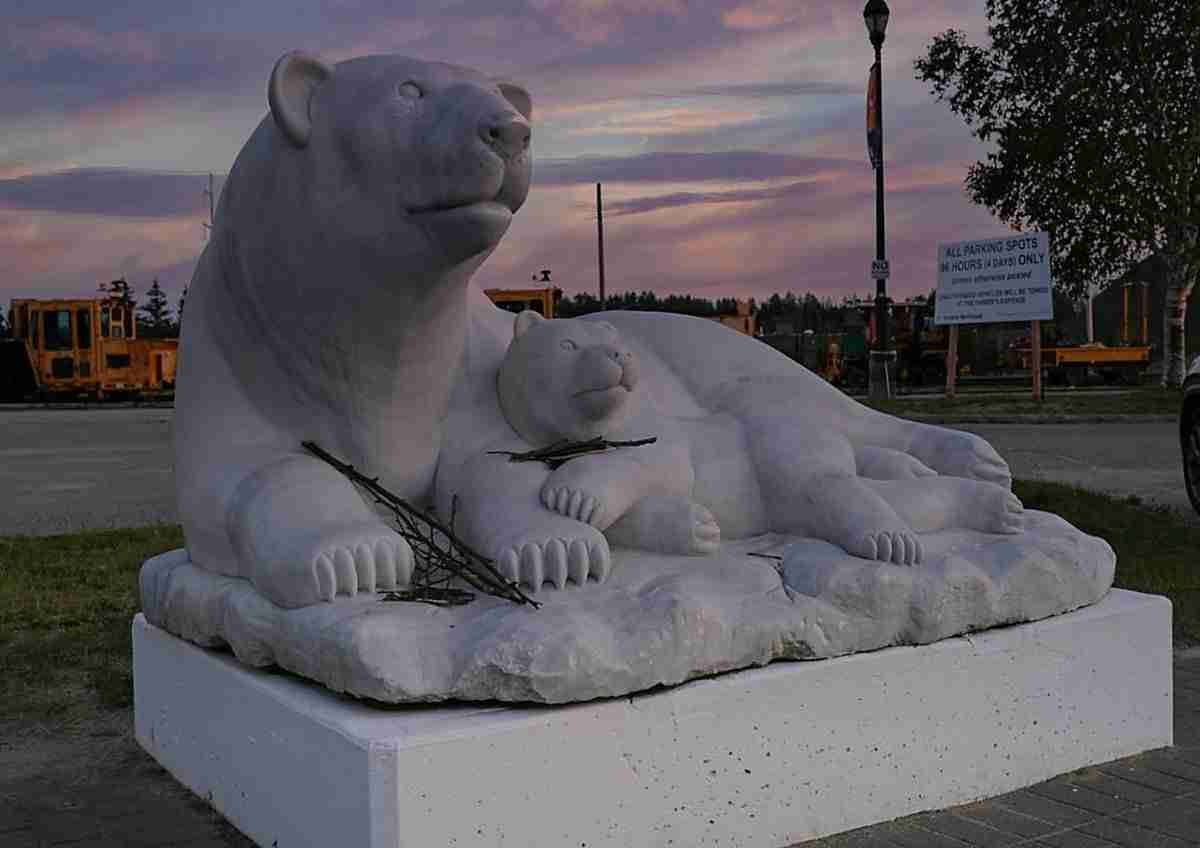
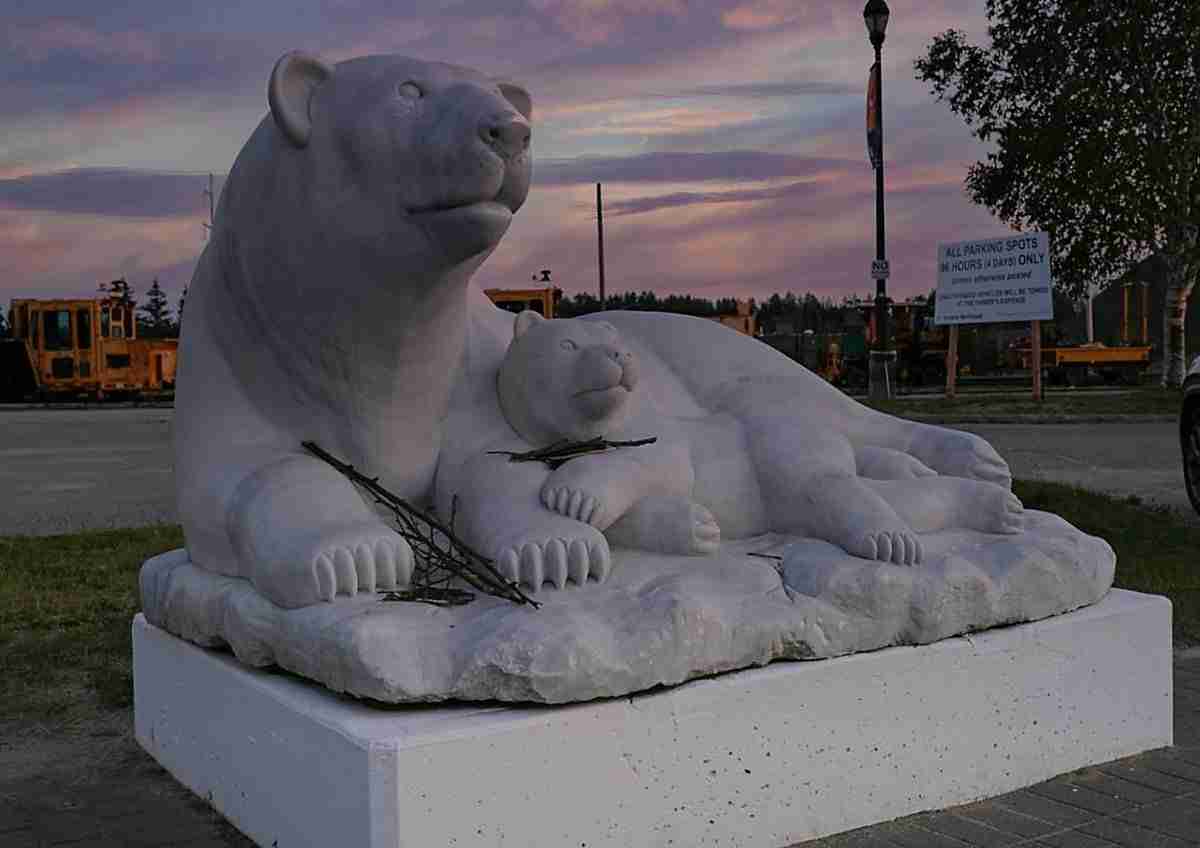
Rising dramatically in the center of Cochrane, Ontario, the Cochrane Polar Bear Statue stands as a commanding visual tribute to the region's most iconic and revered animal. This oversized sculpture is more than a roadside curiosity—it's a cultural emblem of the town's Arctic identity and its enduring connection to the wild north. With its lifelike pose and sheer scale, the statue anchors Cochrane's downtown with a sense of character and pride, drawing visitors and photographers alike. Situated just minutes from the renowned Polar Bear Habitat, the statue symbolizes Cochrane's commitment to wildlife conservation and its role as a gateway to Canada's remote northern wilderness. For photographers, this landmark offers both dramatic visual contrast and powerful storytelling potential, particularly in the extremes of Northern Ontario's seasons.
Best Photography Opportunities
• Framing with Northern Skies and Open Space
One of the most effective ways to photograph the Cochrane Polar Bear Statue is to isolate it against the vast northern sky. Positioned in a relatively open area, the statue can be composed with wide-angle lenses to emphasize its stature while including the surrounding sky as a dynamic background. In winter, deep blue midday skies or the pastel gradient of dusk offer high contrast against the stark white of the bear. In summer, billowing cumulus clouds or sunrise hues provide atmospheric depth. Try framing low to the ground with a 16–35mm lens to exaggerate scale, or shoot from a distance with a telephoto lens to compress the bear against town features or a wide sky.
• Seasonal Contrast and Environmental Context
The statue's visual power changes dramatically across the seasons. In winter, falling snow, ice buildup, and the whitewashed landscape mirror the polar bear's natural habitat. Photograph the statue with snowbanks, frost-coated signage, or low-hanging sun in the background to evoke a true Arctic mood. In summer, shoot from behind surrounding flower beds, green lawns, or park benches to contrast the statue's arctic white against vibrant greenery. Each season brings its own color palette—icy blues and whites in winter, golden tones in autumn, and saturated greens in summer—that help set a visual narrative tied to the bear's symbolic resilience.
• Golden Hour and High-Contrast Lighting
Northern Ontario's long summer days and low winter sun angles make the golden hours especially rewarding. In the morning, soft sidelight illuminates the statue's textured fur and musculature, creating three-dimensional depth and shadow play. In late afternoon, backlighting creates dramatic silhouette opportunities, especially when shot from a low angle with the sun just out of frame. Winter's reflective snowpack bounces ambient light back up onto the statue, reducing shadows and adding subtle fill, ideal for clean, high-key compositions. Consider using a polarizing filter to deepen skies or cut glare from snow and ice.
• Wide Contextual Shots with Town Elements
While close-up detail shots highlight the statue's craftsmanship, incorporating the town's infrastructure gives your images context. Frame the bear with Cochrane's streetscape in the background—such as lampposts, shops, or directional signs—to place the statue within the visual identity of the town. Shooting from a medium distance allows for layered compositions where the statue anchors the image, and the town adds atmosphere and scale. Overcast days are especially good for these compositions, softening contrast and making architectural details pop without overpowering the scene.
• Close-Up Detail and Texture Studies
The statue's sculpted surface—its fur, paws, and facial expression—offers opportunities for texture-rich close-ups. Shoot at a wide aperture with a 50mm or 85mm prime to isolate detail, whether it's the curve of a paw or the slope of a shoulder against a blue sky. In winter, rime frost or fresh snow can cling to these features, enhancing the tactile quality of the surface. Try focusing on one section of the sculpture with a shallow depth of field for minimalist compositions that abstract the bear's form while maintaining emotional impact.
Best Time to Visit
Cochrane's extreme seasonal variation makes the statue a year-round subject, with each time of year offering distinct photographic conditions. Winter transforms the statue into an almost seamless extension of its environment. From December through March, the snowy landscape, cold light, and minimal color offer an authentic Arctic aesthetic that's both stark and powerful. Blue hour lingers longer in these months, giving ample time for cool-toned imagery with high mood and contrast.
Spring arrives late and brings subtle shifts—melting snow, bare trees, and soft morning fog. This transitional season allows for compositions that blend winter's sharpness with the early signs of thaw and renewal. Summer brings long daylight hours, lush green surroundings, and warm directional light—ideal for vibrant, full-spectrum images and environmental storytelling.
Autumn, typically from mid-September to late October, blankets the town in rich tones of red, orange, and gold. The statue becomes a visual counterpoint to the warm colors, standing in stark contrast to the changing foliage. Golden hour during this season offers especially flattering light, with the low sun casting long shadows that emphasize the sculpture's form.
Regardless of season, early morning and late afternoon provide the best light. Clear days with low sun angles are ideal for contrast-rich compositions, while overcast skies create evenly lit conditions for balanced, documentary-style work.
How to Get There
The Cochrane Polar Bear Statue is centrally located at 6 Aurora Avenue, just off Highway 11 in the town of Cochrane, Ontario. The statue sits prominently in a small plaza near the entrance to the Tim Horton Events Centre, a short walk from the Polar Bear Habitat and downtown businesses. The location is easily accessible by car, with dedicated visitor parking available directly adjacent to the site.
From Timmins, it's a two-hour drive northeast via Highway 101 and Highway 11. For those arriving by train on the Ontario Northland service or via bus, the Cochrane station is within walking distance of the statue. The site is open year-round, with maintained paths and plowed access in winter.
There is no fee to visit or photograph the statue. Tripods are permitted, and there's ample space around the statue to work with a variety of gear. If you plan to shoot during heavy snow or low light, be prepared with appropriate outerwear and lens protection. The nearby Polar Bear Habitat offers additional opportunities for wildlife photography, and combo visits are recommended for those interested in a broader Arctic-themed photo experience.
Recommended Photography Gear
A standard photography kit will serve you well here, but select lenses and filters will help emphasize the statue's scale and visual power. A wide-angle lens (16–35mm) is ideal for capturing the statue within its environment or exaggerating its size from low angles. A 24–70mm zoom provides excellent flexibility for both wide framing and detail shots. For close-ups or abstracts, a fast 50mm or 85mm prime allows for shallow depth of field and crisp rendering.
In winter, bring a sturdy tripod and remote shutter for low-light shooting, and consider a polarizer to control glare on snow or enhance skies. In snowy conditions, lens hoods and microfiber cloths are essential for managing snowfall or condensation. For night photography or blue hour compositions, a small LED panel or flashlight can be useful for light painting or subtle fill.
Battery performance drops quickly in sub-zero temperatures, so bring extras and keep them warm. A weather-sealed bag with easy access is recommended, especially during fast-changing winter conditions. For those interested in storytelling or travel documentary work, a second camera body or compact mirrorless system with a fixed lens will let you move quickly between tight and wide compositions.
Nearby Photography Locations
Located just down the road from the statue, this unique facility houses live polar bears in a spacious, naturalistic environment. With the right timing and gear, it's possible to photograph these incredible animals in a setting that mimics the Arctic, especially during feeding or enrichment sessions.
A short walk from the town center, this tranquil lake offers seasonal reflections, walking trails, and open views. Ideal for sunrise or sunset photography, particularly in fall and winter when mist or fresh snow enhances the quiet mood.
• Historic Downtown Cochrane
Capture the charm of Northern Ontario with heritage architecture, small-town storefronts, and local signage. This area is especially photogenic after a fresh snowfall or during evening golden hour when warm light spills across the rooftops.
• Tim Horton Events Centre and Ice Rink
The center behind the statue occasionally hosts community events and displays local culture. Photograph architectural elements, community life, or winter activity such as skating and outdoor recreation during special events or colder months.
• Ontario Northland Railway Yard
For industrial or travel-themed photography, the nearby rail yard offers a glimpse into Northern Ontario's connection to transportation and remote access. Shoot during blue hour or golden light for graphic compositions with strong lines and cool tone contrast.
The Cochrane Polar Bear Statue is more than just a roadside photo stop—it's a cultural landmark that captures the spirit of the north through scale, setting, and symbolism. Whether blanketed in snow or standing tall against a summer sky, this sculpture invites photographers to engage not only with form and light, but also with the story of a town built on resilience, identity, and respect for the wild.
Comments
Loading comments…