
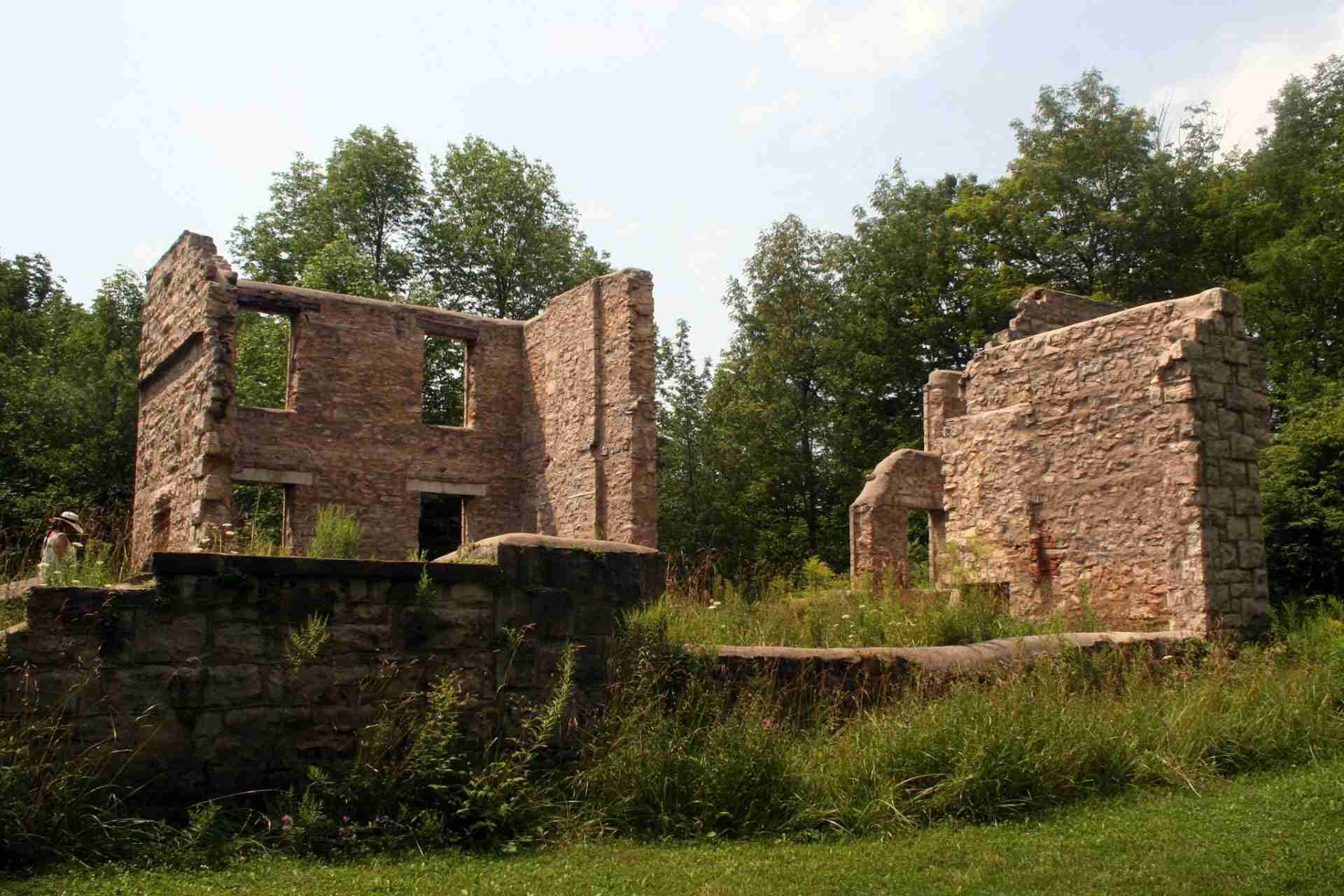
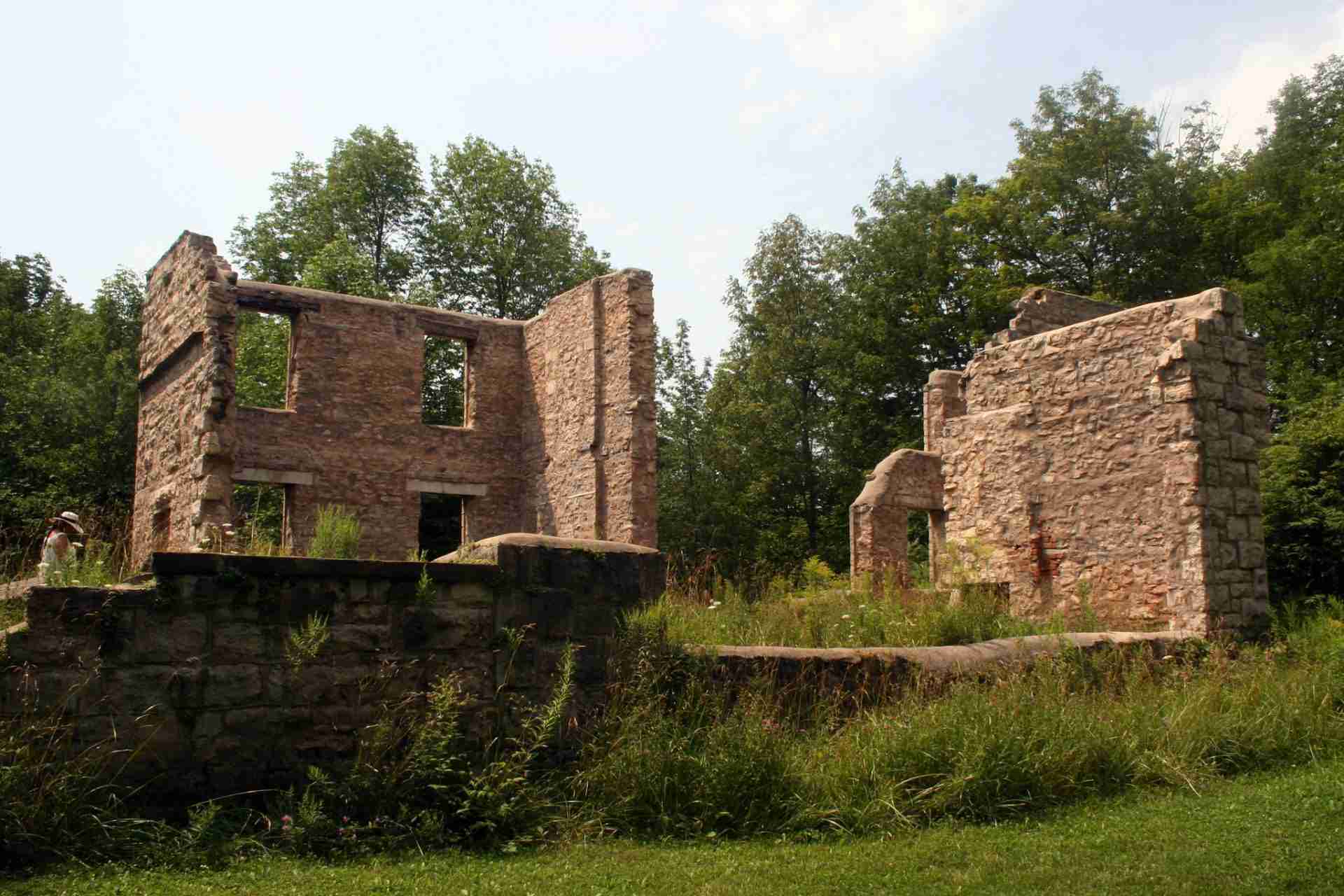
Tucked into the forested bluffs of the Spirit Rock Conservation Area near Wiarton, the Corran Ruins offer a haunting and visually rich location for photographers interested in the intersection of architecture, landscape, and time. Once a grand 19th-century estate overlooking Colpoy's Bay, the stone remnants of the Corran now stand as a testament to fading grandeur, slowly reclaimed by nature. Ivy, moss, and wind-swept leaves have softened its edges, creating an evocative contrast between the permanence of stone and the transience of the surrounding forest. The site is more than a ruin—it's a layered photographic experience, blending textures, filtered light, and the serenity of the Niagara Escarpment's wooded trails.
Best Photography Opportunities
• Wide Compositions of the Ruins Against the Forest
Photographing the full facade of the Corran Ruins is best done with a wide-angle lens, allowing the entirety of the standing structure to be framed alongside the surrounding forest canopy. Position yourself just below the elevated front of the building to create a sense of scale and atmosphere. Early morning or late afternoon light filters softly through the trees, accentuating the textures of the weathered stone and catching the leaves overhead. The mix of man-made symmetry and organic growth gives this shot a rich narrative quality, ideal for landscape photographers with an eye for contrast.
• Architectural Details and Textures
Closer inspection of the ruins reveals ornate stone window frames, broken stair foundations, and scattered iron fittings—details that reward patient exploration. A standard zoom or short telephoto lens (50–100mm) allows for tight framing of corners, archways, and cracked stone surfaces. Shoot in soft light to preserve subtle texture, or embrace high contrast conditions for black-and-white studies that highlight the ruin's geometry. These details are perfect for storytelling sequences or atmospheric inserts within a larger set of landscape shots.
• Interior Framing and Natural Overgrowth
Shooting from within the footprint of the ruins outward allows for creative framing through empty windows and doorways. Use the ruin itself as a compositional device—aligning straight lines of stone with vanishing points in the surrounding woods. Creeping vines and plant life often drape across the openings, catching golden-hour light and casting intricate shadows across the interior stonework. A tripod can help here to maintain sharpness in lower light and allow for careful composition without rushing.
• Woodland Paths and Light Play Along the Trail
The forest trails leading to and from the ruins wind along the edge of the Niagara Escarpment, offering beautifully lit corridors of trees and intermittent views over Colpoy's Bay. These are excellent for wide compositions, particularly in autumn when leaves blanket the ground and create vibrant color palettes. Look for angled light breaking through the canopy in early morning to produce soft shadows and highlight the shape of the trail. Long exposure techniques can work well in low light to capture subtle movement in leaves and branches.
• Wildlife and Bird Photography in the Conservation Area
While the ruins are the focal point, the surrounding forest and escarpment cliffs offer regular sightings of deer, woodpeckers, and migratory songbirds. A lightweight telephoto lens (200–400mm) is sufficient for most encounters. Shoot with a high ISO and fast shutter to freeze motion among branches or along the trail. These wildlife shots complement the more static architectural frames and give a fuller sense of the area's ecological variety.
Best Time to Visit
The Corran Ruins are accessible year-round, but photographic conditions are most favorable in late spring, summer, and autumn. In spring, fresh green growth provides a vivid backdrop, and early morning fogs often cling to the forest floor, creating ethereal conditions around the stonework. Summer offers dappled light through dense foliage and easy trail access, while autumn delivers the most visually dramatic setting. During peak fall color, the forest surrounding the ruins glows with warm tones, and fallen leaves create rich ground textures that enhance foreground interest in wide compositions.
Winter access is possible but can be challenging depending on snow accumulation and trail conditions. Snow-covered ruins can make for a striking subject, especially during overcast days that bring out detail and contrast in the stone. However, visitors should be prepared with traction devices and weather-appropriate clothing.
Golden hour light is particularly effective at the site—sunrise for soft, indirect lighting through the trees and sunset for golden tones bouncing off the stone. Midday shooting can be difficult due to high contrast between sunlit and shaded areas, though cloudy days are an excellent alternative for even lighting throughout the scene.
How to Get There
The Corran Ruins are located within Spirit Rock Conservation Area, approximately five minutes north of Wiarton, Ontario, along Highway 6. The conservation area is managed by the Grey Sauble Conservation Authority, and a small entrance fee is collected at the parking lot kiosk.
After parking, follow the main trailhead into the woods. The walk to the ruins is approximately 10 to 15 minutes on a well-marked, moderately inclined trail. The path loops around the ruins and connects with scenic overlooks of Colpoy's Bay. The trails are mostly compacted earth and gravel, but in wet or winter conditions, they can be slippery, so hiking footwear is recommended.
The ruins themselves are open for viewing but fenced in select areas for safety. Climbing on the stonework is prohibited to preserve the site's integrity. The area is open from dawn to dusk, with no artificial lighting—so plan shoots around natural light availability. There are no restroom facilities on-site, and cell signal may be weak, so prepare accordingly.
Recommended Gear and Shooting Tips
A wide-angle lens (16–35mm) is essential for full-structure shots and immersive forest compositions. Pair this with a standard zoom (24–70mm) for mid-range frames and architectural details. A short telephoto or macro lens is useful for capturing textures in the stone or tight natural elements like lichen, moss, and carved remnants. A polarizer will help reduce glare on damp surfaces and enhance color contrast in the foliage.
Tripods are recommended for interior or low-light shots, especially when working at sunrise or during overcast conditions. A remote shutter or delayed release will help maintain sharpness in long exposures. Pack lens cloths to deal with moisture, especially during cool, foggy mornings.
Shoot in RAW to maximize dynamic range, particularly when balancing bright sky and dark interior shadows. Consider bringing a flashlight or small LED to experiment with light painting inside doorways or for enhancing shadow textures at twilight—though always be mindful not to disturb other visitors.
Nearby Photography Locations
• Colpoy's Bay Lookout
Accessible from the same trail system, this viewpoint offers sweeping vistas across the bay toward Georgian Bluffs. Best at sunrise or during early morning fog, the overlook is ideal for wide landscapes and moody long exposures.
A short drive south, this site features dramatic limestone overhangs and mossy forest floor compositions. Great for both wide-angle environmental shots and tight, texture-focused imagery of layered rock formations.
• Wiarton Marina and Waterfront
Located in the town just below Spirit Rock, this shoreline area provides opportunities for sunset shooting, sailboat silhouettes, and long exposures over Georgian Bay. The pier is especially good for blue hour compositions with reflected sky light.
Further northeast along the Bruce Trail, this elevated escarpment lookout features dramatic cliff edges and expansive views over the Saugeen Peninsula. Ideal for sunrise and drone photography with strong leading lines and horizon drama.
A wilder and more remote location east of Wiarton, this reserve features dense mixed forest, seasonal waterfalls, and rugged terrain perfect for moody forest compositions and macro work in shaded environments.
The Corran Ruins offer more than just a subject—they offer a setting. A place where natural and historical narratives overlap, and where light and decay reveal beauty in transition. For photographers looking to explore beyond the obvious, this quiet hillside ruin rewards curiosity, patience, and a willingness to find stillness in stone.
Comments
Loading comments…