
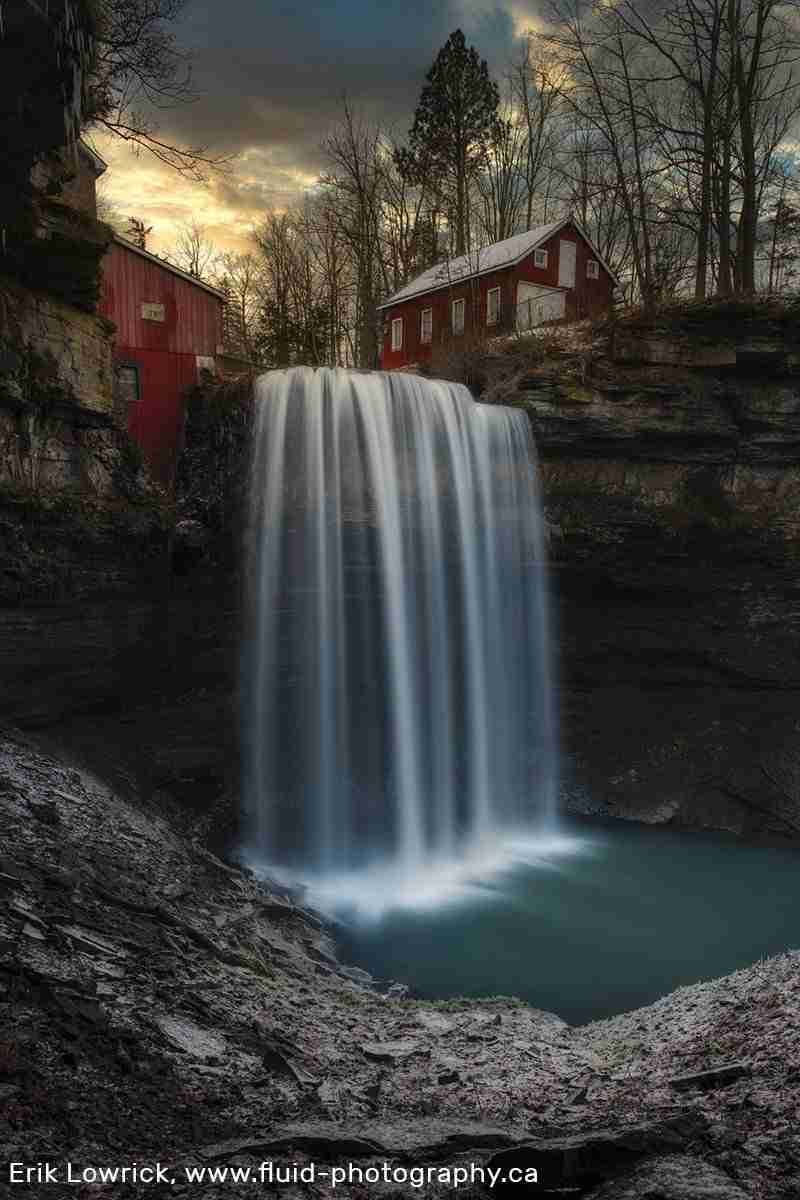
Set within a rugged gorge on the edge of St. Catharines, DeCew Falls is one of Ontario's most visually rewarding waterfalls—especially for photographers willing to make the effort to get close. Dropping 22 meters in a single vertical plunge, the falls sit beside the historic Morningstar Mill, a 19th-century gristmill restored to its original stone and timber beauty. This pairing of human history and natural spectacle creates an irresistible composition that blends motion, texture, and time. With easier access along the Bruce Trail and more challenging routes down into the gorge, DeCew Falls offers layers of photographic potential that range from classic landscape views to intimate studies of water and rock.
Best Photography Opportunities
• Classic View from the Mill
: From the Bruce Trail above, photographers can capture the falls beside the Morningstar Mill—a rare combination of man-made and natural features perfectly aligned. Shooting from just above the plunge allows for a clean, frontal view with the mill in frame. Early morning or golden hour brings soft side light across the stone walls and water, enhancing textures and adding warmth to the scene. A wide-angle lens helps to frame the full composition, while a mid-range focal length compresses the mill and falls into a dramatic, tighter shot.
• Gorge Access and Waterfall Base
: For a more immersive perspective, reaching the base of the falls offers a dynamic upward view of the water pouring over the cliff face. This trail is steep, slippery, and only recommended with proper hiking boots and dry conditions, but the visual reward is high. Shooting from the gorge floor allows you to work with foreground elements like boulders, driftwood, or flowing water leading up to the base of the falls. Long exposure techniques turn the falling water into a soft veil, contrasting beautifully with the rugged gorge walls.
• Water Detail and Pool Reflections
: At the base of the falls, shallow pools and scattered rocks offer reflective surfaces and textural foregrounds that work well with slow shutter speeds. Isolating portions of the falls or their reflections can produce abstract or fine art-style images. In summer, leaf canopies above the gorge filter green-tinted light onto the rocks and water, enhancing depth and atmosphere.
• Historic Architecture and Trail Elements
: The Morningstar Mill itself is worth photographing beyond its relationship to the falls. Wooden siding, vintage windows, stone foundations, and rusted waterwheels offer detail shots that evoke the site's industrial heritage. Sections of the Bruce Trail near the mill feature wooden fences, stone footpaths, and shaded groves that frame the scene nicely or provide visual lead-ins to wider compositions.
• Dappled Light and Natural Framing
: The dense foliage surrounding the falls and mill offers opportunities to frame your shots with overhanging branches or natural openings. In summer, the mix of light and shadow across the gorge and trail adds texture to both landscape and portrait compositions. Backlighting during late afternoon can create rim light around the mist and leaves, adding atmosphere to wide shots or close-ups alike.
Best Time to Visit
Summer is the best time to photograph DeCew Falls. The trails are dry, the foliage is full, and access to both the top and bottom of the falls is safer and more enjoyable. Early mornings during this season offer soft light through the trees, minimal foot traffic, and reduced contrast between highlight and shadow—ideal for balanced exposures and longer shutter speeds.
Autumn brings rich color to the trees surrounding the falls, but wet leaves and mud make the descent into the gorge much more hazardous. Spring runoff swells the water flow but also increases slipperiness and trail washout risk. Winter is not recommended for accessing the gorge—ice and snow make the descent treacherous—but the top of the falls can still be photographed from a safe distance for those equipped with spikes and care.
Late afternoon and golden hour provide strong sidelight across the mill and cliff face, while overcast days are perfect for long exposures and subtle detail without harsh contrast. Avoid mid-day light, which flattens the stone textures and can blow out highlights in the water.
How to Get There
DeCew Falls is located on DeCew Road in St. Catharines, Ontario, adjacent to the Morningstar Mill and a section of the Bruce Trail. From downtown St. Catharines, follow Pelham Road south, turning onto DeCew Road and continuing to the parking area beside the mill. The lot is small but free, and fills quickly on summer weekends.
The easiest view of the falls is from the trail just behind the mill. From the parking lot, it's a short walk to the overlook. To reach the base of the falls, hikers must follow unmarked, informal paths that branch off the main trail. These paths are steep, slick, and not maintained—hiking boots with strong grip are essential. It typically takes about an hour round trip to descend into the gorge, shoot from the bottom, and return, depending on trail conditions.
Access to the area is free, but always follow local guidelines and respect closures or conservation restrictions. Bring waterproof gear if planning to shoot from below the falls, and consider a dry bag or lens cloth to manage spray during high flow.
Exploring the Surrounding Area
Beyond the falls and mill, the surrounding section of the Bruce Trail offers peaceful woodland scenery, escarpment views, and quiet forest compositions that contrast with the drama of the gorge. Further up the trail, hikers can explore Lake Moodie, Brock University's forested campus edges, and other nearby ravines and streams that feed into the Niagara Escarpment. The entire area is rich with rock textures, exposed roots, and subtle environmental moments ideal for macro photography or moody woodland scenes.
The Morningstar Mill complex includes restored machinery and interpretive signage, giving photographers a narrative context for their images. The juxtaposition of 19th-century industry with raw, natural power invites a broad range of photographic themes—from decay and preservation to time and transformation.
Nearby Photography Locations
: Located in Short Hills Provincial Park, this seasonal waterfall offers quiet trails, deep ravines, and soft forest light. Ideal for long exposure work and more secluded compositions.
: A short drive west, this conservation area includes two waterfalls, a heritage village, and wooded trails—perfect for a full day of varied waterfall and landscape photography.
: Another Short Hills gem, this lesser-known waterfall is tucked into a peaceful gorge with moss-covered rocks and minimal foot traffic. Best visited after rainfall or in spring.
: East toward Niagara Falls, this area offers dramatic boulders, forested paths, and turquoise river views—ideal for hiking and river-level photography with geological interest.
: Just minutes from DeCew Falls, Rockway offers a similar blend of escarpment drops, forested terrain, and access to lower gorge paths. It's a great second stop on the same day.
DeCew Falls is a rare blend of natural power and heritage charm, where the roar of water meets the quiet story of Ontario's industrial past. Whether you're composing a soft, misty plunge or framing the falls against weathered stone walls, this location rewards thoughtful photography with depth, atmosphere, and timeless contrast. It's a place that captures both motion and memory—where every visit reveals new layers beneath the surface.
Comments
Loading comments…