
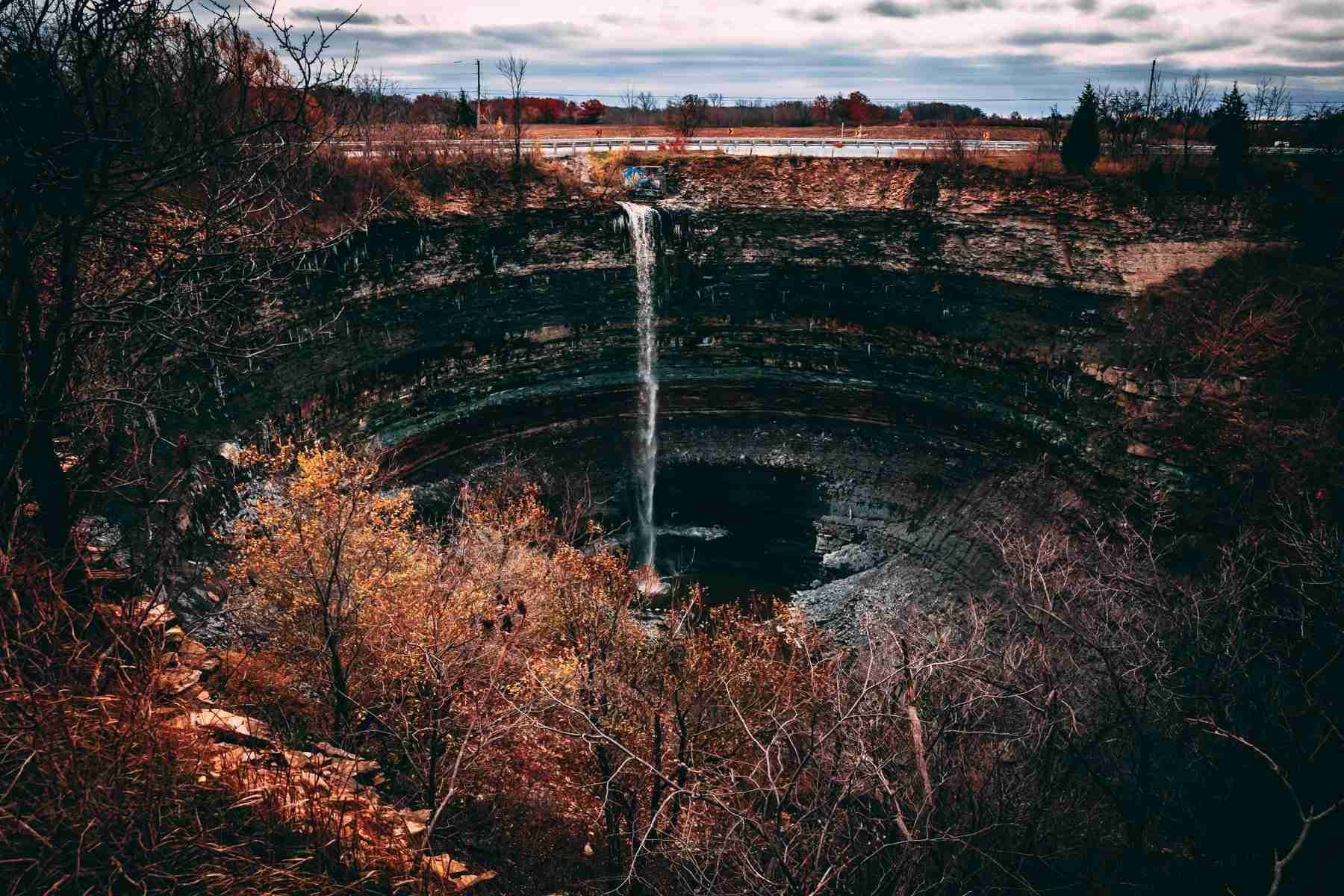
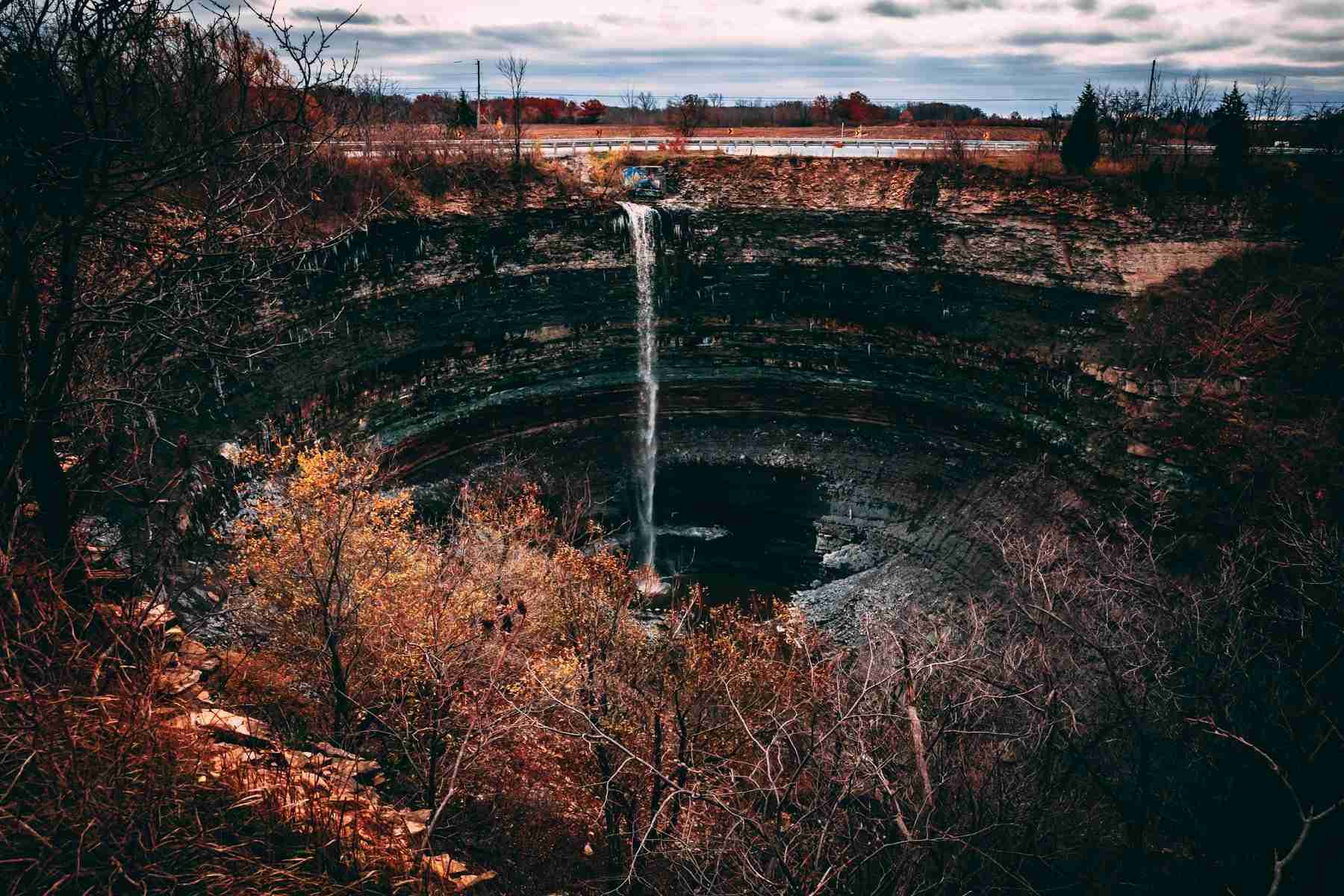
Carved into the ancient layers of the Niagara Escarpment, the Devil's Punchbowl in Stoney Creek, Ontario, is one of the province's most visually arresting geological formations. This towering amphitheatre-like gorge is home to a waterfall that plunges nearly 37 metres into the bowl below, with exposed rock strata lining the surrounding cliffs like pages in an open geology book. Dramatic in form and rich in texture, the site draws photographers year-round for its vertical drop, colorful sedimentary bands, and expansive views of Hamilton and Lake Ontario from the upper lookout.
The waterfall itself can vary wildly depending on rainfall and season—sometimes a thunderous torrent, other times a delicate ribbon trickling into the depths. But the Punchbowl remains photogenic in every state, thanks to its sheer walls, curving escarpment lines, and the variety of perspectives available from both the upper rim and lower access points. For those interested in geological structure, abstract compositions, and powerful natural forms, this is a location that continues to surprise and challenge with every visit.
Best Photography Opportunities
• The Main Falls from the Base
From below, the Devil's Punchbowl waterfall cascades straight down into a rocky basin surrounded by striated cliff walls. A wide-angle lens is essential here to capture the full vertical scope of the falls, along with the curving amphitheatre shape that wraps around it. Use long exposures to soften the water's descent, allowing it to contrast with the hard lines and textures of the surrounding stone. During low flow, the trickle creates minimalist compositions that emphasize vertical space and form. Shooting in early morning or late day adds warm light to the rock face, deepening color and contrast.
• Cliff Face and Sedimentary Bands
The rock walls that line the Punchbowl display millions of years of sedimentary layering in vivid color—reds, grays, ochres, and greens. These bands are especially vibrant after rain, and offer compelling opportunities for abstract and textural photography. A telephoto lens or macro setup allows for precise isolations of unique patterns, cracks, and mineral deposits. These shots work beautifully for black-and-white conversions or geological storytelling, particularly when shadows reveal depth and contour in the rock.
• The Upper Lookout and Panoramic Vistas
From the top of the Punchbowl, a formal viewing platform offers sweeping views not just into the gorge, but across the city of Hamilton and out to Lake Ontario. At sunrise and sunset, this lookout is ideal for wide landscapes that blend natural and urban elements. Use a graduated ND filter to manage sky exposure, and consider revisiting during stormy weather for dramatic clouds rolling over the escarpment. In winter, frost-covered trees frame the rim, adding subtle contrast to the broader scene.
• Trail-Level Views and Framed Compositions
The Bruce Trail and surrounding footpaths offer lower and side views into the gorge, where tree limbs, boulders, and seasonal foliage can be used to frame the falls or cliff face. In autumn, the foliage burns with color, contrasting the stone walls and offering rich compositional layering. These trails provide excellent opportunities for environmental portraits and narrative work, placing people or natural elements into the wider geological context of the Punchbowl.
• Aerial Views and Escarpment Geometry
If flown safely and legally, drones can offer breathtaking perspectives of the Punchbowl's perfect circular formation and the patterns etched into its cliffs. Overhead shots emphasize the symmetry and reveal the full structure in ways ground-based photography can't. Oblique aerials from higher elevation can also showcase the juxtaposition of natural gorge and surrounding farmland or suburbs. Aerial work is best in fall or winter when canopy coverage is minimal and rock formations are most visible.
Best Time to Visit
The Devil's Punchbowl is photogenic year-round, but the visual character of the falls and gorge shifts dramatically with the seasons. Spring and early summer bring the highest flow, with the waterfall at its most powerful. This is the best time for dramatic long exposures and capturing mist and motion. Autumn adds vibrant foliage that contrasts beautifully with the earth-toned cliffs and is arguably the best season for wide compositions and layered scenic work.
Winter, though challenging, rewards with frozen cascades and snow-covered ledges that highlight the geometric structure of the rock face. Early morning and golden hour provide the most flattering light inside the gorge, where high walls can otherwise cast deep shadows. Overcast days are excellent for detail and color balance, especially when photographing the sediment bands or smaller flow patterns in the waterfall.
The site can be busy on weekends, especially in peak fall color, so early visits during the week offer a more peaceful and flexible shooting environment. Bring weather-appropriate gear and watch for slick conditions if accessing the base trail.
How to Get There
The Devil's Punchbowl is located in the Stoney Creek area of Hamilton, Ontario. From Highway 403 or the QEW, exit at Centennial Parkway and head south up the escarpment. Turn left onto Ridge Road and follow signs to the Devil's Punchbowl Conservation Area, where a parking lot offers direct access to the upper lookout.
To reach the base of the falls, trail access begins nearby and requires a moderate hike down through escarpment terrain. The trail can be steep and slippery in wet or icy conditions—wear appropriate footwear and take caution. The upper viewing platform is easily accessible for all visitors and offers a commanding view into the gorge and out over the region.
There is no fee for entry or parking, though donations to the Hamilton Conservation Authority are welcomed. Photography is permitted throughout the site, but respect posted signage and avoid climbing or crossing into unstable areas of the gorge or cliff edges.
Recommended Gear and Shooting Tips
A wide-angle lens (16–35mm) is essential for photographing the falls from both above and below, allowing you to capture the full vertical and horizontal span of the Punchbowl. A 70–200mm telephoto is perfect for isolating sediment bands, cliff textures, and layering foliage across the gorge. A mid-range zoom (24–70mm) adds flexibility when hiking between viewpoints.
Tripods are especially useful for waterfall photography and capturing low-light conditions within the gorge. Neutral density filters help create motion blur in the water, while a circular polarizer will reduce glare and enhance color in both the rock and surrounding vegetation. Bring a microfiber cloth—spray from the falls is common during high flow, and light rain or mist can drift into the gorge easily.
If using a drone, fly with caution—check regulations and maintain a respectful distance from the falls, cliffs, and nearby visitors. The location is exposed to winds from the lake, so plan flights carefully and fly only in safe, clear conditions.
Nearby Photography Locations
Located just a short drive away, Albion Falls is one of Hamilton's most iconic multi-tiered cascades. It's a favorite for long exposures and offers great symmetry from its main viewing area. The layered rock base and heavy flow in spring make it a perfect complement to the Punchbowl.
A quieter alternative nearby, Felker's Falls drops gracefully over a limestone ledge and is surrounded by a peaceful trail system. The site is especially good in spring and after rain when water flow is strong, and the trail is photogenic year-round with dense green foliage and winter icicles.
• Dundas Peak and Tew Falls
Further west along the escarpment, this lookout and waterfall duo offers sweeping views of Spencer Gorge and the town of Dundas. The peak is especially popular in autumn, offering one of the best elevated views in Southern Ontario. Arrive early to beat the crowds and shoot in soft light.
• Webster's Falls
Located in nearby Greensville, this broad, bridal-veil style waterfall is set in a well-maintained park. Though access to the base is now restricted, the upper viewing areas still provide excellent photographic opportunities, especially with a telephoto lens to compress surrounding trees and cliffs.
East of the Punchbowl, this unique geological site includes sinkholes, caves, and underground streams—offering varied textures and subterranean themes. Ideal for macro, abstract, or black-and-white work focused on erosion, limestone, and earth patterns.
Comments
Loading comments…