
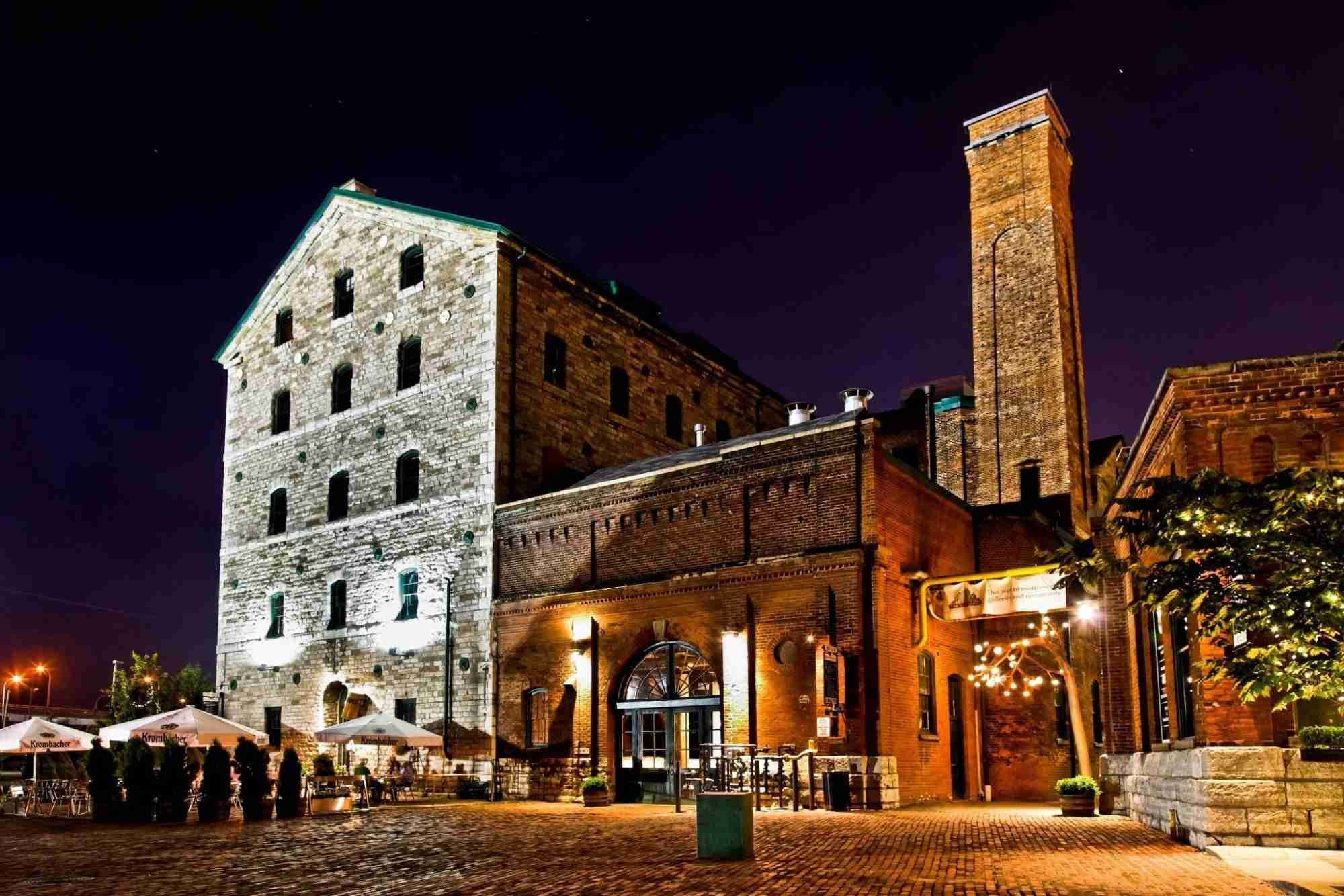
The Distillery District in Toronto offers one of the city's most atmospheric and richly textured photography locations—a pedestrian-only enclave of 19th-century industrial architecture, cobblestone lanes, and restored red-brick warehouses that now house galleries, shops, and cafes. Once home to the Gooderham and Worts distillery, the district has been thoughtfully preserved and reimagined as a cultural hub, blending historic charm with modern energy. Photographers will find endless compositions here, from architectural details and street portraits to seasonal installations and warm ambient lighting. Whether you're drawn to moody urban storytelling, architectural heritage, or vibrant street scenes, the Distillery District delivers a unique visual narrative at every turn.
Best Photography Opportunities
• Cobblestone Alleys and Brick Facades
The district's narrow lanes and uneven cobblestones lend themselves to strong leading lines, layered perspectives, and textural foregrounds. Early morning or late afternoon light adds warm tones to the red brick, while overcast conditions flatten contrast for a softer, vintage look. These walkways are ideal for wide-angle architectural shots or character-filled street portraits that frame subjects between tall walls and iron-framed windows.
• The Trinity Street Corridor
The central spine of the district, Trinity Street, offers an uninterrupted line of sight flanked by historic buildings and string lights that glow during evening hours. This area is a favorite for symmetrical compositions, particularly at blue hour when the warm lights contrast with the cool tones of the sky. It's also an ideal location for long exposures, especially during the holiday season when the district is decorated with garlands, glowing installations, and festive crowds.
• Details and Industrial Relics
Scattered throughout the district are ironworks, original machinery, and faded signage that hint at its industrial past. These elements are perfect for detail-oriented photographers looking to tell a visual story through texture, patina, and form. Look for rusted metal staircases, weathered wooden doors, and cast iron columns that can be isolated in frame or included as layers in a wider environmental scene.
• Light and Shadow Play in the Passageways
Between buildings, a series of narrower passageways offer rich opportunities for contrast-based compositions. As light filters through overhead walkways or gaps in the architecture, it casts dynamic shadows that shift throughout the day. These spaces are excellent for moody, cinematic captures, particularly when incorporating silhouetted figures or reflections in puddles after rain.
• Seasonal Installations and Nighttime Ambience
The Distillery District transforms throughout the year with art installations, markets, and events. In winter, the Toronto Christmas Market (now known as the Distillery Winter Village) fills the space with glowing trees, string lights, and festive booths—ideal for holiday-themed shoots, bokeh experimentation, and handheld low-light scenes. In warmer months, patios, floral displays, and open-air sculptures create inviting foregrounds for environmental compositions.
Best Time to Visit
The Distillery District is photographable year-round, but each season brings its own set of aesthetic qualities and storytelling opportunities. Spring and summer bring out the district's more vibrant side, with lush planter boxes, sidewalk patios, and lively street scenes that work well for candid photography and environmental portraiture. Golden hour during these months is especially effective, as the low sun reflects off the brick and glass with a golden hue.
Autumn is one of the most visually rewarding times to visit. The warm tones of the red brick pair beautifully with changing leaves and soft afternoon light, while fewer crowds in early fall make for easier setup and cleaner compositions. The cobblestones also pick up color from surrounding trees and banners, adding natural texture and contrast to your frames.
Winter offers a completely different atmosphere. During the Distillery Winter Village, the district is decorated with thousands of lights, garlands, and a towering Christmas tree that becomes the centerpiece of many photos. Snow on the cobblestones and rooftops enhances the nostalgic feel of the area, while nighttime visits provide excellent conditions for handheld low-light and long exposure photography. Just be prepared for larger crowds during weekends and peak event times.
Early morning is the best time for uncluttered shots of the architecture, especially before shops open or events begin. The soft, angled light at this hour also helps define texture in brick and stone. Overcast days work well for focusing on texture and detail, eliminating harsh shadows while enhancing the mood.
How to Get There
The Distillery District is located just east of downtown Toronto, at the intersection of Parliament Street and Mill Street. It's easily accessible via TTC by taking the 504 King streetcar to the Distillery Loop or the 501 Queen to Parliament Street, followed by a short walk south. Union Station is also within walking distance—about 20–25 minutes on foot—making it an ideal destination for visitors exploring the city's core.
If you're driving, paid parking is available in nearby lots along Parliament and Cherry Streets. Be aware that the district itself is entirely pedestrianized, so you'll need to walk in with your gear. While there's no fee to enter the Distillery District, special events or festivals may have ticketed entry depending on the season and setup.
Tripod use is generally permitted for casual photography, but during busy hours or special events, it's best to be respectful of crowds and business entrances. For commercial or editorial shoots, permits are required and can be obtained through the Distillery District's management. As always, travel light and be mobile—many of the best compositions are found while exploring on foot and reacting to the shifting light and energy of the space.
Exploring the Surrounding Area
Just beyond the gates of the Distillery District, the surrounding neighborhoods offer a mix of modern residential towers, street art, and waterfront access that extend the visual diversity of your shoot. To the south, the new Canary District and Corktown Commons provide clean-lined urban design and landscaped paths ideal for minimalist compositions, environmental portraits, and architectural contrast. These newer developments pair well with the historic character of the Distillery, especially when juxtaposed in the same photo set.
To the west, Parliament Street and Front Street East feature a blend of heritage buildings and updated storefronts that retain the area's original character. Murals and public art installations are common here, and the transitional feel of the neighborhood lends itself to street photography and layered urban compositions. Keep an eye out for alleyways and side streets where brick walls and industrial remnants still echo the district's working-class origins.
North of the district, the Esplanade corridor is lined with trees, public seating, and historic apartment buildings. This stretch is ideal for slowing down and capturing more relaxed, local-feeling imagery. You'll also find interesting light-play here during morning and late afternoon hours as sunlight moves through gaps in the surrounding architecture.
Nearby Photography Locations
Just a short walk southeast, this modern park features elevated boardwalks, wetlands, and skyline views framed by native plantings. The layered textures and clean lines contrast nicely with the industrial character of the Distillery, making it a perfect companion stop for wide-angle landscape or architectural photography.
• Cherry Street and Underpass Park
Head south and you'll find one of Toronto's most underrated photo spots—Underpass Park. This concrete space beneath the overpasses is covered in colorful murals and skateboarding structures, offering a raw, urban edge perfect for street photography, motion blur, or dramatic artificial lighting at night.
A 10-minute walk west brings you to the St. Lawrence Market and surrounding historic blocks, where warm-toned brickwork, heritage facades, and bustling street scenes offer complementary textures and tones. It's a rich area for capturing everyday life with a historic twist.
Just beyond the Distillery's southern edge, this redeveloped neighborhood is full of clean modern architecture, glass façades, and public art. The sharp lines and open spaces provide a striking counterpoint to the more tactile aesthetic of the Distillery District, perfect for architectural studies and abstract compositions.
South of the Distillery, the waterfront opens up at Parliament Slip with piers, parks, and sailboat docks. This location provides big-sky compositions and long leading lines along the boardwalk, ideal for golden hour or peaceful sunrise shoots away from the denser city core.
The Distillery District remains one of Toronto's most versatile and immersive photography locations—where every corner, cobblestone, and cast iron beam seems to tell a story. Its blend of preserved industrial heritage, curated storefronts, and ever-changing seasonal atmosphere invites photographers to slow down, explore, and see how light interacts with history in real time. Whether you're building a portfolio, planning an editorial, or just chasing beautiful textures, this district rewards every frame.
Comments
Loading comments…