
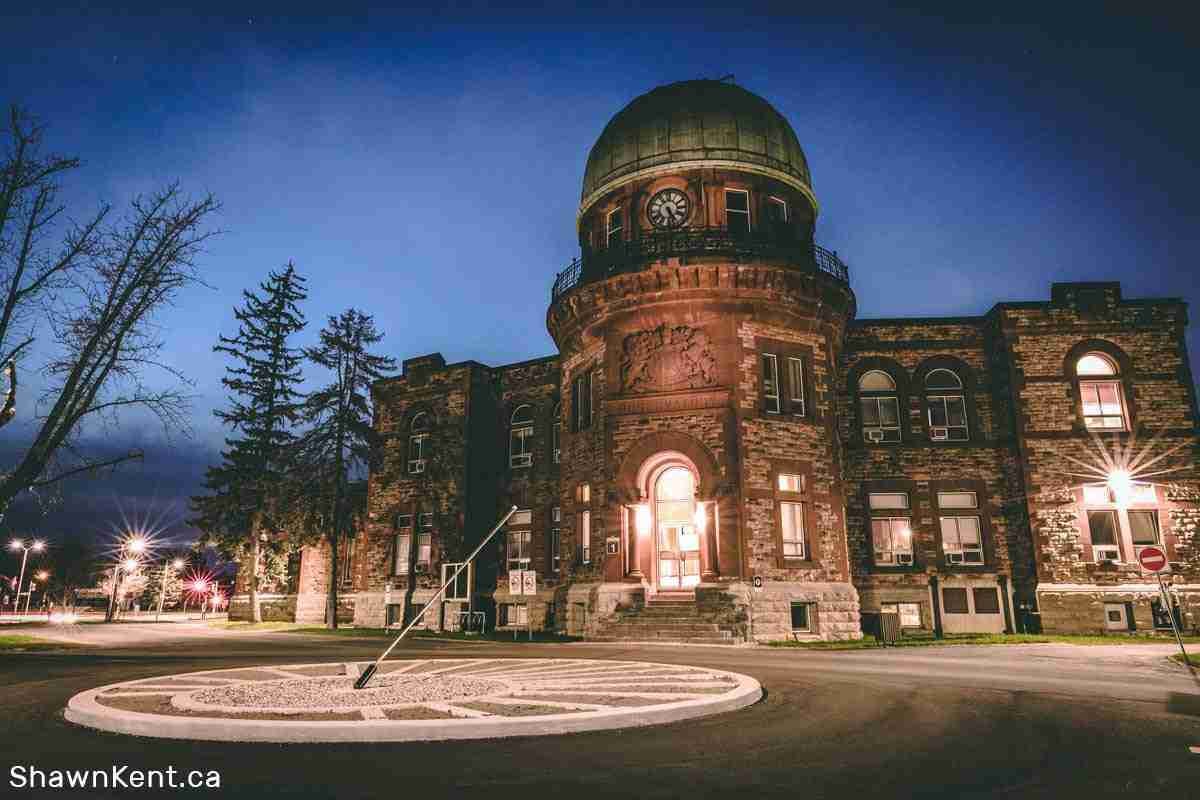
Nestled within the Central Experimental Farm in Ottawa, the Dominion Observatory stands as a monument to Canada's early astronomical research. Built in 1902, this Romanesque Revival stone structure once housed the nation's top timekeeping and astrophysical instrumentation until its closure in 1970. Today, the building has found a second life as home to the Office of Energy Efficiency, but its elegant architecture and historic character remain intact. With its domed tower, arched windows, and finely cut Nepean sandstone, the observatory offers a striking blend of symmetry and detail that appeals to photographers drawn to heritage architecture, textures, and quiet institutional spaces.
Best Photography Opportunities
• Architectural Framing of the Dome
: The central dome, once housing the primary telescope, is the building's most photogenic feature. Composing it centrally with a wide-angle lens allows you to emphasize its perfect symmetry and surrounding stonework. Side angles from the curved walkway or lawn reveal the depth and curvature of the dome set against the blocky solidity of the main structure. Shooting during golden hour adds warm tones to the sandstone and casts soft shadows that enhance the dome's texture.
• Romanesque Revival Details
: The observatory is rich with architectural details—arched windows, stone voussoirs, turrets, and decorative masonry that reward close study. These elements are ideal for abstract or detail-focused photography. Use a medium telephoto lens to isolate features such as keystones, cornices, or the carved entrance arch, which remains one of the structure's most recognizable elements.
• Contextual Shots within the Experimental Farm
: The observatory is surrounded by fields, trees, and research buildings that offer contrasting textures and tones. Wide compositions that include both the observatory and the pastoral environment give the structure a sense of place and legacy. Including trees or flowering plants in the foreground helps soften the institutional architecture and creates a seasonal narrative—particularly striking in spring bloom or autumn color.
• Symmetry and Minimalism in Overcast Light
: The stone façade and geometric layout lend themselves to minimalist compositions, especially under diffused or overcast skies. Flat light minimizes shadows, emphasizing the building's form and allowing for clean, balanced compositions. Black-and-white processing can enhance the sense of permanence and historical gravitas inherent in the structure.
• Night Photography and Celestial Context
: Though the building no longer operates as an observatory, its association with the stars makes it a symbolic subject for night photography. On clear evenings, long exposures with stars or the moon above the dome pay homage to its scientific past. With careful framing, light painting, or ambient streetlight, photographers can highlight architectural details while integrating a subtle astronomical motif.
Best Time to Visit
The Dominion Observatory is photogenic throughout the year, but different seasons offer unique visual opportunities. Spring brings flowering trees and soft grass that frame the building with natural color and texture. Summer provides strong golden hour light, especially in the early evening when the sun filters through the surrounding trees. Autumn adds vibrant contrast with orange and red foliage reflecting off the stone, while winter's snow transforms the structure into a stark, elegant form standing out against pale skies.
Early morning and late afternoon are the best times for directional light that enhances the building's stone textures. Overcast conditions work well for detail and symmetry shots, especially if you're aiming to minimize harsh contrast and emphasize architectural clarity. The observatory is generally quiet during the day, making it easy to shoot undisturbed with time to refine compositions.
How to Get There
The Dominion Observatory is located within the Central Experimental Farm near Carling Avenue in Ottawa. The easiest access is via Maple Drive or Prince of Wales Drive, depending on your direction of approach. The building sits near the Canada Agriculture and Food Museum and the Fletcher Wildlife Garden, with parking available at designated lots throughout the farm campus.
Public transit routes serve nearby Carling Avenue and Baseline Road, with a short walk into the farm grounds. The observatory grounds are publicly accessible year-round during daylight hours, though the building itself is not open to the public. Photography is permitted from the surrounding lawn and walkways, and tripods are welcome. No permits are required for casual or non-commercial photography.
Exploring the Dominion Observatory and the Surrounding Area
The observatory is part of the broader Central Experimental Farm, which offers a range of complementary photographic subjects—from formal gardens and tree-lined paths to working barns and agricultural fields. The nearby arboretum is particularly photogenic in spring and fall, while the research buildings and greenhouses provide contrasting textures to the stonework of the observatory itself.
The pathways connecting the various sectors of the farm create strong leading lines and natural framing for environmental portraits or architectural studies. For photographers interested in documentary work, the farm is a living laboratory of Canadian agricultural science, offering both historic and contemporary elements that tell a deeper story about research and national development.
Nearby Photography Locations
: Just south of the observatory, this working museum includes barns, livestock pens, and vintage farm equipment that add rustic texture and narrative layers to any shoot.
: A short walk away, this 26-hectare site is filled with mature trees, footpaths, and elevation changes that make for excellent landscape compositions—especially during the fall color change or spring bloom.
: A few minutes east, the locks provide a blend of water, heritage stonework, and mechanical detail. Perfect for shooting reflections, water movement, or historic canal infrastructure.
: These historic flower beds feature heritage perennials, rose gardens, and symmetrical planting beds. Ideal for macro photography, floral detail shots, or seasonal storytelling.
: Just north of the farm, Dow's Lake offers waterfront views, paddleboats, and seasonal floral displays during the Tulip Festival. It's a good spot for catching golden hour light over water or city reflections.
Though its telescope is no longer scanning the skies, the Dominion Observatory continues to reflect light in its own way—through stone, symmetry, and a quiet presence rooted in Canada's scientific history. For photographers seeking elegance, stillness, and architectural heritage within a green urban setting, this landmark offers a timeless subject that connects the grounded and the celestial in a single frame.
Comments
Loading comments…