
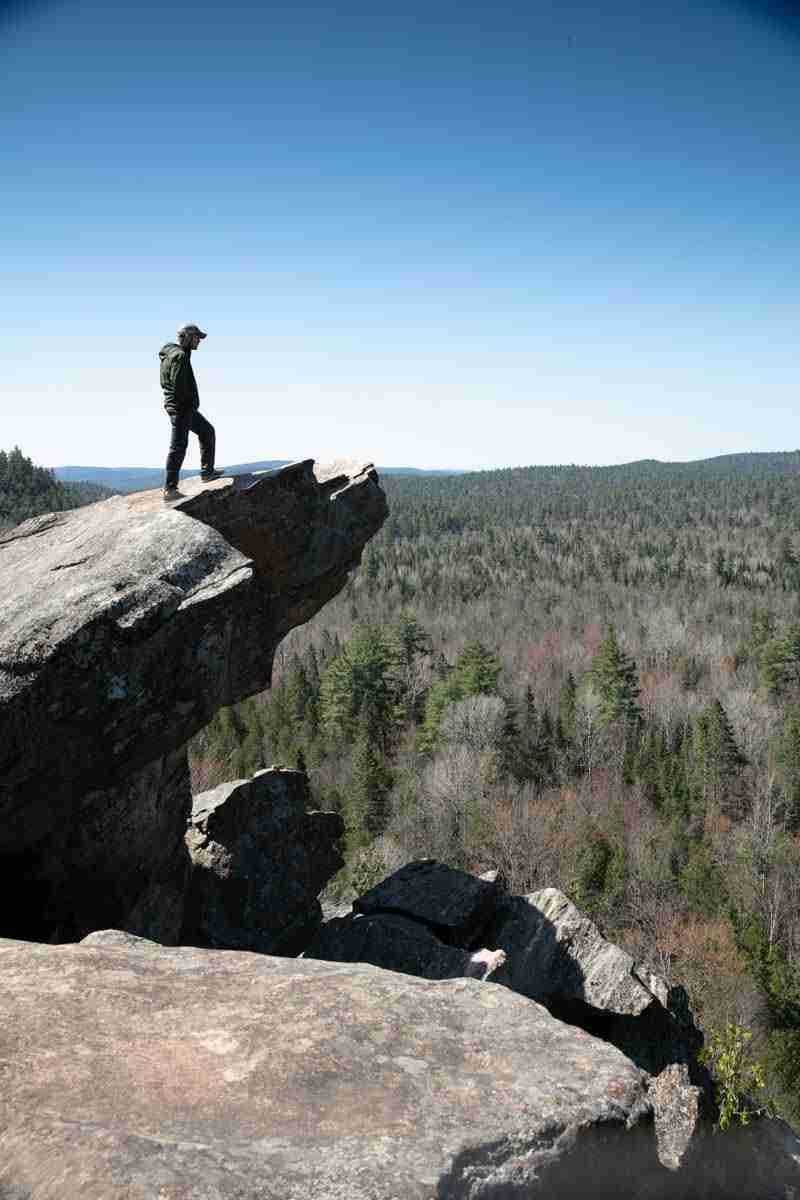
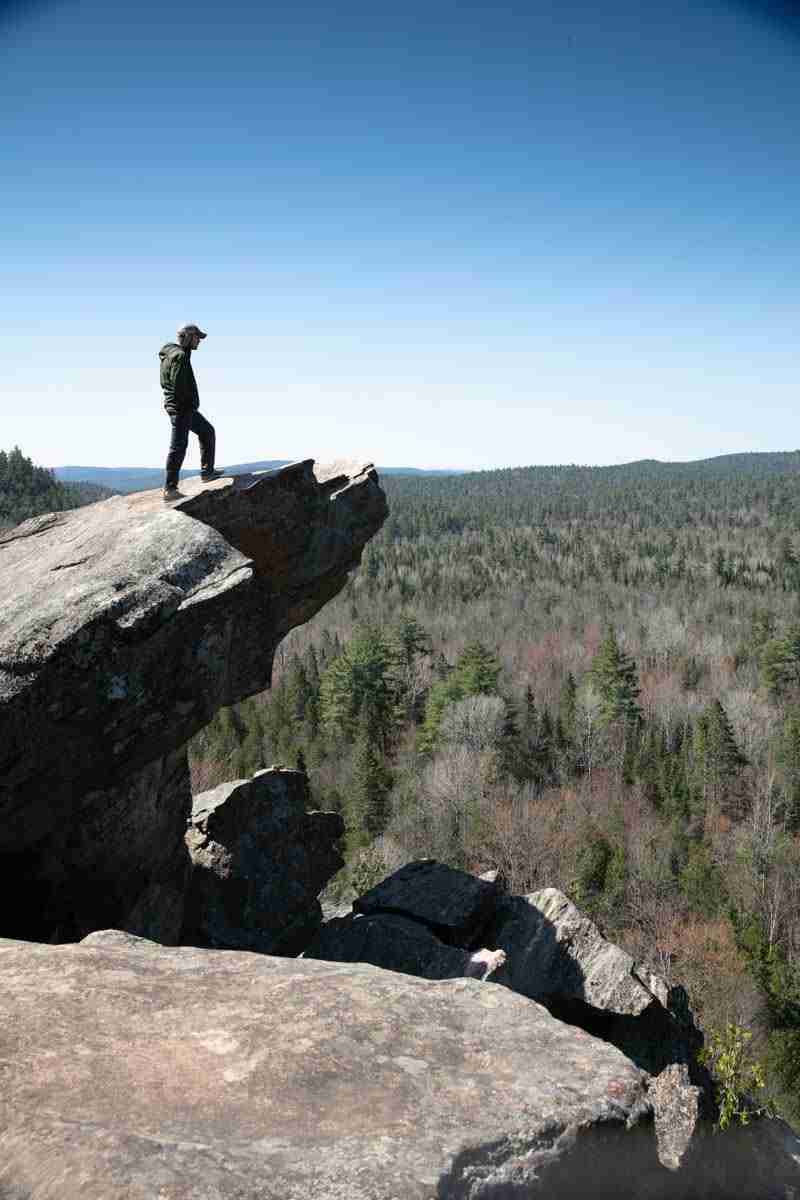
Rising above the town of Calabogie in Ontario's Ottawa Valley, Eagle's Nest Lookout delivers one of the most expansive and cinematic views in Eastern Ontario. Perched on a dramatic granite cliff face high above the Madawaska Highlands, this location is beloved by hikers and photographers alike for its commanding overlook of layered forests, winding roads, and undulating ridgelines. What sets it apart isn't just the view—it's the elevation, atmosphere, and the quality of light that flows through the valley, especially during sunrise and golden hour.
Best Photography Opportunities
• The Main Cliff Overlook
The signature view from Eagle's Nest places the sheer granite drop in the foreground with miles of forested valley stretching to the horizon. Shoot wide to take in the full sweep, or move closer to the edge (safely) to emphasize the drop. Early morning light creeps across the hills, backlighting layers of mist and revealing the topography in soft relief. In autumn, this spot is ideal for high-contrast compositions that balance warm foliage with cool blue shadows.
• Valley Layers and Atmospheric Depth
As the sun rises or sets, light grazes the ridgelines and creates strong tonal separation between the various tree-covered hills. This is perfect for creating images with visual depth and atmospheric perspective. Use a telephoto lens to compress the layers and exaggerate the gradient between foreground and background. Fog and low clouds often settle in the valley in spring and fall, adding soft diffusion that enhances the sense of scale.
• Foreground Texture and Edge Composition
The cliff's edge features gnarled pines, lichen-covered rock, and pockets of wild blueberries that provide strong foreground interest. These elements can anchor your wide-angle compositions and provide scale or seasonal detail. Positioning these features against the void of the valley below creates dynamic tension in your frame. In winter, snow-covered branches and windswept rock offer striking contrast and texture for black-and-white studies.
• Sunrise and Golden Hour Drama
Eagle's Nest is an outstanding sunrise location. The eastern exposure means the first light of day pours directly into the valley, illuminating fog banks, rim-lighting pine tops, and igniting the sky in pinks, oranges, and soft gold. Golden hour in the evening is equally dramatic, with long shadows and a warm glow that lasts longer than expected due to the valley's open aspect. Arrive early or stay late to take full advantage of these shifts in light.
• Drone and Elevated Perspectives
If permitted, drone photography from Eagle's Nest allows for jaw-dropping top-down views and sweeping panoramas of the entire highland basin. The cliff face reads as a dramatic curve against the otherwise tree-covered landscape, and oblique aerials can capture the transition between rugged rock and layered forest. Always fly responsibly and check local guidelines—this is a shared space with hikers and wildlife.
Best Time to Visit
The best time to photograph Eagle's Nest is at sunrise or in the late golden hour when the light angles low across the valley. Mornings offer a chance for mist and subtle light, while evenings bring warmth and dynamic skies. Autumn is the most photogenic season, with the valley erupting into vibrant reds, oranges, and yellows. Spring brings fresh green tones and clear air, while winter creates stark, elegant compositions ideal for minimalist and monochrome work.
Avoid midday visits when the overhead sun flattens the scene and contrast becomes difficult to manage. Weekdays and early mornings are best for avoiding crowds, especially during peak foliage season. Always check trail conditions in winter or after rain, as the final approach to the cliff can be slick or icy.
How to Get There
Eagle's Nest Lookout is located near Calabogie, Ontario, about 90 minutes west of Ottawa. From Highway 508 (Calabogie Road), turn onto the gravel Barrett Chute Road, then onto the trailhead access for Manitou Mountain Trails. The Eagle's Nest Trail is clearly marked and follows a relatively short and moderately steep route through the forest to the lookout.
The hike is approximately 1.5 km one way, with a well-trodden path that leads directly to the lookout. The final section approaches the cliff edge, so use caution and wear good footwear. There is no fee for access, and parking is available at the trailhead, but it can fill quickly on weekends.
Recommended Gear and Shooting Tips
Bring a wide-angle lens (16–35mm) to take in the full valley vista and foreground elements. A telephoto lens (70–200mm) is perfect for layering the distant hills, capturing atmosphere, and isolating patterns in the trees. A mid-range zoom (24–70mm) provides flexibility along the trail for spontaneous compositions.
A tripod is highly recommended for low-light conditions during sunrise and sunset, especially for bracketed exposures or panoramic stitching. A circular polarizer can enhance sky contrast and deepen color in foliage, while an ND filter allows for softening moving clouds or emphasizing time transitions. Be prepared for wind at the top—use a sturdy tripod or add weight to stabilize.
Dress in layers and bring water, especially for early or late visits. In winter, ice cleats or hiking poles may be necessary for safe access. This is a wilderness location—leave no trace and respect other visitors and the land.
Nearby Photography Locations
• Calabogie Lake Shorelines
Just minutes away, Calabogie Lake offers calm water, dock scenes, and sunrise reflections. Great for pairing wide waterscape compositions with early morning mist and soft color palettes.
This network of trails offers additional forest and ridge scenes, perfect for quieter woodland compositions, wildlife photography, or moody fog-laced atmospheres. The wooded paths are excellent for vertical frame studies and storytelling sequences.
West of Calabogie, these lesser-known viewpoints provide similar escarpment drama with fewer visitors. Ideal for sunset and high-contrast landscape work with strong granite formations and expansive sky.
• Bonnechere River Lookouts
East of Eagle's Nest, this winding river cuts through valleys and farms with multiple photogenic bends, bridges, and wooded bluffs—great for drone or elevated road-side compositions.
• Balaclava Ghost Town
Pair a morning at Eagle's Nest with an afternoon in Balaclava, photographing the historic mill and riverside ruins. The shift from open landscape to detailed architectural decay makes for a compelling day-long photographic journey.
Comments
Loading comments…