
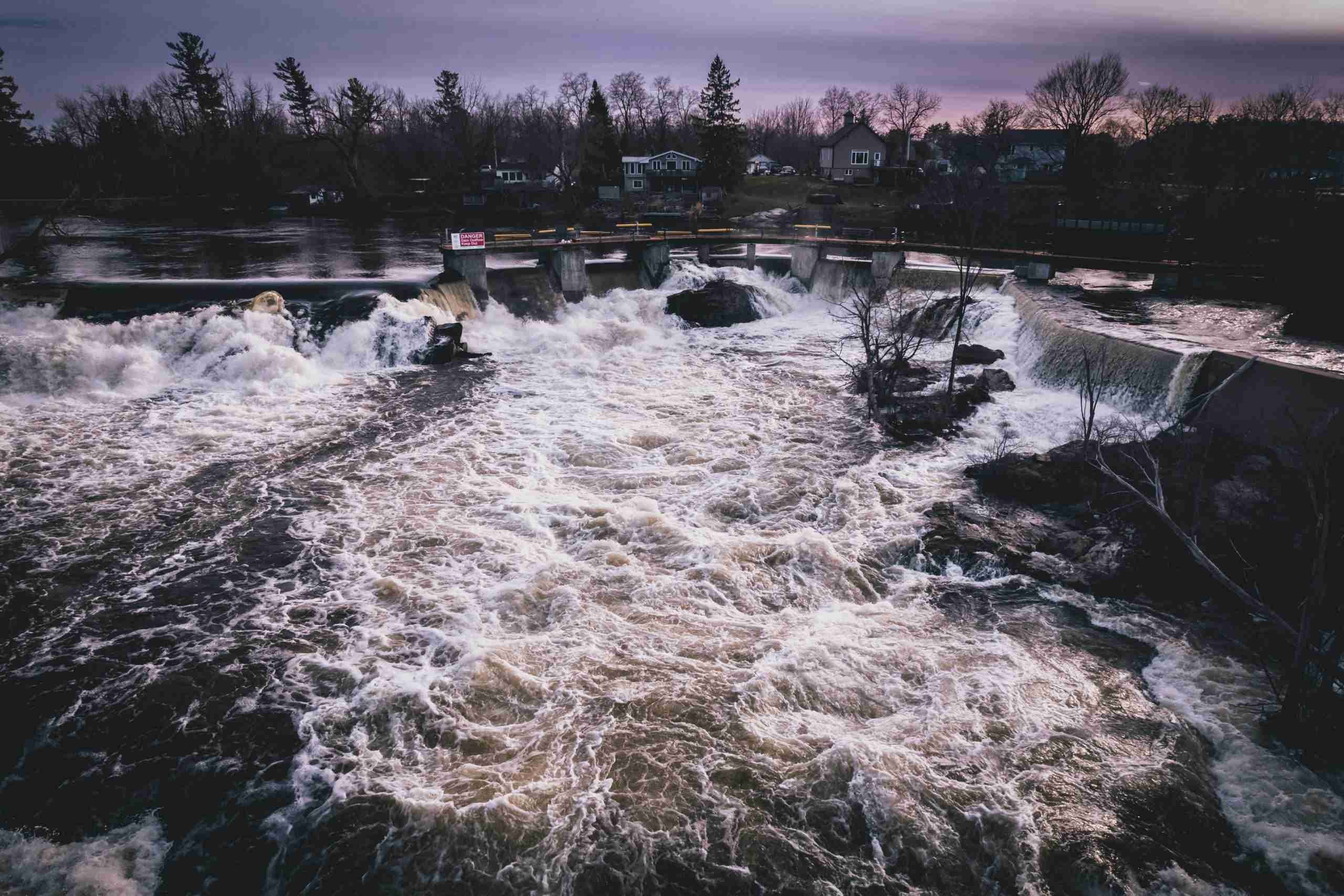
The hydro plant was originally built in 1907 and has undergone many upgrades since, continuing to supply power to the local grid. In the spring, the water rushes powerfully over the falls and downstream, and in the summer, the falls are a bit tamer and less dramatic but still quite beautiful.
Best Photography Opportunities
• Aerial Overview of the Falls and Power Station
Flying a drone above the Mississippi River reveals the full context of Galetta Falls, including the multi-tiered cascades, the compact hydroelectric facility, and the riverbanks downstream. From altitude, you can frame the entire site with the structure in one corner and the water's motion filling the rest of the image. Use oblique angles to add depth and dimension to your shot—direct overheads work well for symmetry, but slightly tilted compositions often convey scale and elevation more effectively.
• Downstream River Composition with Leading Lines
A drone shot looking downstream from above the falls captures the river stretching toward the Ottawa River basin, flanked by trees, shoreline rock, and pockets of whitewater. These compositions work best in spring when the water is fast and dramatic, and again in autumn when the color of the leaves frames the river in gold and red. Follow the river's natural curves as visual guides through the frame, and adjust altitude to either flatten or enhance the sense of depth depending on your scene.
• Vertical Shots for Texture and Geometry
Straight-down shots of the cascading water across the rocks highlight the geometry of the riverbed and the contrast between moving water and stone. This is especially effective in summer when more of the riverbed is exposed, and the water flows in narrower, defined channels. These compositions work well as high-contrast black-and-white images or can be treated in post to emphasize the warm hues of stone and cool blue-green tones of water.
• Hydroelectric Infrastructure and Environmental Contrast
Use tighter compositions or lower altitudes to isolate the hydro plant itself, contrasting its sharp lines and engineered forms with the raw movement of the surrounding river. The juxtaposition of built and natural elements is particularly powerful from the air, where the relationship between structure and flow becomes visually obvious. Adjust your exposure to retain highlights in the water without blowing out detail in the lighter concrete surfaces.
• Seasonal Motion and Long Exposure Simulation
Spring offers the most dramatic water movement, while fall introduces color to the frame. If your drone allows, use built-in neutral density filters and slower shutter speeds to create the illusion of motion blur, emulating traditional long exposure photography from the air. This technique works especially well when hovering directly above the falls or capturing water trails winding through the terrain below.
Best Time to Visit
Spring is the most dynamic season at Galetta Falls, with snowmelt pushing the Mississippi River to peak flow. This is when the falls are at their most dramatic, and drone footage captures ribbons of water surging over rock and through the spillways. The combination of high water volume and greening trees makes for cinematic contrast and motion.
Summer offers more subdued water levels, which reveal more of the river's geological structure and allow for precise framing of the hydro plant and falls. Late afternoon and golden hour provide the best light from a drone's vantage point, especially with long shadows stretching over the textured rock beds.
Autumn adds bold color to the surrounding forest, making aerial compositions vivid and painterly. Winter is less visually dramatic here, and ice can obscure the flowing structure of the river—but the frozen patterns around the plant and across the falls can be photogenic in their own right.
Drone flying is best done in calm weather. Wind gusts from the river's valley can be unpredictable, so fly during early morning or late evening when the wind is lower and the light more flattering. Always check current airspace restrictions and avoid flying during high public use periods.
How to Get There
Galetta Falls is located in the small village of Galetta, Ontario, along the Mississippi River west of Ottawa. From the city, take Highway 417 west, then exit onto Kinburn Side Road and follow signs to Galetta Side Road. The hydro station and falls are located near the corner of Galetta Side Road and Loggers Way.
There is a small gravel turnout or roadside shoulder where you can safely pull off near the plant. While the best images come from the air, you can also walk along the road and river's edge to scout the location and launch your drone. There are no amenities on site, and signage is minimal, so come prepared and respect the area's privacy boundaries around the hydro infrastructure.
Recommended Gear and Shooting Tips
A drone with a high-resolution camera and gimbal stabilization is essential. DJI's mid- to pro-level models work well, particularly those with built-in filters and RAW shooting capability. Bring ND filters if you want to simulate long exposures, and ensure you have at least two fully charged batteries—the area invites repeat passes and wide coverage.
Shoot in RAW for maximum flexibility in post-processing, particularly with whitewater and shadowed infrastructure. Use auto exposure lock when reframing your composition to keep your sky and water tones consistent. A polarizer can help reduce glare if your drone is compatible.
Scout the site visually before flying to understand the relationship between the plant, river, and downstream areas. Begin with high overview shots, then descend and refine your framing for tighter compositions. Be mindful of wind and overhead power lines near the hydro facility, and fly with extra caution around the infrastructure itself.
Nearby Photography Locations
Just east of Galetta, this riverside conservation area offers scenic forest trails, river views, and wildlife photography opportunities. Ideal for handheld work and a peaceful contrast to the industrial aesthetic of the falls.
A few minutes to the north, this park features wooded riverside trails and access to the Ottawa River. Sunset from the shoreline offers excellent light on the water and soft woodland silhouettes.
• Almonte's Mississippi River Falls and Textile District
Downstream along the same river system, Almonte's downtown features cascading falls, old mills, and stone bridges. Great for classic long exposures and historical architectural framing.
To the southwest, this quiet lakeside community offers reflection-friendly dock scenes, misty morning water views, and slow-paced shoreline compositions. Particularly nice in early fall.
• Kinburn's Rural Roads and Farmland
The rural backroads between Galetta and Kinburn are dotted with aging barns, wide-open skies, and classic Eastern Ontario farmland—perfect for golden hour storytelling or drone landscape studies.
Galetta Falls may not have the pedestrian paths or viewing decks of more famous waterfalls, but for photographers with a drone, it opens up a rare and dramatic view of Ontario's river power. With a blend of cascading water, industrial architecture, and natural flow, it offers the kind of aerial visual poetry that's hard to find so close to the city—and even harder to replicate anywhere else.
Comments
Loading comments…