
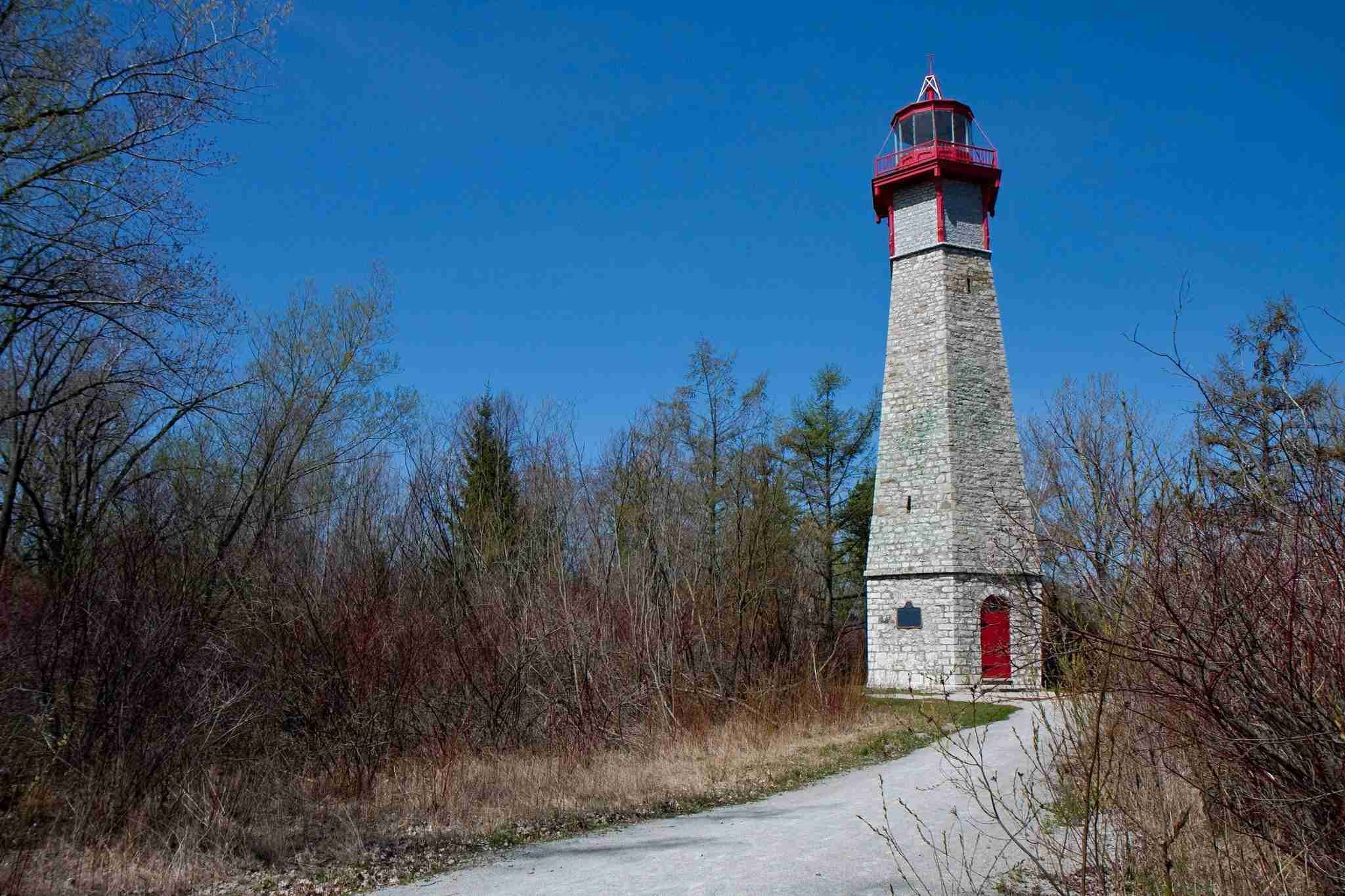
Tucked among the trees on the Toronto Islands, the Gibraltar Point Lighthouse stands as one of Canada's oldest and most mysterious navigation beacons. Built in 1808 and perched just inland from the Lake Ontario shoreline, it is the oldest lighthouse on the Great Lakes and the second oldest in all of Canada. This historic tower predates much of the city that now surrounds it, and its isolation on the islands—combined with the eerie local legends—gives it an enduring sense of mystery and atmospheric charm.
Constructed of limestone quarried from Queenston, the lighthouse originally sat right on the lake's edge, but centuries of shoreline buildup now place it some distance inland. Its thick, tapered form, narrow windows, and weathered exterior make it an evocative photographic subject, especially in low light or foggy conditions. For photographers interested in maritime history, architectural decay, or moody storytelling, Gibraltar Point offers a visually rich experience just a short ferry ride from downtown Toronto.
Best Photography Opportunities
• Full Tower Compositions from the Pathway
From the tree-lined trail that approaches the lighthouse, you can capture its full vertical presence nestled in the clearing. A wide-angle lens emphasizes the tapering structure and its quiet integration with the wooded surroundings. Try moving a few steps to the side for a slight asymmetry that reveals more of the surrounding tree trunks and helps the composition feel anchored in place. Framing with branches or leaves can add a sense of depth and visual layering, especially in summer or autumn.
• Architectural Detail and Weathered Stone
The limestone exterior of the lighthouse has aged beautifully, with sections darkened by weather and streaked with lichen. These textures are highly photogenic when lit from the side, particularly in low, angled light. Get close to shoot elements like the narrow windows, the metal lantern gallery, or the old doorway—these are ideal for building a story of decay and endurance. You can also isolate contrasting materials like wood and stone to show how time and weather have worn them differently.
• Silhouettes and Misty Atmosphere
Fog and overcast conditions transform the lighthouse into a dramatic silhouette. Shooting against the light, especially with a faint sun breaking through cloud cover, produces haunting outlines of the tower and trees. Silhouettes work especially well when the lighthouse is framed in negative space or when mist softens the transition between tower and background. Adjust your exposure to preserve sky detail and experiment with black-and-white conversions to heighten the mood.
• Storytelling and Seasonal Framing
Each season offers a distinct personality to the setting. In spring, fresh greens create a sense of renewal; in summer, thick foliage casts dramatic dappled shadows; autumn brings rich color that warms the stone; and in winter, the starkness of the bare trees and white snow offers clean compositions and visual calm. Build a seasonal series from this location, returning several times to explore how light and atmosphere shift the visual story across the year.
• Environmental Portraits and Editorial Work
The lighthouse's secluded location and textured environment provide a perfect setting for thoughtful, moody portraiture. Position your subject at the base of the tower or walking the path, allowing the structure to loom subtly in the background. Earth tones and muted color palettes work best here, echoing the natural hues of the stone and woodland. Foggy or overcast days are ideal for soft, flattering light, and give portraits an editorial or cinematic edge.
Best Time to Visit
Golden hour and early morning light are ideal for capturing the textures and tones of the lighthouse's stone surface and its shaded woodland environment. In the morning, fog is more likely to linger over the Toronto Islands, enhancing the mystery and mood of the location. Sunset light filters through the trees and occasionally breaks across the tower's upper portion, giving it a soft, sculpted glow.
Autumn is especially photogenic, with the surrounding trees providing bold color contrast to the grey stone, and fallen leaves layering the ground around the tower. Winter is stark and quiet—perfect for minimalist compositions or black-and-white work. Summer offers lush green framing and the clearest sky, though the area sees more foot traffic during that time.
If you're aiming for atmospheric shots, plan your visit on a day with fog, drizzle, or heavy clouds. These conditions not only enhance the lighthouse's eerie visual identity but also thin out crowds, allowing for more uninterrupted shooting time.
How to Get There
Gibraltar Point Lighthouse is located on the western end of Centre Island, part of the Toronto Islands in Lake Ontario. To reach it, take the Centre Island ferry from the Jack Layton Ferry Terminal in downtown Toronto. Once on the island, follow signage westward—either by foot or bicycle—toward Gibraltar Point. The lighthouse is about a 15 to 20-minute walk from the ferry dock.
There are paved trails the entire way, and the site is easily accessible for most visitors. The lighthouse is not open to the public for interior access, but the surrounding grounds are open year-round. Restrooms and facilities are available on Centre Island during the warmer months, though services are reduced in the off-season.
Recommended Gear and Shooting Tips
A wide-angle lens (16–35mm) is excellent for capturing the entire tower and its wooded surroundings. For tighter shots and architectural details, a 24–70mm or 70–200mm lens gives you the flexibility to isolate texture and form. A tripod is useful for low-light work, foggy conditions, or longer exposures during golden hour and twilight.
A circular polarizer helps manage glare on the stone and can deepen greens or blues in the background foliage or sky. A neutral density filter may be helpful if you're working in bright daylight and want to slow your shutter for subtle movement in trees or clouds.
Bring a microfiber cloth if you're shooting on foggy days, as moisture may gather on your lens. Consider packing lightly if you're walking or biking in—though the trails are flat, the ferry and travel time make mobility a priority.
Nearby Photography Locations
Just a short walk south of the lighthouse, the Centre Island boardwalk provides expansive lake views and big skies. The long wooden pier acts as a strong leading line, particularly effective during sunrise or golden hour when the lake glows in soft pastel tones. It's an excellent place for wide-angle compositions and minimalist shoreline shots that contrast nicely with the intimacy of the lighthouse setting.
A ferry ride or walk across the islands brings you to Ward's Island, home to one of the most iconic skyline views of Toronto. From this vantage point, you can capture city lights, sailboats, and reflections on calm water—especially dramatic during blue hour. A telephoto lens compresses the skyline and foreground water for cinematic results, while wider angles include the island foregrounds and docks.
• Franklin Children's Garden and Tree-Lined Paths
This gentle and secluded spot near Centreville is great for quiet compositions involving soft woodland light and organic shapes. Use it for detail shots of leaves, bark, and path textures, or shoot environmental portraits framed by trees and bridges. In autumn, the fallen leaves create a rich tapestry of warm colors underfoot, and in spring, the early blooms soften the entire scene with color and light.
• Hanlan's Point and the Island Airport Shoreline
To the west of Gibraltar Point, Hanlan's Point provides open fields, marsh grasses, and long sightlines along the water. You can capture airplane silhouettes against the skyline or focus on the lake's subtle moods. Sunset here can be particularly rewarding, with the fading light catching the grasses and water while casting long shadows over the sand and shoreline.
• William Meany Maze and Open Meadows
Back toward the center of the island, this whimsical maze and its surrounding meadows offer playful geometry and wide, open sky. Great for symmetrical compositions, shallow depth of field experiments, or creative portraits. The area is especially photogenic when the sun is low and grass blades catch the light, creating golden highlights across the frame.
Gibraltar Point Lighthouse is more than a historic structure—it's a weathered relic steeped in lore, light, and landscape. For photographers seeking solitude, story, and subtle beauty, this enduring stone tower remains one of Toronto's most atmospheric and timeless shooting locations.
Comments
Loading comments…