
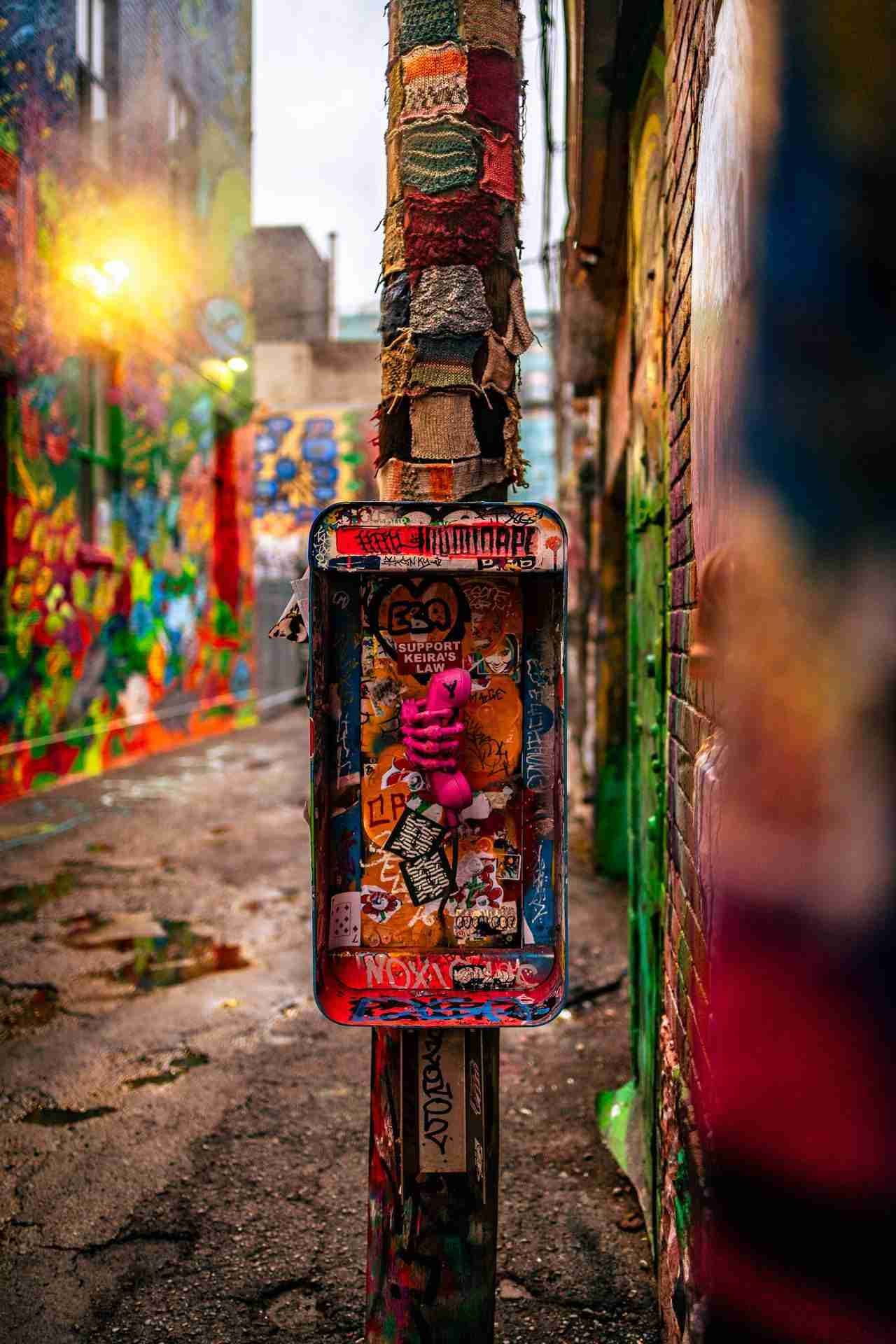
Hidden in plain sight behind Queen Street West's boutiques and cafés, Graffiti Alley is one of Toronto's most visually electric photography locations. Stretching over three city blocks between Spadina Avenue and Portland Street, this narrow laneway is a constantly evolving gallery of street art, murals, and raw urban expression. For photographers, it offers a dense, immersive experience—walls explode with color and creativity, and every turn reveals new textures, themes, and voices. Whether you're working with wide-angle street scenes, candid portraits, or abstract detail, Graffiti Alley presents a dynamic, ever-changing subject that celebrates the pulse of city life.
Best Photography Opportunities
• Wide-Angle Urban Compositions of Continuous Murals
The linear nature of Graffiti Alley makes it ideal for wide-angle compositions that stretch down the corridor, emphasizing perspective and the density of artwork. Shooting with a 16–35mm lens allows you to capture entire mural sequences, playing with leading lines formed by the alley walls and sidewalk. These shots work particularly well in early morning or late afternoon, when the low sun casts long shadows across the brick and asphalt. Light bouncing between buildings adds dimension to otherwise flat walls, highlighting the layering of tags, throw-ups, and polished murals.
• Detail Shots of Texture and Artistic Layers
Graffiti Alley's walls are thick with layered paint—decades of street art, stencils, stickers, and aerosol blended into textured compositions. Zooming in with a standard lens (35–70mm) or even a macro setup allows you to explore these surfaces in detail. Focus on flaking paint, overpainted tags, or the way a bold new mural interacts with remnants of past work beneath. These images tell quieter stories, revealing the passage of time and the human touch behind every mark.
• Candid Street Photography and Environmental Portraiture
The alley's gritty texture and colorful backdrop make it a prime location for street portraits and lifestyle shots. Locals and tourists alike pass through, offering moments of interaction between people and art. Use a fast 50mm or 85mm prime to capture fleeting expressions, backdrops of color, or movement against the static murals. Ask for permission if approaching portraiture, or incorporate natural silhouettes to maintain candid storytelling. Overcast days are excellent for even light that enhances skin tones without harsh contrast.
• Night Photography with Ambient Urban Lighting
At night, the alley transforms into a moody, cinematic space. Wall-mounted lights, neon glow from nearby businesses, and the occasional vehicle spill ambient light into the lane, creating shadows and hotspots ideal for long exposures. Use a tripod and slow shutter speeds to accentuate reflected colors on wet pavement, or to capture trailing figures for a dynamic urban narrative. These images benefit from subtle post-processing that emphasizes color balance and tonal contrast without losing the natural ambient feel.
• Repeated Themes and Artist Signatures
Because Graffiti Alley is legal and curated by Toronto's street art community, many recurring artists leave recognizable tags or characters. Documenting these signatures across visits creates a visual story over time—a kind of urban taxonomy. Focus on capturing specific motifs from different angles or in different light, building a series that emphasizes the continuity and change that defines the alley's identity. This long-term approach is ideal for photographers interested in narrative documentation and cultural commentary.
Best Time to Visit
Graffiti Alley is photogenic in all seasons and weather conditions, but the quality and character of the light vary throughout the day. Early morning and late afternoon are optimal for golden-hour light, which skims across the walls and emphasizes texture and shadow. Midday sun can be harsh and create high contrast, especially in narrow spots where the light doesn't fall evenly, but even then it can add drama to high-saturation murals.
Overcast skies diffuse the light and help balance exposure across bright and dark sections of the alley—ideal for detailed mural work or portraits. After rainfall, the pavement reflects colors from the walls and enhances saturation, especially at twilight or night.
The alley is typically quieter in the mornings and on weekdays, making it easier to set up shots or experiment with different angles without foot traffic. Weekends can bring both crowds and buskers, which offer opportunities for candid photography and environmental scenes with human elements.
How to Get There
Graffiti Alley is located just south of Queen Street West in downtown Toronto, between Spadina Avenue and Portland Street. The alley runs parallel to Queen, and the easiest access points are via Augusta Avenue, Graffiti Alley Lane, or Rush Lane, which feed directly into the corridor.
The area is easily reached by TTC streetcar via the Queen Street line, with stops at Spadina or Bathurst placing you within a two-minute walk. Street parking is limited, but several nearby parking lots provide options for drivers. The alley is entirely pedestrian and open to the public at all hours, though lighting is limited at night, so evening shoots should be planned with safety and awareness in mind.
There are no fees or permits required for casual photography. However, if you are conducting commercial shoots, especially with models or lighting equipment, it's courteous to coordinate with local artists or nearby businesses who may be impacted.
Recommended Gear and Shooting Tips
A wide-angle lens is essential for capturing the narrow alley's full perspective and sprawling wall compositions. A 24–70mm standard zoom adds flexibility for tighter mural sections and impromptu street portraits. Prime lenses like a 35mm or 50mm are excellent for low-light conditions and storytelling shots with shallow depth of field.
A tripod is useful for night photography, especially when balancing exposure under mixed lighting conditions. During the day, handheld shooting is more practical due to the alley's foot traffic and tight shooting spaces. Consider bringing a lens hood to manage flare from overhead lights or sunrays bouncing off windows.
Shoot in RAW to preserve highlight and shadow detail, especially in high-contrast scenes. Watch for clipped reds and blues—graffiti often contains highly saturated hues that can be difficult to balance in-camera. Use zone metering or spot metering for difficult exposures.
Graffiti Alley evolves constantly. Return visits will reveal new work, new tags, and even complete mural overhauls. Documenting the changes not only keeps your portfolio fresh but also builds a layered archive of one of Toronto's most dynamic cultural spaces.
Nearby Photography Locations
Just a short walk away, this eclectic neighborhood features vintage shops, street performers, and another rich collection of murals and paste-ups. Ideal for street photography, architectural abstracts, and low-light compositions under market awnings.
The surrounding main street offers vibrant storefronts, neon signage, and a mix of modern and heritage architecture. Great for capturing urban energy and storefront reflections, especially in the late afternoon when the street is bathed in warm light.
A few blocks west, this large urban park provides a relaxed contrast to the alley's energy. Great for wide environmental portraits, seasonal landscape work, and candid people-watching, especially during weekends or golden hour.
For skyline views and long exposures, head a few minutes south to the Bathurst Street Bridge, which offers rail line perspectives and distant views of the CN Tower, especially striking at dusk or after dark.
East of the alley, this architectural gem features neoclassical lines, iron fencing, and manicured grounds—perfect for balanced compositions and quiet scenes amid the bustle of downtown.
Graffiti Alley is more than a tourist stop—it's a living, breathing urban canvas. For photographers, it offers an unfiltered lens into Toronto's creative spirit, one frame at a time. Whether you're capturing chaos, precision, or the spontaneous intersection of both, this alley challenges and rewards with every visit.
Comments
Loading comments…