
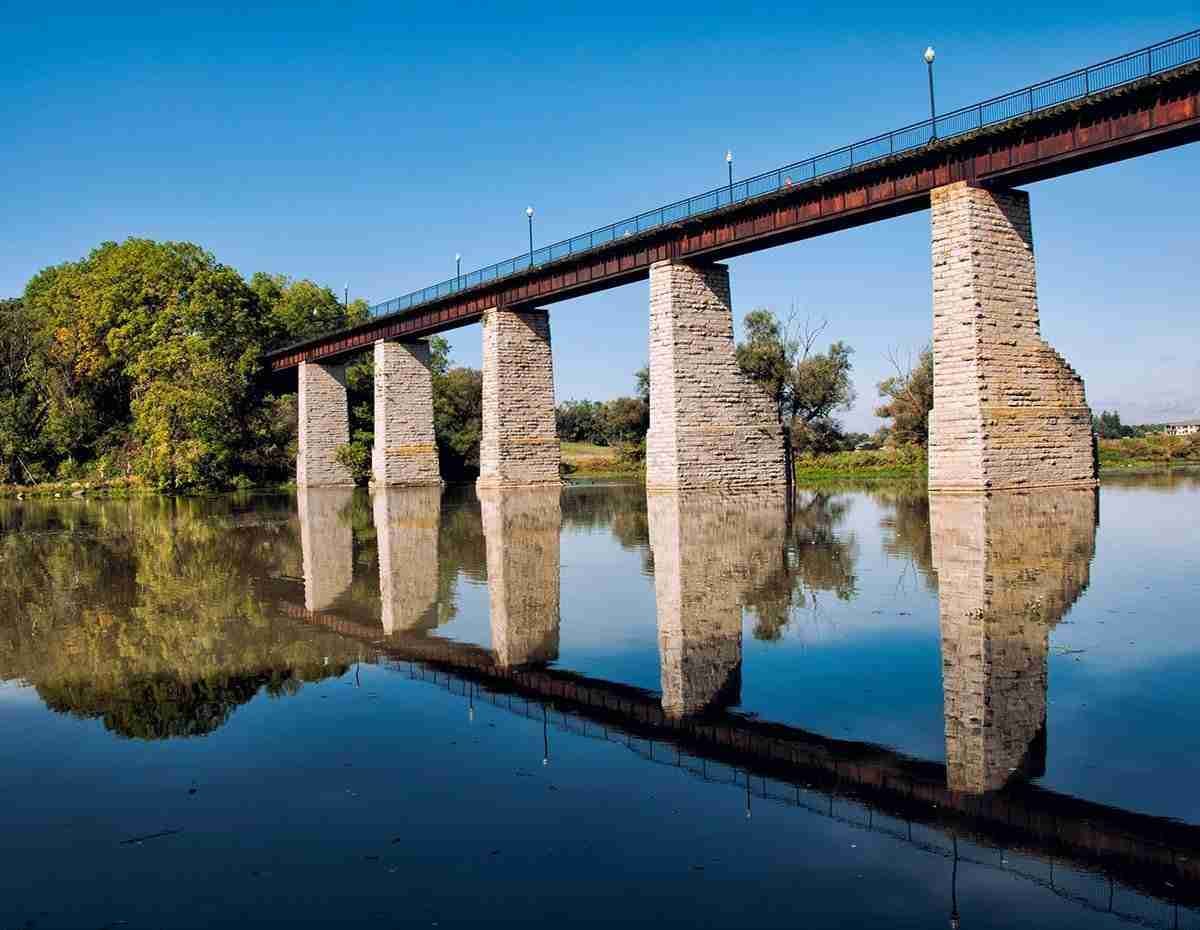
Spanning the Thames River in the heart of St. Marys, Ontario, the Grand Trunk Trail Bridge is a historic railway trestle transformed into a scenic pedestrian path—and one of the most photogenic landmarks in Perth County. Originally built in the early 1900s, the bridge features massive stone piers and sweeping views from its elevated deck, offering photographers multiple vantage points both above and below. With its rhythmic arches, layered textures, and proximity to the town's charming riverfront, the bridge invites a variety of compositional approaches, from wide-angle landscapes and architectural studies to long exposures and seasonal mood shots. Whether bathed in morning mist or silhouetted against a fiery sky, the Grand Trunk Trail Bridge is a rich subject for photographers drawn to the intersection of nature and history.
Best Photography Opportunities
• Views from Atop the Bridge
: Standing on the bridge's deck places you high above the Thames River, offering panoramic views in both directions. To the east, the river curves gently through town, framed by forested banks and seasonal color. To the west, the water widens and the town's rooftops and steeples come into view. Shoot during golden hour for soft light raking across the river surface and catching the stonework of the arches. Use leading lines of the bridge railing to draw the viewer's eye into the frame.
• Under the Stone Arches
: The true visual signature of the bridge is seen from below. The massive stone piers create repeating archways that lead the eye into the scene. These are especially dramatic when viewed from the riverbank, where you can frame reflections and seasonal vegetation against the textured masonry. Morning light casts soft shadows inside the arches, while golden hour adds depth and richness to the stone. Bring a wide-angle lens and explore multiple positions along the shore to find your strongest angles.
• Long Exposures of the River
: The steady flow of the Thames below the bridge provides excellent conditions for long exposures. Use ND filters to smooth the water and emphasize the solidity of the bridge structure. Composing with the arches above and water movement below adds dynamic contrast. Overcast days work well for this technique, creating moody, even-toned images with enhanced texture.
• Fog and Mist in the Early Morning
: During spring and fall, cool mornings often bring mist rising from the river, wrapping the bridge in soft atmosphere. These conditions are ideal for black-and-white or desaturated edits, and work beautifully with silhouettes of the arches or figures walking across the deck. Frame from below with foliage or rocks in the foreground to enhance depth.
• Night Photography and Light Trails
: While the bridge itself is not brightly lit, the surrounding riverwalk and town often glow subtly at night, creating opportunities for moody blue hour shots. If you capture pedestrian or bike traffic across the bridge, consider using long exposures to blur movement and add ghostlike trails that contrast with the bridge's permanence.
Best Time to Visit
The Grand Trunk Trail Bridge is accessible year-round and offers unique photographic character in every season. Spring brings fresh greens and rising mist over the river. Summer offers long shooting windows, lush foliage, and the chance to frame the bridge against colorful sunsets. Autumn is particularly stunning, with warm-toned trees lining the riverbanks and golden light filtering through the arches.
Early mornings are the best time for soft, even lighting and tranquil reflections—especially if fog is present. Sunset sessions provide excellent backlighting and dramatic shadows on the bridge's western face. Winter offers a stark, minimalist mood: the bare trees and snow-covered arches are ideal for monochrome compositions or high-contrast color work.
How to Get There
The Grand Trunk Trail Bridge crosses the Thames River near downtown St. Marys and is easily accessed from the Grand Trunk Trail, which runs through the town. From Queen Street East, you can walk or bike to the bridge via the trailhead near the Milt Dunnell Field parking area. The bridge is part of the St. Marys loop, so there are multiple entry points depending on your direction of travel.
Parking is available at Milt Dunnell Field or near the St. Marys Museum, both of which are within walking distance of the bridge. The area is well-maintained and accessible year-round for pedestrians and cyclists. The bridge deck is flat and wide, making it easy to set up a tripod or switch lenses on the fly. Trails along the riverbank below the bridge also provide easy access for shooting from ground level.
No permits or fees are required for photography, and the site is generally quiet in the early hours or on weekdays, making it easy to work without interruption.
Exploring the Surrounding Area
While the bridge is the centerpiece, the surrounding riverfront and trail system offer plenty of additional photo opportunities. The banks of the Thames feature open meadows, mature trees, and walking paths that create elegant leading lines and natural framing elements. Explore both sides of the river to capture the bridge from different angles and elevations.
Milt Dunnell Field, located just east of the bridge, provides open grassy space and sculptural trees that work well in sunrise compositions. The area also attracts local wildlife—geese, ducks, and herons are commonly seen in and around the river, particularly near the shallow areas downstream from the bridge. In late afternoon, the stone of the bridge catches soft sidelight that emphasizes texture and adds depth to wider scenes.
For those working on a story-driven series, the bridge's conversion from industrial rail to peaceful trail lends itself to narrative themes of renewal and time—well suited for editorial or fine art interpretation.
Nearby Photography Locations
: Just a short walk north of the bridge, Canada's largest outdoor freshwater swimming quarry is also a dramatic geological site. The limestone walls, deep turquoise water, and tree-lined edges create a visually rich contrast to the bridge's structure—ideal for landscape and abstract compositions.
: This historic district offers heritage architecture, red-brick buildings, and small-town charm. Golden hour light along Queen Street can produce warm façades and dynamic shadows, while storefront details and lampposts offer visual rhythm and character.
: Located near the bridge, the museum grounds feature gardens, mature trees, and Victorian architecture—excellent for quiet, refined compositions with seasonal floral color or moody overcast tones.
: A 15-minute drive northeast, Wildwood offers forested trails, a large reservoir, and rolling landscapes. It's ideal for more expansive nature photography, particularly in fall when the hardwoods ignite with color.
: South of St. Marys, this trail system follows the Avon River through farmland, woodlots, and scenic rural areas. Excellent for pastoral scenes, bird photography, and subtle environmental storytelling.
The Grand Trunk Trail Bridge is more than just a piece of railway history—it's a photographic stage set in stone, offering structure, story, and the flowing rhythm of the river below. Whether you're capturing quiet symmetry in morning fog, sculpted light on weathered masonry, or the sweep of the Thames from its high deck, this bridge invites repeat visits and rewards thoughtful composition in every season.
Comments
Loading comments…