
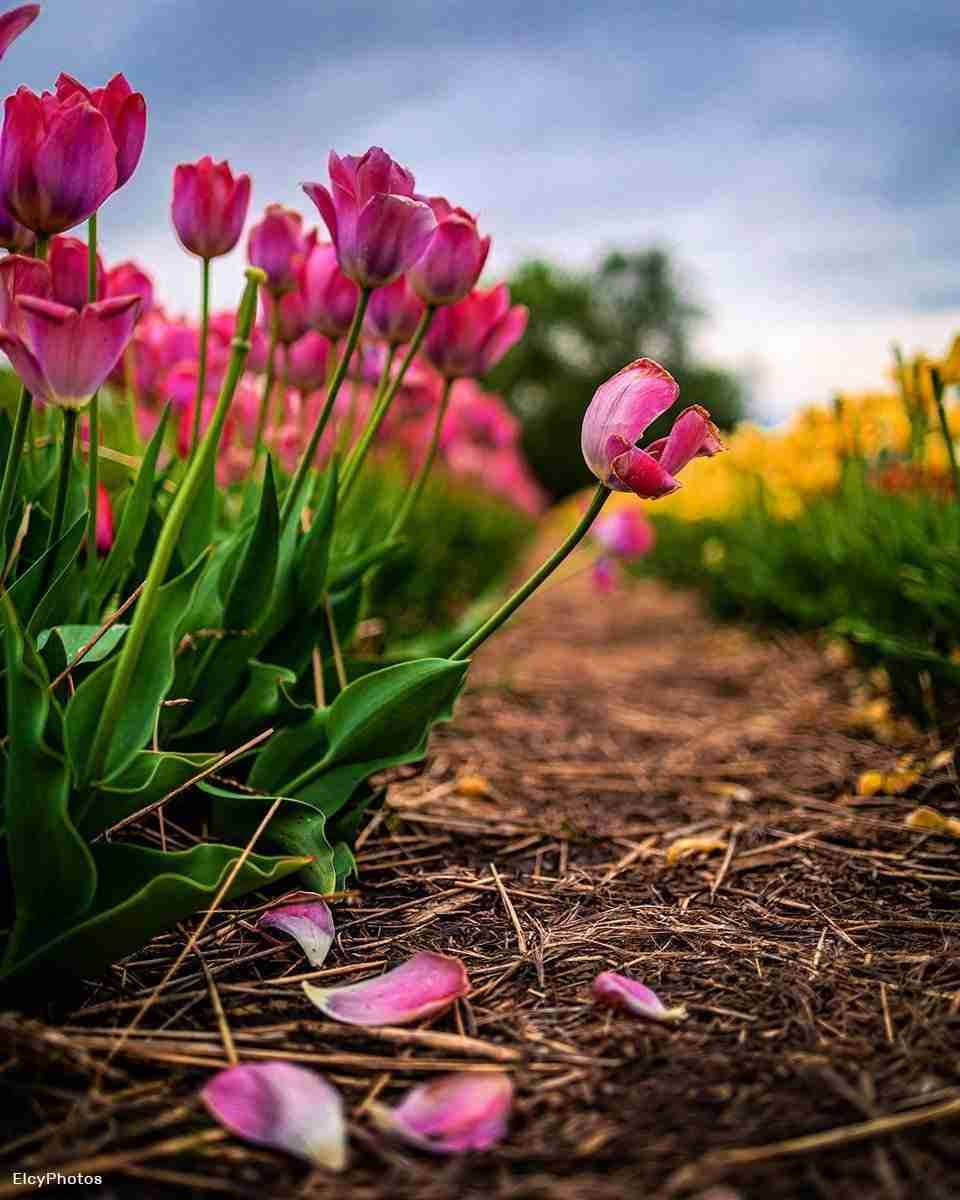
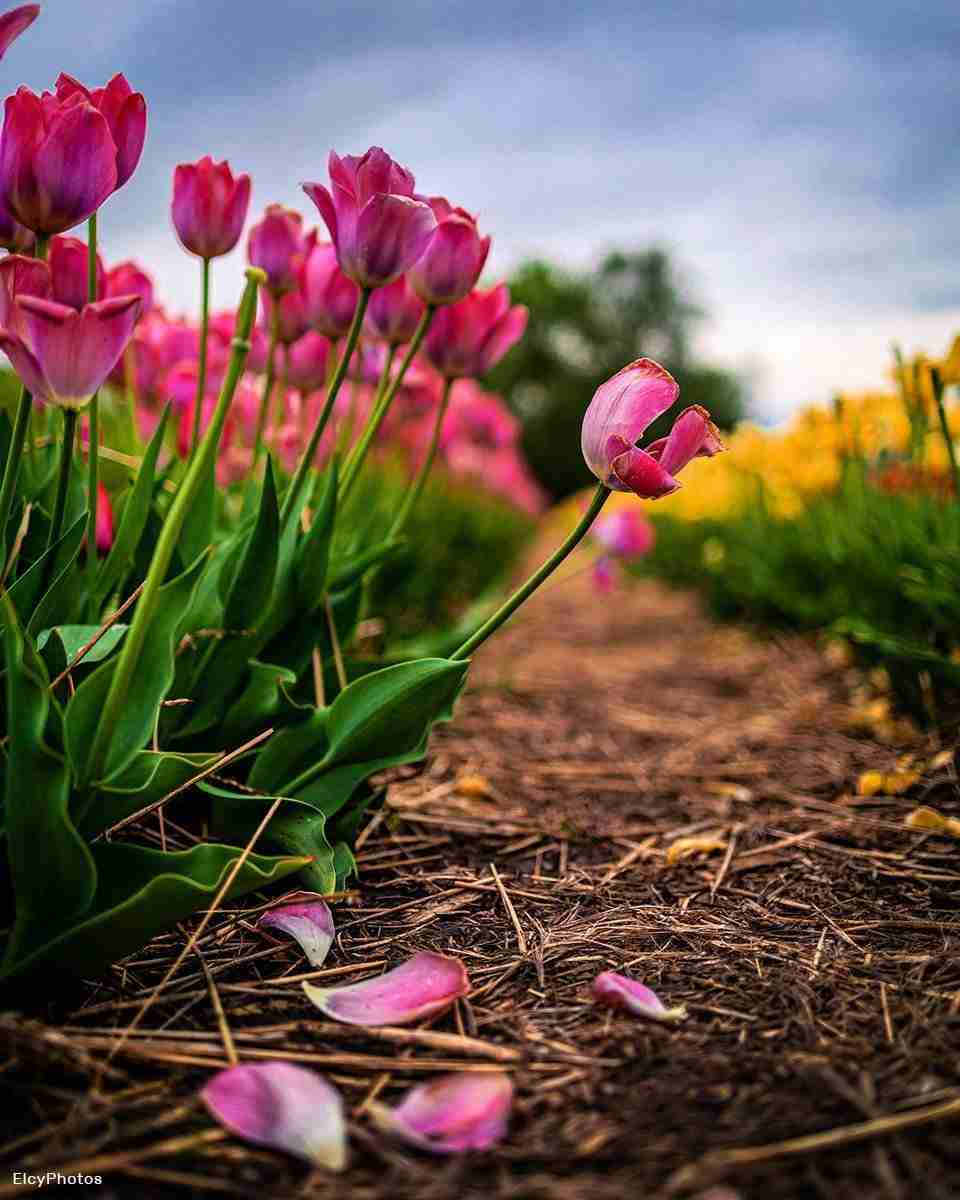
Just east of Ottawa, Green Corners Farm transforms each spring and summer into a living canvas of color and texture that's become a magnet for floral photographers and seasonal portrait work alike. With over 350,000 tulips in bloom during their spring u-pick season, along with waves of daffodils, hyacinths, sunflowers, snapdragons, and zinnias, the farm offers one of Ontario's most immersive floral photography environments. Set amid the gently rolling agricultural landscape outside the city, the fields stretch wide under open skies, giving photographers the space—and the permission—to work with tripods, drones, and dynamic natural light in a fully curated outdoor setting. Whether you're chasing bold macro shots, painterly drone compositions, or soft golden-hour portraits, Green Corners Farm is a vibrant and well-managed location that welcomes creativity within clearly defined boundaries.
Best Photography Opportunities
• Tulip Fields in Spring Bloom
: The farm's signature tulip field is a riot of color in May, with carefully planted rows forming tight linear patterns and color-blocked sections across the gently sloped terrain. These flowers lend themselves well to both immersive wide-angle shots that show the expanse of the field and shallow-depth close-ups that emphasize color, petal texture, and bokeh-rich backgrounds. Early mornings are ideal for dew-touched petals and directional light that traces along the flower rows, while golden hour bathes the fields in warmth and shadow play. Tulip rows create strong leading lines—use them to pull the viewer's eye through your frame.
• Daffodils and Hyacinths for Soft Pastels and Texture
: Blooming slightly earlier than the tulips, these companion flowers fill out the spring palette with gentler yellows, whites, purples, and pinks. The hyacinths, in particular, have a more clustered growth habit and offer an excellent contrast in structure when shot alongside taller tulips. Low angles here allow you to place the blooms against sky or isolate them with carefully controlled depth of field. Use a macro or fast prime lens to highlight the intricate textures and scent-laden petals without the need for artificial lighting or props.
• Summer Fields of Sunflowers, Snapdragons, and Zinnias
: By mid to late summer, the tulip beds give way to a vibrant rotation of taller and broader-blooming flowers. The sunflower field is bold and high-impact, best captured with strong backlight to accentuate their scale and symmetry. Meanwhile, the zinnias and snapdragons offer dense, colorful compositions in tighter spaces, with a more layered look perfect for flat-lay, portrait, or fine art close-up work. The vertical habit of snapdragons pairs well with side lighting to bring out texture and shape.
• Drone Photography for Geometric Landscapes
: With advance notice to the farm staff, drone photographers are permitted to fly over the fields, opening up an entirely different perspective. From above, the rows form structured grids and color bands that read like abstract paintings. Mornings and late afternoons offer the best directional light for shadow definition, while overcast skies reduce glare and flatten the palette for a softer aesthetic. Use altitude to vary composition—lower flights emphasize row texture and floral density; higher flights reveal the fields in relation to the broader rural landscape.
• Natural Light Portraits and Environmental Scenes
: The farm's no-prop policy keeps visual clutter minimal, making it a clean backdrop for seasonal portrait sessions. Photographers booking commercial slots can bring clients into the fields for mini sessions, family shoots, or styled portrait work—just be mindful of the permitted gear restrictions. Golden hour is especially flattering here, with sunlight filtering through rows and casting warm tones on skin and petals alike. Foreground blooms can be used creatively for natural framing and color layering.
Best Time to Visit
The farm's photography potential unfolds in two major waves: spring and summer, each with their own peak periods and light characteristics. Spring begins with hyacinths and daffodils, typically in late April, followed closely by tulips, which reach full bloom in May. During this period, mornings provide the most even light and soft conditions, particularly when capturing petal detail and reflection. Overcast skies are equally desirable for color accuracy and contrast reduction—especially helpful in handling the saturated reds and purples of some tulip varieties.
Summer blooms start around mid-July and run through August, with sunflowers peaking in late July. These sessions tend to favor late afternoon and golden hour for both warmth and flattering shadows. Snapdragons and zinnias maintain their color and structure even under midday light, though early morning is still preferable for comfort and fewer crowds. Keep in mind that weather and bloom timing may vary year to year, so checking the farm's website or social media updates is essential for planning.
Crowds increase significantly on weekends and in the first days of peak bloom, so weekday mornings offer the quietest and most controlled conditions for both tripod and drone work. The farm remains highly photogenic even past peak bloom—petal drop, slightly wilted flowers, and weathered textures add storytelling value for those seeking a more documentary or fine-art approach.
How to Get There
Green Corners Farm is located just east of Ottawa, easily accessible by car via Highway 417 or Regional Road 174. The farm's precise address and updated directions are available at greencorners.ca. Ample on-site parking is provided, and visitors are welcomed through a well-organized check-in area, particularly during bloom seasons and ticketed events.
Entry to the flower fields is ticketed, with standard admission for personal photography and an upgraded "Commercial Photographer Ticket" required for those shooting clients or mini sessions. Drone pilots are permitted but must notify staff prior to flight for safety and coordination. All visitors must adhere to posted rules: while tripods are allowed, the use of light stands, reflectors, or props is not permitted in the field areas to minimize disruption and protect the flowers.
While the farm is not directly serviced by public transit, its proximity to the city makes it an easy half-day outing by vehicle. Facilities on site typically include portable washrooms, refreshments, and occasional pop-up vendors during event days. Be sure to bring your ticket confirmation and respect time limits on field access during peak periods.
Recommended Gear and Shooting Tips
A mixed kit of wide, standard, and macro-capable lenses gives the most flexibility when working at Green Corners Farm. For immersive scenes of the flower rows or overhead drone work, a wide-angle lens (16–35mm) helps to emphasize leading lines and gives a strong sense of place. A mid-range zoom (24–70mm) is ideal for handheld compositions and quick adjustments, especially in crowded conditions or while working within commercial session timeframes.
Macro lenses or close-focusing primes (like a 100mm macro) are essential for capturing the unique structure of hyacinths, tulips, and zinnias. Pay attention to petal translucence in backlight conditions, and use a shallow depth of field to separate blooms from busy backgrounds. If you're using a tripod, keep movement minimal and avoid blocking pathways—quick setup and courtesy are key in this communal setting.
Drones should be equipped with variable ND filters to manage exposure under changing skies and midday glare. Fly slowly and intentionally, emphasizing symmetry and color fields while avoiding overlap with other guests. For portrait shooters, plan your sessions around the light: the fields are fully open to sky, so early and late light are best for flattering tones and skin balance.
Since props and lighting tools are restricted, embrace what's available: frame with foreground blooms, shoot through stems and petals for dreamy soft-focus effects, or use natural shadow play to add depth. Most importantly, move with respect—these blooms are delicate, and preserving the space ensures future photographers get the same opportunity.
Nearby Photography Locations
: Located less than 20 minutes away, this raised bog ecosystem offers boardwalks, wild grasses, and unusual landscapes rarely found elsewhere in Ontario. It's especially photogenic at sunrise, when mist clings to the low-lying terrain.
: A heritage site east of Ottawa featuring restored buildings, rural artifacts, and old-world charm perfect for portrait sessions or storytelling work. Seasonal events add atmosphere and additional visual layers.
: A forested park and lakefront area ideal for nature photography, reflections, and wildlife spotting. In summer, it's a quiet place to wind down after a flower field session, with golden light filtering through pine stands and cattails.
• Downtown Cumberland
: A small village with historic stone buildings, picket fences, and quaint street scenes that offer a contrast to the natural saturation of the flower fields. Early morning or rainy day sessions here bring out the textures in wood, brick, and cobblestone.
• Ottawa River Lookouts (Trim Road & Petrie Island)
: For wide horizons and water-based sunset compositions, the lookouts along the Ottawa River provide dramatic skies, silhouettes, and calm waterfront scenes within a short drive of the farm.
With its expansive bloom cycles and openness to both artistic and professional use, Green Corners Farm is more than a seasonal attraction—it's a rare invitation to walk, shoot, and immerse yourself in color on a grand scale. Whether you're capturing the symmetry of tulips from a low angle or flying high over sunflower fields at dusk, this is a place where floral photography flourishes in every sense.
Comments
Loading comments…