
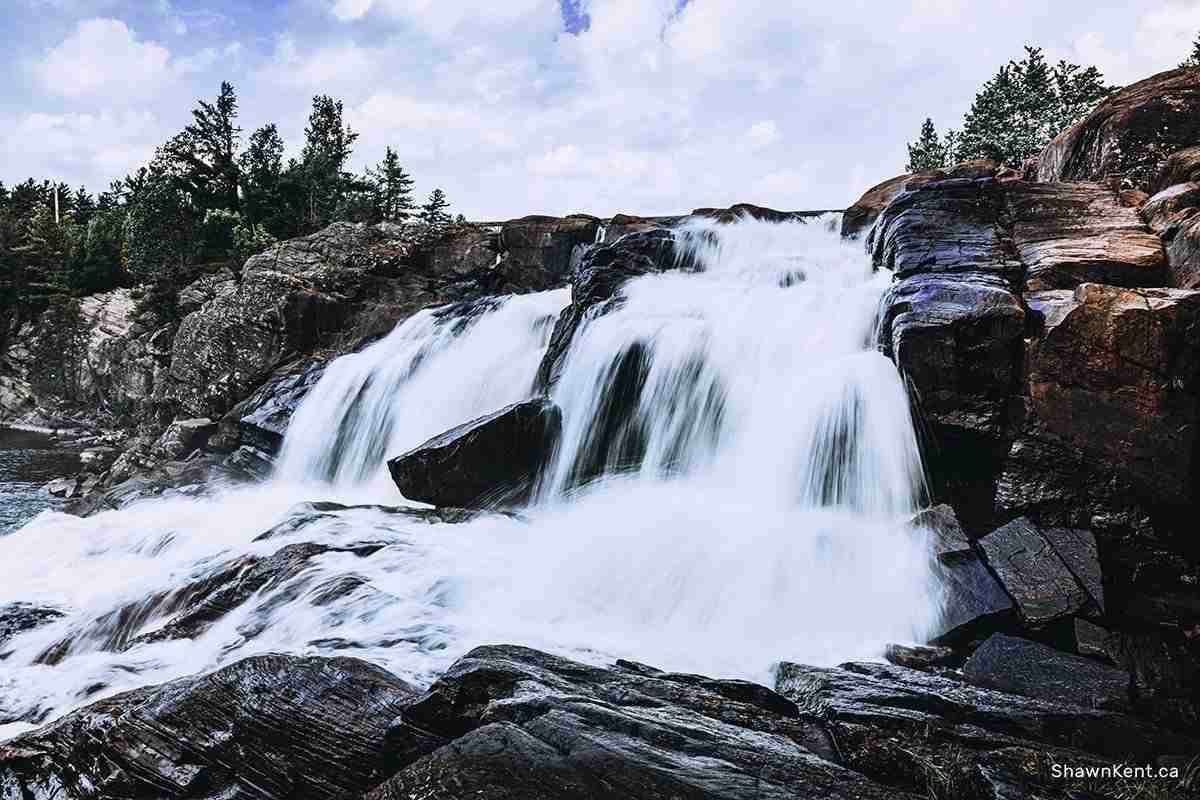
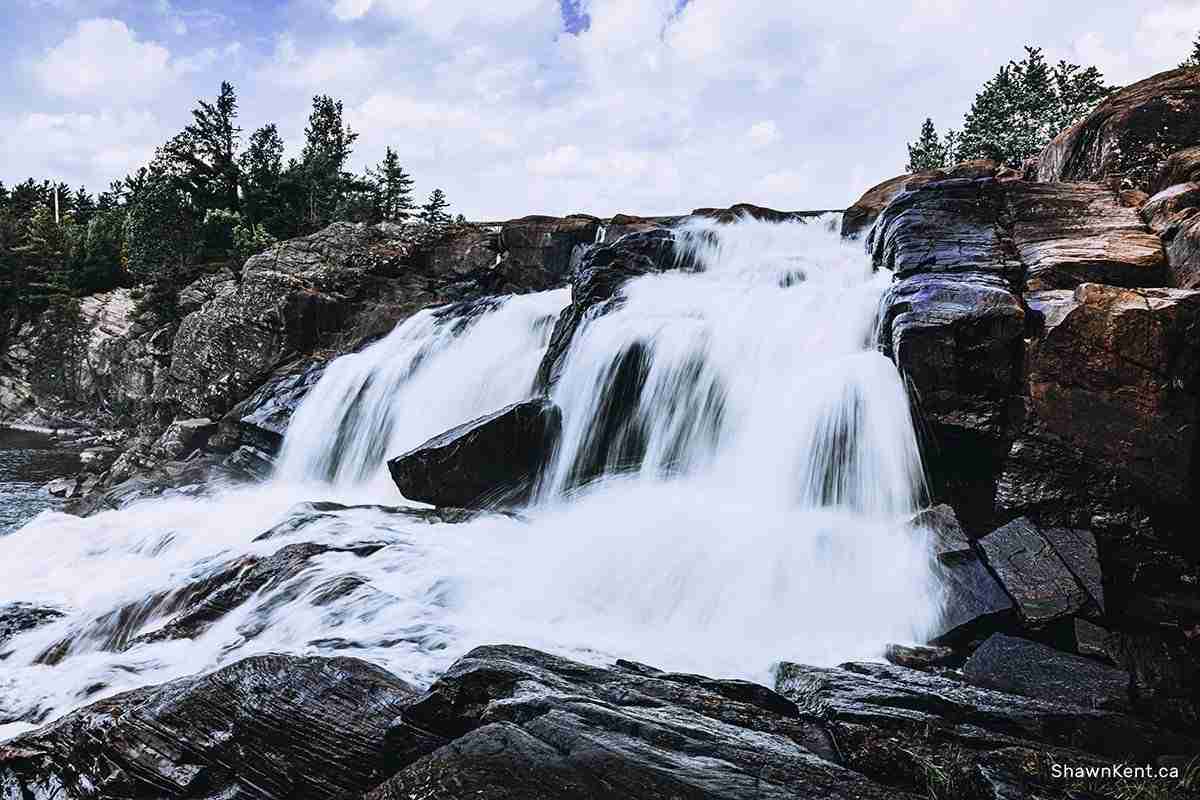
Just north of the town center in Bracebridge, Ontario, High Falls presents a striking mix of natural beauty and industrial function. This tall, forceful waterfall is enhanced—not diminished—by its pairing with a hydroelectric dam, offering photographers the rare opportunity to shoot both untamed water and human-engineered structure in a single composition. The area is easily accessed by car, with a well-maintained parking area nearby, and features short hiking trails that lead to multiple vantage points and a handful of smaller, equally photogenic waterfalls upstream and downstream.
For photographers, High Falls is compelling not just for its raw volume and vertical drop, but for the variety of angles, moods, and textures available in a relatively compact area. The wide, plunging curtain of water, framed by dense pine forest and angular concrete structures, creates scenes that feel at once powerful and meditative. Whether you're working on long exposures, aerial compositions, or abstract studies of water in motion, High Falls rewards careful observation and time on site.
Best Photography Opportunities
• Main Falls from the Base
The classic view of High Falls comes from below, where the Boyne River spills over a wide crest into a gorge lined with exposed bedrock and weathered conifers. A wide-angle lens allows you to capture the full scope of the waterfall along with the surrounding cliffs and spray. In spring, high water levels produce maximum drama, while in autumn, the surrounding trees provide a golden frame. Use a tripod and neutral density filter to stretch exposure time and create silky movement in the falling water, contrasting beautifully with the hard geometry of the dam.
• Hydroelectric Dam Detail and Geometry
The nearby hydroelectric infrastructure offers a totally different kind of photographic subject—rusted metal, concrete supports, and the angular lines of the dam itself. These architectural features are ideal for shooting with mid- to long-range lenses, isolating texture, shadow, and structure. When paired with flowing water, the industrial elements add a compelling tension to the scene, especially when you compose with symmetry or reflection in mind.
• Smaller Waterfalls and Cascades
Along the trail system surrounding High Falls are several smaller cascades and feeder streams. These falls, though lesser in height, are just as rewarding in terms of texture and lightplay. Often shaded by dense foliage, they're ideal for slow shutter speed photography and can be used as compositional elements in foregrounds or as standalone subjects. Many are surrounded by mossy boulders, fallen logs, and ferns, offering layered, close-range compositions with natural framing.
• Aerial and Elevated Views
Drone photography at High Falls can offer stunning perspectives, especially in seasons when tree cover is less dense. Overhead views capture the full width of the dam and the flow of the river beyond, revealing patterns in the water and landscape not visible from the ground. Oblique aerial shots looking downstream emphasize the contrast between the engineered drop and the meandering river below. Always check for local regulations and fly with caution, as hydro facilities may have specific no-fly zones.
• Trail Vistas and Riverbank Compositions
The trails leading to and from the falls offer opportunities to step back and include the environment in your compositions. Look for bends in the river, partially submerged rocks, or canopy openings that create natural vignettes. These scenes are ideal for storytelling sequences that show the falls as part of a larger landscape. The views here change rapidly with the light—returning at different times of day can yield vastly different moods, from soft morning mist to warm backlight at sunset.
Best Time to Visit
High Falls can be photographed in all seasons, but its character shifts dramatically throughout the year. In spring, snowmelt from the surrounding watershed surges through the dam, amplifying the sound and size of the falls. This is the best time for dramatic, high-volume long exposures and for capturing the force of water at its peak. Summer brings lush green foliage and slower flows, which allow for more defined compositions around the rocks and basin.
Autumn transforms the area with vibrant color in the maples and birches that frame the river gorge—perfect for pairing warm hues with cool tones in the water. Winter is a quieter but equally interesting time, as the falls often remain partially flowing while ice forms along the edges. Icicles, snowbanks, and misted-over branches create excellent conditions for high-contrast compositions, especially in black-and-white.
Visit early in the morning to avoid crowds and harsh light. Overcast days are great for detail work on the smaller falls and for soft, even exposures across the wide face of the main falls. Return visits at different water levels will give you a full sense of the site's dynamic nature.
How to Get There
High Falls is located just off Highway 11, north of Bracebridge in Ontario's Muskoka region. From the town center, take Highway 117 east, then follow signs for High Falls Road. A well-marked parking lot provides easy access to the trails and viewing areas, which are just a few minutes' walk from your vehicle.
The trails are relatively short and manageable for most fitness levels, though some sections near the falls involve uneven ground and slippery rocks. Wear proper footwear and be prepared for spray from the falls, especially in high water season. In winter, portions of the trail can be icy or snow-covered, so spikes or snowshoes may be helpful depending on conditions.
Recommended Gear and Shooting Tips
Bring a wide-angle lens (16–35mm) for shooting the full height of the falls and surrounding gorge. A mid-range zoom (24–70mm) is useful for isolating details in the dam structure and for flexible composition as you explore the trail. If you're shooting from across the river or above, a 70–200mm lens will help compress the scene and highlight texture or atmosphere in the mist.
A tripod is essential for long exposures, especially when capturing water movement or working in low light. A circular polarizer is extremely effective here—removing glare from wet rocks, enhancing water clarity, and boosting foliage color. A 6- or 10-stop ND filter will allow for slower shutter speeds even in brighter conditions.
Weather-seal your gear or bring covers if you plan to shoot from close range—spray from the falls can be unpredictable. Lens cloths and microfiber towels are a must. Also consider waterproof boots if you're venturing near the edge or across shallow channels for a better angle.
Nearby Photography Locations
• Bracebridge Falls and Downtown Heritage Buildings
Right in town, Bracebridge Falls offers another strong cascade framed by stone walls and historical architecture. The nearby downtown includes heritage storefronts, pedestrian bridges, and a classic industrial riverfront ideal for urban-rural storytelling.
Just a few minutes from High Falls, this lesser-known waterfall provides a quiet, wooded setting with numerous smaller cascades and boulders perfect for slow shutter speed work. The forest trail is peaceful and photogenic year-round.
• Muskoka River Lookouts
North of Bracebridge, the Muskoka River offers several quiet pull-offs and lookout points. These are ideal for golden hour photography, especially when the river is calm and reflecting the surrounding forests.
Located near Milford Bay, this granite outcrop provides wide views over Lake Muskoka—an excellent place for sunset landscape photography with strong foreground texture and horizon depth. Best paired with a trip to the falls for variety in terrain and subject.
A bit farther north, Arrowhead offers waterfalls, forest boardwalks, and dramatic river bends. In winter, the park is especially known for its ice-covered falls and snowshoe trails, while in summer it's a peaceful spot for reflections and layered woodland compositions.
High Falls is a blend of power and precision, where natural drama meets human design. For photographers who love working with water, structure, and changing light, it's a location worth returning to again and again.
Comments
Loading comments…