
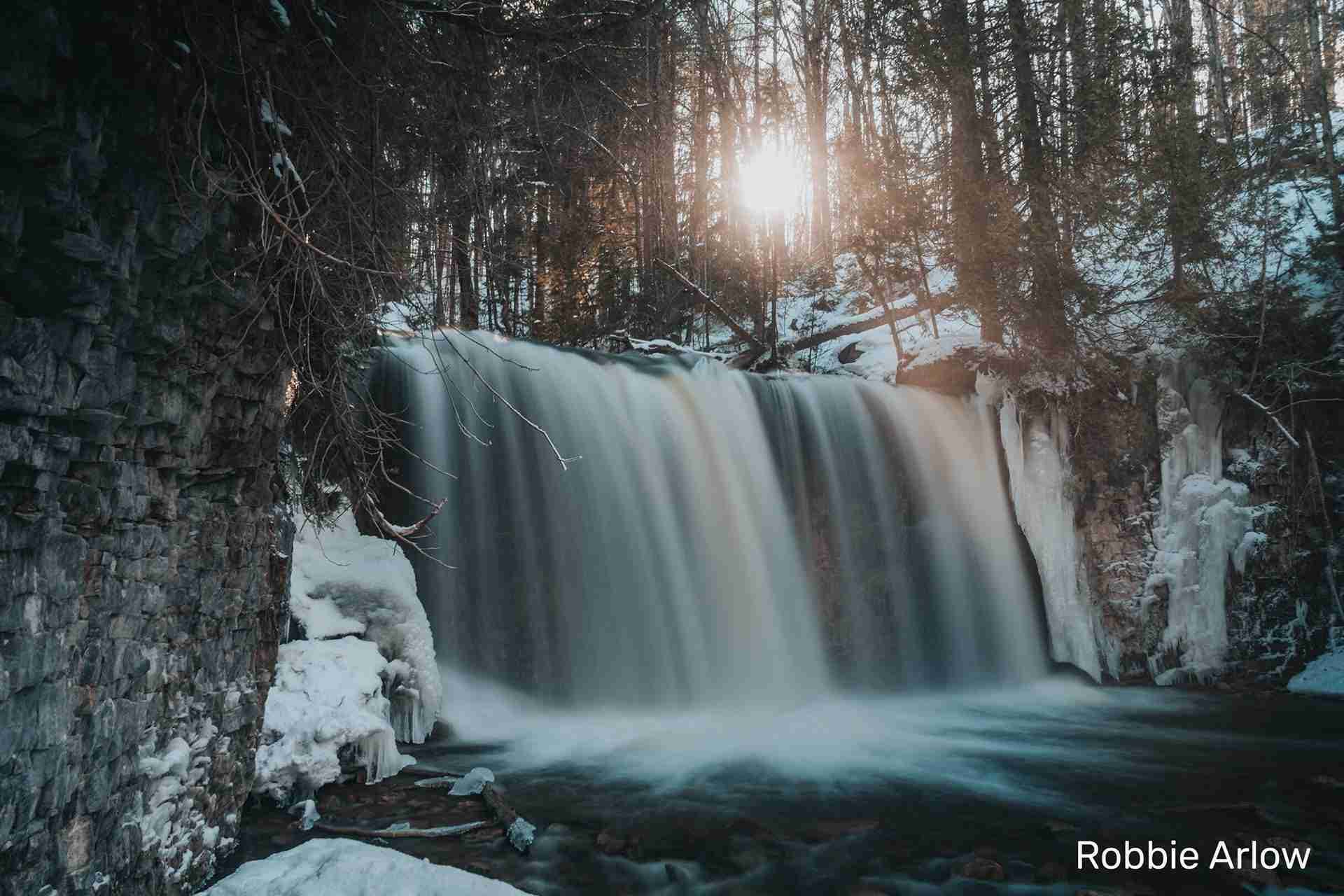
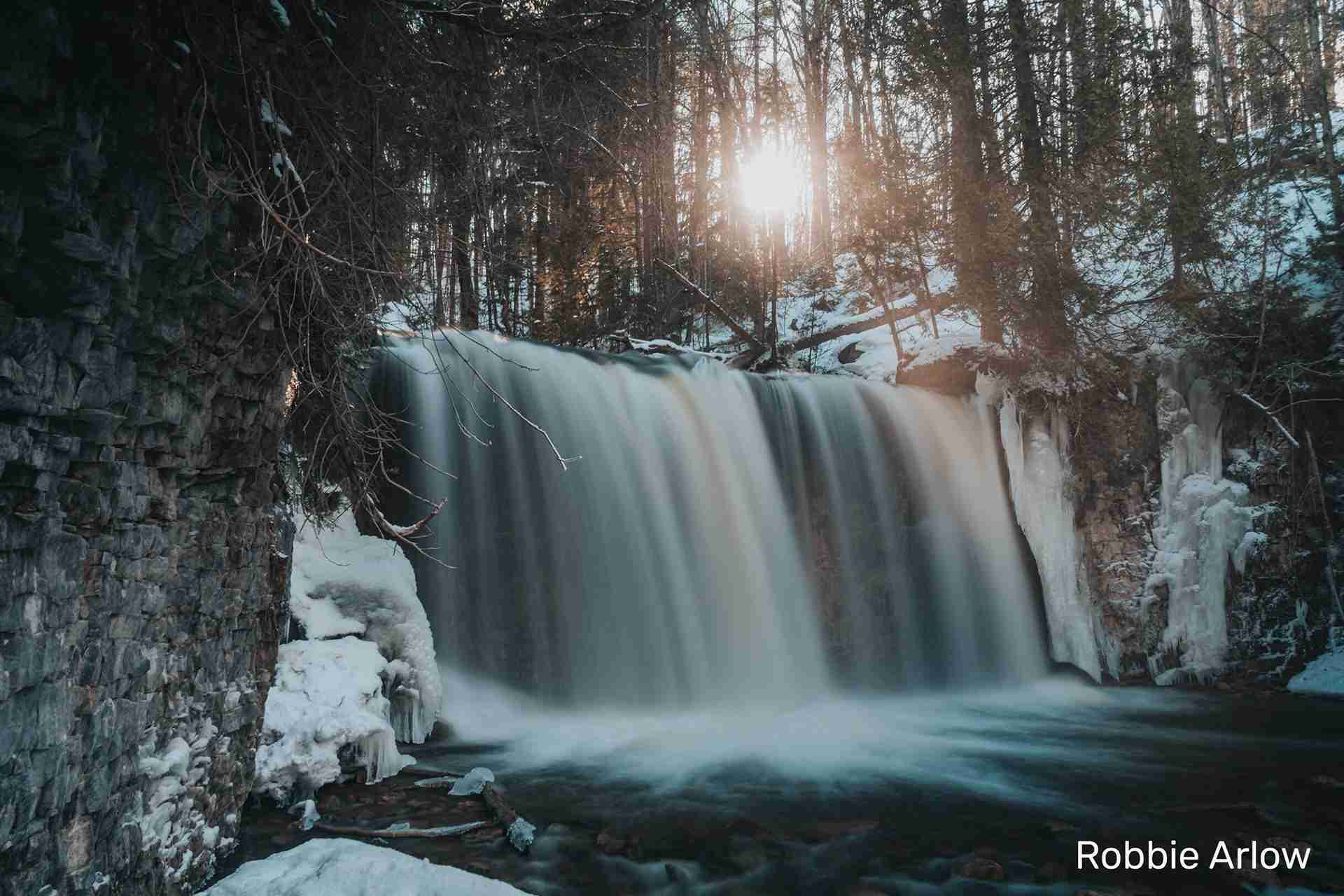
Tucked within the dense hardwoods of Grey County, Hogg's Falls is a secluded and tranquil spot where the Boyne River tumbles over a seven-metre drop into a forested gorge. Located just a short walk from Lower Valley Road, the falls are named after William Hogg, an early settler who once operated a sawmill nearby. Unlike the more popular waterfalls in the region, Hogg's Falls retains a quiet, untamed feel—making it a rewarding destination for photographers seeking moody light, long exposures, and a deep sense of place in the woods.
The falls are framed by hemlocks, mossy outcrops, and ferns that thrive in the cool, misty microclimate of the ravine. With its limited signage and less-traveled trail, Hogg's Falls feels more like a discovery than a destination, and its gentle scale makes it ideal for both wide environmental shots and intimate compositions of flowing water, textures, and seasonal contrast.
Best Photography Opportunities
• Main Falls Composition from Below
The most iconic view is from the base of the falls, where you can capture the full drop framed by dark rock and lush foliage. A wide-angle lens lets you include the surrounding forest and creek bed for context, especially effective during early summer when the greens are vibrant. Use a slow shutter speed to turn the waterfall into a soft white veil and balance it against the rugged textures of the surrounding rocks and streambanks. Winter compositions here are particularly striking with snow clinging to the trees and mist rising from the water.
• Side Views and Diagonal Angles
Moving off the main trail just slightly, you'll find several side vantage points that allow for diagonal compositions where the falls cut across the frame. These off-center views are excellent for layering depth, with foreground rocks or branches guiding the eye toward the water. The play of shadow and sunlight filtering through the trees creates a natural spotlight effect that changes constantly—ideal for reactive, handheld shooting.
• Close-Ups of Cascading Water and Texture
The base of the falls and downstream along the Boyne River offer opportunities for tight compositions focusing on swirling water, wet moss, and fallen branches. Use a macro or mid-range lens to isolate these textures, especially after rainfall when water levels are higher and the ground is slick with organic debris. These close-in shots are perfect for emphasizing mood and abstraction, and they pair well with wider context frames in a full photo essay.
• Upstream Forest Trail and Leading Lines
The trail leading to the falls weaves gently through a mixed forest of maples, birch, and conifers, offering natural leading lines, especially when the ground is covered in leaves or snow. In autumn, the golden canopy and carpet of fallen foliage create a warm, immersive environment ideal for landscape-style compositions. In winter, snow-laden branches and boot tracks in the trail can be used as compositional guides that lead the viewer toward the sound of falling water.
• Winter Photography with Snowshoes
Hogg's Falls is accessible year-round, but the trail can be covered in deep snow during winter. Snowshoes are highly recommended for stability and access to off-path compositions. The falls often remain flowing in cold temperatures, offering a powerful contrast between rushing water and frozen surroundings. Icicles hang from the rock walls, and the surrounding trees glisten with frost—ideal for high-contrast black-and-white photography or subtle, low-saturation winter palettes.
Best Time to Visit
Hogg's Falls can be visited in all four seasons, each offering distinct photographic moods. Spring brings strong flow from snowmelt and newly leafing trees, ideal for shooting with soft natural light and high water volume. Summer offers ease of access and lush green surroundings, but also occasional harsh light—early morning or late afternoon shoots are best during this season.
Autumn transforms the area into a tapestry of orange and gold, especially along the trail leading to the falls, which becomes a scene in itself. The contrast between warm leaves and cool stone adds depth to compositions. Winter is magical but requires proper preparation. The trail is unplowed, so snowshoes or traction aids are essential. The frozen landscape, combined with the movement of the falls, offers a unique blend of stillness and motion.
Because of its east-facing orientation and tall forest canopy, the light at Hogg's Falls is typically soft and diffused, even at midday—making it forgiving for long exposures and waterfall photography without the need for heavy filtration.
How to Get There
Hogg's Falls is located in the heart of Grey County, Ontario, near the town of Flesherton. From Highway 10, turn west onto Grey County Road 4, then south onto East Back Line. Follow the signs to Lower Valley Road, where there is a small, well-marked parking lot just off the roadside.
From the lot, it's about a five-minute walk down a well-worn trail to the falls. The path is relatively easy in dry conditions but can be muddy or icy depending on the season. There are no washrooms or facilities on-site, so plan accordingly. The area is managed for conservation—please stay on marked paths, and use caution near steep or slippery edges along the ravine.
Recommended Gear and Shooting Tips
Bring a wide-angle lens (16–35mm) for capturing the full waterfall and surrounding environment, and a mid-range zoom (24–70mm) for tighter compositions or isolating cascades and trail scenes. A circular polarizer is essential to reduce glare from wet rock surfaces and enhance contrast in foliage and water. A 6-stop ND filter can help achieve longer exposures during daylight hours for silky water effects.
A tripod is highly recommended, especially for long exposures at the falls or during low-light winter conditions. Rubber feet are preferable to spikes, as much of the ground is uneven rock or soil. Waterproof boots and a weather-sealed pack are useful year-round, particularly in wet or snowy conditions.
In winter, carry extra batteries and use a lens hood to prevent snow from landing on your glass. In autumn, bring a blower or cloth to manage falling debris, especially during windy days. Travel light but stay prepared—while the hike is short, the terrain can require a bit of agility to get the most creative angles safely.
Nearby Photography Locations
Just a 10-minute drive north, Eugenia Falls offers a much taller drop—over 30 metres—and is framed by dramatic cliffs. While busier than Hogg's, it's ideal for wide scenic shots and long-exposure work during spring melt or after rain. The trails here also provide elevated vantage points over the gorge.
A short drive southeast, this scenic lookout offers expansive views over the Beaver Valley. Ideal for golden hour landscapes and wide vistas, especially in autumn when the valley is ablaze with color. The cliffside trail also offers great leading lines and silhouette opportunities.
• Flesherton Hills and Rural Farmland
The rolling hills and backroads around Flesherton offer classic southern Ontario pastoral scenes—old barns, quiet roads, and layered fields that photograph beautifully in mist or early morning light. This is a great area for soft, atmospheric rural documentary work.
• Beaver Valley Ski Club Area
Even outside of ski season, the area around the Beaver Valley Ski Club features rich topography, winding roads, and woodland trails perfect for moody forest compositions and drone photography. The valley's steep sides catch dramatic light, especially during early morning.
About 45 minutes west, this park features another dramatic waterfall, formal garden spaces, and extensive forest trails. Inglis Falls itself is a powerful cascade framed by rock walls and heavy foliage, offering strong compositional geometry and seasonal variety.
Hogg's Falls is one of those places that invites return visits—not because it changes dramatically, but because its quiet rhythm reveals something new each time. For photographers who thrive in forest light and seek both motion and stillness, it's a location that feels personal, timeless, and deeply rewarding to explore.
Comments
Loading comments…