
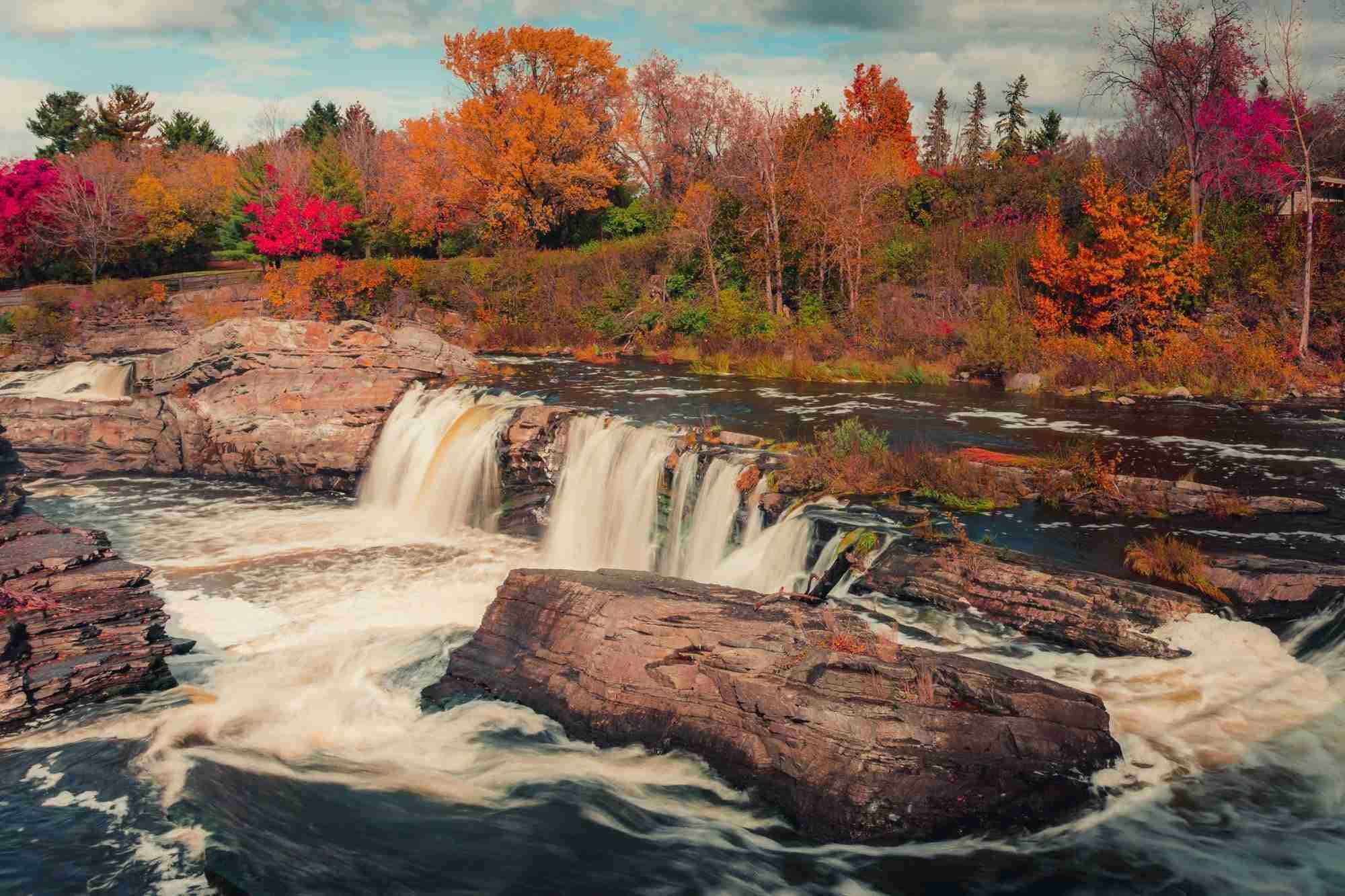
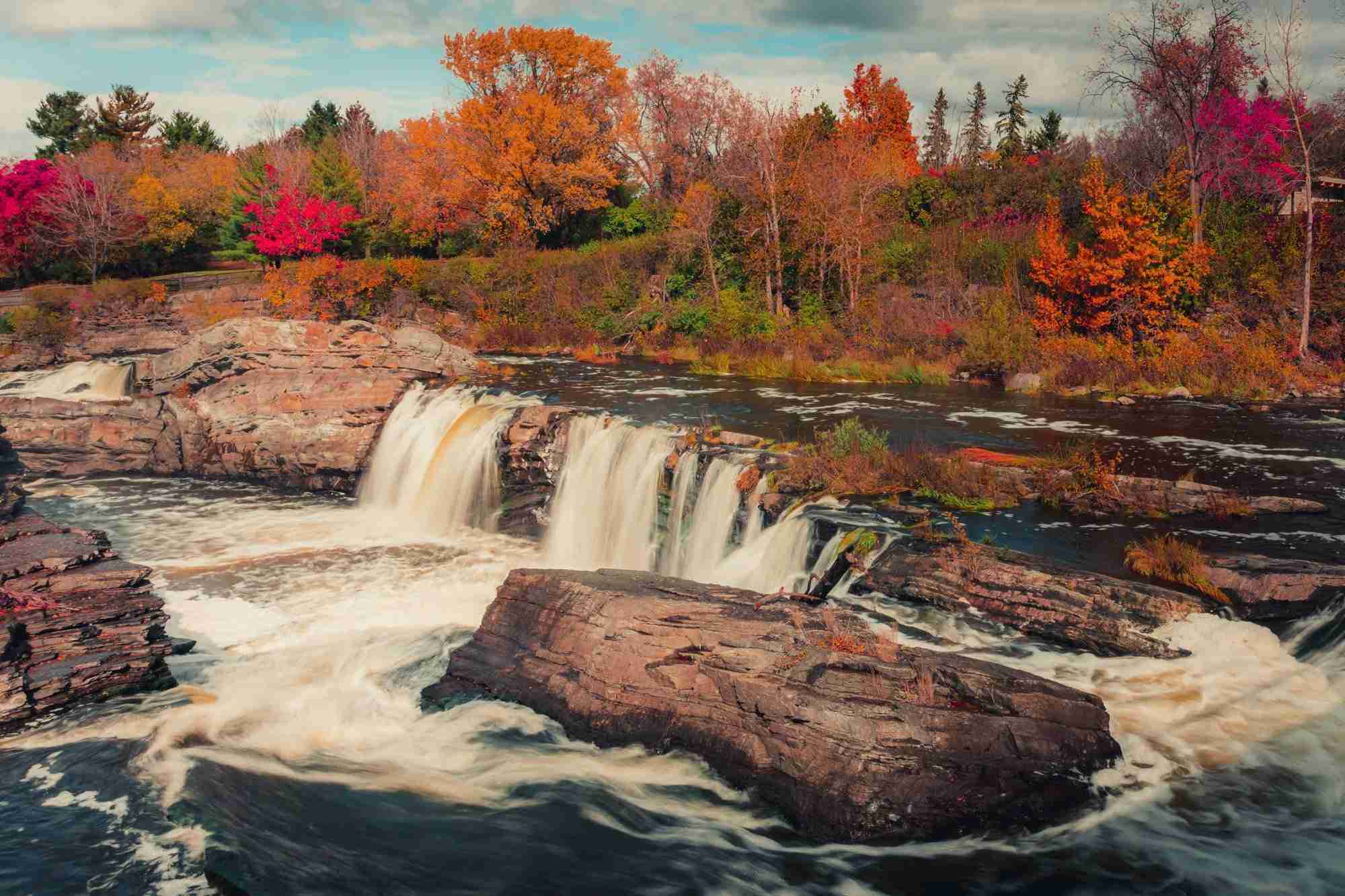
Hogs Back Falls, officially known as the Prince of Wales Falls, is a unique Ottawa photography location where raw water power meets human engineering. Situated along the Rideau River just south of downtown, this man-made waterfall was created where the river is diverted into the Rideau Canal system. The result is a dramatic cascade of channeled rapids, rushing over jagged rock ledges and through stone-lined channels surrounded by mature forest. The site combines natural texture, rushing water, and structural elements—offering a wide variety of shooting opportunities for landscape, abstract, and seasonal photography.
Best Photography Opportunities
• Main Waterfall from the Viewing Bridge
The central cascade of Hogs Back Falls is best photographed from the dedicated pedestrian bridge spanning the gorge. A wide-angle lens lets you capture the full scope of the falls, with its segmented rock shelves and converging flows. The composition is especially powerful in spring when snowmelt raises the water level, or in late autumn when leaves carpet the banks and bare trees frame the rush below. Try long exposures to soften the water into white ribbons or freeze the motion for a more dramatic, high-energy look. The bridge also provides excellent vantage points to study how the water interacts with the engineered contours of the channel.
• Lower Rapids and Rock Ledges
Below the main falls, the water funnels through a series of smaller rapids bordered by jagged rock formations. These make for compelling long exposure studies, particularly from the lower trail that runs along the Rideau River's edge. Use foreground rocks to anchor your composition and emphasize the layered textures of water, stone, and lichen. These lower sections are also quieter, with less foot traffic, allowing for extended tripod setups and slower, more intentional work. Watch for birds, moss, or ice buildup on the rocks that can add focal points or storytelling layers.
• Autumn Color and Framing Foliage
In fall, the surrounding forest blazes with color, creating a vibrant contrast to the neutral tones of the water and rock. Position branches, leaves, or nearby trees in your foreground to add depth and color framing. A telephoto lens is helpful for compressing the colorful canopy behind the falls, while a polarizer deepens the saturation of wet surfaces and eliminates glare. Windy fall days can add motion blur to the leaves for a more expressive image, while still days offer glassy pools and sharp detail. Consider vertical compositions to emphasize both the treetops and the falls below.
• Winter Freeze and Ice Formations
Winter transforms the area into a high-contrast landscape of snow and ice. Portions of the falls freeze into delicate formations, while steam continues to rise from flowing channels. Use these conditions for minimalist compositions, black-and-white studies, or abstract close-ups of frost on stone and branches. Morning light is particularly flattering in these conditions, adding warmth and direction to a cold scene. Be mindful of changing textures—icicles, hoarfrost, and windblown snow can shift your compositions from static to ethereal with minor changes in angle or exposure.
• Bridge Lines and Human Scale
The infrastructure around Hogs Back—including bridges, railings, and walkways—can be incorporated into compositions to provide human scale or leading lines. These elements lend themselves to more urban-nature hybrid imagery. Including passersby in silhouette or blur can add movement and contrast to a static scene. Play with geometry—diagonals, vanishing points, and negative space—to contrast natural textures with engineered form. These scenes are excellent for wide angles or compressed telephoto shots depending on the look you want to achieve.
Best Time to Visit
Hogs Back Falls can be photographed throughout the year, but its appearance and energy shift dramatically with the seasons. Spring brings peak water levels and turbulent flow—perfect for dramatic compositions and long-exposure waterfall work. The surrounding vegetation also begins to bud, offering fresh greens and early wildflowers that contrast nicely with the churning water.
Summer delivers lush foliage and longer golden hours, though water levels may be lower. This is a good time for capturing rich greens, people enjoying the trail system, and the dappled light that filters through the trees. Early morning visits offer soft light and fewer visitors.
Autumn is arguably the best season for photographing Hogs Back Falls. The combination of rushing water and fall color makes for vibrant, layered scenes. Visit in early morning or late afternoon to catch golden light streaming through the canopy or bouncing off the wet stone.
In winter, ice and snow reshape the falls into an almost sculptural form. Low sun angles cast long shadows, and fog or steam from the warmer water can add atmosphere. Bring spikes or careful footwear, as trails and rocks can be slippery, and be prepared to work with high contrast light in this season.
How to Get There
Hogs Back Falls is located in Ottawa's south end at the confluence of Prince of Wales Drive and Hogs Back Road. The area is easily accessed by car, bike, or public transit. A parking lot is located directly beside the park entrance, with additional spaces near Mooney's Bay.
The falls are just a short walk from the parking area, and trails loop around the top and lower sections for varied perspectives. The pedestrian bridge over the falls provides a central viewpoint, and side trails lead down to lower rapids and more intimate views of the rocks and water.
The park is free to access and open year-round, though pathways may be icy in winter. Washrooms and picnic areas are available seasonally, and signage provides historical and environmental context for those building a more documentary approach to their photography.
Recommended Gear and Shooting Tips
Bring a wide-angle lens (16–35mm) for capturing the full breadth of the waterfall and surrounding forest. A mid-range zoom (24–70mm) is great for tighter compositions from the bridge or lower trails, while a 70–200mm lens helps isolate rock textures, water patterns, or distant color in the foliage.
A tripod is essential for long exposures, particularly when working with flowing water. An ND filter (6 or 10-stop) is highly recommended for smoothing the falls during daylight. A circular polarizer will help reduce glare on wet rock and bring out natural tones in foliage, especially in autumn.
In winter, bring microfiber cloths to wipe condensation from gear, and dress warmly for standing still in cold air. Use live view and manual focus when shooting through mist or trying to lock focus on low-contrast ice or flowing water. Footwear with good grip is crucial when navigating icy or wet paths.
Watch your composition carefully—branch shadows, railing lines, and rock shapes can either enhance or distract from your focal point. Revisit the site in different seasons and lighting conditions to build a deeper visual story of the falls.
Nearby Photography Locations
Just downstream, this popular park offers open beach areas, waterside trails, and sweeping views of the Rideau River. Great for wide landscapes, reflections, and sunrise work along the shoreline.
Located adjacent to the falls, this historical lock system adds mechanical structure and historic interest to your shoot. Try framing boats, stone lock walls, and moving water within broader compositions.
A short walk or drive away, this forested park features winding trails, picnic areas, and tall pine stands that make excellent backdrops for portrait or seasonal nature photography.
About ten minutes by car, the Arboretum features open rolling hills, mature trees, and a peaceful setting ideal for early morning or golden hour shoots. It's a great contrast to the energy of the falls.
• Billings Bridge and Rideau River Trail
Head north along the river for quiet footpaths, urban bridges, and wildlife viewing. The trail is especially beautiful in autumn, with low riverbanks offering clear sightlines for misty sunrise compositions.
Comments
Loading comments…