
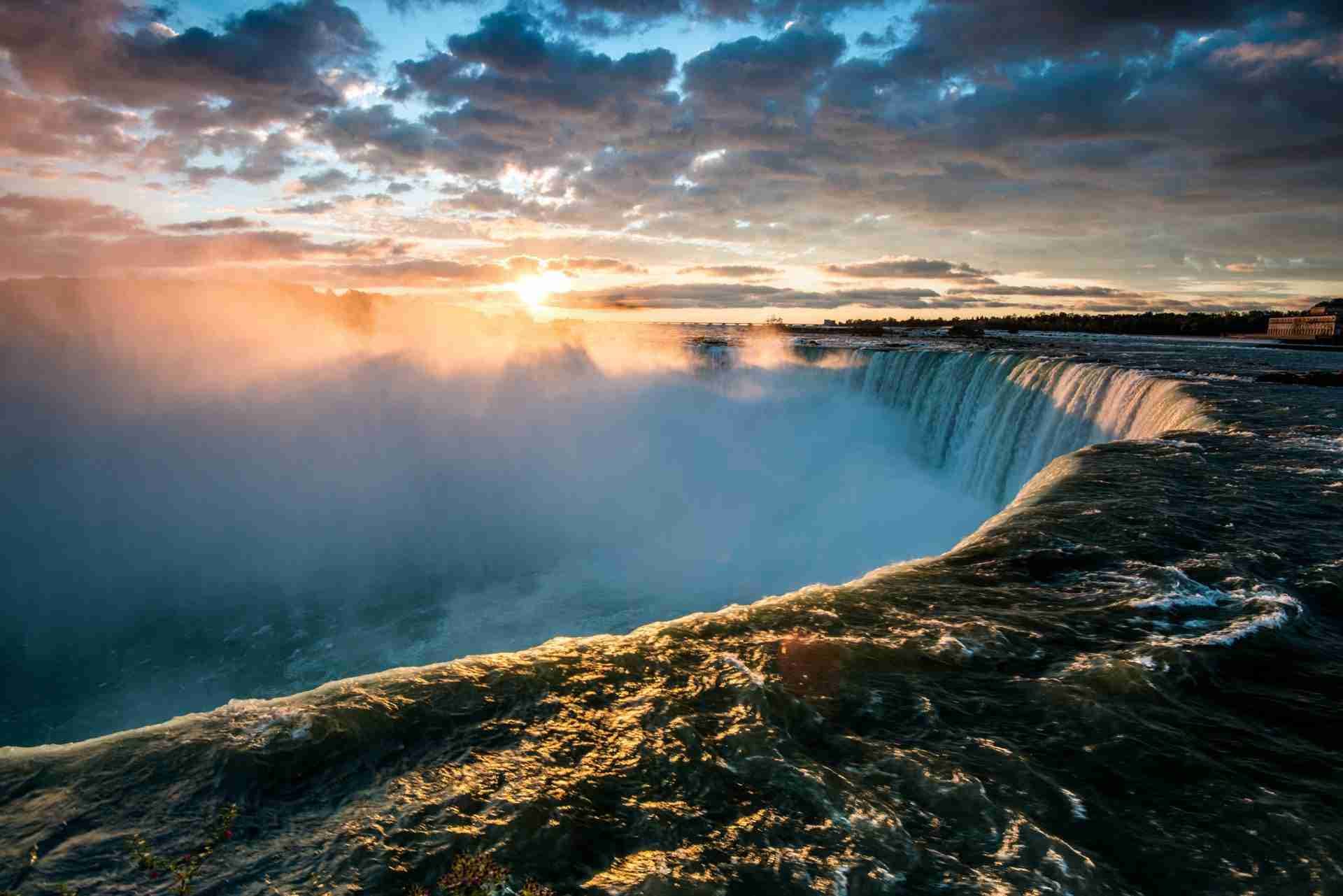
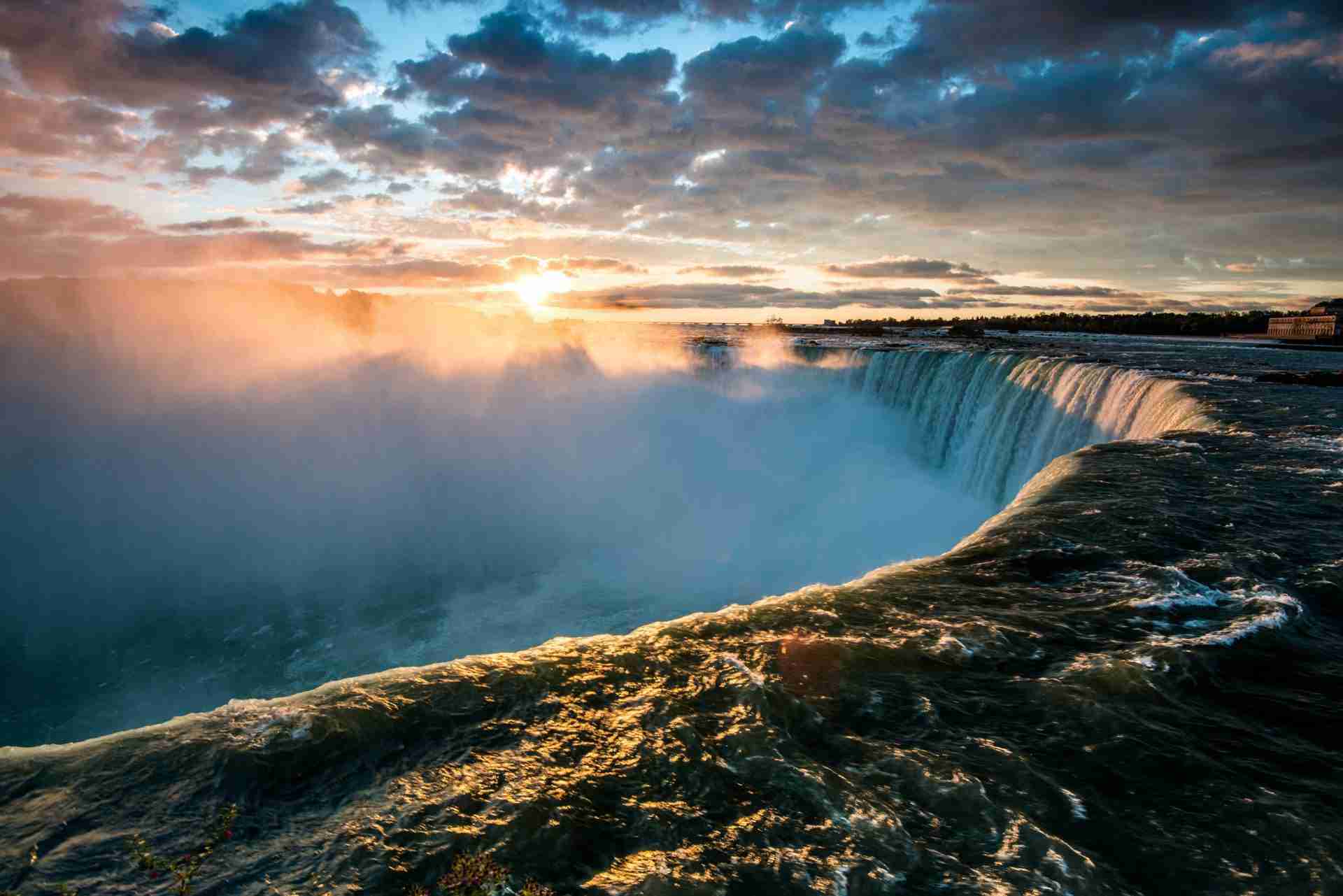
Few natural wonders deliver the raw sensory impact of Horseshoe Falls, the largest of the three waterfalls that make up Niagara Falls. From the main Horseshoe Falls Viewpoint near the Niagara Falls Welcome Centre, photographers can experience the overwhelming force and beauty of 600,000 gallons of water per second crashing into the Niagara River below. This elevated, curved overlook provides one of the most immersive vantage points in the world—a place where the mist rises like steam, the roar never stops, and the light plays constantly on the spray and stone. Whether you're capturing long-exposure dreamscapes or seeking to freeze split-second chaos in crystalline detail, this location is a masterclass in shooting water, light, and motion at grand scale.
Best Photography Opportunities
• Wide-Angle Perspectives of the Main Cascade
: From the central viewpoint just north of the brink, use a wide-angle lens (16–35mm) to frame the full arc of the falls and the mist plume rising like a volcanic column from below. Sunrise and late afternoon light can strike across the curve of the falls, creating powerful gradients of light and shadow that enhance the flow. Including railing or nearby tourists in the foreground adds scale and a sense of awe to your composition. Use a tripod and ND filter to extend shutter times and transform the water into smooth, glowing veils.
• Silhouettes and Mist Backlight
: On mornings when the sun rises behind the falls, strong backlight through the mist can create ethereal scenes, particularly in the golden hour when warm light contrasts with the cool vapor. Position your lens toward the southeast with a longer focal length (70–200mm) and expose for the highlights to capture the drama of silhouetted figures and dancing light within the spray. A hooded lens and weather protection are essential here—drops will gather on your front element within minutes.
• Detail Work in the Roiling Water
: Step in closer and use a mid-telephoto lens (100–200mm) to isolate sections of the falling water, where foaming lines and chaotic textures create abstract studies in movement. These tighter frames reveal subtleties in the cascade—threads of green, white bursts of air and water, and complex patterns formed by current and wind. Shoot at fast shutter speeds (1/1000s and above) to freeze the violent texture, or slow it slightly for painterly blur while retaining form.
• Rainbow Formations in the Mist
: On sunny days, rainbows frequently form at the base of the falls, sometimes arching across the entire viewpoint if you stand at the right angle. Use a standard zoom (24–70mm) to compose the rainbow against the deep green water and rising mist. Early afternoon, when the sun is high, tends to produce the most vivid color arcs, though the exact angle and visibility change constantly with wind and sun position.
• Twilight and Illumination Shots
: As night falls, the falls are lit with vibrant colored LEDs that change hue and intensity in slow pulses. Long exposures (10–30 seconds) at blue hour capture these transitions beautifully, with reflections in the mist and soft trails of motion in the flow. Use a tripod, remote release, and low ISO to preserve detail. These compositions are often best taken slightly further downstream, where you can frame more of the river and city lights together.
Best Time to Visit
The viewpoint is accessible year-round, but spring through early fall (April–October) offers the most consistent light and accessible shooting conditions. The best time of day for photography is early morning (sunrise to 9 a.m.) or late afternoon to twilight, when the light is more directional and the crowds thinner. Early visits offer peace, mist backlighting, and potential rainbows, while sunset sessions benefit from golden tones and city lights starting to glow.
In winter, the falls take on a surreal, frozen appearance. Ice builds up along the railing and cliffside, and the mist crystallizes on nearby structures—ideal for minimalist compositions and black-and-white work. However, frigid temperatures make camera handling more difficult, and mist exposure risks freezing gear. Be prepared with microfiber cloths, hand warmers, and weatherproof equipment.
Weekends and holidays are extremely crowded, especially in summer. Aim for weekdays or off-season visits for quieter experiences and uninterrupted tripod work. On windy days, mist direction can shift dramatically—bring protective lens filters and shoot in short bursts to minimize water spots.
How to Get There
The Horseshoe Falls Viewpoint is located just outside the Table Rock Welcome Centre on Niagara Parkway, directly adjacent to the edge of Horseshoe Falls in Niagara Falls, Ontario. From downtown Niagara Falls, follow Niagara Parkway south toward the falls; ample signage points to the Welcome Centre and Table Rock area.
Paid parking is available at the Falls Parking Lot (Lot A), which is a short walk from the viewpoint. While access to the Welcome Centre exhibits and Journey Behind the Falls requires admission, the main outdoor viewpoint is free and open to the public 24/7.
The area is wheelchair-accessible, with railings and multiple viewing levels. Be cautious of slick surfaces during peak mist conditions, particularly near the railings. Benches and restrooms are available nearby, and the Welcome Centre offers shelter, cafés, and rest areas during bad weather.
Recommended Gear and Shooting Tips
A wide-angle lens (16–35mm) is essential for capturing the full scope of the falls from up close, while a mid-range zoom (24–70mm) adds flexibility for tighter compositions. A telephoto lens (70–200mm or longer) is helpful for isolating details in the cascade or compressing mist and rainbow elements from a distance.
Use a sturdy tripod for long exposures, especially during twilight or night. ND filters (6- or 10-stop) will allow slower shutter speeds during daylight, helping to create that classic silky waterfall effect. A circular polarizer helps cut glare from the wet surfaces and intensifies sky or rainbow colors.
Due to constant mist, weather-sealed bodies and lenses are recommended. Keep a microfiber cloth or lens wipe easily accessible—you'll need to clean your front element frequently. Use a lens hood and point slightly away from the falls between shots to reduce mist buildup.
For handheld shooting, consider a fast prime (35mm or 50mm f/1.8) that can perform well in changing light. Always keep a waterproof cover for your gear and dress accordingly—mist here is constant and inescapable.
Nearby Photography Locations
: Slightly north of Horseshoe Falls, this raised area offers a broader angle of both Horseshoe and American Falls, particularly beautiful at night when both waterfalls are lit. Long exposure fans will appreciate the smoother water textures and LED reflections captured from this higher perspective.
: For a full aerial view of all three falls, the Skylon Tower is unmatched. Use a telephoto lens to compress the falls and river into elegant lines and curves, or shoot wider to incorporate the skyline and horizon. Best at sunset or twilight when city and falls lighting converge.
: This scenic walking path follows the Niagara River and offers multiple vantages of the falls, whirlpool, and surrounding landscape. Use it for more relaxed compositions with trees, fences, or seasonal blooms framing the water.
: A short walk upstream, these small islands and bridges offer quiet water scenes with reflections, particularly striking in autumn. This area contrasts well with the intensity of the falls and is ideal for macro, bird, or foliage-focused work.
: Just a few kilometers north, this gorge-side trail system provides river-level access to the Niagara River's rapids and forested cliffs. Excellent for moody canyon compositions, especially under overcast skies or morning mist.
The Horseshoe Falls Viewpoint is not just about photographing water—it's about framing power, scale, and sensory immersion in a way few places allow. From rainbow arcs in swirling mist to city lights glinting on a liquid horizon, every frame is alive with motion. Bring patience, protection, and presence—you're not just photographing a waterfall, you're standing on the threshold of one of nature's great spectacles.
Comments
Loading comments…