
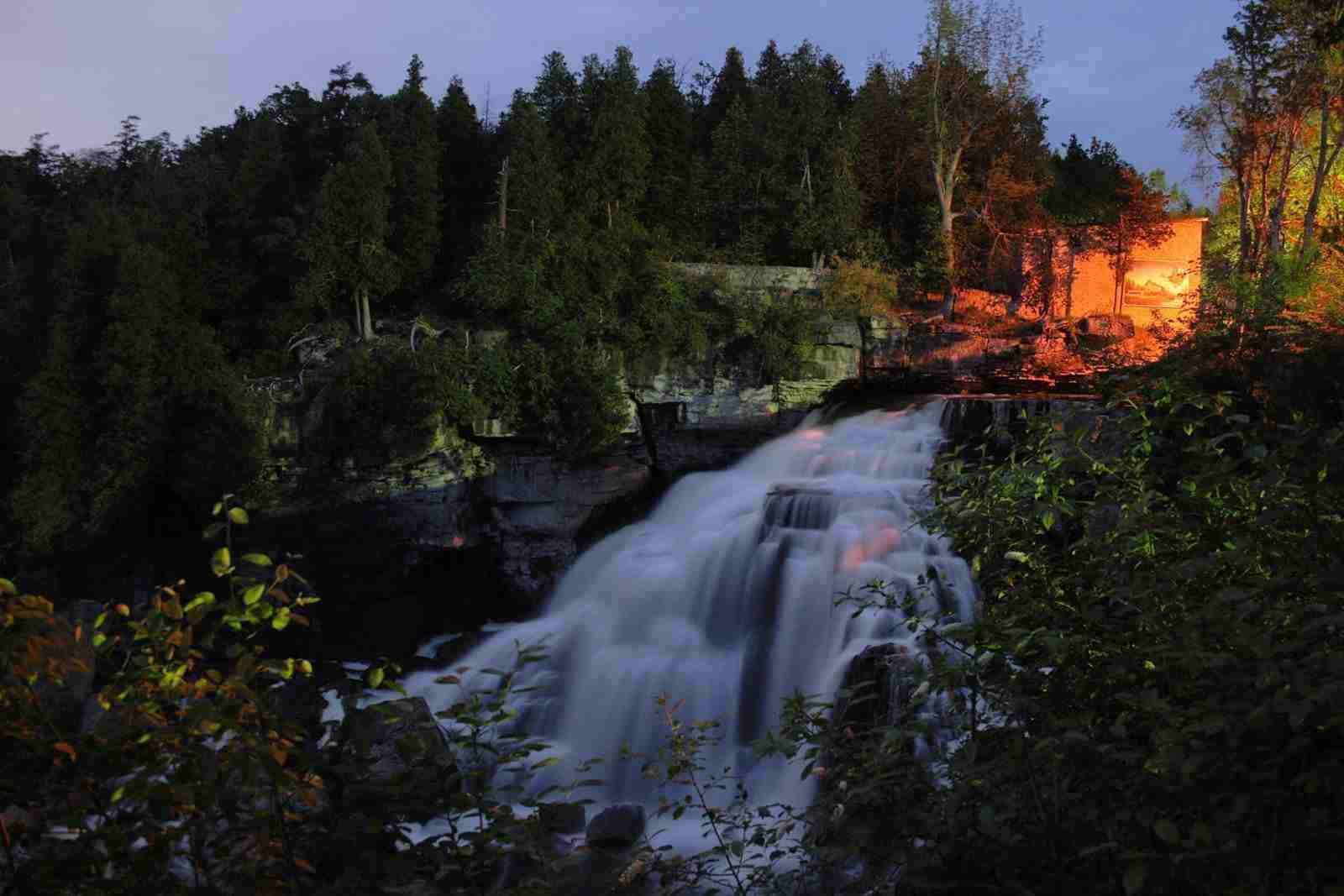
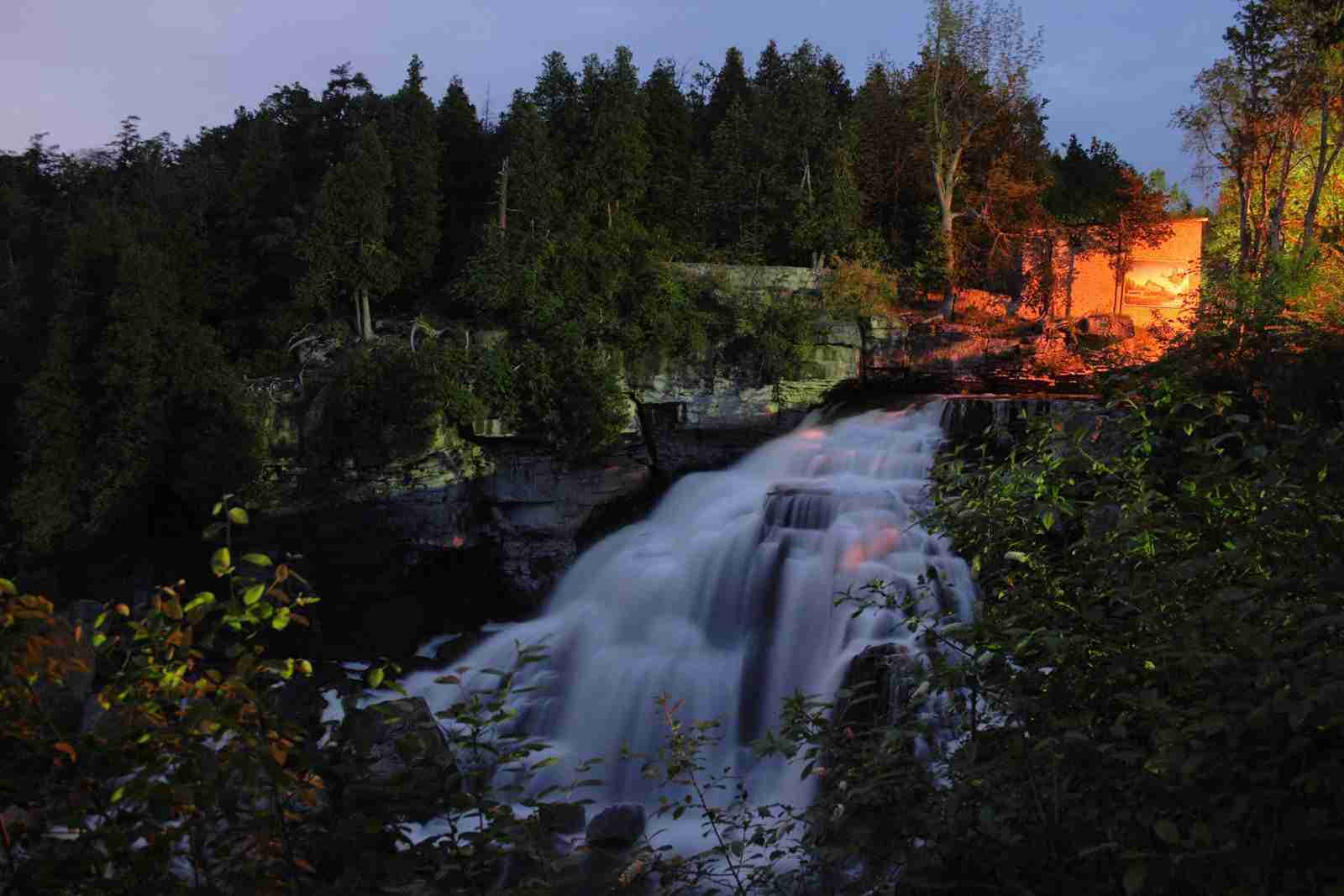
Tumbling dramatically over the rugged cliffs of the Niagara Escarpment, Inglis Falls is one of Ontario's most photogenic waterfalls and a crown jewel of Grey County. Set within the 200-hectare Inglis Falls Conservation Area, this 18-meter-high cascade marks the convergence of the Sydenham River with ancient limestone formations, creating a textured, multi-tiered flow that offers visual complexity in every season. Whether blanketed in spring greenery, framed by fiery autumn leaves, or surrounded by winter ice formations, Inglis Falls rewards patient photographers with dynamic compositions that combine water, rock, forest, and light into an ever-changing tapestry of natural beauty.
Best Photography Opportunities
• Main viewpoint from the upper platform
: The primary overlook near the conservation area's parking lot offers a direct and elevated view of the full waterfall. This wide-angle vantage point captures the full cascade along with the layered limestone cliffs and surrounding forest. Arrive early in the morning or late in the afternoon to catch directional light sweeping across the falls, enhancing texture in both the rock and water. A tripod and small aperture setting help preserve depth throughout the entire frame, particularly when shooting long exposures to soften the flow of the river.
• Side trails and angled perspectives
: Several short trails branch off from the main viewing area, offering more oblique and less conventional perspectives of the falls. Shooting from the side emphasizes the multi-tiered nature of the cascade and allows you to include foreground elements such as mossy rocks, overhanging branches, or flowering plants depending on the season. Mid-range zoom lenses work well here to frame the falls within the surrounding landscape and to isolate interesting sections of cascading water against stone.
• Limestone textures and detail studies
: Inglis Falls is notable for the exposed layers of Niagara Escarpment limestone visible throughout the gorge. Use a telephoto lens to zoom into the cliff face, capturing intricate textures where the stone has been eroded by centuries of water flow. Look for areas where small plants cling to the rock, or where cascading rivulets create patterned streaks across the surface. Overcast light is ideal for this type of detail photography, bringing out subtle tonal shifts without harsh contrast.
• Autumn foliage framing
: During late September and early October, the conservation area comes alive with brilliant reds, oranges, and golds. Position colorful leaves in the foreground to frame the falls, creating depth and seasonal atmosphere. A polarizing filter can enhance foliage saturation and reduce glare from wet rocks and water surfaces. Wide compositions with forest canopy or close-up shots that layer colorful leaves against the rushing water both work beautifully at this time of year.
• Winter ice formations and frozen cascades
: In colder months, Inglis Falls often partially freezes, creating surreal, crystalline textures along the rock faces and suspended sheets of ice along the river's descent. Bundle up and visit on clear winter mornings when the low sun casts long shadows and illuminates the ice from behind. Long exposures at this time capture a blend of static ice and flowing water, offering unique contrast and mood that differs sharply from the falls' warmer-season character.
Best Time to Visit
Inglis Falls offers year-round photographic potential, but the best time to visit depends on your desired mood and subject matter. Spring (April through early June) brings high water flow from snowmelt, lush green surroundings, and often misty conditions that add atmosphere to your shots. Summer offers easier trail access and dense foliage, though water volume tends to be lower by mid-season.
Autumn (late September through mid-October) is the most spectacular time for color photography, as the hardwood forests surrounding the falls ignite with vibrant hues. Crisp mornings often bring clear air and low-angle light that enhances the saturation and detail across the landscape. Winter transforms the falls into a sculptural wonderland of ice and snow, ideal for minimalist compositions and dramatic contrasts.
Early morning is consistently the best time to shoot, offering soft light, fewer visitors, and often calmer wind conditions for more controlled exposures. Evenings can also be beautiful, especially with warm sunset light slanting across the falls from the west, but crowds can be heavier later in the day.
How to Get There
Inglis Falls is located approximately 5 kilometers south of Owen Sound, Ontario, within the Inglis Falls Conservation Area managed by the Grey Sauble Conservation Authority. From downtown Owen Sound, take 2nd Avenue East southbound, which becomes Inglis Falls Road. Follow signs leading directly into the conservation area; the entrance is well-marked.
Parking is available near the main viewpoint, with several trailheads accessible directly from the lot. A small entrance fee is charged during peak season, supporting conservation efforts. Facilities include restrooms and picnic areas, making it easy to plan longer sessions without having to leave the site.
The main viewing platforms are easily accessible with minimal walking, while side trails range from easy to moderate difficulty depending on your chosen route. Good hiking shoes are recommended, particularly if venturing onto trails that skirt the rocky edge of the gorge.
Recommended Gear and Shooting Tips
A wide-angle lens (16–35mm) is essential for capturing the full breadth of the waterfall from upper viewpoints or incorporating surrounding landscape elements. A mid-range zoom (24–70mm) offers flexibility for angled shots along side trails or for closer studies that place the falls within the broader forest context. A telephoto lens (70–200mm) is highly effective for isolating rock textures, narrow cascades, or small compositions hidden within the main falls.
A sturdy tripod is necessary for long exposures that smooth the water's movement or for detailed shots requiring perfect focus and stability. A polarizing filter helps cut reflections off wet rocks and enrich foliage color, especially crucial during spring and autumn shoots. ND filters (3-, 6-, or 10-stop) are extremely useful for creating slow shutter effects even in bright daytime conditions.
Weatherproof gear protection and lens cloths are highly recommended, especially in spring and after rainfall when mist from the falls can quickly coat your equipment. Always scout your shooting positions before setting up, as footing can be uneven and wet rocks extremely slippery. Working lower to the ground can help create compositions with leading lines from river stones or vegetation framing the falls.
Nearby Photography Locations
: Just minutes north in Owen Sound, this expansive park features wooded trails, small waterfalls, bridges, and seasonal gardens. It's a peaceful location for early morning mist photography and environmental portraiture.
: Located nearby along Highway 6, this less-crowded waterfall offers a serene setting with a dramatic 12-meter drop and is especially photogenic in spring and after rainfall.
: A short drive west of Owen Sound, this conservation area features a horseshoe-shaped waterfall carved from the escarpment rock. Best visited after heavy rains for strong water flow, it offers dramatic rock textures and woodland compositions.
: The Bruce Trail passes through the Inglis Falls area, offering extensive hiking options with scenic lookouts, escarpment cliffs, and forest landscapes perfect for wide-angle nature photography.
: Situated along the Owen Sound waterfront, this beach and park area provides sunset views over the bay, seasonal event photography opportunities, and relaxed environmental compositions contrasting with inland waterfall shots.
Inglis Falls is a dynamic, living landscape where water, rock, and forest meet the light of changing seasons. Whether you seek the rush of spring water, the fire of autumn leaves, or the frozen stillness of winter cascades, the falls invite photographers to explore both the grandeur and the fine details of Ontario's natural beauty.
Comments
Loading comments…