
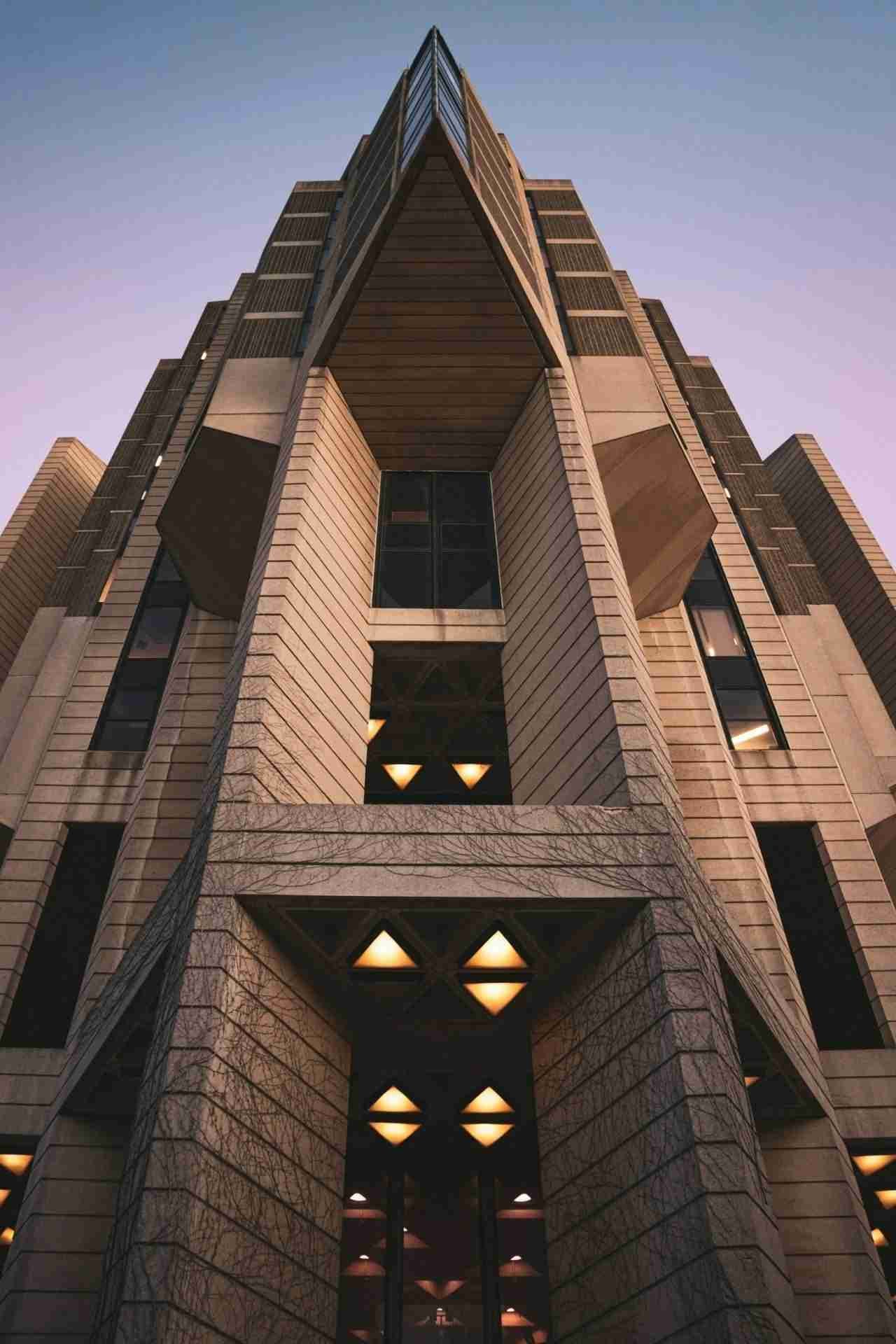
John P. Robarts Research Library, often called Robarts Library, is one of Toronto's most striking examples of brutalist architecture. Its bold, geometric design and massive concrete facade give it a fortress-like presence in the cityscape, making it an intriguing subject for architectural photography. Inspired by the form of a peacock, the library's unique structure stands out among the surrounding glass and steel buildings, offering a stark contrast to Toronto's evolving skyline.
Best Photography Opportunities & Best Time to Visit
Robarts Library is a dream location for photographers who appreciate brutalist architecture and strong geometric compositions. Capturing the structure from low angles enhances its towering and imposing design, while the sharp lines and repetitive patterns of its concrete facade make for compelling abstract shots. The elevated walkways, staircases, and surrounding urban environment provide additional framing elements to create dynamic compositions.
Sunrise and sunset are ideal times to photograph the library, as the interplay of light and shadow accentuates its angular forms. Overcast days can also be excellent for photography, as diffused lighting minimizes harsh contrasts, allowing the intricate textures of the raw concrete to stand out. Long-exposure shots taken at night, with city lights casting subtle illumination on the structure, offer another unique perspective. A wide-angle lens is recommended to capture the full scale of the building, while a telephoto lens can be used to isolate details such as windows, patterns, and structural elements.
How to Get There
Robarts Library is located at 130 St. George Street in downtown Toronto, within the University of Toronto campus. The library is easily accessible by public transit, with St. George and Spadina subway stations both within walking distance. While the interior is primarily reserved for students and staff, the exterior provides numerous vantage points for photography, with pedestrian pathways and nearby streets offering various angles.
About Toronto
Toronto is a vibrant metropolis known for its mix of modern skyscrapers, historic architecture, and diverse cultural influences. The city's eclectic skyline and urban landscapes make it a fantastic destination for photographers of all styles. Whether capturing historic buildings, contemporary landmarks, or hidden architectural gems like Robarts Library, Toronto offers endless opportunities for creative exploration.
Nearby Photography Locations
• University of Toronto St. George Campus – A mix of historic and modern architecture, including the stunning stonework of Hart House and the gothic-style Convocation Hall. The campus is especially photogenic in the fall when the trees add bursts of color to the scene.
• Royal Ontario Museum (ROM) – A fascinating architectural contrast, where the historic stone museum meets the ultra-modern glass-and-metal Michael Lee-Chin Crystal addition. The juxtaposition of styles makes for intriguing compositions.
• Bata Shoe Museum – A uniquely designed building featuring curved, sandstone-like walls that create soft, sculptural lines, perfect for abstract and minimalist architectural shots. The natural textures of the facade contrast beautifully with the sharp angles of Robarts Library.
• Kensington Market – A vibrant neighborhood filled with colorful murals, eclectic storefronts, and street art, offering a lively contrast to the brutalist aesthetic of Robarts Library. The market is a great location for candid street photography and urban textures.
• Nathan Phillips Square & Toronto City Hall – One of Toronto's most famous landmarks, featuring the curved towers of City Hall and the iconic illuminated "Toronto" sign, best photographed at night or during events when the square comes to life.
With its commanding presence, striking geometric design, and unique brutalist aesthetic, Robarts Library is a must-visit location for architectural photographers exploring Toronto's urban landscape. (Toronto, Ontario, Canada)
Comments
Loading comments…