
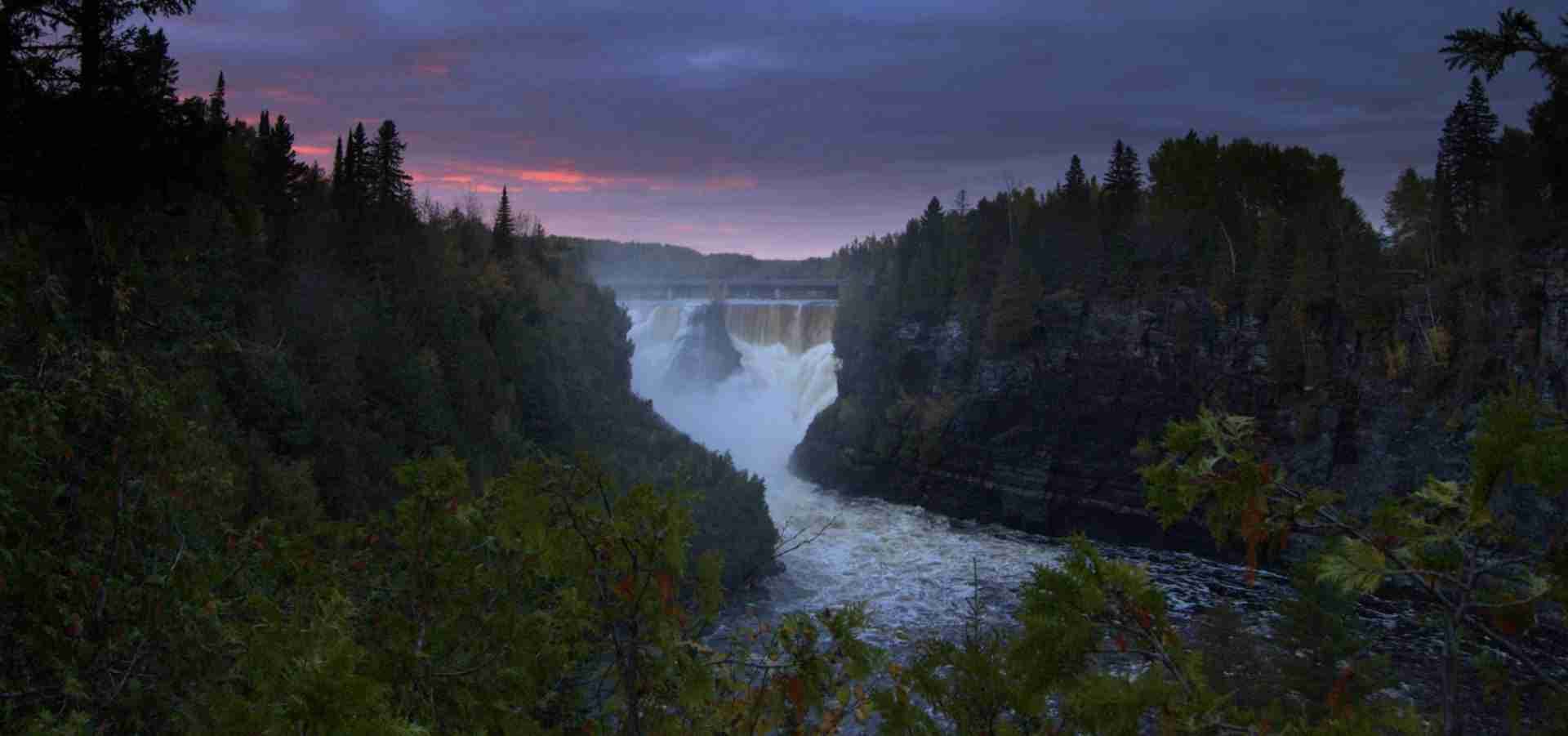
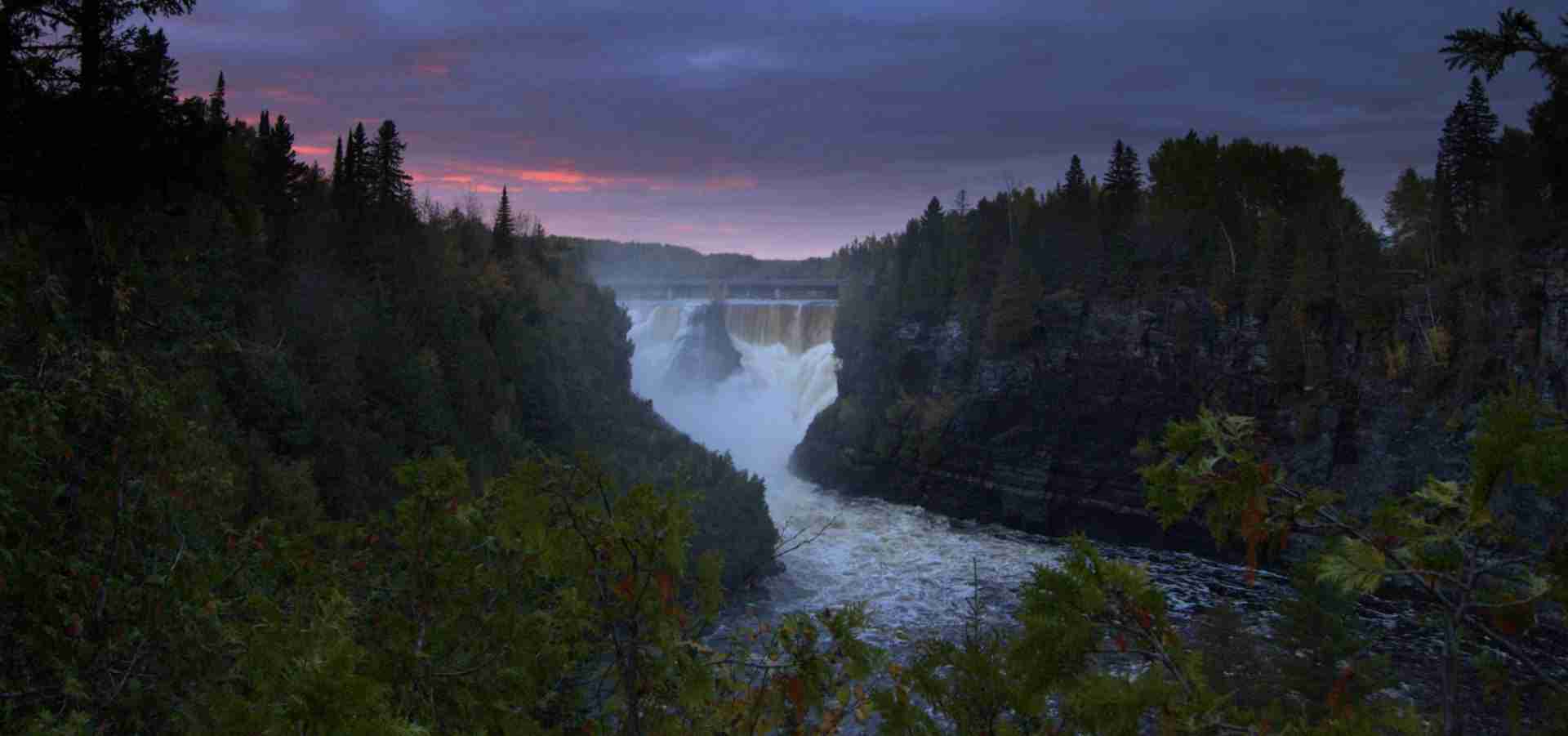
Known as the "Niagara of the North," Kakabeka Falls is one of Ontario's most powerful and awe-inspiring natural wonders. Dropping 40 meters (131 feet) along the Kaministiquia River, these falls are surrounded by rugged cliffs, boreal forests, and an expansive provincial park that offers excellent access for photographers. Indigenous legend surrounds the falls, adding a layer of cultural depth to their natural grandeur. Whether capturing the thunderous energy of the water in full spring flow or the serene beauty of fall foliage surrounding the gorge, Kakabeka Falls offers dynamic and breathtaking photography opportunities year-round.
Best Photography Opportunities
• Classic wide-angle views from the boardwalk
: Several viewing platforms along the boardwalk trails provide stunning, unobstructed panoramas of Kakabeka Falls and the deep gorge it has carved over millennia. A wide-angle lens allows you to capture the full width of the falls along with the dramatic cliffs and riverbanks. Shooting at sunrise or sunset, when the warm light slants across the landscape, enhances the rich colors of the rock and vegetation. Incorporating the wooden railings or nearby vegetation into the foreground can add depth and framing to your images. Shifting your position slightly along the boardwalk allows for a variety of compositions, each emphasizing different aspects of the falls' powerful descent into the gorge.
• Long exposure compositions for silky water effects
: Using a tripod and neutral density (ND) filters, photographers can create long exposures that smooth the rushing water into soft, flowing ribbons while keeping the rugged canyon sharply in focus. Early morning or cloudy days are ideal for this technique, offering even lighting and a moody atmosphere that complements the raw power of the falls. Experiment with different shutter speeds to balance the texture of the water and the detail of the surrounding cliffs. Slower shutter speeds, in the range of 10–30 seconds, create a dreamy, ethereal look, while slightly faster speeds preserve more of the water's structure for a more dynamic effect.
• Intimate studies of cascading water and rock formations
: Focusing on smaller sections of the falls where water meets rock can yield dramatic and abstract images. A mid-range zoom lens is perfect for isolating areas where swirling currents carve into the canyon walls or where sunlight creates sparkling highlights on the water's surface. These tight compositions tell a more intimate story of the geological and hydrological forces at play. Look for patterns created by the erosion in the rock or reflections bouncing off the water to add complexity and richness to your close-up frames.
• Seasonal transformations and dramatic contrasts
: Kakabeka Falls transforms dramatically across the seasons. Spring's snowmelt swells the river into a roaring torrent, while summer brings lush greenery framing the falls. Autumn is particularly spectacular, with brilliant foliage setting the scene ablaze in reds, oranges, and golds, making for some of the most colorful landscape photography of the year. In winter, parts of the falls may freeze into massive ice formations, providing hauntingly beautiful compositions full of stark contrasts. Each season not only changes the color palette but also shifts the light quality and flow patterns, offering photographers completely new challenges and rewards with each visit.
• Evening light and twilight moods
: While daytime is popular for vibrant shots of the falls, visiting at twilight can yield magical results. The last light of day bathes the gorge in subtle hues, and long exposures during blue hour allow for silky water combined with the deepening blues and purples of the evening sky. If visiting after dark, consider light painting techniques or using available ambient light to illuminate sections of the gorge for creative night photography. Twilight conditions also bring a quieter, more solitary atmosphere to the park, allowing for slower, more contemplative compositions without the distraction of crowds.
Best Time to Visit
Kakabeka Falls is photogenic year-round, but each season offers a distinct visual character. Spring (April to June) showcases the falls at their most powerful, with high water levels and roaring cascades fueled by melting snow. Summer (July to August) provides lush, full foliage and easy trail access, making it ideal for vibrant, colorful landscape compositions.
Autumn (September to October) is arguably the most stunning time for photography, as the park's forests erupt in vivid fall colors, creating a striking contrast against the gray and tan canyon walls. Winter (November to March) offers a stark, minimalist beauty, with sections of the falls freezing over and snow blanketing the landscape in serene whites and muted grays.
For the best light, sunrise offers beautiful illumination from the east side, casting soft light across the falls and highlighting the mist rising from the river. Early morning visits also ensure quieter conditions before tourist crowds arrive, allowing for more contemplative compositions and uninterrupted shooting.
How to Get There
Kakabeka Falls Provincial Park is located approximately 30 kilometers west of Thunder Bay, Ontario, along Highway 11/17. From Thunder Bay, it's an easy 20–25 minute drive westward. Follow the signs to the park entrance, which is clearly marked and offers easy access to parking areas near the main falls viewing platforms.
The falls are easily accessible from the parking lots via short, well-maintained paths and boardwalks, making them ideal for photographers carrying gear. Several trails branch off from the main falls area, including the Mountain Portage Trail and Little Falls Trail, offering alternative vantage points and quieter shooting spots.
A daily vehicle permit is required for entry into Kakabeka Falls Provincial Park, available for purchase on-site or through Ontario Parks' online reservation system.
Recommended Gear and Shooting Tips
A wide-angle lens (16–35mm) is essential for capturing the grandeur of the falls and the surrounding landscape. A mid-range zoom (24–70mm) is ideal for tighter compositions, isolating sections of the falls, and focusing on textures within the canyon walls. A telephoto lens (70–200mm) is useful for abstract studies and compressing layers of rock, water, and foliage.
A sturdy tripod is crucial for long-exposure work and for steady shooting during low-light conditions at dawn, dusk, or under heavy cloud cover. A set of neutral density (ND) filters enables longer exposures during bright conditions, allowing you to create silky water effects even under midday sun.
A circular polarizer helps cut glare off wet rocks and water surfaces, deepens sky color, and enhances the greens of surrounding foliage. Bringing waterproof footwear and protective gear for your camera can be helpful, as mist from the falls can sometimes spray onto nearby paths and platforms.
Take time to explore various angles and elevations, from wide overviews at the main platform to closer, more intimate vignettes along the trails. Returning at different times of day or under changing weather conditions can yield a wide range of moods and dramatic shifts in lighting.
Nearby Photography Locations
: A short hike from the main Kakabeka Falls area, Little Falls offers a more secluded waterfall set within a peaceful forest. The trail provides a chance for quieter, close-up nature photography amid dense northern woodland.
: Located to the east of Thunder Bay, this park features dramatic cliffs, boreal forests, and sweeping views over Lake Superior. It's a dream location for landscape photographers seeking panoramic vistas and rugged coastal scenes.
: Prince Arthur's Landing along Thunder Bay's waterfront provides opportunities for cityscape photography, marina reflections, and sunset shots over Lake Superior. The historic grain elevators and lighthouse add industrial and maritime elements to compositions.
: South of Thunder Bay, Mount McKay offers expansive views across the city, the Kaministiquia River, and the distant Sleeping Giant. It's an excellent sunset location for capturing the colors of the western sky above the rugged landscape.
: Northeast of Kakabeka Falls, this open-pit amethyst mine offers unique textures and vibrant colors perfect for macro and detail photography, especially if you enjoy geological subjects and abstract compositions.
Kakabeka Falls rewards photographers who appreciate both the grand drama of massive cascades and the subtle details carved by centuries of water and stone. Whether framed by roaring spring floods, vibrant autumn forests, or the stillness of winter ice, the falls offer an ever-changing canvas for creative exploration and awe-inspiring landscape photography.
Comments
Loading comments…