
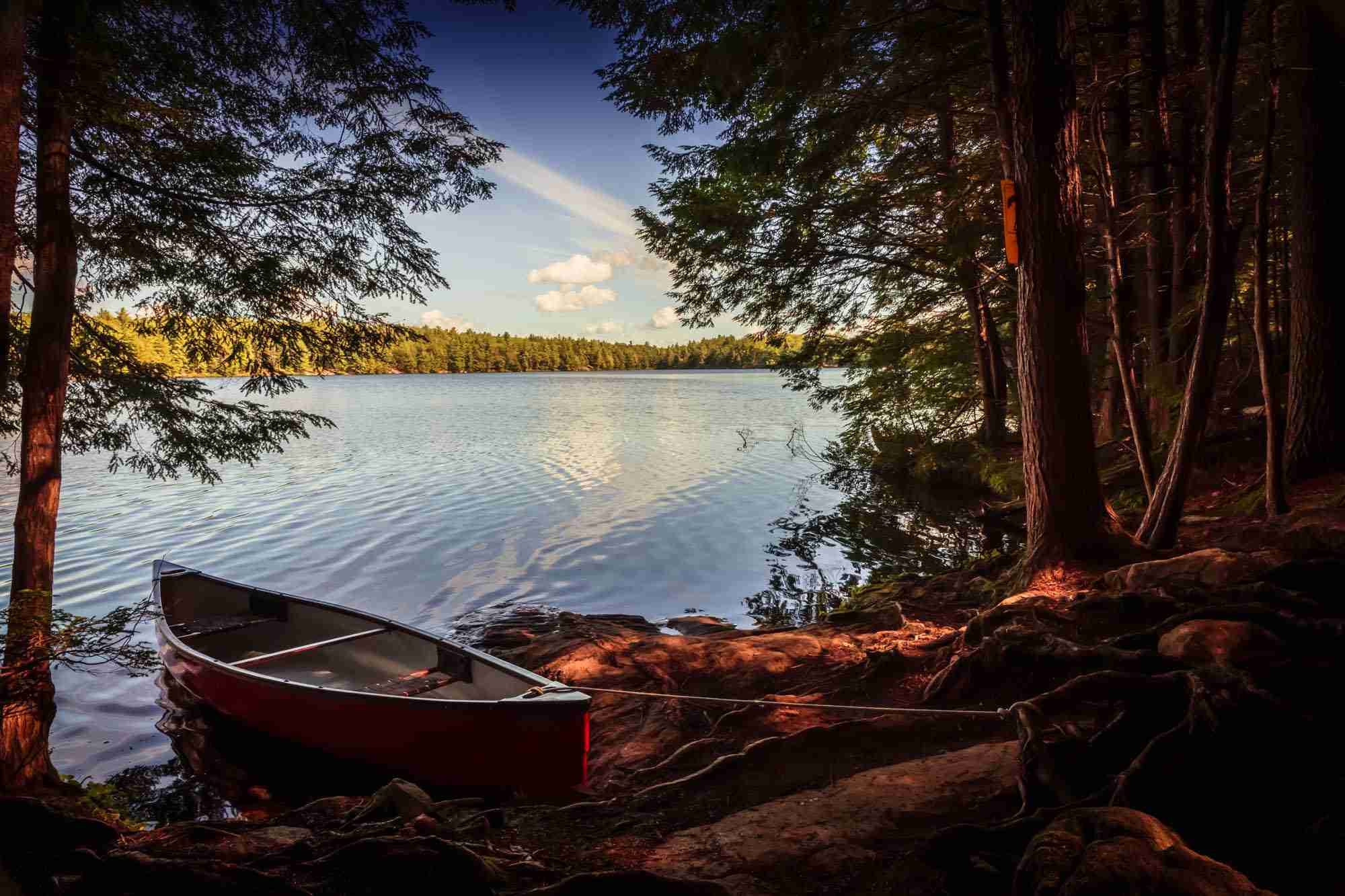
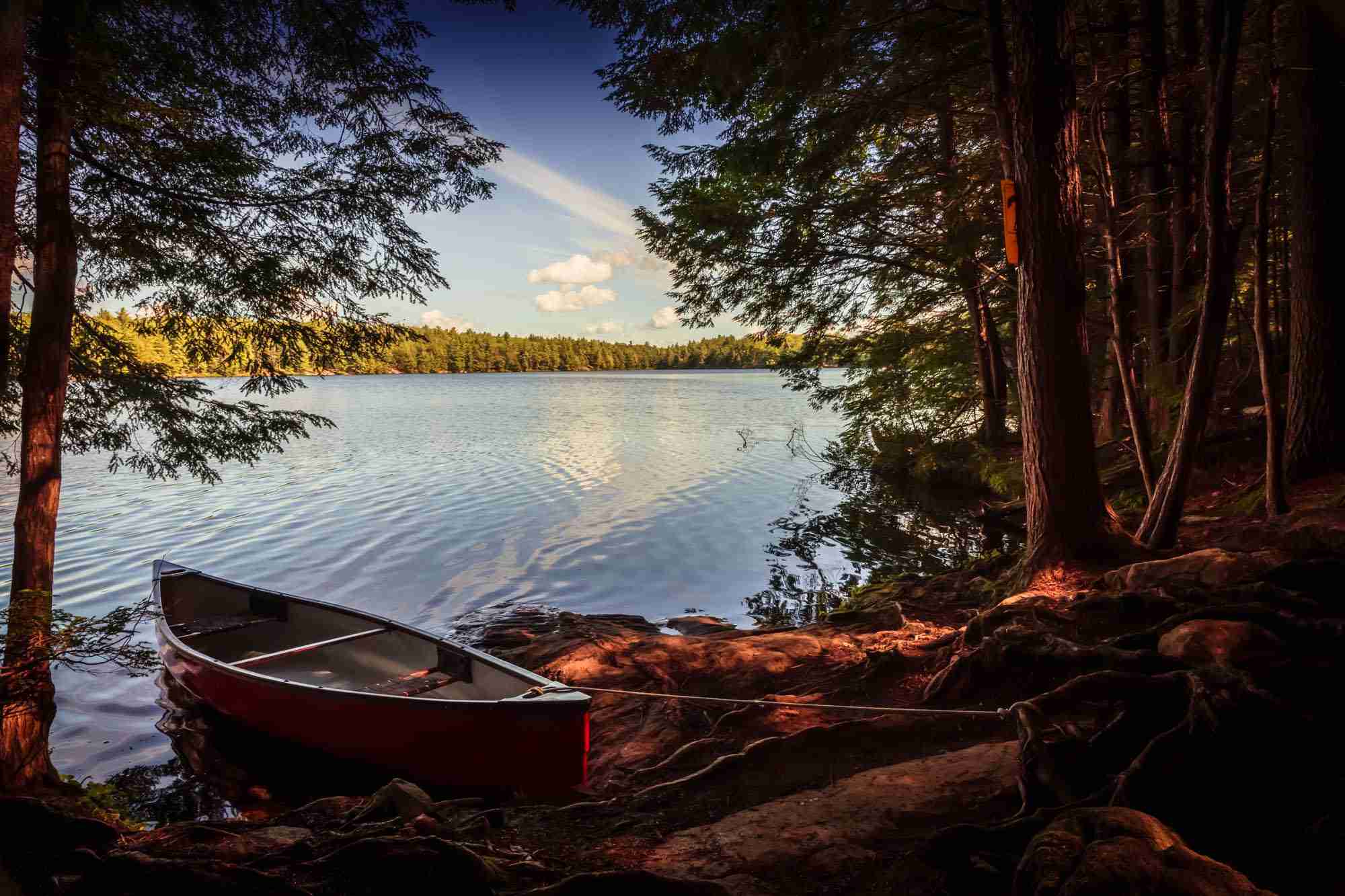
Tucked into the remote backcountry of Kawartha Highlands Provincial Park, the portage point between Wolf Lake and Crab Lake offers a uniquely intimate and rugged slice of Ontario wilderness. Located at the southwest edge of Wolf Lake, this narrow, rock-lined carry trail marks the passage between two quiet lakes, framed by Canadian Shield outcrops, thick boreal forest, and weather-worn cedar roots. It's not a traditional landmark or lookout, but for photographers who thrive in the quiet details of wild spaces, this location offers raw, immersive scenery that rewards close observation and creative exploration.
The lack of infrastructure and the need to travel by canoe or kayak heightens the solitude of the setting, allowing for photography that feels elemental and grounded. Whether capturing early morning mist rising off the lake or studying the sculptural forms of bedrock and moss underfoot, this portage zone reveals layers of natural composition that shift with the light and season.
Best Photography Opportunities
• Canoe Landing and Portage Trail Perspective
The approach to the portage from Wolf Lake is often marked by a simple landing of exposed bedrock sloping gently into the water. This foreground, combined with the narrowing of the trail into the forest beyond, offers excellent natural leading lines. Frame the shot with your canoe in the foreground or capture a companion stepping ashore to tell a quiet, documentary-style story of wilderness travel. Early morning or late afternoon light filtering through the trees adds dimensionality and warmth to the scene.
• Reflections on Still Water
Both Wolf and Crab Lakes offer moments of absolute calm, especially in the early morning when the air is still. These conditions create pristine reflections of treetops, sky, and shoreline granite that lend themselves to minimalist compositions. Use a wide or mid-range lens to balance the shoreline and sky, or a longer focal length to isolate reflective textures and mirrored detail across the water.
• Textural Close-Ups of Rock and Root
The Canadian Shield reveals itself here in slabs of lichen-covered granite, interwoven with gnarled cedar roots and patches of sphagnum moss. These elements are ideal for macro or detail-oriented photography, especially in diffused light or after rain when saturation and contrast are enhanced. The textures offer endless variation and lend themselves to natural abstract work or background studies that emphasize earth tones and natural decay.
• Paddle-in Landscape and Wide Natural Vistas
As you leave Wolf Lake or approach Crab Lake, the wide water surface framed by low hills and mixed forest opens up to sweeping, wild landscapes. These long perspectives are ideal for horizontal compositions with canoe prows in the foreground or atmospheric layers in the distance. Golden hour and misty mornings enhance depth and separation across the ridgelines and tree canopy, creating painterly effects in-camera.
• Seasonal Change and Wilderness Mood
This is a location where the mood of the landscape shifts profoundly with the seasons. In spring, high water and fresh green growth create a feeling of renewal. Summer offers warm light and lush shadows beneath full foliage. Autumn transforms the trail into a tunnel of orange and gold, and in early winter, if accessible, the lake edges begin to freeze, creating stark, monochromatic scenes of ice, water, and stone.
Best Time to Visit
The best time to visit Kawartha Highlands Portage Point is during the canoeing season, typically late May through early October. Summer offers the most consistent access and long hours of light, but autumn is especially rewarding for rich foliage, cool air, and soft golden light filtering through the thinning canopy.
Early morning is the most productive time for still water reflections, wildlife sightings, and gentle, directional light across the portage trail. Evening can also be excellent for moodier tones, but access may be more challenging as the light fades, especially if you're on a tight travel timeline. After a light rain, the forest glows with increased saturation and richness, ideal for detail work.
Due to the location's remoteness, visiting midweek or outside of long weekends will increase your chances of solitude, allowing for uninterrupted shooting and a more immersive experience.
How to Get There
Access to the portage point between Wolf Lake and Crab Lake requires canoe travel and basic backcountry navigation. The nearest official access point is the Wolf Lake access at Anstruther Lake Road. From there, paddlers must follow designated canoe routes west into the interior of Kawartha Highlands Provincial Park.
Wolf Lake is a large, calm body of water with multiple campsites, and the portage to Crab Lake lies at its southwest edge. Portage landings are typically marked with signs or cleared trailheads, but it's recommended to carry a waterproof map or GPS and check with park staff before heading out. Be prepared for backcountry travel: you'll need to bring all your gear, be self-sufficient, and follow Leave No Trace principles.
Recommended Gear and Shooting Tips
A lightweight DSLR or mirrorless setup is ideal for this trip, especially if you're paddling and portaging. A wide-angle lens (16–35mm equivalent) helps capture the immersive forest and lake settings, while a mid-range zoom (24–70mm) offers versatility for canoe portraits, reflections, and environmental details. If you have room, a macro lens or extension tube adds richness to the textural photography of moss, bark, and stone.
Bring a compact tripod or clamp for long exposures or early morning low-light conditions. A polarizer is especially useful for cutting glare on the water and boosting sky and foliage contrast. Consider using a dry bag for all gear—weather can change quickly and shoreline access often requires getting wet.
Work slowly. The magic of this location lies in quiet observation. Sit with the scene, explore from multiple angles, and be ready to shoot the same view in different conditions as the light and wind shift.
Nearby Photography Locations
• Wolf Lake Campsites and Shoreline
The perimeter of Wolf Lake includes sheltered coves, rocky outcrops, and dense forest edges that change character with light and wind. These areas are ideal for wide landscape compositions, sunrise scenes, and night sky photography if you're camping.
• Crab Lake Interior Shore
Smaller and more enclosed than Wolf Lake, Crab Lake has a wilder, more intimate atmosphere. Its irregular shoreline, overhanging trees, and occasional beaver activity make for dynamic reflection work and abstract landscape opportunities.
• Anstruther Lake Access and First Portages
Before you even reach Wolf Lake, the journey from Anstruther offers moments worth capturing. Paddling through narrow channels, over low beaver dams, and past forest-lined narrows can yield strong canoe-centric images that convey the journey itself.
• Highland Ridge Lookouts (Hiking Only)
Some of the higher trails in Kawartha Highlands (accessible from other parts of the park) provide expansive views over layered forest and lake systems. If your trip includes hiking legs, these high points offer a different, elevated perspective on the terrain.
• Silent Lake Provincial Park (Nearby by Road)
Just to the north, Silent Lake provides road-accessible trails, shorelines, and viewpoints with a similar landscape character. It's an excellent spot to complement your backcountry trip with more structured shooting conditions.
The Kawartha Highlands Portage Point is not a destination in the traditional sense—it's a moment between places. But for photographers willing to go slow and work with the rhythm of the land and water, it offers something rare: a quiet scene that's always in motion, shaped by the weather, the paddle, and the light on stone.
Comments
Loading comments…