
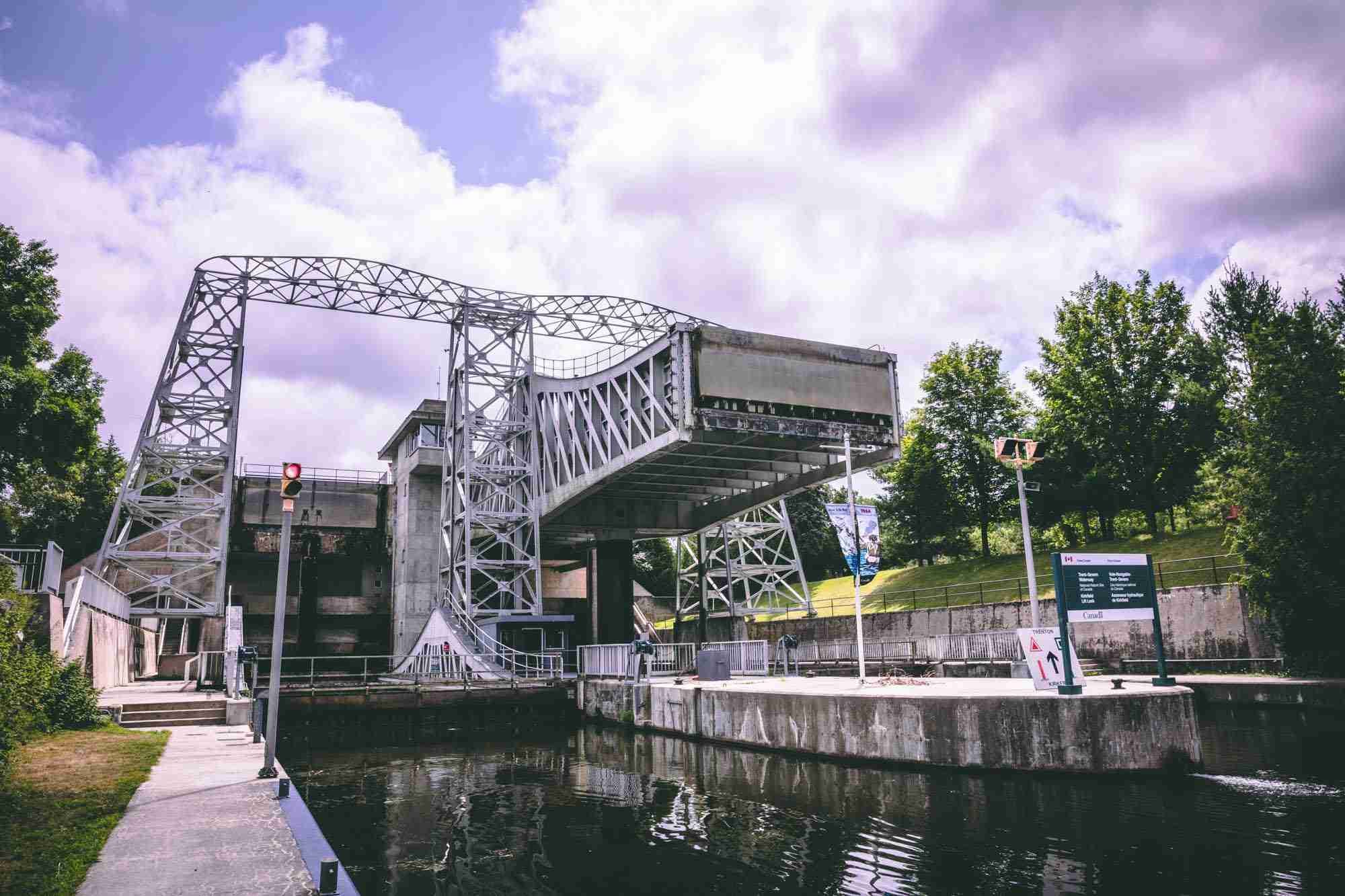
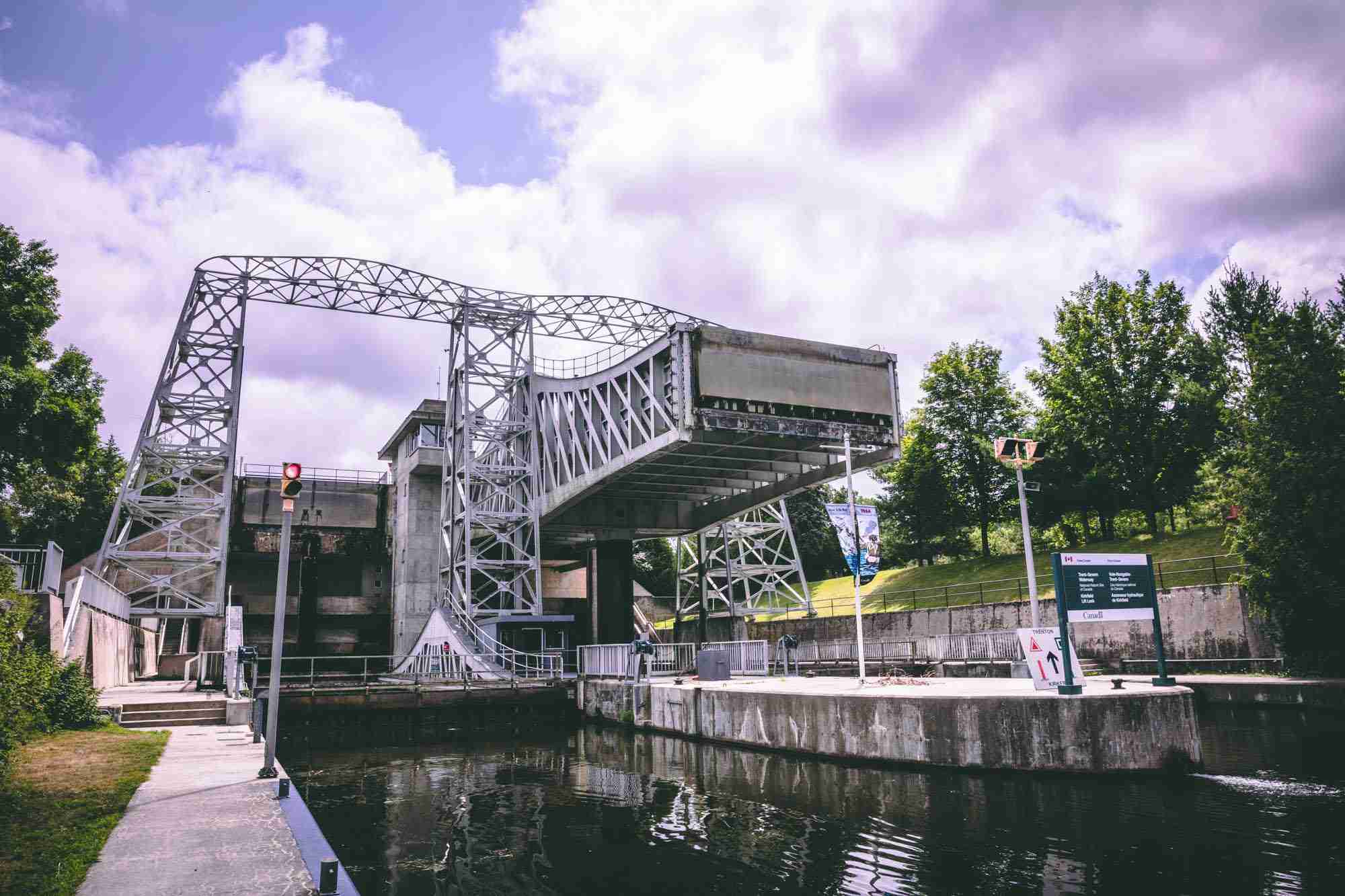
Rising like a sculptural monument from the flat terrain of Kawartha Lakes, the Kirkfield Lift Lock is one of the most remarkable and photogenic feats of early Canadian engineering. Built in 1907 and still operational today, it is the second-highest hydraulic boat lift in the world and a crown jewel along the Trent–Severn Waterway. Its truss-heavy design, towering chambers, and elegant mechanical symmetry make it a compelling subject for photographers interested in industrial heritage, structural geometry, and architectural storytelling.
Operating on the principle of hydraulic counterbalance, the Kirkfield Lift Lock uses two massive water-filled chambers, or caissons, to raise and lower boats by approximately 15 metres (46 feet). As one descends, the other ascends, driven purely by the force of gravity and water displacement. This quiet efficiency, combined with its skeletal metal frame and stark verticality, makes the site a rare example of functional engineering turned photographic icon.
Best Photography Opportunities
• Full Lift Lock Composition from the Lower Approach
From the lower basin, you can frame the entire lift lock structure from a wide perspective. Use a wide-angle lens to capture both caissons, the tower-like supports, and their mirrored symmetry. This angle allows you to include leading lines from the canal walls or the access paths, and in the right light, reflections in the water add dimension and mood. Morning or late afternoon sun enhances the industrial texture of the steel, casting long shadows across the frame.
• Detail Work: Gears, Rivets, and Hydraulic Components
The lift lock is rich in textures and mechanical details—massive counterweights, steel rivets, gear teeth, and rusted brackets tell the story of more than a century of continuous use. A mid-range zoom or telephoto lens lets you isolate these details and build abstract or documentary-style compositions. Shoot during overcast conditions to reduce glare and better capture the tonal range of the weathered steel.
• Elevated Vantage from the Upper Lock Basin
From the upper section of the lock, you can shoot down onto the canal below and create strong vertical compositions that emphasize the scale and depth of the lift. This view also allows you to frame boats entering or exiting the chamber, adding scale and activity to the scene. Include guardrails, signage, or passersby to bring in a human element without overwhelming the structure.
• Reflections and Symmetry Across the Canal
From across the waterway, especially on calm mornings, the lift lock reflects beautifully in the surface of the canal. Use a tripod and tight framing to double the structure's form in the water, or go wide and capture the entire mirrored scene for a more surreal or minimalist image. This angle is particularly effective for emphasizing symmetry and contrast.
• Seasonal and Operational Context
During the summer months, when the lock is operational, photographing the motion of the lift with boats entering and exiting adds life and narrative to the industrial scene. Capture boaters as they maneuver into the chambers, or wait for the caissons to move for dynamic before-and-after compositions. In winter, the lock sits silent and monumental, perfect for stark black-and-white work or high-contrast framing against a snow-laden landscape.
Best Time to Visit
Late spring through early fall is the ideal time to visit, particularly when the lock is in active operation and the surrounding park is open. During these months, light from early morning and late afternoon brings out the full depth and character of the steel surfaces. Blue hour and golden hour both produce excellent light on the eastern and western faces of the lock, while midday light can be harsh but is manageable with proper filters.
Autumn offers warm tones in the surrounding foliage that pair beautifully with the cool grays of the steel structure. Reflections during this time are especially vibrant. Overcast days are excellent for close-up detail work, allowing for even light across the textured surfaces of the machinery. Winter visits provide minimalist compositions, but access may be limited, and you'll want to verify whether walkways and viewpoints are maintained.
How to Get There
The Kirkfield Lift Lock is located in the village of Kirkfield in the City of Kawartha Lakes, Ontario. From Highway 48, head north on Portage Road (County Road 6), then follow signs to the Trent–Severn Waterway and Kirkfield Lift Lock Road. The site is well-marked and includes a designated parking area with ample space for vehicles.
The surrounding park area is open to the public from 9 am to 5 pm during the navigation season, and the lock itself can be viewed from both above and below via pedestrian walkways and viewing platforms. The lock is part of the Parks Canada network, and staff are often on site during open hours to answer questions or provide historical insight.
Recommended Gear and Shooting Tips
A wide-angle lens (16–35mm) is essential for capturing the entire lift structure, especially from lower ground or when composing across the canal. A 24–70mm lens is ideal for mid-range work, including compositional studies of boats entering the lock or tighter framing of the caisson structure. A telephoto lens (70–200mm) allows for fine detail isolation of machinery and structural components.
A tripod is recommended for long exposures, especially when shooting reflections or capturing motion blur from moving boats. A circular polarizer helps control glare from the water and enhances color contrast, while a neutral density filter is useful for softening water surfaces or capturing cloud movement behind the lock.
Plan your visit around the lock's activity schedule if you want to include movement or people in your compositions. Be patient and work the scene from different angles—both upper and lower access points offer strong visual contrast, and even small changes in position can dramatically shift the geometry of your image.
Nearby Photography Locations
• Trent–Severn Waterway Trails and Footbridges
Adjacent to the lock, the canal system includes a number of walking trails and narrow footbridges. These provide excellent secondary views of the water and lock structure, ideal for documentary or landscape work that blends industry and nature.
Just a short drive south, Balsam Lake offers expansive water views, dockside textures, and excellent sunrise compositions from the shoreline. Indian Point Provincial Park provides forest and lakeside access with good backlighting in early morning.
• Dalrymple Windmill and Farmland
The nearby windmill near Dalrymple stands surrounded by old trees and open fields, offering a quiet, pastoral counterpoint to the industrial lines of the lift lock. Great for rural textures and simple roadside compositions.
Another lock site further along the waterway, Fenelon Falls adds the drama of a natural waterfall into the mix. Good for long exposure waterfall shots and urban canal scenery, especially in the shoulder seasons.
• Cameron Lake and Lock 34
Located near the town of Fenelon Falls, this smaller lock has classic canal textures and an active boating community in summer, perfect for candid scenes, reflection shots, and slow travel photography.
The Kirkfield Lift Lock stands as a monument to ingenuity and elegance in mechanical form. For photographers, it presents a unique blend of symmetry, motion, and industrial texture that rewards both wide-angle storytelling and close-up technical exploration. Whether you're capturing it in operation or standing silent against a dramatic sky, it's a subject that commands both attention and time.
Comments
Loading comments…