
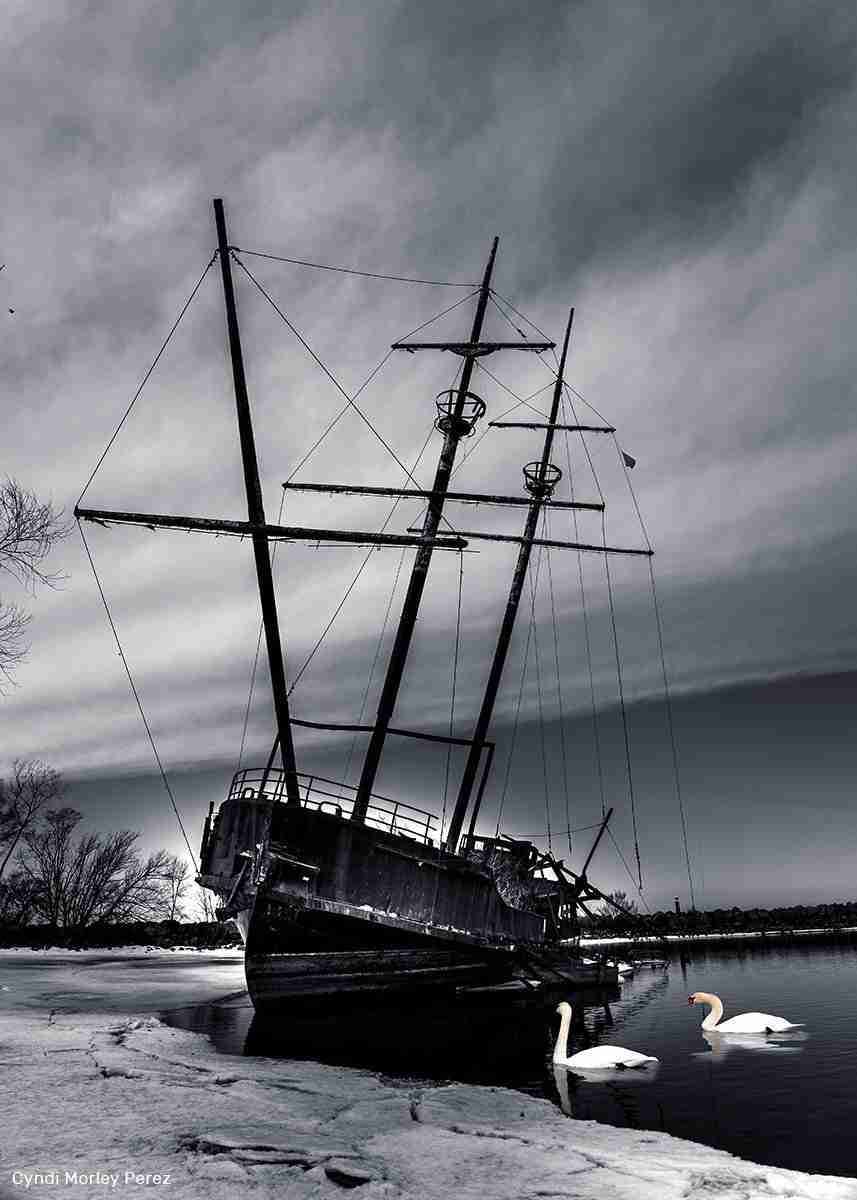
Just off the Queen Elizabeth Way near Jordan Harbour, the rusting skeleton of La Grande Hermine sits marooned in shallow water—a surreal and arresting sight for anyone traveling between Toronto and Niagara. Originally built as a replica of Jacques Cartier's 16th-century sailing ship for Expo 67, this three-masted vessel has since transformed from floating restaurant to forgotten icon. Now abandoned and half-burned from a mysterious fire years ago, it stands as both monument and ruin—an evocative subject that feels more cinematic than historical.
With her decaying hull, skeletal masts, and improbable setting in a quiet inlet off Lake Ontario, La Grande Hermine has become one of southern Ontario's most photographed roadside oddities. The ship's presence is both majestic and melancholic, offering endless opportunities for visual storytelling, long exposure work, and seasonal mood photography.
Best Photography Opportunities
• Full Ship View from the Shoreline
From the adjacent parking lot, you can frame the entire vessel across calm harbour water. Use a wide-angle lens to include the ship's full length, with foreground reeds or shoreline textures to add depth. During golden hour, the rusted reds of the hull catch the light and reflect warmly in the water. This view is particularly effective when the lake is still or slightly frozen, as reflections enhance the symmetry and mood of the composition. Composing from the southern end also allows you to include some of the marina infrastructure in the distance, adding scale and context to the shot.
• Detail Work: Rust, Rigging, and Structure
Though access to the ship itself is not permitted, a zoom or telephoto lens allows you to isolate sections of the decaying wood and metal. Look for patterns in the rusted seams, weathered rope, exposed beams, or jagged remnants of the fire-damaged interior. On overcast days, these close-ups come alive with soft contrast and muted tones, perfect for textural studies or moody black-and-white conversions. Focus on areas where decay reveals structure—broken window frames, partially collapsed sections, or stripped rigging—for the most narrative-rich details.
• Silhouettes and Backlit Masts
The tall masts and skeletal rigging make for strong silhouettes against the sky. Position yourself at sunrise or sunset with the light behind the ship to emphasize its outline and dramatic shape. This technique works well for minimalist compositions or long exposures that blend sky and water around the ghostly remains. Try framing through nearby trees or shoreline elements to add layers and context to the silhouette, or capture a series as the light changes to build visual tension over time.
• Winter Ice and Mirror Reflections
In colder months, ice often forms around the base of the ship, creating an incredible reflective surface. Use a tripod for low-angle shots across the frozen water, capturing double images of the masts and hull. Winter's muted palette and crisp light turn this scene into something almost painterly—one of the most compelling times of year to shoot here. Snowfall also transforms the background and surrounding banks, simplifying the palette and drawing more attention to the structure's form and color.
• Storm Light and Dramatic Skies
The ship's decayed state lends itself well to dramatic lighting and heavy weather. Watch for approaching storms or fast-moving cloud cover—these add mood and motion to the scene. A long exposure during moody conditions transforms the water into a soft blur while clouds streak behind the ship, enhancing its haunted, surreal quality. Consider shooting just after a storm passes, when the sky may split into gold and grey, giving you high contrast and emotionally charged lighting conditions.
Best Time to Visit
La Grande Hermine photographs well year-round, but each season offers a different visual story. Winter is perhaps the most striking season, when ice on the water reflects the ship in eerie, glassy perfection and the leafless trees emphasize the starkness of the scene. Golden hour during winter months often casts a low, directional light that highlights the rust and decay beautifully.
Spring and autumn add color to the surrounding landscape, with budding or falling leaves creating a subtle backdrop that contrasts with the vessel's decay. Summer tends to be brighter and more accessible, but high sun can flatten the textures and reflections—early morning or late evening light works best in warmer months.
Because the ship is just off the highway and very easy to access, it's a great stop at any time of day, but quieter hours offer more flexibility and fewer onlookers. Visit on weekdays or early mornings for undisturbed shooting conditions.
How to Get There
La Grande Hermine is located in Jordan Harbour, directly off the Q.E.W. (Queen Elizabeth Way) in Lincoln, Ontario. Heading toward Niagara, take the Jordan Road exit and follow South Service Road. The ship is visible immediately after the overpass, and a small gravel parking lot is located beside it with space for multiple vehicles.
From the parking area, the ship is just a few steps away—clearly visible from the shoreline and accessible via public property. There are no barriers to photography from land, but the ship itself is unstable and should not be approached or boarded under any circumstances.
Because of its proximity to the highway, it's also a convenient stop for travelers, offering a unique photo opportunity without a long detour.
Recommended Gear and Shooting Tips
A wide-angle lens (16–35mm) is essential for capturing the full structure from shore, especially when composing with foreground elements like reeds or ice. A 24–70mm lens offers flexibility for mid-range shots and tighter framing of the masts or hull. A telephoto lens (70–200mm) is ideal for isolating details of the ship's rigging, rust patterns, or deck components.
Use a tripod for long exposures, particularly in low light or when photographing reflections and clouds. A circular polarizer helps manage glare off the water and brings out the color and detail in the sky and rust. In winter, dress warmly and bring traction gear if shooting on frozen surfaces near the water's edge.
Consider bracketing exposures or blending images in post-processing to retain detail in both sky and hull, particularly when shooting at sunrise or sunset. The contrast between the decayed structure and vibrant sky offers strong dynamic range and emotional tone.
Nearby Photography Locations
Just beyond the ship, this stretch of shoreline offers calm water, reeds, and birdlife. Great for reflective compositions and nature photography that complements the industrial decay of the ship.
A short drive inland, this conservation area features waterfalls, historic buildings, and forested trails. Perfect for pairing natural landscapes with rural heritage subjects.
The surrounding wine region offers rolling vineyard landscapes, rustic architecture, and wide lake vistas—especially photogenic in autumn or during golden hour.
Located east along the Lake Ontario shore, this pier provides strong leading lines, lighthouse compositions, and open lake views—ideal for long exposure and minimalist shoreline work.
A bit farther west, this historic neighbourhood features brightly colored Victorian cottages and lakeside charm. Great for architectural detail and editorial-style street compositions.
La Grande Hermine is one of Ontario's most iconic examples of forgotten grandeur. For photographers, it offers a powerful blend of maritime history, industrial decay, and visual storytelling—all wrapped in a scene that is both easy to reach and emotionally resonant. With rumors of its removal looming, now is the time to capture this ghost ship before it slips forever beneath the surface of memory.
Comments
Loading comments…