
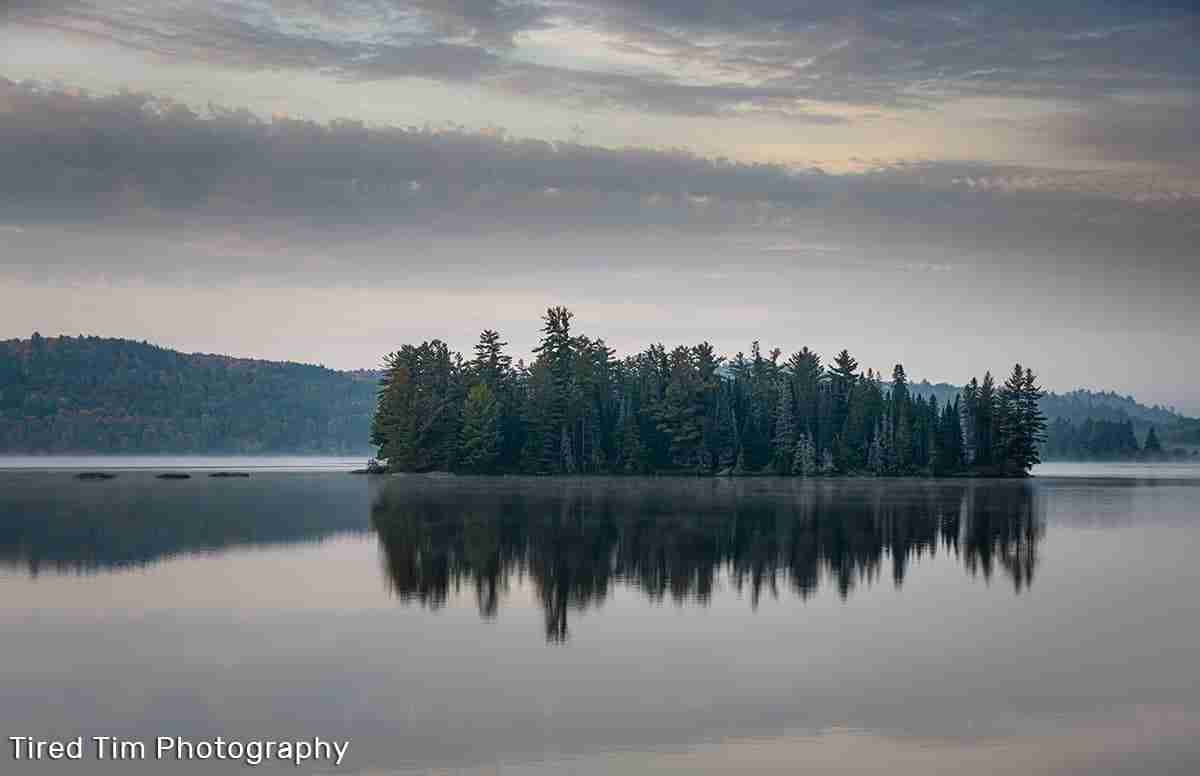
Cradled at the heart of Algonquin Provincial Park, Lake of Two Rivers is a scenic expanse of water bordered by white pine forest, sandy beaches, and a network of peaceful trails. Easily accessible from Highway 60 (Frank MacDougall Parkway), it's one of the park's most photographed lakes—and for good reason. With dramatic sunsets, moody mist-filled mornings, and broad open vistas framed by classic Algonquin terrain, Lake of Two Rivers offers a perfect blend of accessibility and raw northern beauty. Whether you're shooting from the water's edge, a trail overlook, or from a quiet canoe on its surface, this lake delivers varied compositions and atmospheric light year-round.
Best Photography Opportunities
• Golden Hour from the Beach or Parkway Shoreline
The western end of the lake, viewable from the beach and roadside along Highway 60, offers expansive views of the water backed by distant pine ridges. At sunset, the sky often glows in warm tones that reflect across the calm lake surface. Use a wide-angle lens to include grasses or driftwood in the foreground and deepen the scene's sense of depth.
• Early Morning Fog and Reflections from the Dock
Before sunrise, mist often clings to the surface of the lake, especially in spring and autumn. Shoot from the dock or beach for symmetrical compositions of pine trees reflected in still water, or isolate distant silhouettes through the mist for moody, minimalist images. A tripod and long exposure help enhance the calm, ethereal feel.
• Trailside Vistas Through White Pine Forest
The surrounding trails wind through stands of white pine and hardwoods, opening occasionally to views over the lake. Frame compositions through tree trunks or with branches arching overhead for natural vignettes. Autumn is especially rewarding here, with golden light filtering through leaves and softening the contrast between forest and lake.
• Canoe-Based Mid-Lake Perspectives
From a canoe or kayak, photographers can access views across the lake that are impossible from shore—especially compositions that capture the surrounding hills and sky reflected on glassy water. These perspectives are ideal for wide, peaceful landscape shots or for creative self-portraiture with environmental storytelling.
• Night Sky and Astrophotography Along the Beach
With low light pollution and clear northern skies, Lake of Two Rivers is a fantastic spot for photographing stars, the Milky Way, and even occasional aurora borealis. Use the shoreline for foreground framing and time your visit during new moon phases for the darkest skies. Reflections of starlight across the lake add an extra layer of drama.
Best Time to Visit
Lake of Two Rivers is stunning in all seasons, but spring and autumn provide the most dynamic photographic conditions. Spring (May to early June) brings fresh green foliage, high water levels, and misty mornings. Autumn (late September to mid-October) transforms the surrounding forest into a vibrant patchwork of orange, red, and gold, mirrored beautifully in the lake's surface.
Sunrise and early morning offer the softest light, active mist, and the highest chance of still water for reflections. Evenings bring warm side light and rich tones across the beach and tree canopy, especially on calm days when the sky colors linger in the water.
Winter adds a stark, silent beauty, with frozen surfaces, snow-draped branches, and clear air—ideal for minimalist compositions and black-and-white imagery, though accessibility may be limited depending on snow and ice conditions.
How to Get There
Lake of Two Rivers is located directly off Ontario Highway 60 (Frank MacDougall Parkway) within Algonquin Provincial Park, about 30 minutes east of the West Gate entrance. The lake is clearly marked with signage, and there is a day-use beach area, canoe rentals, and a nearby campground.
Ample parking is available at the day-use area and near the Lake of Two Rivers Store. Trails surrounding the lake are well-marked and vary from flat, easy routes to more rugged forest paths. The beach, dock, and canoe launch provide easy access points for landscape and waterscape photography.
Tripods, drones (with proper permits), and long or wide-angle lenses are all useful here. Be prepared for bugs in late spring and early summer, and dress for variable weather—especially in the shoulder seasons.
Exploring the Surrounding Area
The area around Lake of Two Rivers is rich in photographic variety. The Two Rivers Trail, a short loop hike nearby, climbs to a bluff overlooking the lake and surrounding forest—perfect for elevated wide-angle shots during golden hour or when autumn color is at its peak.
Along Highway 60, multiple roadside pullouts offer views of rivers, marshes, and smaller lakes teeming with birds, moose, and beaver activity. The Mew Lake
area nearby offers quiet, tree-lined water perfect for reflection work and wildlife spotting, especially at dawn.
In spring and early summer, the forest comes alive with birdsong, mushrooms, wildflowers, and rich undergrowth—ideal for detail and macro photography. In autumn, the air is crisp and the forest trails glow with warm light, offering strong natural framing and composition opportunities.
Nearby Photography Locations
One of Algonquin's most famous views, this rugged trail rewards hikers with a sweeping panoramic vista over Cache Lake and its winding shoreline. Best photographed at sunrise or sunset for dramatic light and expansive layering of hills and water.
A longer trail renowned for wildlife, Mizzy Lake winds through wetlands, forest, and several small lakes. Excellent for moose and bird photography at dawn, with fog and layered forest making for painterly compositions along the way.
A short, steep hike to one of the park's most scenic viewpoints. Especially spectacular in fall when the forest below is ablaze with colour. Strong leading lines and natural framing make this a favorite for classic wide-angle landscape shots.
A nearby lake with a quieter feel and strong sunrise potential. Forest-framed compositions, canoes on the water, and misty reflections are all possible from its beach or nearby campsites.
A gentle loop trail through a wetland ecosystem filled with tamarack, sphagnum moss, and open sky. Ideal for intimate compositions and seasonal change—especially in early fall when tamaracks turn golden.
Lake of Two Rivers is a place where time slows down, and the light speaks in soft, shifting tones. Whether you're composing a reflection beneath autumn leaves, paddling through morning fog, or capturing the last blush of sunset over the forested hills, this heart-of-the-park lake offers moments of stillness, clarity, and inspiration with every frame.
Comments
Loading comments…