
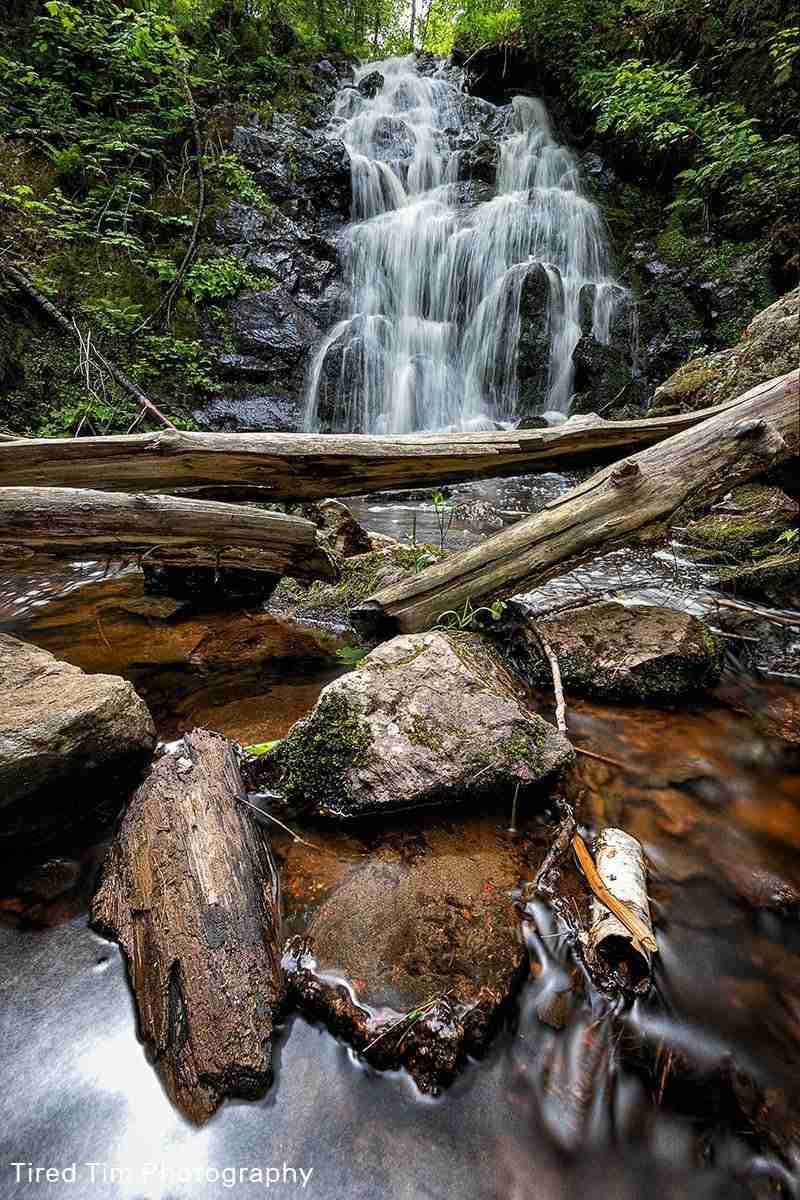
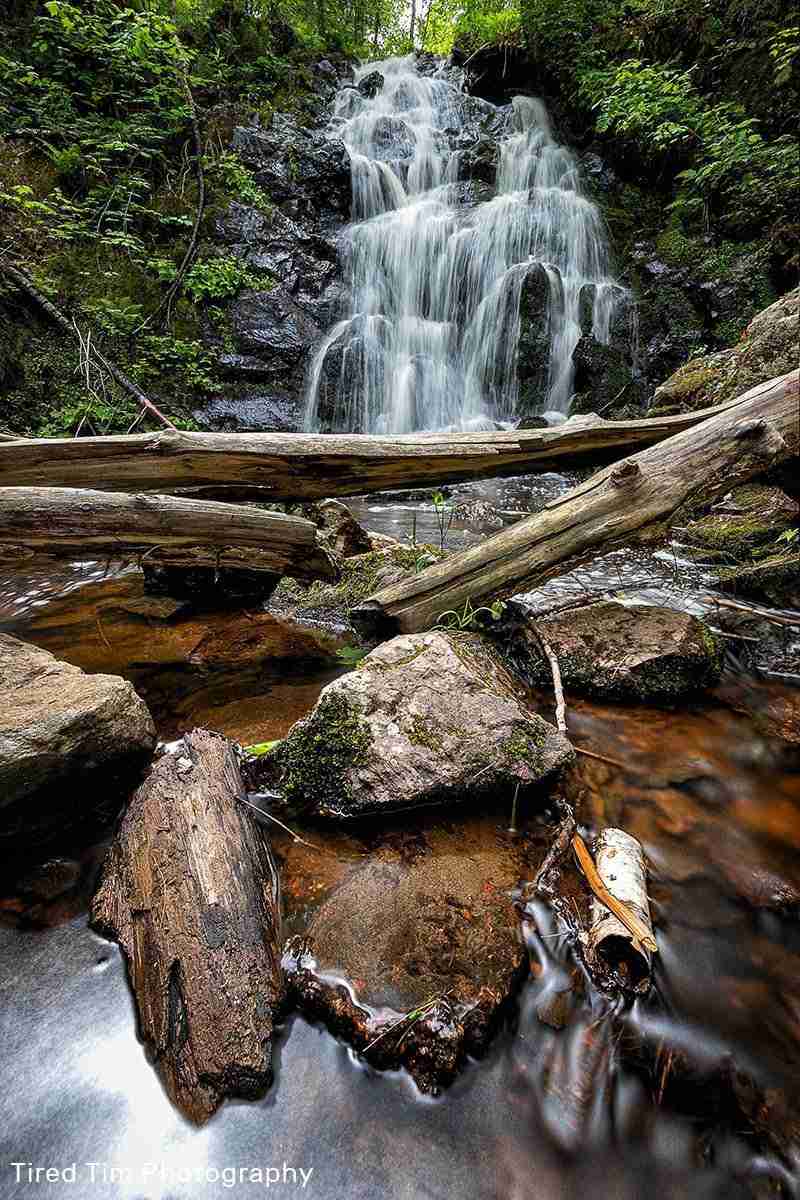
Tucked away in the woodlands near Laurentian Hills, Ontario, the Laurentian Valley Waterfall is a quiet, secluded cascade that rewards those who know where—and how—to look. This small but photogenic waterfall spills over a rugged rock face in a shaded forest hollow, fed by a modest creek that winds its way through the Laurentian Valley. With no official signage or parking lot, it remains something of a local secret, accessible only by an unmarked pull-off on Round Lake Road and a short five-minute hike into the woods. What it lacks in grandeur it makes up for in intimacy and mood, offering a peaceful forest setting, filtered light, and the soft textures of flowing water that make for thoughtful, meditative compositions.
Best Photography Opportunities
• The Waterfall from Creek Level
: The main cascade drops over a rock ledge into a shallow pool surrounded by moss, roots, and scattered stones. It's best photographed from the base, where a wide-angle lens allows you to capture the flow in context with the enclosing forest. Use long exposures (1–4 seconds) to smooth the water and bring out its silky flow, especially under the dappled light that often filters through the tree canopy above. Shoot low and angle slightly upward to give the falls more prominence in frame.
• Rock and Moss Textures
: The waterfall's surroundings are rich in detail—moss-covered rocks, water-worn bark, and layers of wet leaves that catch the light in subtle ways. These foregrounds add texture and depth to your waterfall shots, or can be isolated for more abstract, macro-style compositions. Overcast skies or late afternoon light are ideal for minimizing harsh contrast and emphasizing natural tones.
• Intimate Forest Scenes
: Beyond the falls themselves, the short trail winds through mature forest with occasional glades of ferns, exposed root systems, and tangled undergrowth. These areas are excellent for environmental detail work and forest landscape studies. In spring, wildflowers and new growth add color and delicacy; in autumn, fallen leaves carpet the path and creek in warm hues.
• Stream and Downstream Flow
: The stream that feeds the waterfall continues through the forest and offers smaller cascades, reflective pools, and curved banks framed by trees and brush. These quieter elements are excellent for compositional variety, and often photograph better than the main falls on bright days. Position your camera just above water level for soft reflections and layered, horizontal frames.
• Moody Black-and-White Interpretations
: The quiet, shaded character of this site lends itself well to monochrome photography. The play of light through the trees, the contrast of white water against dark stone, and the delicate textures of foliage all translate beautifully in black-and-white—especially when shooting on overcast days or under early morning fog.
Best Time to Visit
The Laurentian Valley Waterfall is best visited from spring through autumn, when water flow is more consistent and the trail is easy to navigate. In spring, snowmelt swells the stream, making the waterfall more vigorous and dynamic. It's also a great time for capturing lush greens and soft morning mist.
Summer offers a more tranquil scene, with lower water levels and vibrant undergrowth. Bug spray is absolutely essential in this season—mosquitoes and black flies are common, especially after rain. Autumn is visually rich, with colorful leaves surrounding the falls and carpeting the forest floor. Late afternoon light in October can create dramatic, warm-toned images with excellent contrast against the cool, shaded rocks.
Winter is more challenging—while the falls may freeze into beautiful ice formations, access becomes tricky without snowshoes or spikes, and the unmarked trail may be difficult to locate. If accessible, the frozen falls and bare trees offer stark, sculptural compositions well suited for minimalist or black-and-white work.
How to Get There
The Laurentian Valley Waterfall is located just off Round Lake Road (County Road 58) in the Laurentian Hills region of Renfrew County, Ontario. There is no signage marking the site, but local knowledge and satellite map scouting can help you locate the approximate pull-over area along the road, roughly 15–20 minutes northwest of Pembroke.
Look for a small gravel shoulder or worn pull-off spot along a bend in the road—typically large enough for one or two cars. From there, an informal trail leads into the woods. The hike to the falls is short—around five minutes—but can be muddy, uneven, and overgrown in places. Wear sturdy hiking boots, and be cautious of slippery terrain near the water. A GPS pin or offline map is helpful for locating the area, as cell reception may be inconsistent.
There are no facilities or marked trails, so come fully prepared and follow Leave No Trace principles. This is a fragile site that remains beautiful because it's largely undisturbed—respect it accordingly.
Exploring the Surrounding Area
Though compact, the site surrounding the Laurentian Valley Waterfall is layered with visual interest. From the trailhead to the falls and beyond, you'll find a mix of quiet creekside scenes, exposed roots, and light play filtering through the dense tree cover. Pause to observe how the light changes as it moves across wet stone and shifting leaves.
You can follow the stream both upstream and downstream for additional compositional variety—small riffles, rock pools, and undercut banks offer quieter photographic moments away from the main cascade. This is a place that rewards slow exploration, sensitivity to detail, and a willingness to get low to the ground.
In the warmer months, dragonflies, frogs, and even the occasional deer may make an appearance, offering moments for wildlife photography if you move quietly and remain observant.
Nearby Photography Locations
: A short drive northwest, Round Lake offers sweeping water views, island silhouettes, and moody skies—ideal for sunrise or sunset sessions. Several access points allow you to shoot from dockside or shoreline.
: About 20 minutes northeast, this park features boardwalks, marshland, and forested trails—great for bird photography and quiet woodland compositions, especially during the spring migration and autumn color.
: A bit farther afield, but well worth it for those heading deeper into the Ottawa Valley. The canyon's dramatic cliffs and winding river provide epic views and opportunities for both wide landscapes and moody forest interiors.
• Mud Lake and MacKenzie Lake Trails
: Located southwest of the falls, these quieter forest areas offer winding paths, beaver ponds, and excellent opportunities for wildlife photography and serene lake views.
: If you're looking for a more powerful waterfall nearby, High Falls offers a taller drop and larger flow, with good trails and a more open setting for shooting wide cascades.
The Laurentian Valley Waterfall may not be marked on many maps, but it's exactly the kind of place that speaks to the quiet rewards of exploration. For photographers seeking a forest-framed cascade, intimate details, and a sense of stillness away from the well-trodden path, this tucked-away gem is worth every step through the trees.
Comments
Loading comments…