
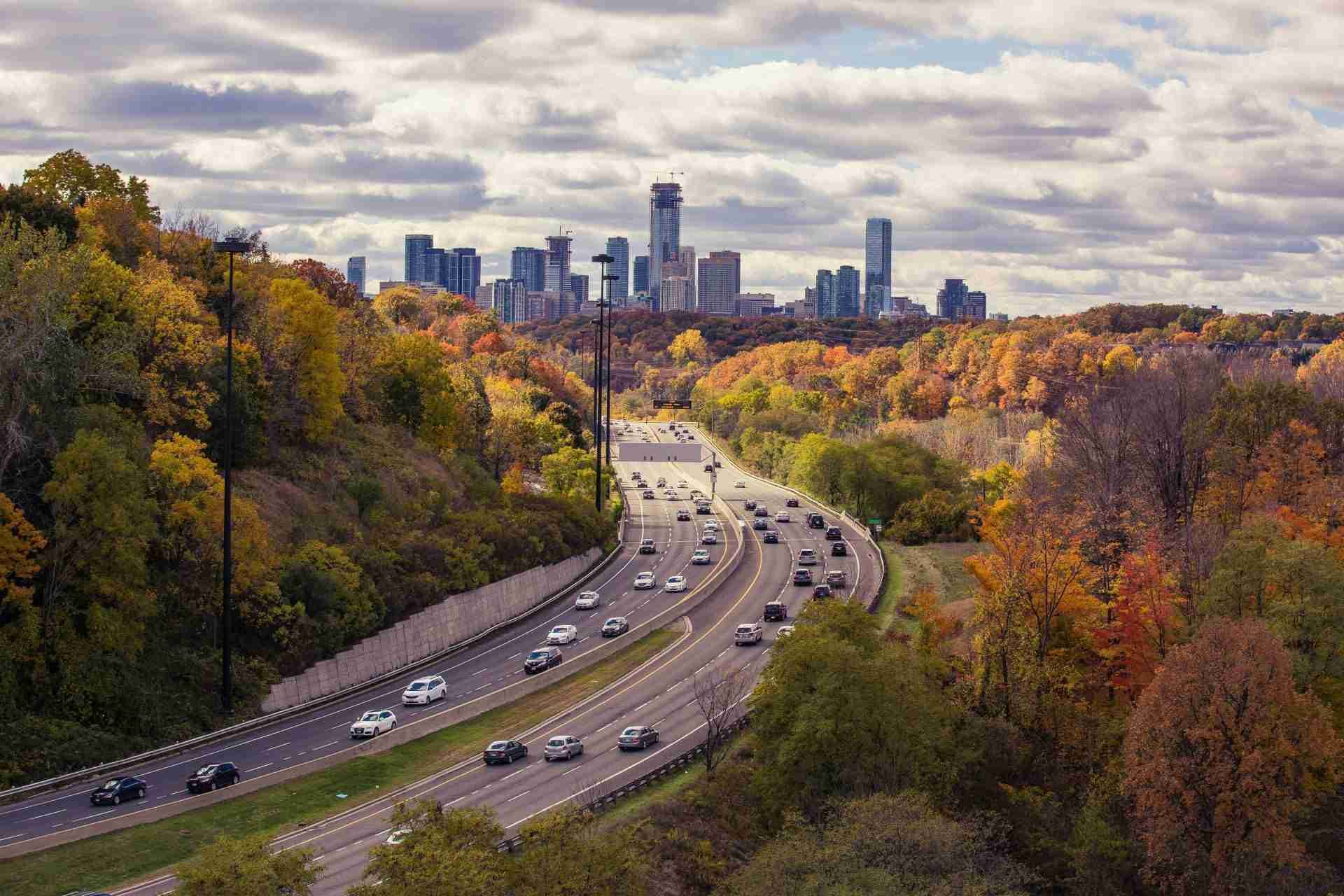
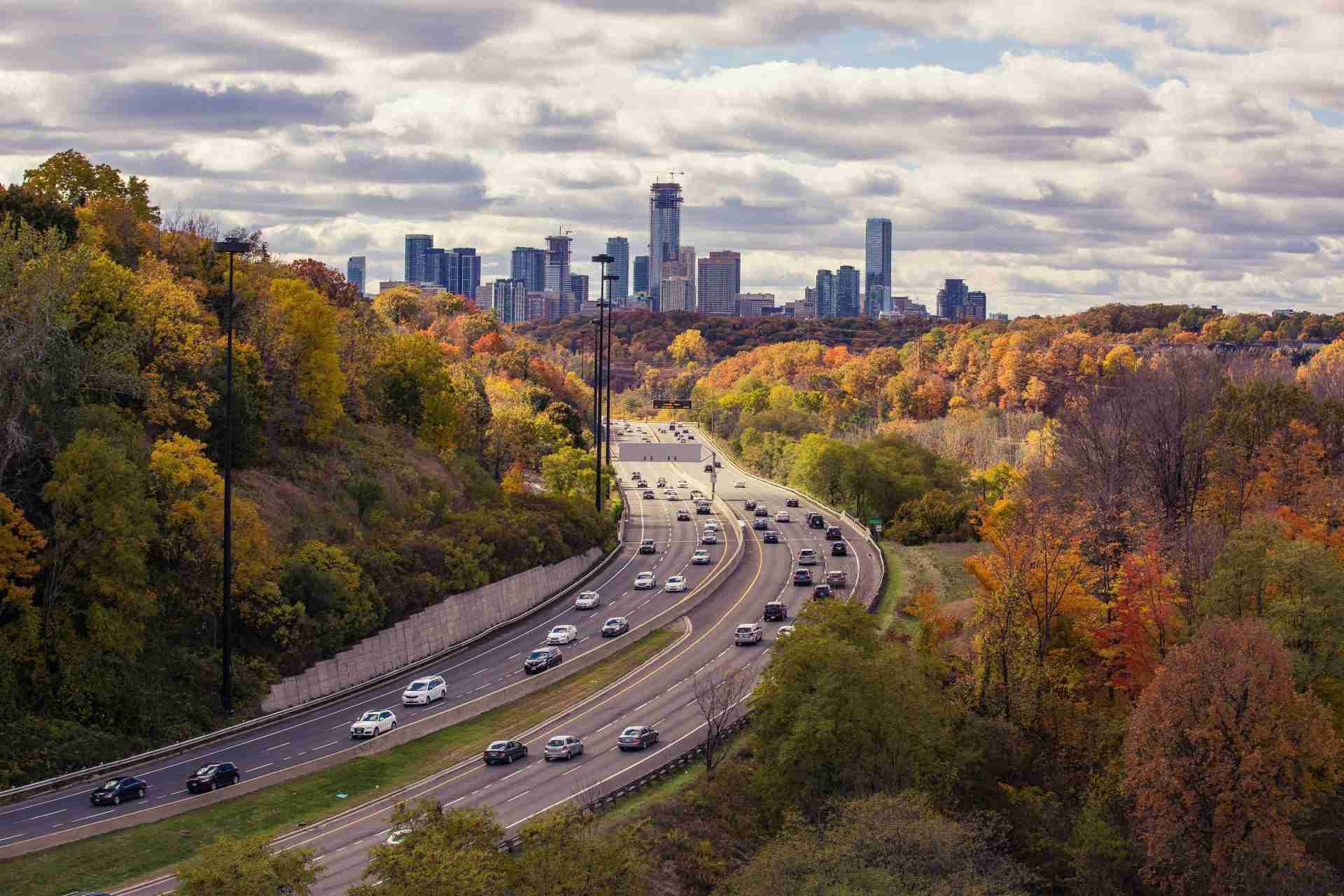
Spanning the Don River and the lush stretch of the Don Valley, Leaside Bridge stands as one of Toronto's most quietly commanding photographic locations. Constructed in the 1920s, this historic concrete arch bridge connects the east-end neighborhoods of Leaside and Thorncliffe Park while offering photographers a dynamic blend of natural and urban subjects. From its elevated deck, you can frame sweeping vistas of the river below, the city skyline beyond, and the rhythmic geometry of the bridge's own architectural lines. With each season, the Don Valley morphs into a dramatically different canvas—lush in summer, ablaze in autumn, and hushed in winter—making Leaside Bridge a reliable year-round location for photographers who value both structure and story in their compositions.
Best Photography Opportunities
• Bridge Architecture and Structural Detail
The bridge's concrete arches, vertical piers, and elegant guardrails offer striking opportunities for architectural photography. The underside of the structure, accessible via nearby Don Valley trails, allows you to frame sweeping curves and repeating forms, particularly compelling in side light during the morning or late afternoon. Use a wide-angle lens (16–35mm) to emphasize scale and symmetry, or isolate segments of the support columns with a 70–200mm lens to explore form and negative space. Black-and-white processing works particularly well here, emphasizing contrast and the interplay of light and shadow across the structure's surfaces.
• Panoramic Valley and Skyline Views
From the pedestrian walkway along the bridge's east side, you're treated to panoramic views of the Don Valley's forest canopy with Toronto's downtown skyline rising beyond. In the early morning, low fog often clings to the treetops, creating a dreamlike atmosphere when the first light pierces through. Autumn provides exceptional color contrast between the trees and surrounding urban structures. Use a 24–70mm lens for flexibility in framing—wider for expansive vistas and tighter to juxtapose natural forms against built geometry. Sunrise and golden hour are the most rewarding times for layered, dimensional shots.
• Long Exposure River and Traffic Trails
The elevated height of Leaside Bridge makes it an ideal location for long exposures. At night, use a tripod and ND filters to capture the soft ribboning of headlights and taillights along Bayview Avenue below. On the valley floor, the Don River curves gently through trees and under smaller bridges, providing an excellent subject for motion-blurred water photography. From beneath the bridge or nearby slopes, set up low to the water with a 10-stop ND filter and shoot during blue hour for smooth, reflective surfaces and subtle twilight tones.
• Seasonal Forest and Trail Compositions
The Don Valley trails just below the bridge open up a network of shooting options throughout the year. In spring, vibrant greens and budding trees create a soft, almost pastel color palette. Summer fills the valley with dense foliage and dappled light. Autumn is the most vivid season, when golds and reds saturate the scene and fallen leaves scatter across trail surfaces. Winter brings a graphic simplicity—bare trees, snow-blanketed paths, and mist rising from the river. Use a standard zoom for flexibility, or a telephoto lens to compress layers of trees and bridge supports into painterly compositions.
• Urban-Nature Contrast and Human Element
Leaside Bridge excels at offering compositions that balance city and nature. From the bridge's edge, frame cyclists, pedestrians, or joggers as they move along the Don Valley Trail far below, dwarfed by the structure above. From ground level, shoot upward toward the bridge deck with the skyline peeking through tree gaps, reinforcing Toronto's vertical presence against the organic sprawl of the valley. These juxtapositions are strongest when framed with intentional use of light—backlight for silhouettes, side light for form, or soft cloud cover for tonal consistency.
Best Time to Visit
Leaside Bridge is photogenic year-round, but the visual character of the site changes dramatically with each season. Spring brings subtle greens and soft textures that highlight new life in the Don Valley. Misty mornings are common and especially rewarding for mood-driven compositions. Summer offers full foliage and deep greens, providing a strong natural frame for shots that incorporate the skyline or bridge structure.
Autumn is the most visually intense season, typically from late September through October. The canopy below the bridge becomes a dense mosaic of warm tones, and the low angle of fall sunlight carves texture into both foliage and stone. Late afternoon light at this time of year enhances color saturation and adds depth.
Winter quiets the valley. Snow outlines the bridge's forms and adds contrast to tree trunks and exposed rock. On overcast days, the result is a muted, high-key environment that lends itself to black-and-white studies and minimalist compositions. Golden hour can be surprisingly warm-toned even in deep winter, catching the bridge and valley rim in amber light.
Golden hour, both morning and evening, consistently offers the best shooting conditions. Sunrises from the bridge's eastern side deliver clean light on the city skyline and river corridor. Evenings offer the chance to combine sunset tones with long-exposure traffic shots on the roads below.
How to Get There
Leaside Bridge spans the Don River just south of Eglinton Avenue East, connecting Millwood Road to Overlea Boulevard in East York. By car, the bridge is accessible from the Don Valley Parkway via the Eglinton or Bayview exits. Street parking is available in nearby residential areas off Millwood Road and along Broadview Avenue, though spaces may be limited during peak hours.
For cyclists and pedestrians, the bridge connects directly to the Lower Don Trail and the East Don Trail, making it a natural waypoint for photo walks or bike-based excursions. If traveling by transit, the closest subway station is Broadview; from there, buses travel east along Mortimer and Overlea, with stops a short walk from the bridge.
There is no cost to access the bridge or surrounding trails. All public access points remain open year-round, although winter trail conditions may vary depending on snowfall and maintenance. Tripods are permitted and can be used safely along the bridge's wide pedestrian walkway or beneath the bridge on the valley floor.
Recommended Photography Gear
Leaside Bridge is a location where dynamic range and compositional versatility are key. A full-frame DSLR or mirrorless body will help manage the strong contrast between bright skies and shaded valleys, particularly during golden hour. A wide-angle lens (16–35mm) is essential for capturing the full sweep of the bridge and expansive Don Valley scenes. A standard zoom (24–70mm) is perfect for walk-around shooting and allows for mid-range landscape and architectural detail work.
For long exposures of traffic and river motion, bring a tripod, a remote shutter release, and a 6- or 10-stop ND filter. A circular polarizer will also help manage glare on water and enhance foliage contrast—particularly valuable during autumn. A 70–200mm lens will allow you to compress urban and natural elements and isolate people or architectural details from a distance.
Pack for mobility. The mix of elevated viewpoints and valley-floor access means some climbing or trail walking may be involved. Sturdy footwear, weather protection for your gear, and a small daypack are recommended, especially if you're planning to photograph multiple locations in the valley on the same outing.
Nearby Photography Locations
• Chester Hill Lookout
Just northwest of Leaside Bridge, this lesser-known lookout offers one of the most cinematic views of the downtown skyline framed by the Don Valley. It's ideal for twilight cityscapes and wide-angle panoramas.
Located a short distance down the Don Valley Trail, this former quarry and industrial site offers rustic textures, wetland views, and urban decay elements set against lush greenery—perfect for moody, layered compositions.
East of the bridge, this tributary trail offers quieter forest scenes, smaller bridges, and curving streamside paths. It's a strong location for spring greens, long exposures of flowing water, and peaceful nature detail work.
Southwest of Leaside Bridge, this park delivers wide open views of the skyline above sports fields and treetops. It's a popular spot for golden hour shooting and long-lens skyline studies with strong foreground context.
Located nearby in the Don Valley, this historic site includes heritage buildings, meadows, and walking trails surrounded by dense forest. It's ideal for close-up nature photography and architectural detail in a quiet, naturalized setting.
Leaside Bridge isn't just a place to cross the Don River—it's a place to stand, reflect, and photograph the city from a vantage point where urban infrastructure meets sprawling natural beauty. Whether you're chasing golden-hour skyline shots, abstract architectural lines, or quiet river trails below, this bridge rewards both patient exploration and creative framing. For photographers seeking a high/low contrast in every sense—light, elevation, and subject—Leaside Bridge offers one of the most compelling shooting platforms in Toronto.
Comments
Loading comments…