
Tucked into the rural countryside of Halton Hills, Limehouse Conservation Area is a hidden photographic gem where geology, forest, and history intersect. Set along the Niagara Escarpment and crisscrossed by the Bruce Trail, this conservation area offers photographers a rare combination of industrial ruins, karst landscapes, and natural woodland beauty. Stone lime kilns from the 19th century stand moss-covered and weathered in quiet clearings, while narrow fissures in the bedrock—known as the "Hole in the Wall"—draw visitors into a surreal network of crevices and caves. The area's dense forests, limestone outcrops, and meandering streams provide ever-changing light conditions that reward careful observation and creative framing.
Best Photography Opportunities
• The Historic Lime Kilns and Quarry Ruins
One of the most compelling features of the conservation area is the cluster of partially restored lime kilns—arched stone and brick structures used in the 1800s to produce quicklime. Framed by moss, trees, and the erosion of time, these remnants tell a silent story of Ontario's early industry. Photograph them in the golden hours, when angled light enhances the textures of the stone and softens the background foliage. Use a wide lens for full-structure compositions and a standard zoom to isolate brick details, cracked mortar, and the encroaching vegetation. On overcast days, the scene takes on a moody, timeless quality that lends itself well to black-and-white processing.
• The "Hole in the Wall" and Karst Fissures
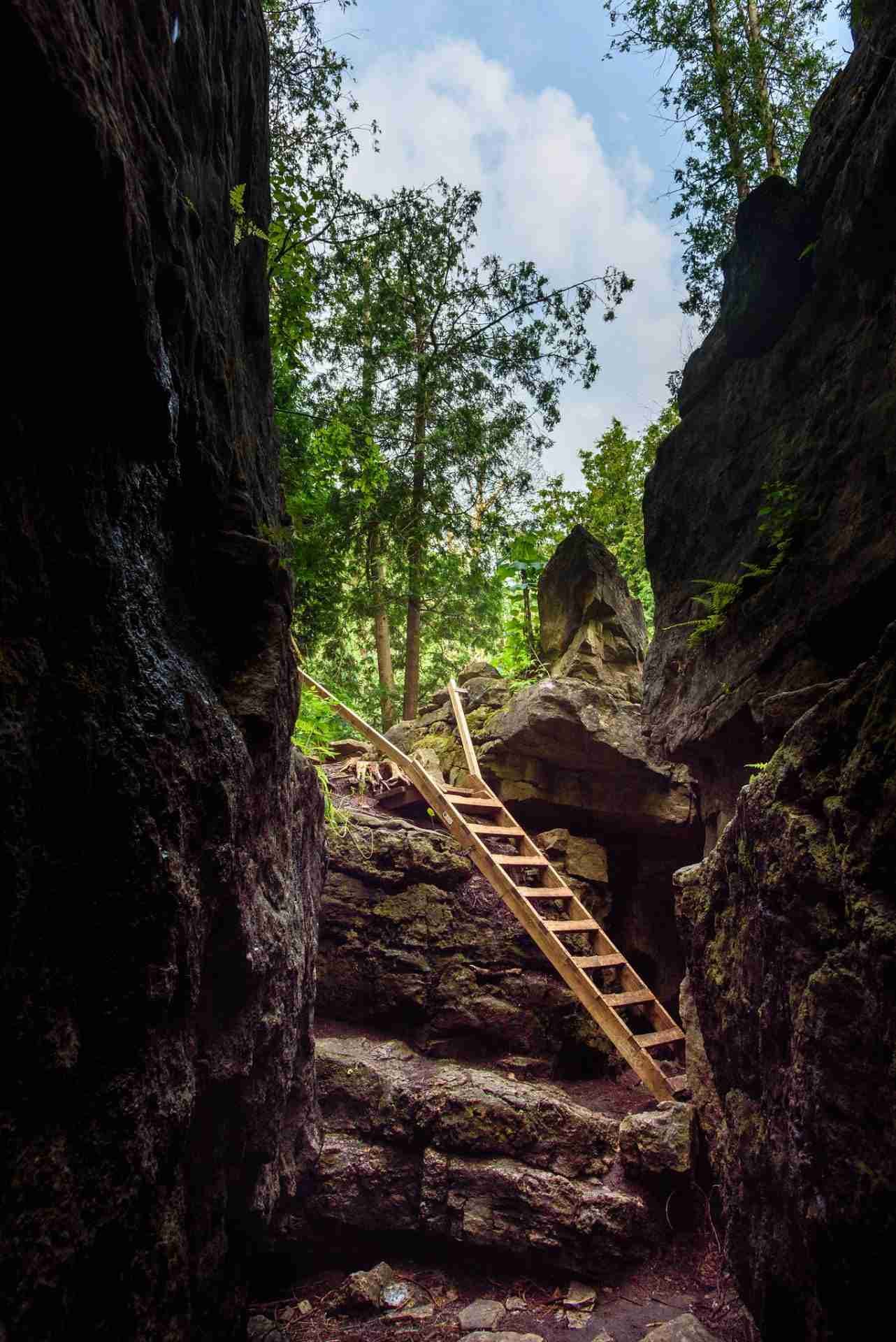
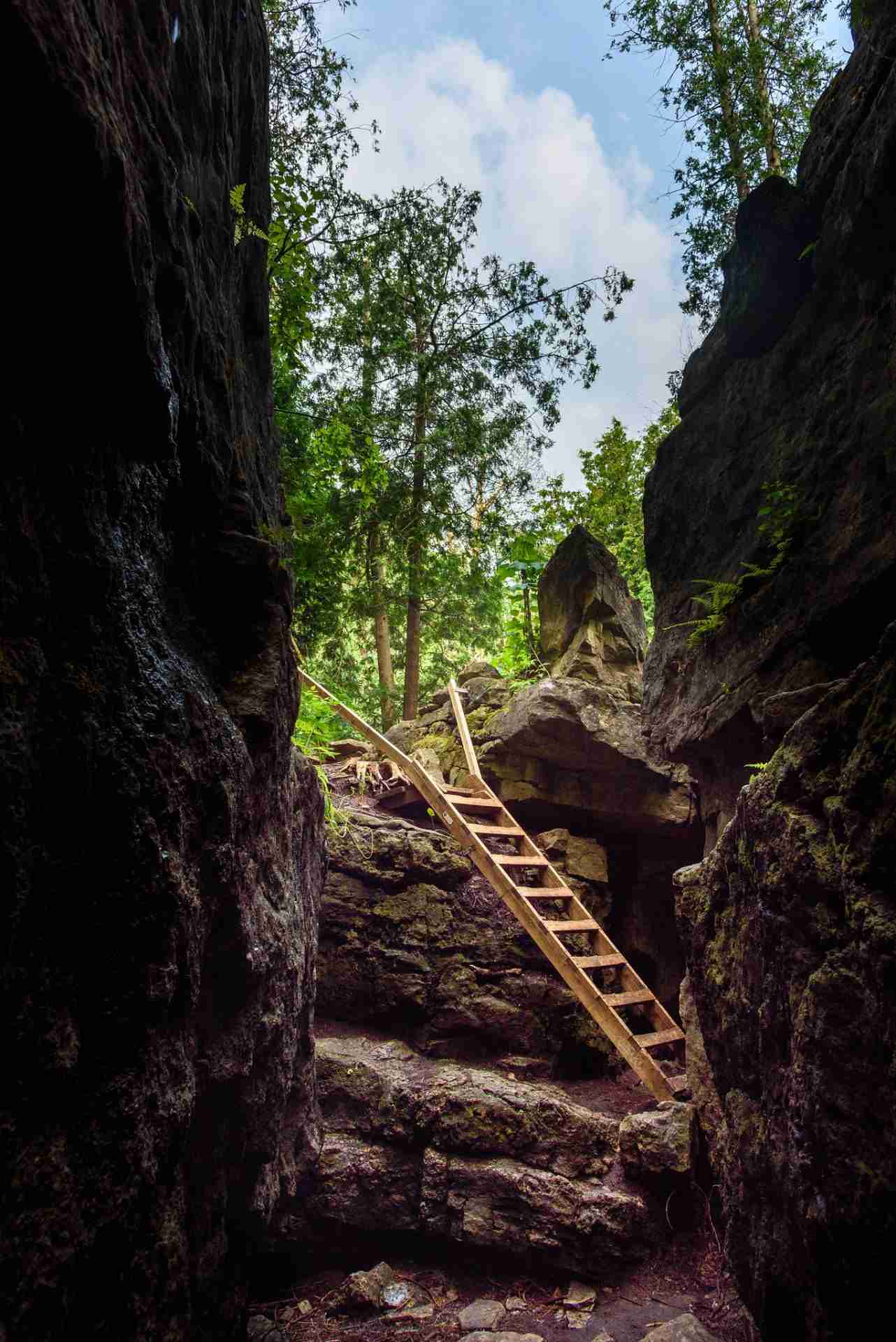
This narrow, ladder-accessible crevice cuts deep into the escarpment rock and leads to a surreal corridor of fractured limestone. Shoot from within the crevice using a wide-angle lens to exaggerate the vertical walls and capture the play of filtered light above. In early morning or late afternoon, shafts of sunlight often penetrate the top of the fissure, casting dramatic shadows and creating high-contrast compositions. Be sure to bring a tripod and slow your shutter to capture fine details in low light. For safety and stability, avoid wet or icy conditions when exploring this feature up close.
• The Bruce Trail and Escarpment Overlooks
The Bruce Trail section that crosses Limehouse features high ridges, rock outcrops, and views over tree-covered valleys. These spots are excellent for wide environmental shots—especially in fall when the forest explodes into reds, golds, and oranges. Look for leading lines in the trail itself or use natural framing from overhanging branches and split boulders. Early spring also offers stark contrast between bare trees and stone, ideal for minimalist black-and-white work. Because the trail is narrow in places and often uneven, pack light and use a shoulder sling or compact tripod to stay mobile.
• Boardwalks, Streams, and Seasonal Water Flow
Alongside the main trails, wooden boardwalks curve through wetland and lowland forest areas, providing both compositional foregrounds and stability for slower exposures. In spring, water flow is strongest, and small streams trickle through mossy rocks beneath these crossings. Shoot low with a wide lens to use the planks as leading lines, or focus on reflections and subtle color contrasts during fall. A polarizer will help reduce glare on wet surfaces and deepen tones in leaf litter and bark.
• Rock Textures, Tree Roots, and Natural Abstracts
The limestone underfoot at Limehouse is heavily pitted, cracked, and exposed in unique ways. Tree roots snake across rocks, carving sinuous paths that beg to be framed. These details reward macro and close-range work—especially in low side light that brings out texture and shadow. Use a mid-telephoto or macro lens to isolate forms and create abstract compositions of geological erosion, plant growth, or shadow patterns. These shots are particularly effective on misty mornings or cloudy days when diffused light softens contrast and reveals tonal depth.
Best Time to Visit
Limehouse is accessible year-round, but its best photographic conditions occur in spring and autumn. In spring, snowmelt feeds the area's streams and brings lush groundcover, making the karst features more active and photogenic. Leafless trees also allow clearer views of cliff faces and quarry ruins. Wildflowers begin to emerge along the trail edges, and the forest floor comes alive with texture and color.
Autumn is the most visually dynamic season. From late September through October, the escarpment trees put on a full display of color, dramatically contrasting with the pale limestone and shadowed crevices. Morning fog is common and creates a cinematic mood in the forest. Trails are dry and easy to navigate, and angled light lasts longer through the canopy than in summer.
Winter and summer offer more specialized shooting conditions. In summer, dense foliage and strong sun can produce high-contrast lighting, ideal for dramatic black-and-white or filtered compositions in the karst features. In winter, snow and ice coat the ruins and fill the crevices, creating surreal shapes and softened lines. However, trail access can be slippery, so caution and proper gear are essential.
Mornings and late afternoons offer the best light, with tree-filtered sun creating patterned shadows on stone and ground. Midday light is often too harsh due to high contrast between light and shadow in the forest. Overcast days are excellent for even lighting and for emphasizing color in foliage, moss, and stone.
How to Get There
Limehouse Conservation Area is located just west of Georgetown, Ontario, in the Halton Hills region. From Highway 401, take Trafalgar Road north to 22nd Side Road, then follow Fifth Line to the Limehouse community. The main parking lot is located on Fifth Line just north of 22nd Side Road and is clearly marked.
Parking is free, and the lot is open year-round during daylight hours. The trails begin directly from the lot, with maps and signage available at the trailhead. The conservation area is managed by Conservation Halton, and trail conditions are generally well-maintained, though rocky and uneven sections are common.
Most key features—including the lime kilns, "Hole in the Wall," and Bruce Trail section—are accessible within a 10- to 20-minute hike from the parking area. Be prepared with good footwear, especially in wet or cold conditions, and allow extra time to explore side trails for unique vantage points and less-traveled areas of the forest.
Recommended Gear and Shooting Tips
Bring a wide-angle lens for interior karst shots and full-scene compositions of the ruins and cliffs. A standard zoom (24–70mm) is useful for mid-range shots and layered forest scenes, while a telephoto lens or macro is excellent for capturing textures in stone, bark, or moss. A tripod is essential for long exposures in low-light conditions or to maximize depth of field for close-up compositions.
A polarizer is especially helpful in forest settings to manage glare on wet stone and leaves. ND filters are less necessary unless you plan to shoot long exposures of running water, which can be especially effective in spring.
Wear neutral, quiet clothing if you plan to photograph wildlife or want to avoid spooking fellow visitors in narrow trail areas. Use manual focus when photographing within crevices or caves where light is limited and autofocus may struggle. Always shoot in RAW to accommodate the wide range of contrast and shadow you'll encounter in the varied lighting conditions of forest and stone.
Nearby Photography Locations
Just a short drive northwest, this conservation area offers forest trails, boardwalks, and open meadows that come alive in spring and autumn. A great location for woodland landscape photography and seasonal wildlife.
• Cheltenham Badlands
Located to the northeast, these exposed red clay hills offer a completely different aesthetic—rolling, alien-looking terrain with unique color and shape. Best visited at golden hour or under diffused light to avoid harsh shadows.
South of Limehouse, this heritage property combines farm buildings, rolling pastures, and forest trails for a mix of rural and natural compositions. Excellent for capturing Ontario's agricultural textures and long-view landscapes.
Part of the same escarpment system, this quieter area features steep ridges, babbling brooks, and peaceful forest trails. It's ideal for intimate landscape compositions and abstract studies of water, rock, and foliage.
A small village east of Limehouse with heritage architecture, riverfront trails, and artisan shops. Combine street scenes with creekside compositions and use the area as a warm-up or cool-down session around your main Limehouse shoot.
Limehouse Conservation Area rewards photographers who move slowly, observe closely, and look beyond the obvious. With its layered history, sculpted landscape, and forest-filtered light, it invites a quieter, more exploratory approach to shooting. Whether you're chasing geological forms, industrial relics, or forest solitude, this escarpment pocket delivers depth and atmosphere in equal measure
Comments
Loading comments…