
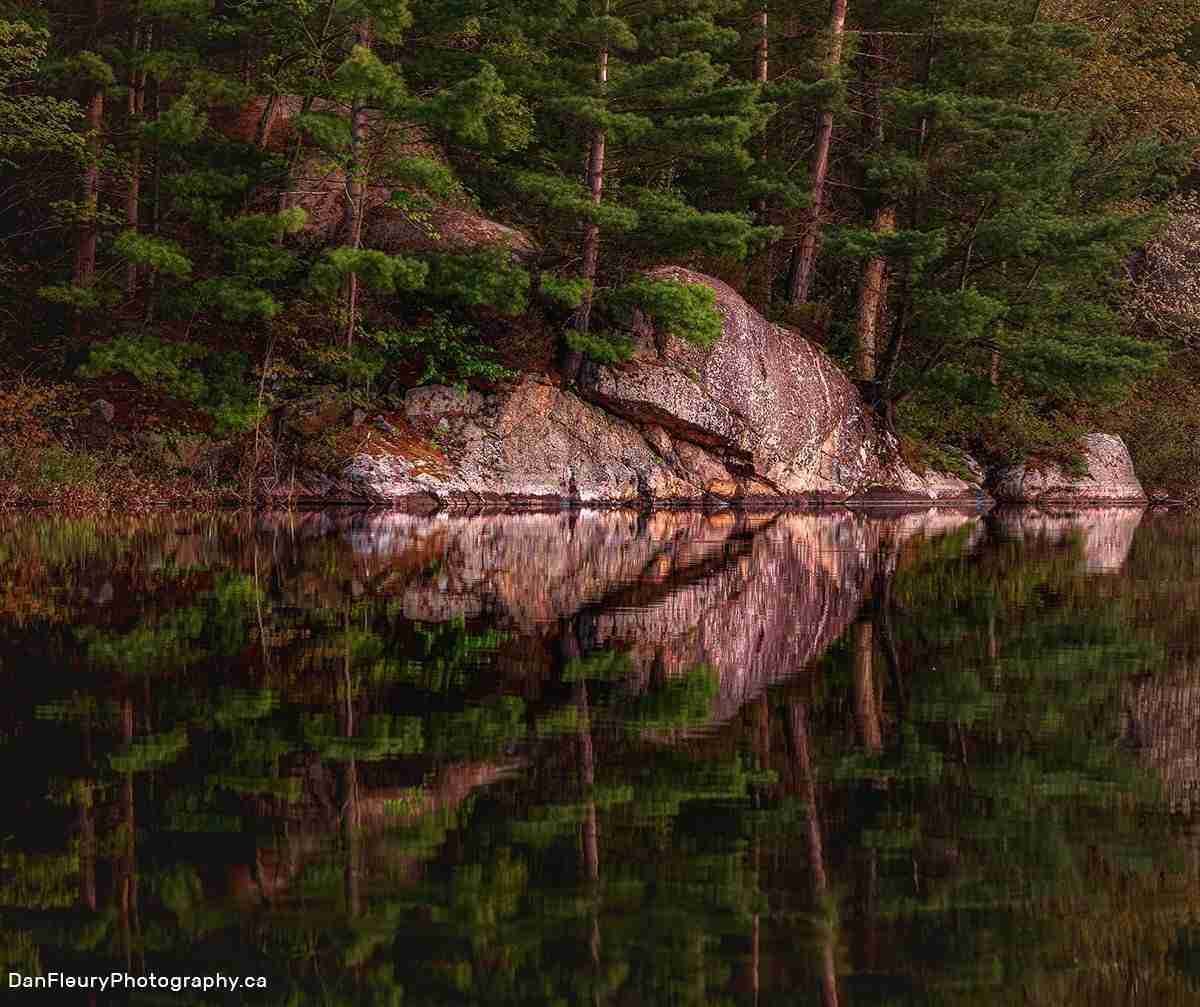
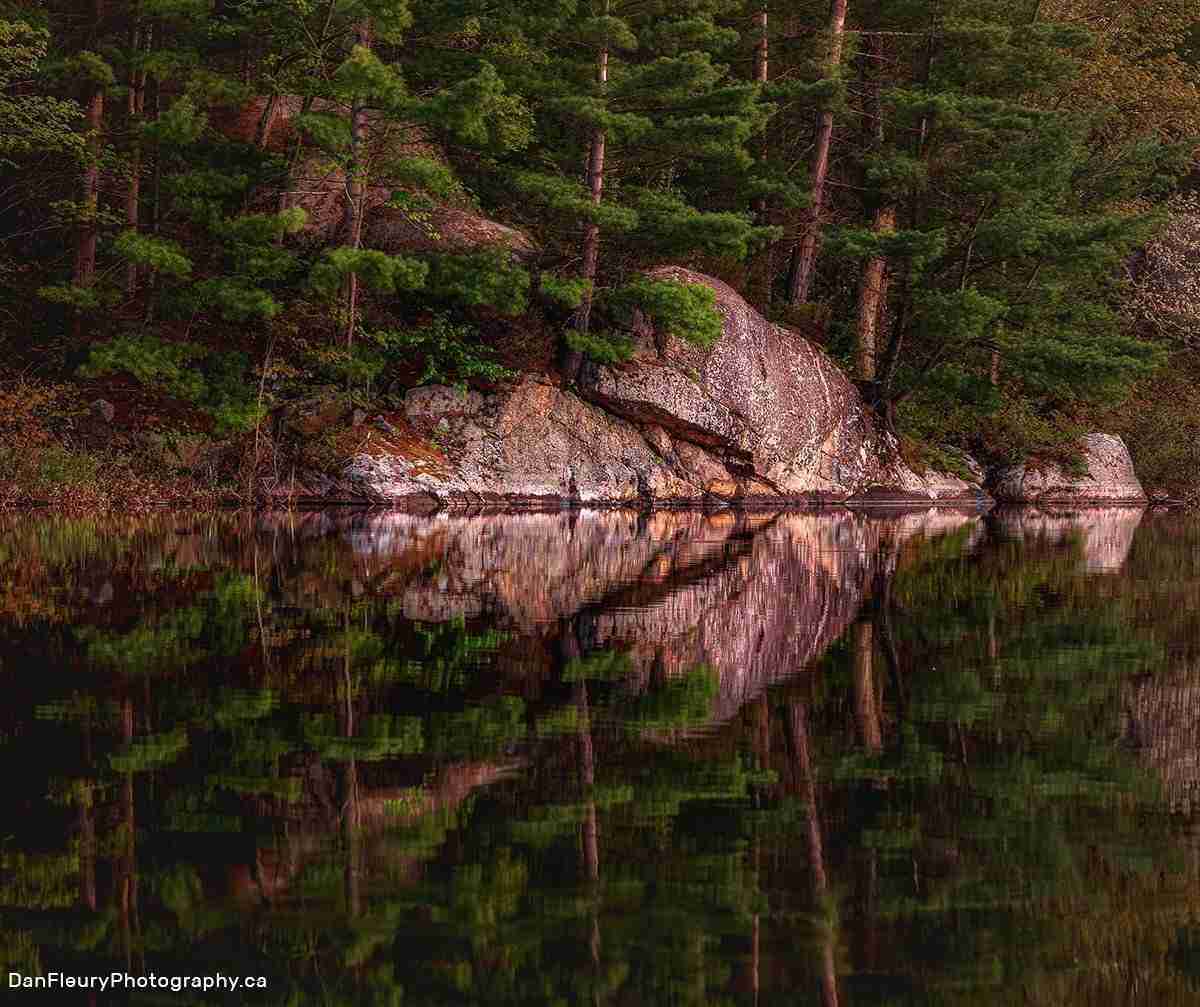
Tucked away in the heart of eastern Ontario, Little Mellon Lake is a secluded paradise for photographers seeking untouched natural beauty. Surrounded by dense forests and rugged Canadian Shield rock formations, this quiet lake offers mirror-like reflections, diverse wildlife, and dramatic seasonal changes. Whether capturing the vibrant fall foliage, the misty morning stillness, or the icy tranquility of winter, Little Mellon Lake is an ideal destination for landscape and nature photography.
Best Photography Opportunities
• Glass-Like Reflections on the Lake
– With minimal boat traffic and a sheltered location, Little Mellon Lake often has incredibly still waters, making it perfect for reflection photography. Early mornings are especially rewarding when the rising sun casts warm tones across the lake's glassy surface, creating near-perfect mirror images of the surrounding trees and sky. Using a wide-angle lens can enhance the symmetry of the reflections, while incorporating foreground elements such as rocks or fallen branches adds depth to the composition.
• Autumn Colors and Seasonal Transitions
– In the fall, the dense forests around Little Mellon Lake burst into a fiery display of reds, oranges, and yellows. The contrast between the warm foliage and the deep blues of the lake makes for breathtaking compositions. Capturing the shoreline from different angles can showcase the gradient of colors, while reflections on calm days double the vibrancy of the landscape for an even more striking image.
• Moody Mist and Sunrise Photography
– Cool mornings often bring layers of mist hovering over the lake's surface, adding a dreamlike quality to images. A wide-angle lens can capture the full expanse of fog rolling over the water, while a telephoto lens is perfect for isolating pockets of mist and light filtering through the trees. Shooting at different times during sunrise allows photographers to experiment with varying hues of pink, gold, and blue as the mist shifts and dissipates.
• Wildlife and Bird Photography
– The remote setting of Little Mellon Lake attracts a variety of wildlife, including deer, beavers, and otters. Birdwatchers can spot loons, herons, and even bald eagles soaring above the tree line. To increase chances of capturing wildlife in action, photographers should remain patient and use a silent shutter mode to avoid startling their subjects, allowing for more natural and intimate shots.
• Canoe and Kayak Perspectives
– One of the best ways to explore Little Mellon Lake is by canoe or kayak. Paddling along the shoreline allows photographers to access hidden inlets, dramatic rocky outcrops, and intimate close-ups of aquatic plants and wildlife. Shooting from the water provides a fresh perspective, and using a low-angle approach can make compositions feel immersive and dynamic.
• Night Photography and Astrophotography
– With very little light pollution, Little Mellon Lake offers dark skies ideal for astrophotography. On clear nights, the Milky Way stretches across the sky, providing stunning opportunities for long-exposure shots. Incorporating silhouettes of trees or distant shorelines helps frame the celestial scene, while experimenting with different exposure times enhances the visibility of stars and constellations.
Best Time to Visit
The best time to visit Little Mellon Lake depends on the type of photography you wish to capture. Summer provides warm weather, lush greenery, and calm waters that are perfect for sunrise and reflection shots. However, autumn is arguably the most visually stunning season, as the changing leaves transform the landscape into a vibrant mosaic of colors.
Winter offers a completely different perspective, with snow-covered trees, frozen lake surfaces, and the opportunity to capture minimalist compositions. The stark contrast between bright white snow and dark evergreen trees can create stunning black-and-white images. Spring is the best time for wildlife photography, as animals become more active and migratory birds return to the lake.
Regardless of the season, early mornings and late evenings provide the best lighting conditions. Golden-hour shots enhance the warmth of the scenery, while blue-hour photography brings out soft, atmospheric tones in the landscape.
How to Get There
Little Mellon Lake is located in eastern Ontario, roughly midway between Kingston and Ottawa. The lake is accessible via small backroads, so a GPS or offline map is recommended for navigation. From Kingston, the drive takes approximately 1.5 hours north via Highway 38. From Ottawa, it is about a two-hour drive southwest via Highway 7.
Parking is limited, as the area is relatively undeveloped, but some roadside pull-offs and informal access points provide entry to the lake. A short hike through forested trails may be required depending on the chosen access point. Canoes and kayaks can be launched from small clearings along the shoreline.
Exploring Little Mellon Lake and the Surrounding Area
Beyond the shoreline of Little Mellon Lake, the surrounding wilderness offers a wealth of photographic opportunities. Dense pine and hardwood forests create a secluded atmosphere, ideal for nature and macro photography. The rocky terrain, characteristic of the Canadian Shield, adds a rugged element to landscape compositions, especially when framed with the lake in the background.
Hiking through the nearby trails reveals small streams, moss-covered boulders, and hidden clearings where light filters beautifully through the trees. Early morning walks often bring encounters with deer or the sight of loons gliding across the still water. The peaceful atmosphere and natural beauty make Little Mellon Lake a perfect destination for photographers looking to immerse themselves in the wilderness.
Nearby Photography Locations
– The larger neighboring lake offers expansive views, more open water, and additional wildlife opportunities. Its rocky shorelines and small islands make for excellent landscape compositions, particularly at sunrise and sunset.
– A short drive away, Bon Echo is famous for its towering Mazinaw Rock, which rises 100 meters above the water and features Indigenous pictographs. This dramatic geological formation is a must-visit for landscape photographers.
– This park offers a mix of dense forests, sandy beaches, and rocky points, providing diverse photographic subjects year-round. Sunrise over Sharbot Lake is particularly stunning, with mist often hovering over the water.
– Known for its rugged terrain and pristine lakes, Frontenac Park is a paradise for nature photographers. The park's hiking trails lead to stunning overlooks, secluded ponds, and dense woodlands filled with wildlife.
– Located along Highway 7, this park features a picturesque lake surrounded by wetlands and forests. It's a fantastic location for capturing moody water scenes, especially during foggy mornings.
Comments
Loading comments…