
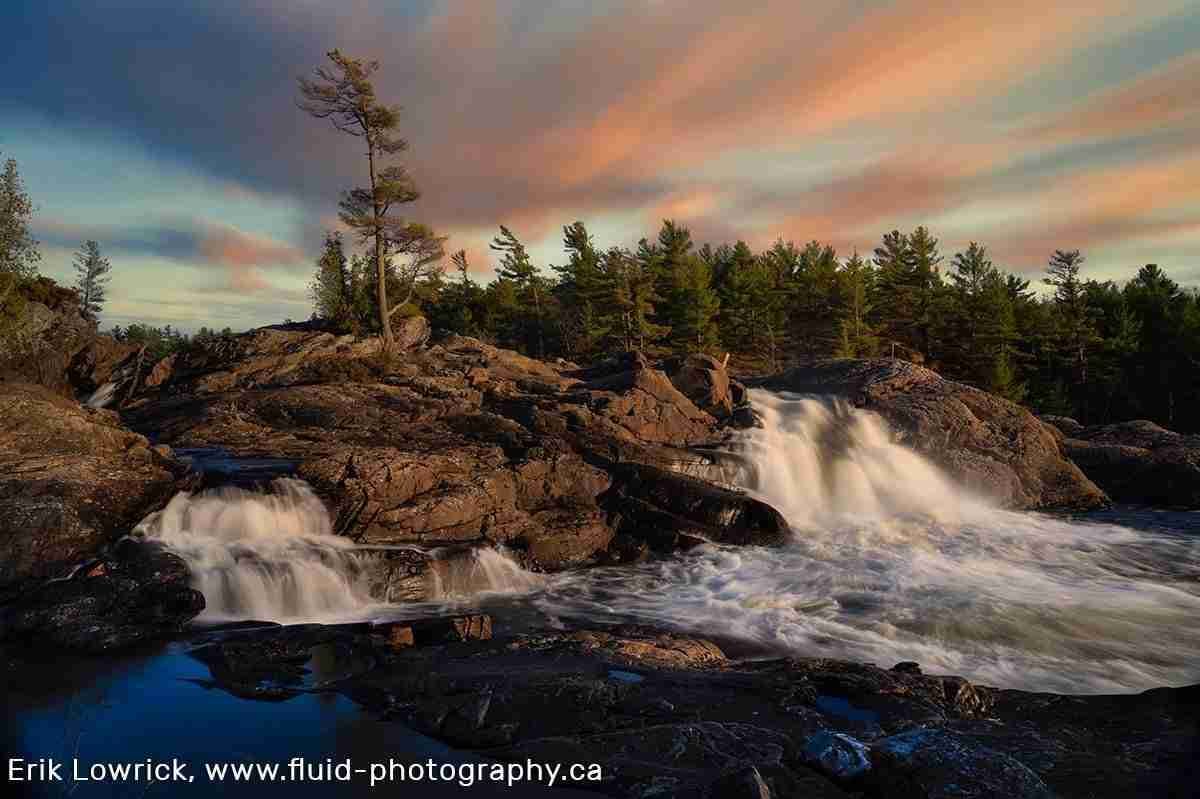
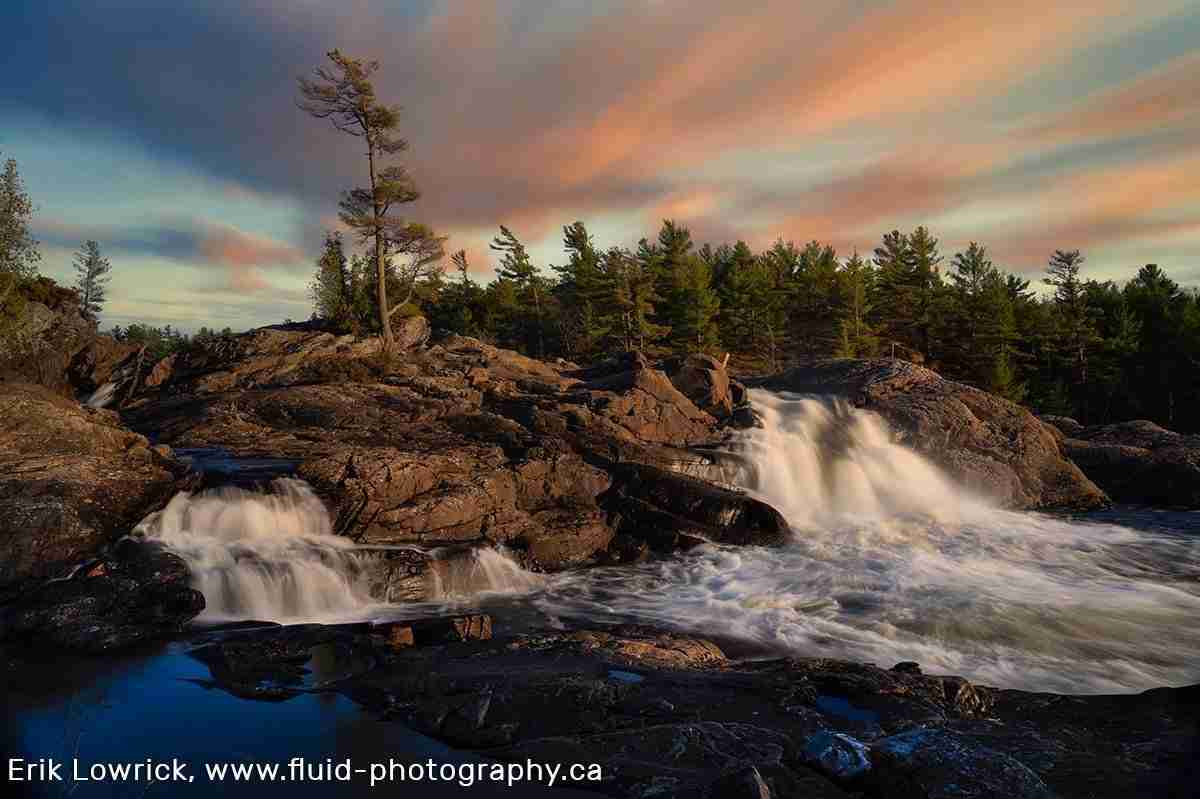
Tucked deep in the rugged wilderness near MacTier, Moon Falls is one of the most photogenic—and remote—waterfalls in Ontario's cottage country. Located less than 10 kilometers from where the Moon River empties into Georgian Bay, this wide, multi-tiered cascade offers a raw and dramatic subject for photographers willing to make the effort to reach it. Surrounded by windswept pines, weathered Canadian Shield granite, and the steady rhythm of fast-moving water, Moon Falls delivers a quintessential Northern Ontario landscape with both scale and atmosphere. Accessible primarily by canoe, it's a location that rewards preparation and patience, offering solitude, texture, and timeless beauty in equal measure.
Best Photography Opportunities
• The Main Cascade
: Moon Falls spills over a wide granite face, creating multiple levels of whitewater as it crashes down toward the lower pools. The scene is dynamic and layered, ideal for long exposures that transform the frothing rapids into flowing ribbons of light. Position yourself at river level with a tripod to capture the full vertical sweep, or step back to include the surrounding forest and bedrock for a more expansive composition. Use a wide-angle lens to emphasize the breadth of the falls and frame it with trees or rocky outcrops.
• Granite Foregrounds and Leading Lines
: The surrounding terrain features slabs of smooth Canadian Shield granite—ideal for anchoring your compositions. Look for cracks, striations, and water channels that lead toward the falls, guiding the viewer's eye into the frame. Early morning side light brings out the warm tones in the rock and adds texture and depth, while overcast days offer even lighting for balanced exposures across bright water and dark forest.
• Reflections and River Calm Below the Falls
: Downstream of the main cascade, the river settles into calmer pools bordered by stone and moss. These areas offer still water for reflections of clouds and pine trees, ideal for contrasting with the energy of the falls above. During golden hour, soft light reflects on the river's surface and enhances color in both foliage and rock. Shoot from low angles along the bank to isolate patterns or include foreground stones for added depth.
• Detail Work and Intimate Landscapes
: Beyond the grand views, Moon Falls excels in smaller scenes—ferns growing in rock crevices, eddies swirling around boulders, or the shimmer of spray on sunlit moss. Use a telephoto or macro lens to explore the textures and quieter moments that give the location its unique character. Early morning is best for this kind of work, when condensation and dew add richness to every surface.
• Sunset Glow Through the Pines
: Though the falls are best photographed earlier in the day, the surrounding forest and granite ridges catch evening light beautifully. Look uphill through the pine silhouettes or frame the orange glow of the setting sun bouncing off water-worn stone. The shifting light at dusk adds atmosphere and dimension, especially if mist or fine spray catches the color.
Best Time to Visit
Moon Falls is most accessible and photographically rewarding from late spring through early autumn. In spring, snowmelt swells the Moon River, making the falls more powerful and dramatic—but the approach may be more difficult due to cold water and strong currents. Summer brings more predictable conditions, warmer weather, and easier paddling access, along with rich greens and golden light filtering through the trees.
Autumn transforms the forest into a palette of amber and crimson, and the combination of colorful foliage with dark rock and bright water makes for striking landscape compositions. The water flow may be slightly reduced depending on rainfall, but the overall scene remains powerful.
Early mornings offer the best light and least wind, perfect for capturing mist, soft shadows, and the first sun striking the rock face. Overcast days are excellent for shooting long exposures with even tonal range across water and foliage. Avoid midday if possible, when harsh light and deep shadow can limit dynamic range and reduce textural detail.
How to Get There
Moon Falls is located near MacTier, Ontario, in the Moon River basin just upstream from its outlet into Georgian Bay. Due to its remote location and lack of direct road access, the falls are best reached by canoe via the Moon River. The most common launch point is at the public access site on Woods Bay Road, near the Moon River Marina.
From the launch, paddle upstream (eastward) along the Moon River for roughly 8 to 10 kilometers. The journey includes open stretches of river and narrower channels, with occasional shallow spots depending on water levels. Allow several hours for the paddle, and be prepared for portages or navigation around obstacles, especially during low water conditions. A GPS or topographic map is highly recommended, as signage is minimal and the route winds through undeveloped wilderness.
Once near the falls, a short portage or pull-up may be required to access the shoreline for shooting. The base of the falls offers solid footing on exposed granite slabs, but be cautious—surfaces can be slick with spray and algae. There are no services in the area, so bring everything you need, including water, snacks, and proper footwear. Cell reception is limited, and solo travel is not advised unless highly experienced in backcountry navigation.
Exploring the Surrounding Area
While the main attraction is the waterfall itself, the surrounding landscape is equally worth exploring. The riverbanks are framed by classic Northern Ontario terrain—lichen-covered stone, gnarled pine trees, and pockets of moss and fern. Follow the rock ledges upstream for alternate angles of the falls or climb a short distance for a higher perspective that includes the full cascade and the river winding away through the trees.
Small islands and rock outcroppings downstream offer opportunities to shoot the falls from across the water, adding scale and natural framing. If time allows, explore nearby bays and quiet inlets where the river slows—these calm waters reflect the sky and tree line in painterly detail and provide a peaceful contrast to the roar of the falls.
The remote location also makes Moon Falls an ideal candidate for an overnight paddle-and-shoot trip. With the right gear and preparation, golden hour and blue hour become fully accessible, and the absence of light pollution makes the area suitable for night sky photography on clear evenings.
Nearby Photography Locations
• Moon River Delta and Georgian Bay
: West of the falls, where the Moon River empties into Georgian Bay, a network of rocky islands, channels, and windswept trees creates a dramatic, windswept landscape. Ideal for paddling and golden hour landscape work, with compositions that echo Group of Seven-style motifs.
: South of Moon River, this rugged park features inland lakes, forested trails, and dramatic rocky coastlines. A perfect place for combining paddling with landscape and wildlife photography—especially in autumn.
• Three Finger Bay and Woods Bay
: Near the launch area, these calm bays offer rich shoreline texture, cottage charm, and reflective evening scenes perfect for softer, more relaxed compositions.
: For photographers who venture farther west by boat, this nature reserve offers pristine Georgian Bay coastline, mature forest, and panoramic views over the open water.
: A short drive from MacTier, this region features classic cottage country scenes—boathouses, docks, and shimmering water—that contrast beautifully with the wild energy of Moon Falls.
Moon Falls is not the kind of location you stumble upon—it's one you seek out. But for those willing to paddle upstream, carry their gear, and wait for the light to shift across stone and spray, the reward is a powerful and personal encounter with Ontario's natural soul. It's a place where movement and stillness meet, where light transforms rock and water into visual poetry—and where each frame carries the quiet thrill of discovery.
Comments
Loading comments…