
Set amid the forested hills of Renfrew County, Muskrat Lake is a quiet gem for landscape photographers seeking reflective stillness, soft light, and seasonal contrast. Located just outside the village of Cobden, the lake stretches east to west with unobstructed views across calm waters and forest-lined shores. Its peaceful atmosphere and gentle topography make it especially photogenic at sunrise, when mist often rises from the surface and the light paints subtle gradients across the landscape. In winter, the lake transforms into a silent, ice-covered expanse—perfect for minimalist photography, snow scenes, and wide-angle compositions that emphasize space and isolation.
Best Photography Opportunities
• Sunrise Reflections Across Still Water
: The lake's east–west orientation provides optimal conditions for sunrise photography. On clear or lightly clouded mornings, the first light casts golden tones across the water and ignites the treeline with warm color. When the air is calm, the lake mirrors the sky with near-perfect symmetry. Shooting with a wide-angle lens from the shoreline or dock allows for balanced compositions of water, horizon, and sky, while longer lenses can isolate color gradients or frame distant trees glowing in the light.
• Winter Minimalism and Frozen Textures
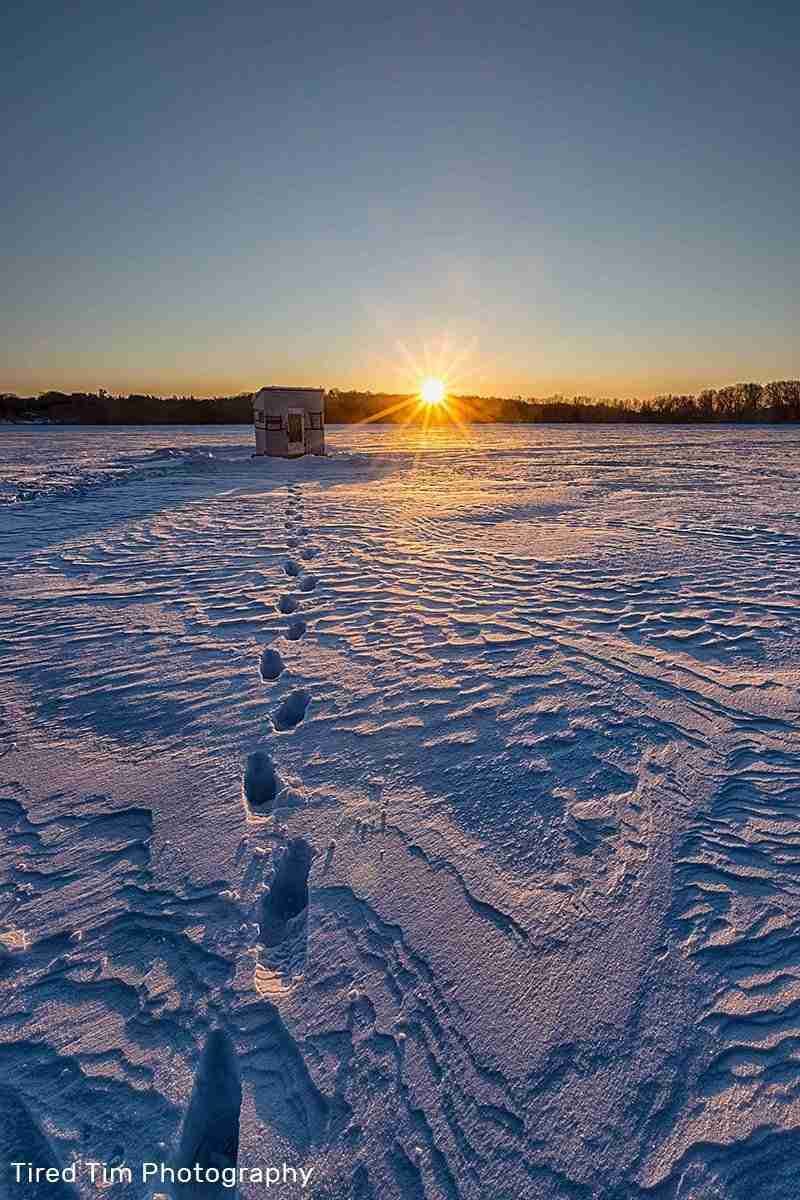
: During the coldest months, Muskrat Lake freezes completely, blanketing the surface in snow or creating expansive sheets of wind-swept ice. This creates excellent conditions for minimalist winter photography. Composing from the shoreline, you can shoot across the frozen surface with a telephoto lens to capture delicate textures or add human scale with ice fishing huts, tracks, or distant walkers. On overcast days, the reduced palette allows for stark black-and-white compositions, while clear mornings add soft pastel hues.
• Fog and Atmospheric Light
: Particularly in autumn and spring, morning fog often forms over the lake's surface, muting contrast and layering the forested shoreline in soft greys and whites. This creates a dreamlike, painterly quality ideal for tonal landscape work. Shooting into the light during these conditions produces silhouettes and soft flare, while shooting side-on emphasizes the depth and recession of forest layers behind the mist.
• Forested Shorelines and Reflected Color
: The lush tree cover surrounding Muskrat Lake is especially vibrant during summer and fall. Early morning light enhances reflections of deep green canopies or autumn reds and golds, doubling the impact in calm conditions. Small inlets and coves along the northern and southern shores offer more secluded vantage points where overhanging branches and fallen logs can serve as natural framing elements or foreground interest.
• Dockside and Waterside Compositions
: Several public access points around the lake, including boat launches and picnic areas near Cobden, feature wooden docks or gravel shorelines that are excellent for building visual structure into lake scenes. Docks serve as leading lines and strong horizontal anchors for sunrise compositions. In winter, snow-covered benches and frozen shorelines make for simple but evocative foregrounds.
Best Time to Visit
Sunrise is the most visually rewarding time to photograph Muskrat Lake. The lake often lies still in the early hours, providing perfect reflections and a calm, meditative atmosphere. Fog is common in the shoulder seasons, especially when cold mornings follow warm days, and the light tends to shift quickly—offering several distinct moods within the first hour after dawn.
Winter brings an entirely different character to the lake. From late December through early March, the surface usually remains frozen and snow-covered, creating minimalist scenes that respond well to soft light and open compositions. Blue hour and overcast days are particularly effective for capturing subtle tones and long, clean shadows on the ice. Summer sunrises, while less dramatic in temperature contrast, offer vibrant color and mirror-like reflections—especially rewarding after a still, clear night.
How to Get There
Muskrat Lake is located just outside the village of Cobden in eastern Ontario, along Highway 17. From Ottawa, the drive takes approximately 90 minutes west via the Trans-Canada Highway. Access to the lake is available through several public areas in Cobden, including the Cobden Park and Boat Launch at the east end of the lake, just off Main Street.
Parking is available at designated lots near the park, with footpaths leading to the water's edge. In winter, access remains possible though some paths may be unmaintained—snow boots and traction gear are recommended for icy conditions. The lake is publicly accessible year-round, with no fees or permits required for personal photography. Drones may be flown with care and compliance to Transport Canada regulations, though they are best used on calm days to avoid wind and drifting snow.
Exploring the Surrounding Area
Beyond the main shoreline near Cobden, Muskrat Lake offers a range of quiet coves, inlets, and forested approaches that reward exploration. Driving the perimeter roads—such as Lakeview Drive and Snake River Line—reveals new vantage points and changing foregrounds, including rural farms, stone walls, and weathered docks. These elements add rustic texture and storytelling layers to lake-focused imagery. Nearby trails and recreational spots also allow you to incorporate human scale or activity into broader landscape shots.
Just east of the lake, the rolling hills and farmland of Renfrew County provide endless potential for rural landscape photography, especially in the golden hours or under snow-covered skies. Wildlife such as loons, herons, and deer may be spotted along quieter shores or visible from elevated roadside pullouts in the early morning.
Nearby Photography Locations
• Snake River and Bluff Point
: West of the lake, the Snake River flows into Muskrat Lake with quiet bends, rocky outcrops, and tree reflections that are ideal for moody morning shots. Bluff Point offers a higher elevation view with sweeping lake perspective.
: The historic core of Cobden features small-town charm, vintage signage, and an active railway line. It's a great location for documentary-style street photography or golden-hour walkabouts.
• Bonnechere River at Renfrew
: A short drive east, this river system includes pedestrian bridges, forest trails, and calm reflective pools—ideal for soft light shooting and varied water textures throughout the year.
: Just north of Cobden, this forest preserve includes old-growth trees, elevated boardwalks, and forest floor compositions perfect for woodland photography. Misty conditions here add atmosphere and depth.
• Whitewater Region Farmlands
: Scattered barns, gravel roads, and distant hills characterize the rural land around Cobden. These elements complement lake photography with a broader regional narrative and reward seasonal return visits.
Muskrat Lake invites photographers to slow down and observe the shifting light across open water, forest silhouettes, and snow-covered expanses. Whether you're drawn to the hush of a frozen dawn or the glow of summer reflections, this tranquil setting provides a generous canvas for landscape storytelling. Subtle, spacious, and quietly majestic, it's a place where the mood often says more than the motion—and where each season leaves its own signature on the shoreline.
Comments
Loading comments…